


February 3, 2026
Innovators, don’t be afraid of the dark
From 2003 to 2007, designer and engineer Julijonas Urbonas ran an amusement park in Lithuania, looking to better understand real-world experiences of what he termed “gravitational aesthetics.” Out of that benign-sounding quest came many designs and one particularly dark prototype: the Euthanasia Coaster. It was, in his words, “a hypothetic death machine in the form of a roller coaster…a humane, elegant, and euphoric solution for those who have chosen to end their lives.”
It involved launching passengers through seven loops at a speed that would induce euphoria and thrill, and ultimately, loss of consciousness and death.
See? Dark.
A dark imagination may not bring the family crowd to your amusement park, but it does play an essential role in breakthrough innovation, says designer Ashleigh Axios in her latest opinion piece for Design Observer.
However, according to Axios, the imagination it takes to do might not be enough. She calls for the imagination it takes to re-do, not do, or do again. It doesn’t just require new ideas, but the ability to heed warnings. She argues that “Designing responsibly in this era requires more than inspiration. It requires ethical foresight: the willingness to imagine not only what could go right, but what could go wrong, and for whom.”
The voices we should look to are often the most overlooked, she posits. “People from historically persecuted, marginalized, or traumatized communities often anticipate risk in new systems more readily,” she says, “not because they are pessimistic or intuitive, but because they have lived inside repeating cycles of harm.”
And this ability to warn has some serious business use cases.
Red teams, which are groups formed to simulate and counter a dangerous adversary such as a potential hacker, have a mandate to identify worst-case scenarios. While they’re typically focused on safety and cybersecurity, they can be creatively deployed to pressure-test any organizational system.
But Axios believes that the capacity to anticipate bad outcomes must live within the imaginations of individuals across an organization, not just one team. It’s everyone’s job to sit with the hard stuff, she says.
“Optimism, untethered from history, is not neutral. It narrows the range of futures we are willing to consider,” she says. “It trains designers to ask how quickly something can be built, not who it might harm.” But that training can be reversed, she says. All you have to do is read. “Designers and technologists already borrow enthusiastically from science fiction for inspiration and fuel for invention — interface metaphors, aesthetic cues, speculative prototypes,” she says. “But that approach alone misses the genre’s deeper opportunity: warning.”
Lee Moreau, the host of the Design As podcast, concludes her argument by stating that pushing back against a potentially bad idea requires speaking truth to power.
“Here’s what I’ve been telling my students, first at MIT and now at Northeastern: stand up to all the wizards. More explicitly, tell the Mark Zuckerbergs of the world to ‘go fuck themselves’ if and when they ask you to do something sinister or morally reprehensible,” he writes. “Those difficult conversations are coming, and the only thing we can do to meet that moment is to feel confident in our craft, our work, and what it stands for.”
For his part, Urbonas has continued to develop an eclectic body of dystopian-tinged speculative work, though the public found his death coaster confusing. Is he serious about this? Is it satire? Even MoMA, where a model of the Euthanasia Coaster was exhibited as part of a 2013 exhibit on Death and Violence, wasn’t quite sure. “Conceivably, Mr. Urbonas was simply indulging in flippant outrageousness for the sake of novelty and sensation, but an interview he gave at the time suggests otherwise,” notes neuroscience professor Antonion Damasio in his review. “He does say that his creation would be helpful in dealing with problems such as ‘overpopulation’ and ‘living too long.’”
I leave it to you to decide how to think about this and all the spectacular new “ideas” floating around.
Either way, true innovation requires imagination and courage. It can be sparked every day in the conversations we have with one another, in the problems we agree to solve, and in the ways we remain open to the world around us. Sometimes it takes embracing the dark to get to the light.
Ellen McGirt
Editor-in-Chief
Ellen@designobserver.com
P.S. Did someone who loves you send you this newsletter? Welcome! Subscribe here.
This edition of The Observatory was edited by Rachel Paese.
This is the web version of The Observatory, our (now weekly) dispatch from the editors and contributors at Design Observer. Want it in your inbox? Sign up here. While you’re at it, come say hi on YouTube, Reddit, or Bluesky — and don’t miss the latest gigs on our Job Board.
The big think
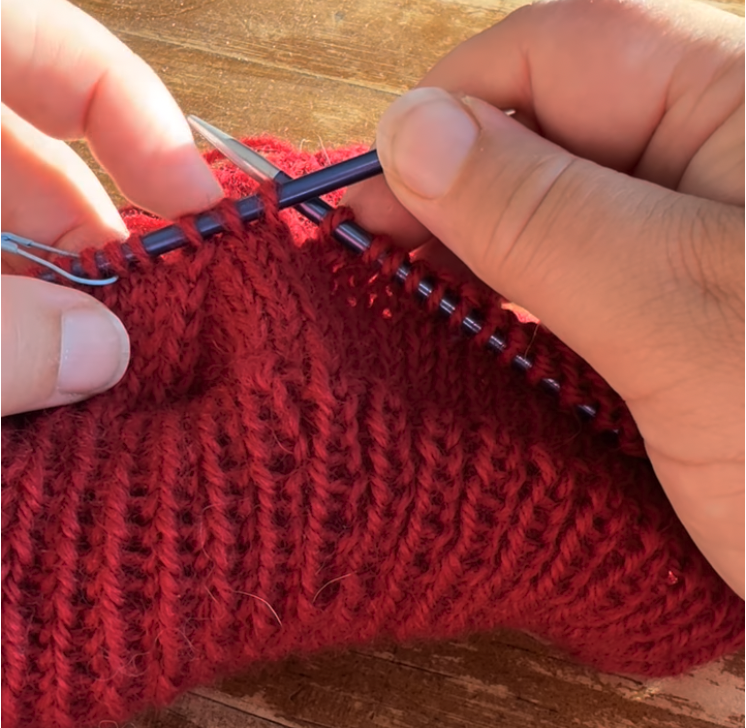
Can a red knitted hat save the world?
Some Minnesotans, no strangers to cold weather and now besieged by ICE, have taken a World War II symbol of Nazi resistance and turned it into a visible sign of solidarity: the red beanie hat with a cheerful tassel, now known as the “Melt the ICE” hat.
The scheme was first stitched at Needle & Skein, a yarn store in Minneapolis, after the owner Gilah Mashaal, realized that the exhausted knitters who gathered there were looking for a way to help. “What’s been happening in Minneapolis has been so egregious and awful and so destructive to our community,” she told NPR. Shop employee Paul Neary created the pattern, and the community began knitting and distributing the hats.
Now, they’re raising serious cash for immigrant causes. The pattern is available for $5.00 — and they’re not here to play. From their website: “In the 1940’s, Norwegians made and wore red pointed hats with a tassel as a form of visual protest against Nazi occupation of their country. Within two years, the Nazis made these protest hats illegal and punishable by law to wear, make, or distribute. As purveyors of traditional craft, we felt it appropriate to revisit this design.”
According to NPR, the shop has raised nearly $400,000 and they have donated a total of $250,000 to two local nonprofits — STEP (St. Louis Park Emergency Program) and the Immigrant Rapid Response Fund.
Mashaal’s daughter has been very busy on Reddit, where she answers questions and helps people connect with the pattern, immigrant support groups, and one another. “The response has been beyond anything we could’ve even dreamed of,” she writes. “We have been crying happy/hopeful/overwhelmed tears all day.”
Some fine print
Here’s a sampling of our latest and greatest from the Design Observer editorial and contributor network.

Arts + Culture
Dylan Fugel|Analysis
“I’d rather be a pig”: Amid fascism and a reckless AI arms race, Ghibli anti-war opus ‘Porco Rosso’ matters now more than ever
Amid fascism and a reckless AI arms race, Ghibli anti-war opus ‘Porco Rosso’ matters now more than ever.
Design Impact
Alexis Haut|Education
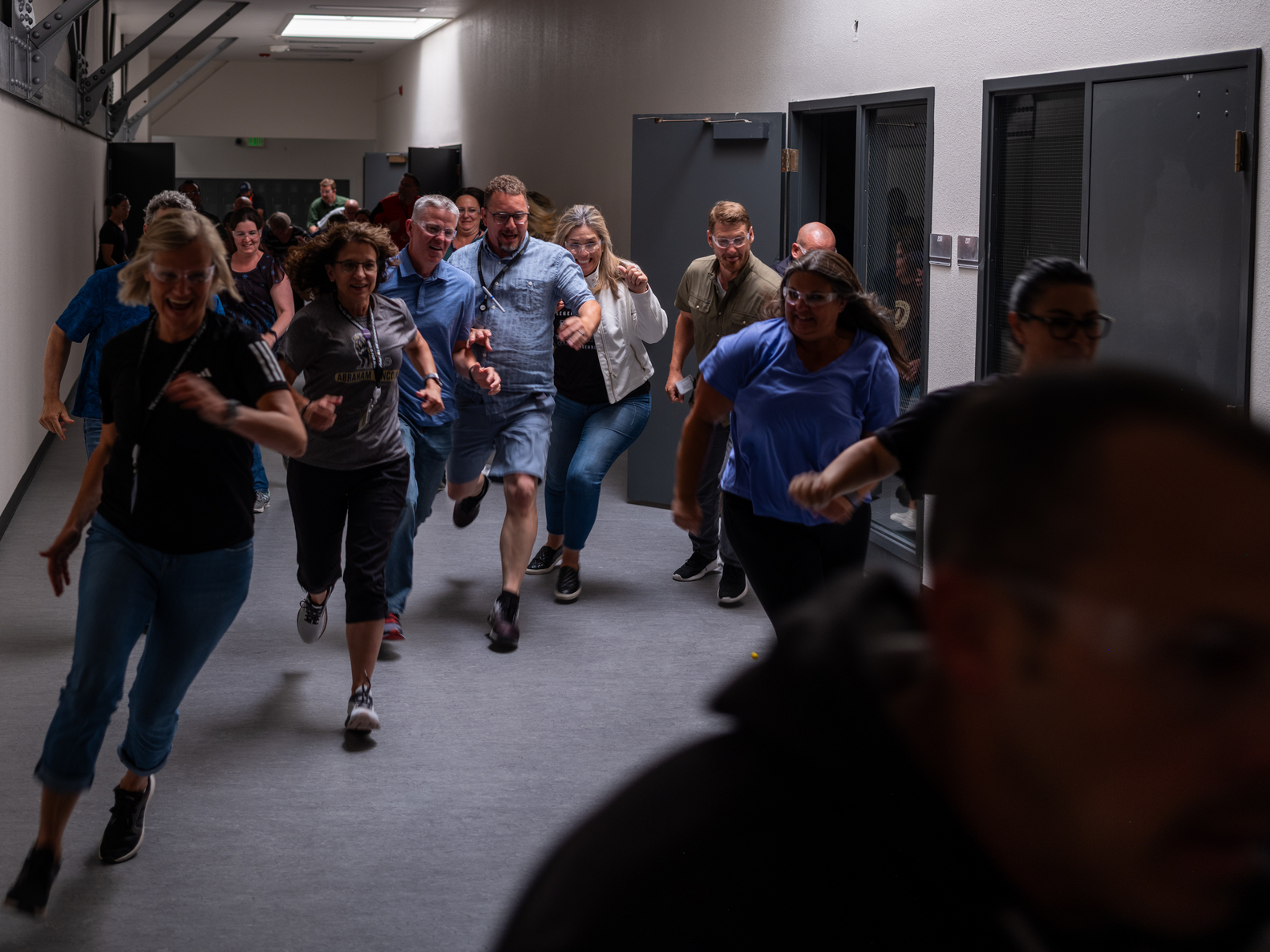
‘Thoughts & Prayers’ & bulletproof desks: Jessica Dimmock and Zackary Canepari on filming the active shooter preparedness industry
HBO’s new documentary, helmed by two lauded photographers-turned-parents, excavates the $3B market born from America’s school shooting problem.

Education
Vera Sacchetti|Interviews
“But Teacher! That’s Not Design!”
Interview with Portuguese communication designer Barbara Alves about teaching in Mozambique.
Observed
What are you observing? Tell us.
Artists at the Grammys did not come to play. Here are the winners.Here’s who protested ICE. And here’s why Trump is threatening to sue host Trevor Noah.
Content creators on TikTok are now using pink or yellow text to signal emotionally raw or vulnerable posts. “People began to associate the text with vulnerability and seriousness,” user @missingslippers told USA Today. “Psychologically, this works because it’s a form of social signaling because seeing the yellow font instantly tells the viewer that the post is personal or vulnerable. Because of that, people react with it and engage with it differently by being more empathetic and more serious.”
Do you want to play a game? The 2026 Design Innovation in Plastics (DIP) competition is asking for university students in the UK and Ireland to design an indoor or outdoor game, for education or entertainment, with the aim of bringing people together through a shared activity. More here.
The Trump administration plans $12 billion investment in rare earth minerals stockpiles to fend off China’s dominance in the sector. The minerals are a key ingredient in the energy, aerospace, and auto sectors.
You know what? Let’s just shut it down. Amid cancellations and plummeting attendance, Trump says he’s closing the Kennedy Center in July for a complete renovation.
Architecture studio David Chipperfield Architects has debuted the new Milano Santagiulia Ice Hockey Arena ahead of the 2026 Winter Olympics. It’s the only permanent venue for this year’s Olympics; Italian insurance group Unipol has acquired naming rights to the stadium.
Fonts matter, people. Cybercriminals are using a nearly invisible typographical trick to impersonate Microsoft and Marriott websites. It’s a new version of a growing spate of homoglyph phishing campaigns that are fooling consumers by swapping the “m” for an “r+n”. Go ahead and squint your eyes and try to buy something at “rnicrosoft.com” or “rnarriottinternational.com.”
The Walker Art Center in Minneapolis closed to the public on January 23 in support of the Day of Truth and Freedom protest against the presence of ICE in the city. It was the highest-profile art institution to do so.
Seeking new landscapes, having new eyes. Now in its 23rd year, this year’s winners from the Travel Photographer of the Year awards are a balm for the weary soul. Some 20,000 images were submitted by amateur and professional photographers from 160 countries.
Albania is enjoying an architecture boom, aiming to remake its skylines with ambitious projects from big-name talent. Says Albania’s Prime Minister Edi Rama: “Albania produces more architecture than the rest of Europe.” Rama, a former artist (put more artists in charge, maybe?), has been overseeing the transformation of Tirana, the capital city, since his stint as mayor in 2014.
A senior curator at the Art Gallery of Ontario (AGO) and two volunteer members of a collections committee have resigned, after the gallery voted against the acquisition of a work by photographer Nan Goldin because of allegations of “antisemitism.” According to a leaked memo, the acquisition of the moving-image work Stendhal Syndrome (2024), planned jointly with the Vancouver Art Gallery (VAG) and Minneapolis’s Walker Art Center, was later scuttled by the AGO, citing Goldin’s public support for Palestinians in Gaza.
IBM Design veteran, educator, and consultant Doug Powell is offering his Expanding Organizational Influence online course, offered through iF Design Academy. It’s for established design leaders seeking to position themselves for career advancement and future executive roles, seeking enterprise-wide impact. The 7-week course is time zone-friendly for the Americas and EMEA; guest lecturers include Pernilla Johansson, Brian A. Rice & Michael Tam. A new cohort begins January 29. More here. 15% discount code: LeadTheFutureofDesign2026
Job Board
Hiring a designer? Post your role on the Design Observer Job Board to reach a highly engaged audience of designers, creative leaders, and studios across the Design Employment Network.
Senior Graphic Designer at Phi Kappa Psi Foundation, Indianapolis, IN
Senior Industrial Designer at Cirrus Aircraft, Duluth, MN
Assistant Professor in Fine Arts: Artificial Intelligence and Artistic Practice at The University of Texas at Austin College of Fine Arts, Austin, TX
Manager, Art Direction & Product Design at CURiO Brands, Minneapolis, MN
End marks
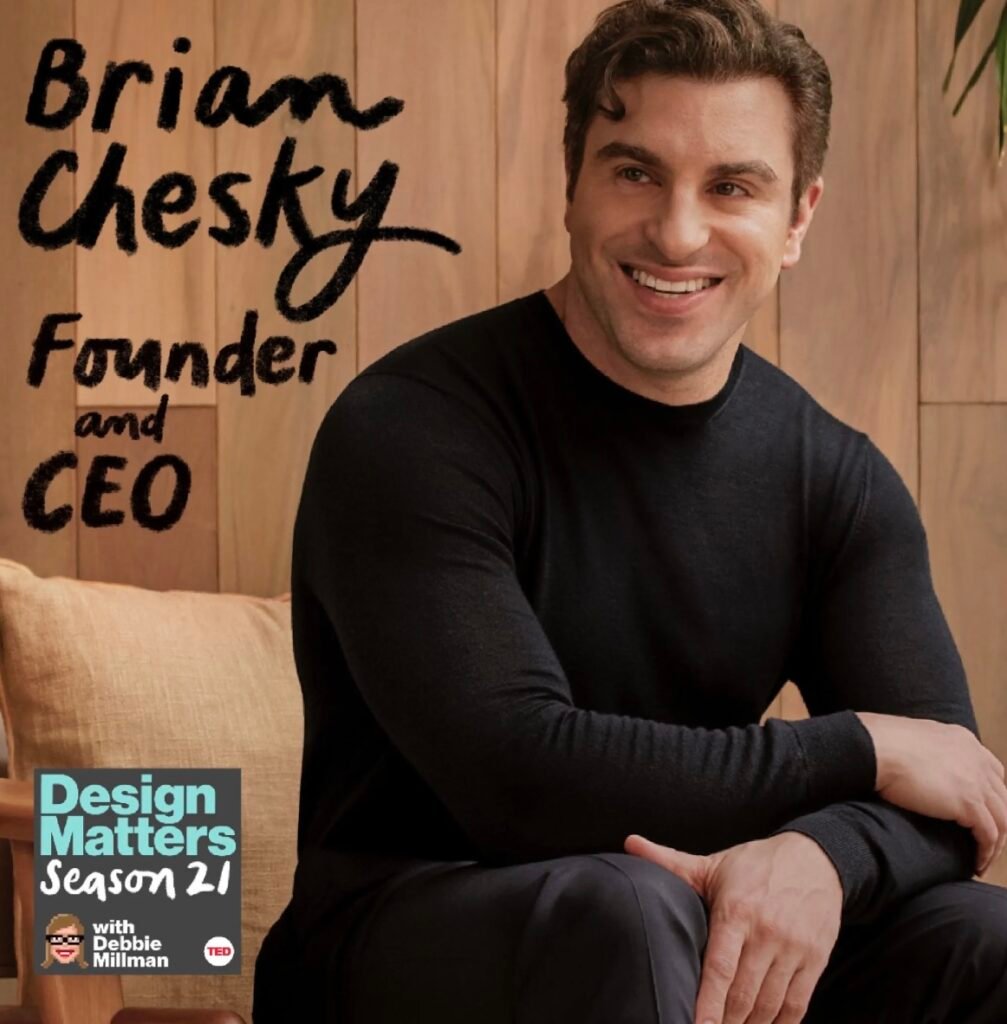
Debbie Millman kicked off the twenty-first season of the Design Matters podcast with the co-founder and CEO of Airbnb. In this episode, they discuss “how imagination and design shaped his path, and what it means to design the world you want to live in.”
This is the web version of The Observatory, our (now weekly) dispatch from the editors and contributors at Design Observer. Want it in your inbox? Sign up here. While you’re at it, come say hi on YouTube, Reddit, or Bluesky — and don’t miss the latest gigs on our Job Board.
More like this
The Observatory Newsletter
Rachel Paese
AI actors are here, but what moves us hasn’t vanished
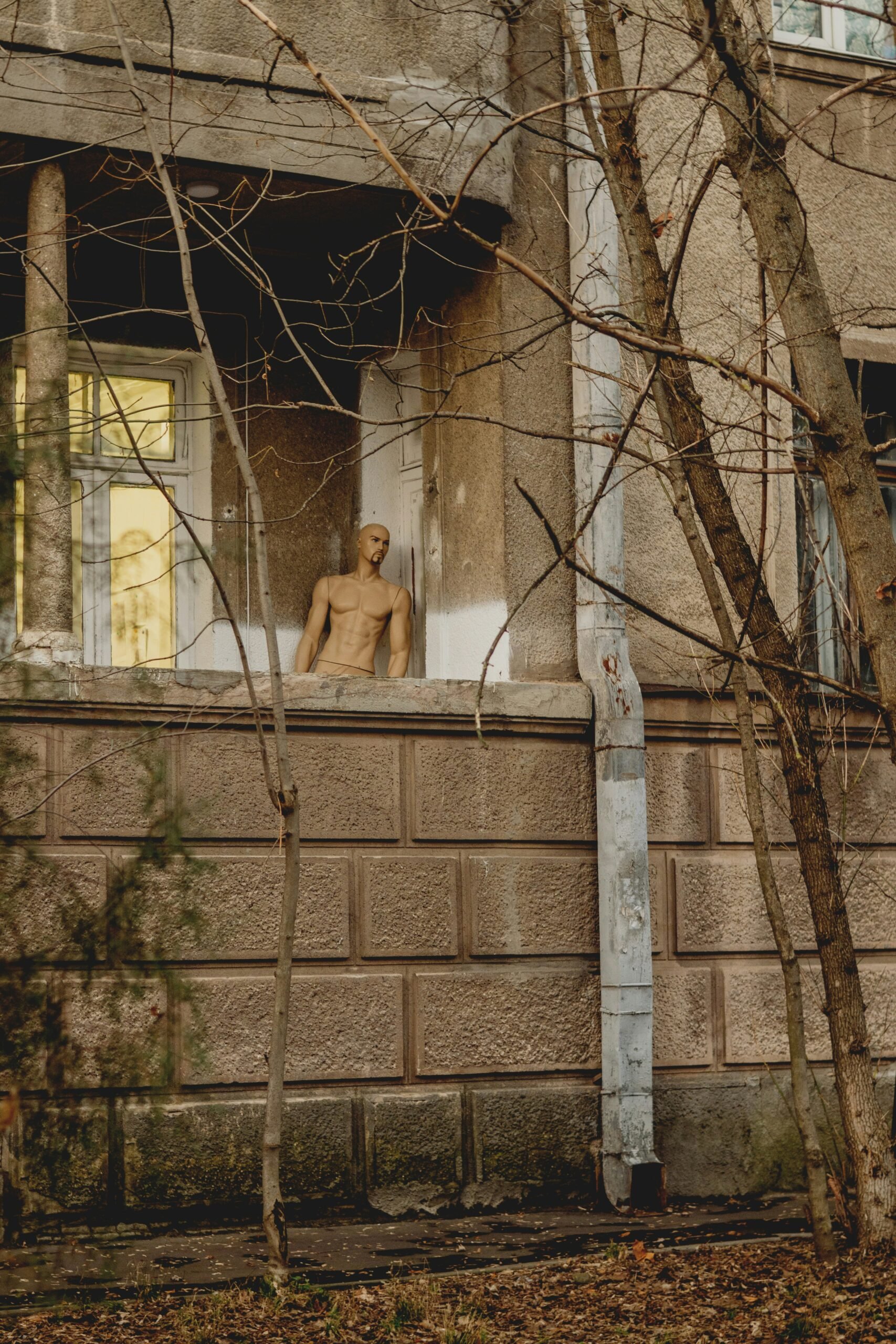
As synthetic humans enter our feeds and screens, the desire for deeply human culture hasn’t disappeared.
The Observatory Newsletter
Ellen McGirt|New Ideas
Gen-AI is a threat to human thinking
Generative AI doesn’t just change how we design, it may also change how we think.
The Observatory Newsletter
Ellen McGirt
Lessons in connoisseurship from the Golden Globes
Connoisseurship requires context, which requires time, commitment, and patience.
Observed
View all
Observed
Share on Social


By Ellen McGirt
 Ellen McGirt is an author, podcaster, speaker, community builder, and award-winning business journalist. She is the editor-in-chief of Design Observer, a media company that has maintained the same clear vision for more than two decades: to expand the definition of design in service of a better world. Ellen established the inclusive leadership beat at Fortune in 2016 with raceAhead, an award-winning newsletter on race, culture, and business. The Fortune, Time, Money, and Fast Company alumna has published over twenty magazine cover stories throughout her twenty-year career, exploring the people and ideas changing business for good. Ask her about fly fishing if you get the chance.
Related Posts

Innovation
Ashleigh Axios|Essays
Innovation needs a darker imagination
The Observatory Newsletter
Rachel Paese
AI actors are here, but what moves us hasn’t vanished
The Observatory Newsletter
Ellen McGirt|New Ideas
Gen-AI is a threat to human thinking

AI Observer
Dave Snyder|Analysis
The identity industrialists
Related Posts
Innovation
Ashleigh Axios|Essays
Innovation needs a darker imagination
The Observatory Newsletter
Rachel Paese
AI actors are here, but what moves us hasn’t vanished
The Observatory Newsletter
Ellen McGirt|New Ideas
Gen-AI is a threat to human thinking
AI Observer
Dave Snyder|Analysis