


September 20, 2019
Wearable Architecture That Won’t Fall Down
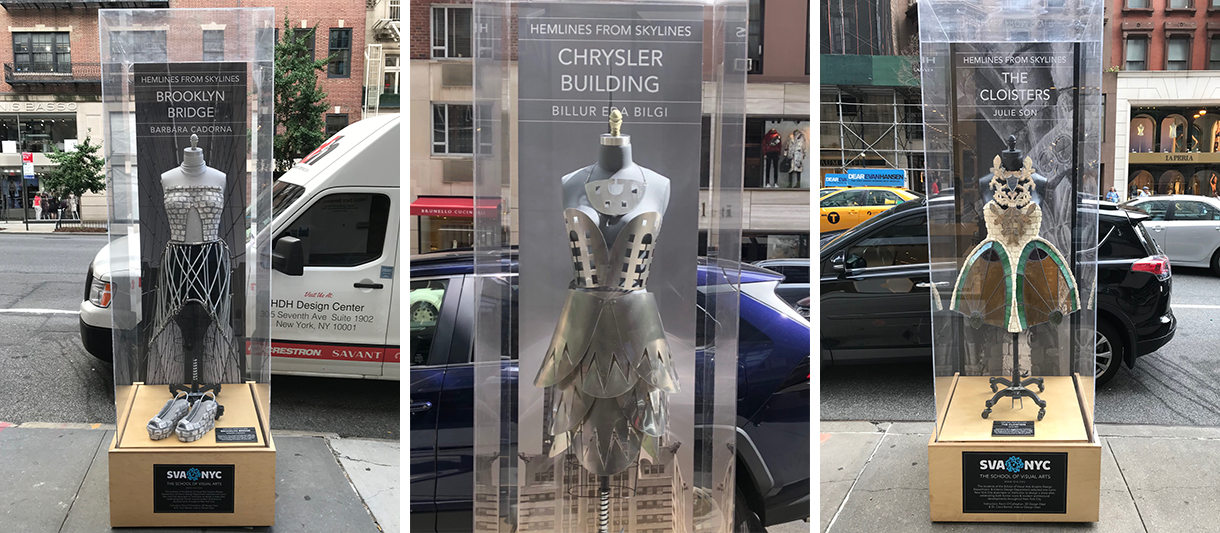
Few things are more impermanent than clothing styles and more permanent than buildings (although architectural styles go up and down with the same relative frequency as hemlines). New York is epicenter of timelessness and timeliness in both realms. This is why Kevin O’Callaghan, the chair of the 3D design program at the School of Visual Arts in New York, has for decades been building exhibitions of repurposed current and obsolete objects — from gas masks to automobiles — that transmute their original functions into innovative things that embody wit, ingenuity, and beauty, and are made entirely by hand too. His most recent transformative exhibit, Hemlines from Skylines: Architectural Fashion, was mounted this September (5-30) in New York in partnership with the School of Visual Arts and the Madison Avenue Business Improvement District, part of “Madison Avenue Salutes Fall Fashion.”

This eclectic public artwork features fashions created by students from SVA’s BFA Design and BFA Interior Design programs. Co-curated by O’Callaghan and BFA Interior Design Chair Dr. Carol Bentel, this is the fifth annual transformation of the sidewalks between East 61st to East 79th Streets (others have included One of a Kind Luxury, dresses made from one object like spoons and forks, Chairs that Inspire, A Moment in Time, giant wrist watches that captured an historical moment, Obsessorize, fashion accessories made from objects from different decades) into virtual galleries with 20 eight-foot tall vitrines, filled with gowns influenced by landmark New York architecture. It was inspired by the storied Beaux-Arts Architects’ ball in 1931, which celebrated the new age of skyscrapers in Manhattan, where architects wore elaborate ensembles inspired by their own iconic structures, such as the Empire State Building and Chrysler Building. This exhibit also includes Radio City Music Hall, the Guggenheim, and Citicorp Center.
The 20 sculptural fashions are inspired by neo-classical, art deco, and mid-century modern eras and incorporating current architectural elements and developments. Each student was influenced by one landmark and organized according to the year when it was constructed. No digital tools or pixels were used. The materials include resin, welded steel and aluminum, rope, grouted tiles, wood, light bulbs, stained glass, crystals, flowers, and more.
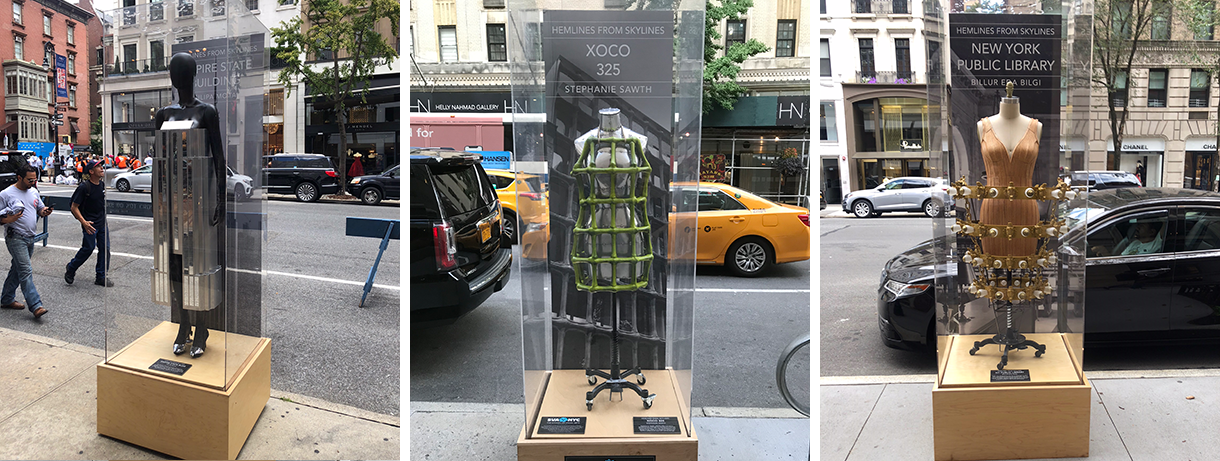
For O’Callaghan, who designed the “golden popcorn” statue for the MTV Movie Awards and a giant pair of headphones using Toyotas as the ear pieces, there is nothing that cannot be made from imagination with the proper tools. “If you learn the integrity of materials, you learn what they can and can’t do, and there isn’t any project that you can’t tackle,” he says. The gowns in Hemlines from Skylines prove the point.
Observed
View all
Observed
Share on Social


By Steven Heller
 Steven Heller is the co-chair (with Lita Talarico) of the School of Visual Arts MFA Design / Designer as Author + Entrepreneur program and the SVA Masters Workshop in Rome. He writes the Visuals column for the New York Times Book Review, a weekly column for The Atlantic online and The Daily Heller.
Related Posts

Business
Kim Devall|Essays
The most disruptive thing a brand can do is be human
AI Observer
Lee Moreau|Critique
The Wizards of AI are sad and lonely men
Business
Louisa Eunice|Essays
The afterlife of souvenirs: what survives between culture and commerce?

Architecture
Bruce Miller|Essays
A haunting on the prairie
Recent Posts
The identity industrialists Lessons in connoisseurship from the Golden Globes “Suddenly everyone’s life got a lot more similar”: AI isn’t just imitating creativity, it’s homogenizing thinking Synthetic ‘Vtubers’ rock Twitch: three gaming creators on what it means to livestream in the age of genAIRelated Posts
Business
Kim Devall|Essays
The most disruptive thing a brand can do is be human
AI Observer
Lee Moreau|Critique
The Wizards of AI are sad and lonely men
Business
Louisa Eunice|Essays
The afterlife of souvenirs: what survives between culture and commerce?
Architecture
Bruce Miller|Essays