February 24, 2026
06: Every Man His Own Balloon
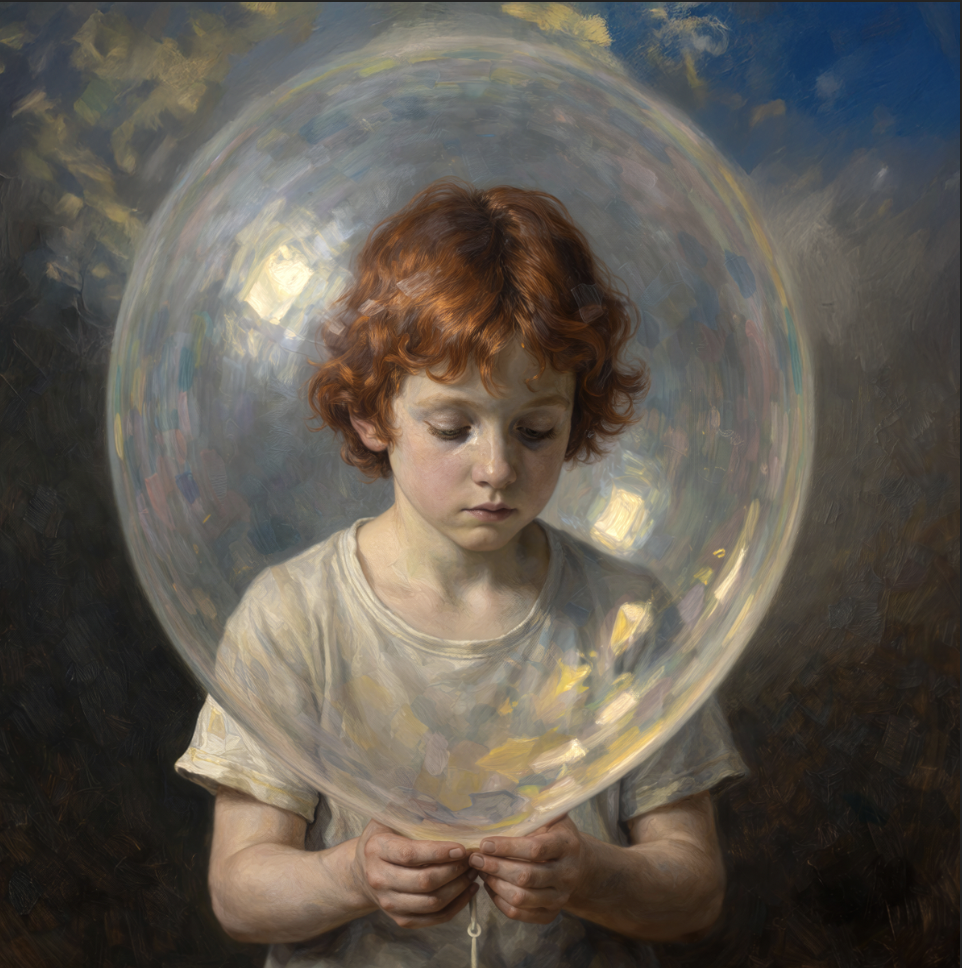
24 x 24 inches
2026
I’ve been thinking about halos. And the halo effect (which is its own kind of myth).
The simplicity of that geometric form, a simple curvature above the head. The perfection of it. The divinity of it.
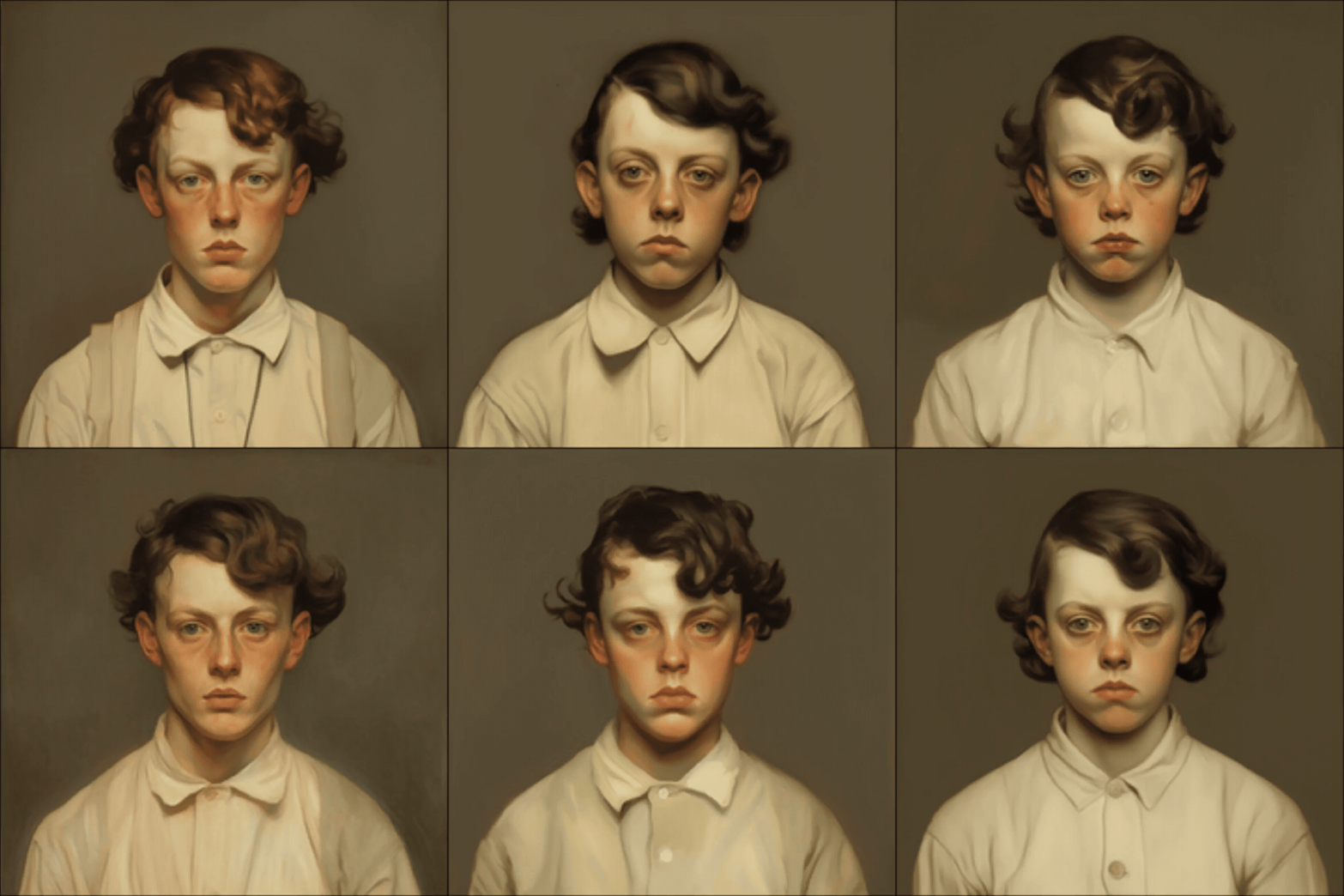
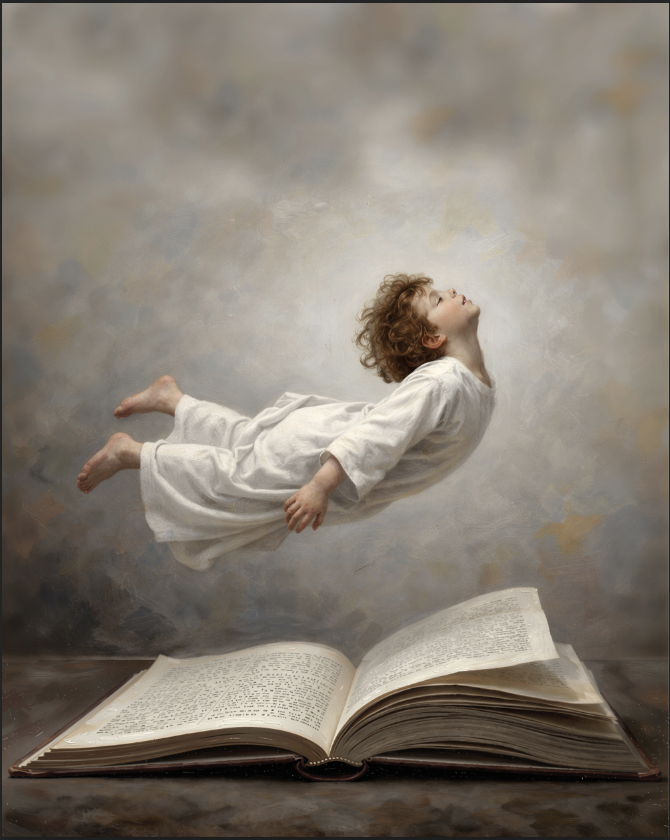
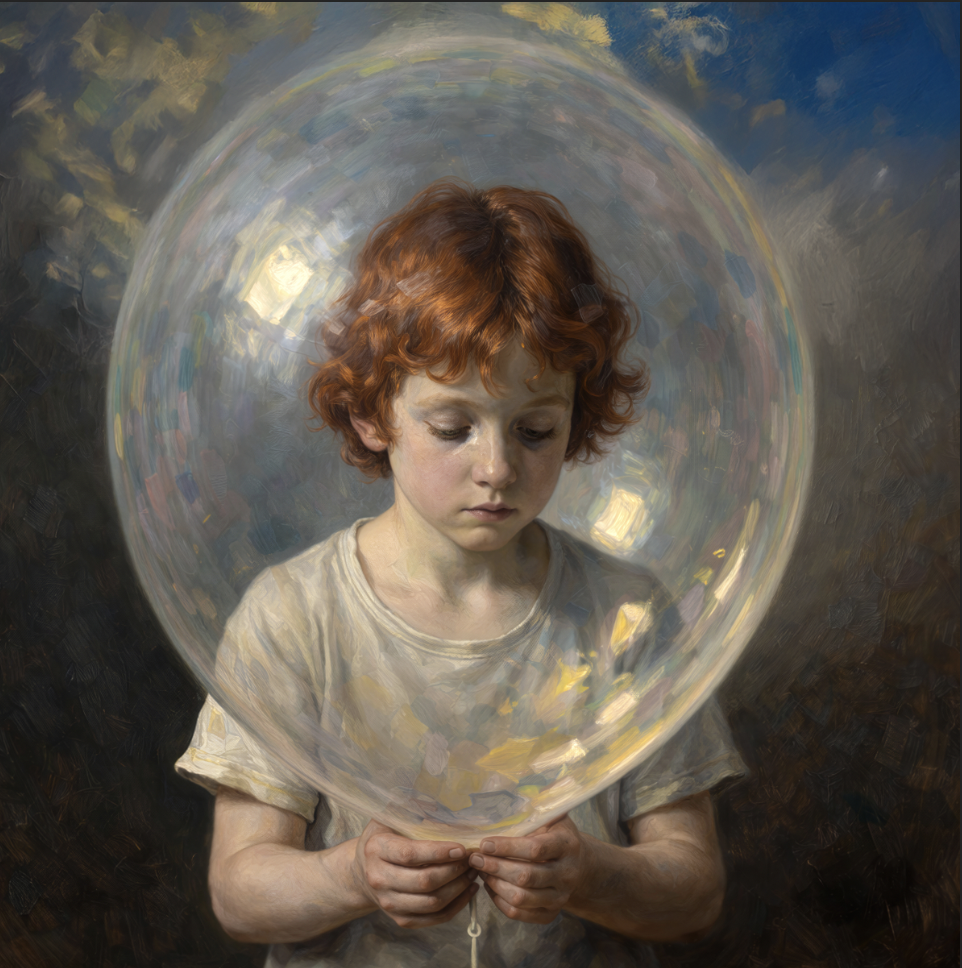
Sketching children and circular crowns of light led me to balloons: here, a child lost in thought. Is he behind the balloon? Is he inside of it?
The world’s a bubble, wrote Saint Augustine.
The balloon, writ large, is an archaic mode of transport. Writ small, it is a toy: fragile and evanescent. A container for so much—not least a child’s boundless imagination.
Balloons takes me to balloon-ING, once actually believed to be the only reasonable method of air travel. (I have not the smallest molecule of faith in aerial navigation, wrote Lord Kelvin in 1869, other than ballooning.) Half a century later, we were still fantasizing about this.
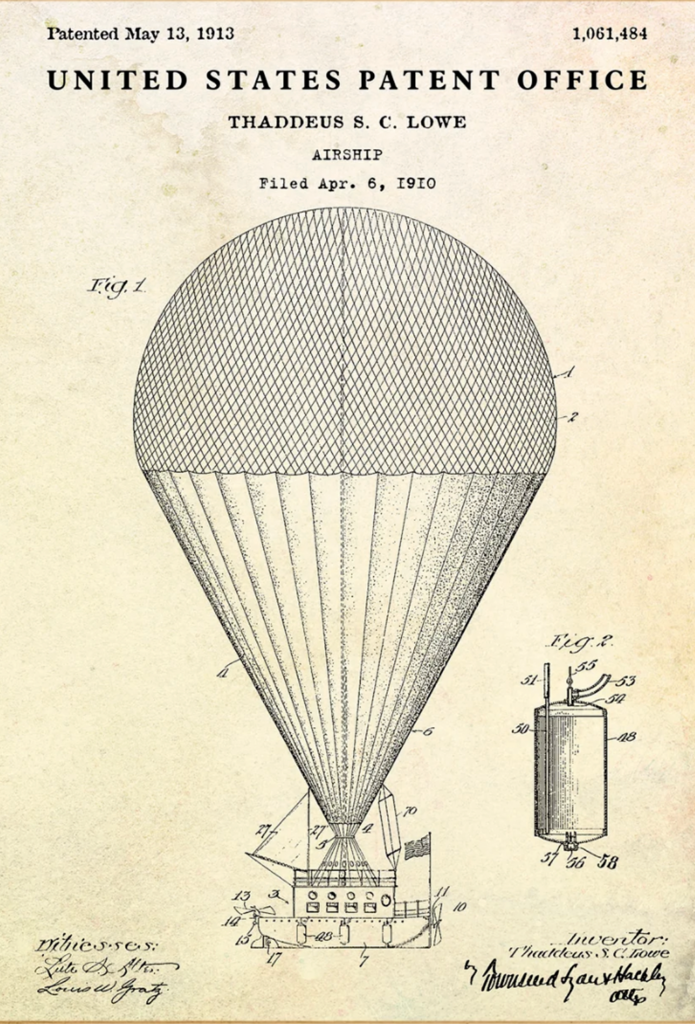
Connecting a Greek myth to early aeronautics—feels like no time has passed at all.
From an editorial in the New York Times (1871):
There is in England a Society for the Encouragement of Flying, whose members look fondly forward to the time when everybody shall be as it were his own balloon, and man shall ride the clouds as easily as he now careens upon the waves.
I am thinking about the materiality of flying: the contraptions, the constructions, and find myself wondering if Daedalus might have experimented with other materials.
I’m thinking about wings made from fragile artefacts: leaves and twigs, hay and straw, grass and weeds and the detritus of a forgotten field.
But wings might benefit with something malleable, something with inherent plasticity. Rubber, for instance.
Or balloons.
AI is a fungible, freaky thing. I combined a balloon and a wing and I got wing-shaped balloons.
Exactly what I was after.
I began to imagine a set of oversized wings, bulbous and improbable, shades of cartoon animals (Dumbo, Mickey) affixed to a child poised for takeoff. I deliberately omitted straps, imagining wax as the bonding material. I want to use wax only in the wings here, but fear they may end up looking like oversized Jordan almonds. Not a good look for Icarus (or anyone).
That a child would imagine his adventure using the materials at his disposal? Those balloon wings could easily have been kites, or teddy bears.
Daedalus, Ovid explains, “altered the laws of nature” by inventing wings.
I wonder if the hubris we attach to Icarus really belongs to his father, thinking he could tempt fate, out-design the divine.
A child sees only shapes and surfaces: an endless sea, a distant sky, and balloons to carry him away.
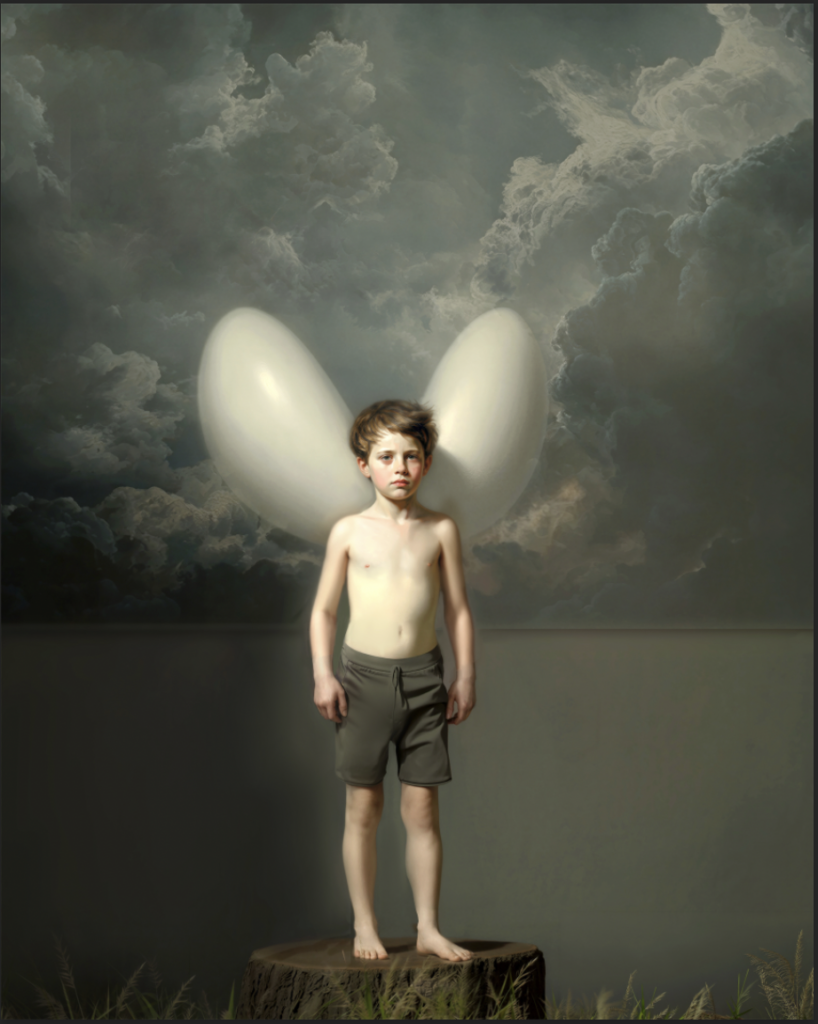
60 x 48 inches
Oil and wax on canvas
2026
Observed
View all
Observed
Share on Social


By Jessica Helfand
 Jessica Helfand is an artist and writer based in New England. A former critic at Yale School of Art and one of the founding editors of Design Observer, she is the author of several books on visual culture including Self Reliance, Design: The Invention of Desire, and Face: A Visual Odyssey. jessicahelfand.com