January 22, 2026
Gen-AI is a threat to human thinking
A clarion call for the human experience
David Z. Morris is a groundbreaking business journalist, researcher, and writer focused on the social impacts of technology. (Here’s one social impact he helped predict: he was part of the team at CoinDesk that first understood and exposed the criminality of FTX and Sam Bankman-Fried. Check out his book, Stealing The Future: Sam Bankman-Fried, Elite Fraud, and the Cult of Techno-Utopia.)
He’s also a former colleague, a talented editor, and has one of the most interesting minds I’ve ever encountered.
So, I was equal parts thrilled and alarmed when his first short feature for Design Observer came packaged as a cautionary tale: a review of the growing body of evidence pointing to the potential negative impacts of generative AI tools on the very thing that makes design so special: a human’s ability to think.
“The technology (and, often, its boosters) invite confusion between analysis and creativity, between mimicry and thought — and that confusion seems to lie at the heart of LLMs’ potential psychological risks,” he writes. “Many neurologists, psychologists, and creativity experts are working to understand those risks and impacts, and there is strong early evidence that AI images can be a turn-off for the very audiences design clients are hoping to persuade.” Turns out, when people think an image was created by an LLM, they tend to hate it. “There are also hints of a much more profound risk: that the spread of generative imagery will, in stark contrast to its promise that everyone can be an artist, reduce the creativity of any society that embraces it.”
The likelihood that generative AI will not turn the head of a difficult client, while disappointing, will not come as a great surprise to design veterans who understand what it takes to build a truly successful practice.
But with AI already behind more imagery, the great homogenization of our feeds — evidenced by the constant, smooth, meaningless advertising images — isn’t the only possible outcome. Morris points to a growing worry that reliance on generative tools is turning us all into homogenous beings.
He references work from Georgetown-based neuroscientist Adam Green, who analyzed college admission essays before and after the tipping point of LLM availability, around 2022. “He found that ‘suddenly everyone’s life got a lot more similar’ after LLMs became prevalent, even when their use was nominally forbidden. More worrying, students who used AI to write about their lives ‘endorse those [outputs] as being really their own story,’ Green says. ‘Their own understanding of their life story is being homogenized.’”
Why does it matter? Because people with diverse ideas and experiences — stop me if you’ve heard this somewhere before — go on to be better thinkers, teammates, and more productive members of society.
If the flip side of a cautionary tale is a clarion call, then the message is clear: become a person with an interesting mind. Claim the human experience, with all its foibles and false starts. Try the new thing, cook the food, watch the film, read the book, collect weird shit, talk to someone you’re wary of, pick up a pencil, and draw.
Take the long road, and not just because it will make you more marketable. But because it’s the better path.
Ellen McGirt
Editor-in-Chief
Ellen@designobserver.com
P.S. Did someone who loves you send you this newsletter? Welcome! Subscribe here.
This edition of The Observatory was edited by Rachel Paese.
This is the web version of The Observatory, our (now weekly) dispatch from the editors and contributors at Design Observer. Want it in your inbox? Sign up here. While you’re at it, come say hi on YouTube, Reddit, or Bluesky — and don’t miss the latest gigs on our Job Board.
The big think

Since we mentioned it, it’s worth taking a moment to reflect on the stunning unraveling that was Sam Bankman-Fried’s run at FTX, and why Morris’s now-legendary beat reporting informs a still-relevant cautionary tale: beware the narcissists who think they alone can save us.
In this excerpt published in advance of the book, he describes a scene from SBF’s sentencing hearing on March 24, 2024, in which Judge Lewis Kaplan framed the defendant as a sociopath, enabled by
From Morris’ Dark Markets Substack:
“Kaplan was articulating the clear but complex answer to a question that remained strangely unanswered over 18 months of furious discourse… Why did this young man, running what at least could have been a successful business, choose to commit massive fraud?
The psychological key to that question can be found by digging into Bankman-Fried’s own incessant claims of innocence. Those continued during and after his sentencing: he told the New York Post last week that he ‘never thought that what I was doing was illegal.’
More broadly, Bankman-Fried seems to have believed that the very concept of something being ‘illegal,’ or even unethical, was irrelevant to him. He seems to have believed, in a substantial sense, that he simply didn’t have to follow normal human rules. This is why he still thinks of himself as innocent.
He thought he was above the conventional law because he saw himself as uniquely brilliant, and because his long-term intentions were good — always a dangerous combination. Added to that was a utilitarian and mechanistic worldview instilled in him by his parents. They, and mother Barbara Fried in particular, seem to have been deeply committed to a mechanistic and scientistic worldview — one that implicitly accepted the complete predictability of the future consequences of present actions.”
Some fine print
Here’s a sampling of our latest and greatest from the Design Observer editorial and contributor network.
AI Observer
Dave Snyder|Analysis
The identity industrialists
As synthetic actors become more lifelike, the people who create them will become the new power players
AI Observer
Stephen Mackintosh|Analysis
Synthetic ‘Vtubers’ rock Twitch: three gaming creators on what it means to livestream in the age of genAI
The battle for viewers in the lucrative world of streaming is getting more complicated

AI Observer
Raphael Tsavkko Garcia|Analysis
AI actress Tilly Norwood ignites Hollywood debate on automation vs. authenticity
Tilly Norwood and the age of AI art
Observed
What are you observing? Tell us.
Inequality and unease, peace prizes and aggression. It’s going to be an unusual Davos.
The Nobel Foundation has revealed the first design proposal for the new Nobel Center, a public institution dedicated to science, literature, and peace. Designed by David Chipperfield Architects Berlin, construction will begin in Stockholm in 2027. It is conceived as a “permanent home for the activities surrounding the Nobel Prize,” which is sadly become, unintentionally hilarious.
A broken joint on the track is being blamed for the derailment of a high-speed train in Spain, which killed at least 39 people.
AI reporter Benj Edwards spent hours experimenting with AI-assisted software development. Here’s his report: “I don’t think AI tools will make human software designers obsolete. Instead, they may well help those designers become more capable.”
Snohetta, the New York-based architecture firm has been accused of illegally dismissing employees who backed a unionization effort. “For architects, the impetus to unionize has generally been low pay and long hours that often include uncompensated overtime.”
A dying artform. For generations, master woodcarvers in the village of Chongshan, China have been making Buddhist and Taoist sculptures for display in temples across China. “My grandpa and my grandpa’s grandpa were also craftspeople,” says one artisan named Zhang, who says poor pay, a saturated market, and the years-long learning curve are dissuading young residents from taking up the craft.
Finally, a design exhibit for ‘Last of Us’ fans. FUNGI: Anarchist Designers is a new design exhibition that explores humanity’s relationship with nature, in part, by rejecting the familiar language of sustainable design. It’s all about the mushrooms. “Featuring installations, films and soundscapes confected by a range of artists, Fungi: Anarchist Designers is a Dantean journey through the many circles of fungal hell, contrived to convey their terrifying ubiquity and resilience,” says The Guardian, in a review that must have been fun to write. At the Nieuwe Instituut, Rotterdam, until August 9.
Graphic designer Deborah Khodanovich has created a new font celebrating gossip. “Gossip, often weaponized against women, has been trivialized as idle chatter, despite its role in building and sustaining social networks,” she says. The Gossip typeface, a blackletter pixel font, is designed to be equal parts gothic and modern.
Trump’s new architect has big plans for the White House demolition renovation. The East Wing is now set to be two stories, and there is crazy talk of adding a second story to the existing West Wing colonnade. The project is now slated to be a cool $400 million.
Happenings
AIGA hosts Designing Democracy’s Front Door on Wednesday, January 21 in, D.C. This conversation examines how design shapes the public’s experience of the White House, and how access, symbolism, and stewardship influence trust in democratic institutions. Moderated by former White House Creative Director Ashleigh Axios, the discussion considers what continuity and care can look like across moments of political change.
Architecture at Zero is a design competition that centers on decarbonization, equity, and resilience. This year’s project is the design of the La Plaza Cultural Center at the Multi-Agency Resilience Center in Antelope Valley, California, a year-round educational and cultural venue. Presented by Southern California Edison (SCE), Pacific Gas and Electric Company (PG&E), Southern California Gas Company (SoCalGas), and the American Institute of Architects California (AIA CA), it is open to students and professionals worldwide. More here.
Job Board
| Interior Designer at CCY Architects, Basalt, CO Product Designer at MÙA FORM, Remote Senior Brand Designer at National Gallery of Art, Washington, DC Help AI understand advanced 3D techniques at CrowdGen, Remote Service Design Manager at AdventHealth, Altamonte Springs, FL Director of Hong Kong Branch of National Engineering Research Center for Steel Construction at The Hong Kong Polytechnic University, Washington, DC Jr. Industrial Designer at Enhance Innovations, Remote Creative Director, Political Ads at Brainstorm Creative Resources, Remote Fixture Design Project Manager at MBH Architects, San Francisco, CA |
AI Observer
bleep, boop
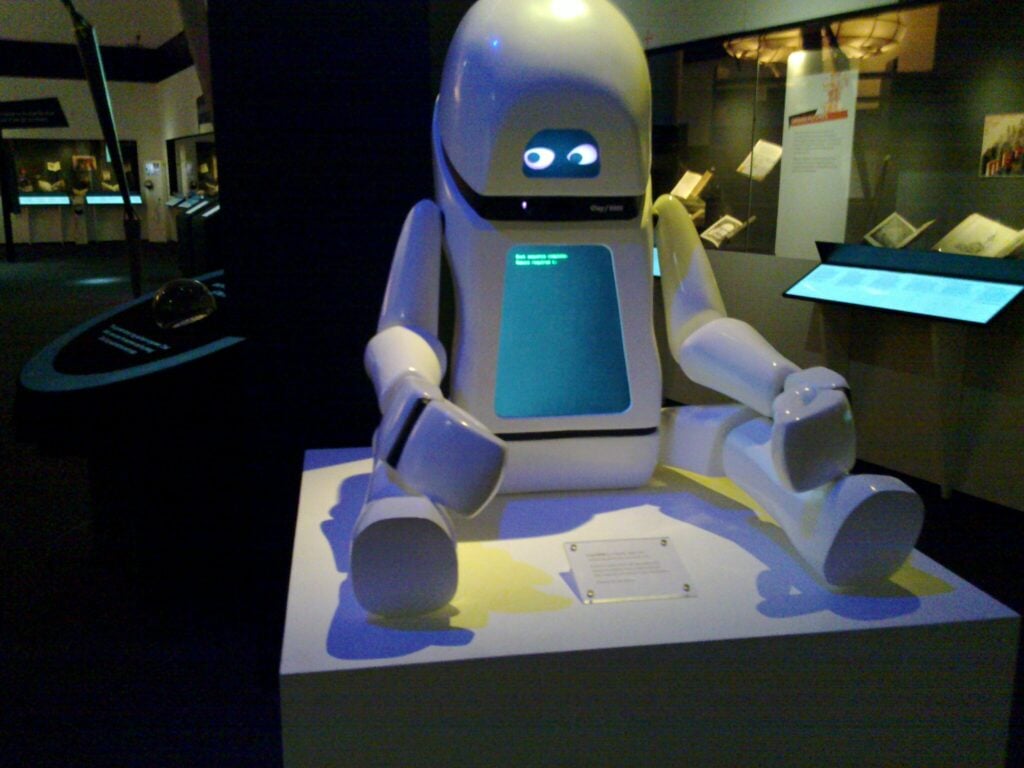
“AI didn’t write this essay, but I suppose it could have. At least a passable facsimile.
And where does that leave me? Or you? Or us?”
— Ellen McGirt, Introducing ‘AI Observer’
This is the web version of The Observatory, our (now weekly) dispatch from the editors and contributors at Design Observer. Want it in your inbox? Sign up here. While you’re at it, come say hi on YouTube, Reddit, or Bluesky — and don’t miss the latest gigs on our Job Board.
More like this:
The Observatory Newsletter
Ellen McGirt
Lessons in connoisseurship from the Golden Globes
Connoisseurship requires context, which requires time, commitment, and patience.

The Observatory Newsletter
Ellen McGirt|Holiday Gift Guide
Visions of sugar-plums
A year-end reflection on design’s evolving role—plus a thoughtful holiday gift guide featuring books to inspire curiosity, craft, and creative leadership.

The Built World
Ellen McGirt
Dispatches from Design Week in Hong Kong
A necessary reminder of the role that design, and designers, must play in building a better world.
Observed
View all
Observed
Share on Social


By Ellen McGirt
 Ellen McGirt is an author, podcaster, speaker, community builder, and award-winning business journalist. She is the editor-in-chief of Design Observer, a media company that has maintained the same clear vision for more than two decades: to expand the definition of design in service of a better world. Ellen established the inclusive leadership beat at Fortune in 2016 with raceAhead, an award-winning newsletter on race, culture, and business. The Fortune, Time, Money, and Fast Company alumna has published over twenty magazine cover stories throughout her twenty-year career, exploring the people and ideas changing business for good. Ask her about fly fishing if you get the chance.