


February 18, 2026
The age of agency
As the traditional corporate 9-to-5 is questioned, creative leaders have an opportunity to redefine career success
This message is for self-identifying women, nonbinary, and queer creatives:
This is a call to action, but not the kind you might expect. Instead, I’m here to invite you to join a growing movement of professionals who are rewriting the rules entirely.
On International Women’s Day 2024, I challenged the narrative around women-founded creative ventures. Unfortunately, the broader reality reveals persistent obstacles — from funding gaps to systemic leadership barriers. But focusing solely on traditional agency and studio paradigms misses the seismic shift happening in our industry. By examining only established metrics, we overlook the rising force of independent leaders who are building entirely new ways of working. Women and marginalized voices aren’t merely participating in the independent gig economy — we’re one of the forces driving it.
As this uprising gains momentum, we’re seeing a more diverse and dynamic workforce emerge, defying old assumptions about how creative work gets done. The traditional 9-to-5 job model is being questioned as more of us choose self-employment over typical corporate roles. This is a deliberate choice to build our own businesses, our own way. We’re simultaneously influencing more flexible, inclusive work environments and actively redefining what leadership looks like.
We’re entering the age of personal agency: a time when we’re reclaiming our power, while fundamentally reimagining what success looks like in the creative world. If you’ve been sidelined, overlooked, and underestimated in our industry — where leadership roles are still disproportionately held by men — it’s time to take control of your careers. For too long, we’ve been waiting for permission, recognition, and fair credit for our ideas. But here’s the truth: we don’t need to wait anymore. The power to shape our own destinies belongs to us.
The numbers tell a compelling story: self-employed knowledge workers now comprise 35–40% of the global workforce, with women and other underserved communities making unprecedented gains across continents. In the US, women represent 57.5% of the labor force and are part of the 70.4 million-strong freelance economy (projected to reach 86.5M by 2027). The UK has seen female self-employment jump from 27% to 37% since 2007, while across the EU, one in three independent professionals are women. This global shift extends to Latin America, which leads with 49% female workforce participation (fueled by digital nomad visas), and Africa, where micro-businesses and self-employed entrepreneurs drive 84% of total jobs, with women dominating informal sectors. It’s also generational, with nearly two-thirds of Gen Z and Millennials embracing side hustles worldwide, and 65% intending to continue these ventures throughout this year. Specifically, North America, Southeast Asia, and South Asia show similar patterns with younger generations of women driving gig economy growth. This transformation transcends borders and cultures. From Middle Eastern digital platforms reporting surging female registrations to Asia-Pacific’s historic milestones in entrepreneurship, women are creating opportunities despite persistent gender inequality. This isn’t a passing trend — it’s a revolution in how we work, led largely by those of us who are tired of waiting for a seat at a table that wasn’t designed for us.
I know why many hesitate to take this leap — financial uncertainty affects people across all backgrounds, though with varying intensity. The current economic and political climate has heightened these concerns, with layoffs, inflation, and policy uncertainties making any career change feel more daunting. Without safety nets like substantial savings, generational wealth, or partners with steady incomes, the risks feel overwhelming — a reality that’s particularly acute for those from low socio-economic backgrounds. What’s often left unsaid is that going out on your own offers financial empowerment — especially for those historically underpaid in conventional roles. By setting our own rates and being transparent about money, we’re not just making a living — we’re thriving. While the business logistics may seem intimidating (incorporation, taxes, insurance), the real breakthrough is mental: realizing we have the ability to create sustainable businesses on our own terms, often matching or exceeding previous full-time compensation. This is about establishing something new that properly values our expertise and time.
These developments reflect more than changing work preferences — they represent a recognition that our lives and careers aren’t separate entities to be balanced, but integrated facets of who we are. For many of us, particularly women and those managing multiple responsibilities, hierarchical corporate environments often demand impossible choices between professional growth and personal wellbeing. The transition toward independence goes beyond escaping these constraints; it enables evolved approaches that honor the multifaceted nature of our lives. When we tailor our own schedules and adjust to our natural rhythms, the energy previously spent navigating office politics flows directly into the work itself, creating space for genuine innovation and deeper client relationships. This unlocks new levels of creativity and impact.
I know this path intimately. When I left my full-time creative director role in October 2020 to build my own venture as an independent design executive, I wasn’t merely seeking flexibility — I was claiming agency over my career and life. Like many of you, I had initially dreamed of having my own studio with a dedicated space and team. But after much reflection, I realized that staying intentionally small would give me something far more valuable: the power to choose not only how I work, but why and with whom.
This extends beyond following my path. Whether that means going solo, pursuing fractional leadership roles, or innovating within existing structures, you get to decide. As co-founder of Studioworks and independent lettering artist Jessica Hische puts it, she’s grateful to be able to “choose [her] own adventure.”
Nevertheless, the obstacles in our field remain stark, especially for women and marginalized groups. In the UK, despite women making up 63% of graphic design students, they hold only 17% of creative director positions, with a gender pay gap of 20.3%. In the US, while the rate of female creative directors rose from 3% in 2008 to 29% in 2020, progress remains painfully slow.
But rather than being discouraged, we’re observing a groundswell of positive momentum. New initiatives like GetEven, launched by branding agency How&How, are emerging to support women in the creative industry — with a particular focus on financial literacy. These efforts signal an expanding realization that the established systems aren’t working for us — and that we possess the power to create more equitable alternatives. And with each of us who steps up, we chip away at these legacy frameworks. Indeed, the perception of the blended workforce — which combines an inner circle of full-time employees with outer circles of independent workers, such as freelancers, contractors, or fractional professionals — is changing.
This journey has led me to discover the world of fractional leadership, where I’ve served as interim creative leader for agencies and in-house teams, including Departures, Loyalkaspar, HoneyBook, and Godfrey Dadich. I’ve also discovered parental coverage roles, which opened up a whole new circuit of opportunity I hadn’t even considered when I started this life chapter. Most recently, I served as creative director at Airbnb, supporting their Marcom International organization as they established the foundational design practice for their newly formed EMEA team. This versatile model provides immense value both ways: companies gain executive-level expertise without the commitment of full-time compensation packages (including benefits and equity), while we gain diversity in projects and clients, autonomy to pursue personal interests, and the space to continually grow. It offers flexibility to scale up or down based on project needs and brings objective perspectives to longstanding internal problems.
Beyond the practical benefits, independent work often facilitates more — not fewer — opportunities for meaningful collaboration. Take my partnership with Chicken & Egg Films, a nonprofit championing women and gender-expansive documentary filmmakers. After Pentagram provided them with a new name and visual identity, I partnered with my friend Shawn Sprockett and the talented crew at MOM Design to bring the brand to life digitally. Rather than being confined to one team or company, this project illustrates how we may build fluid networks based on shared values and complementary strengths. We become architects of our own business ecosystems. For me and so many others, it’s no longer about climbing the corporate ladder, but building a career playground where meaningful partnerships flourish.
The solo journey deepens our relationship with our craft and rekindles the spirit of experimentation. When we’re no longer drowning in meetings or spreading ourselves thin, we reconnect with what we love. Independent creative director and designer Allie Fisher describes it perfectly: “It’s that same feeling I get when I’m reading a very good book. I’m fully immersed in the world of the project.” With only 10–15% of her day taken up by meetings now, she has space for deeper thinking and sustained focus. Each project becomes what Fisher calls “a little pilot” — a contained opportunity to explore new disciplines or industries. Even five years into my own business, I find myself embracing trial and error: taking on projects slightly outside my comfort zone, testing new ways of working, and exploring different engagement models.
This perpetual state of discovery forms the heartbeat of this (increasingly popular) path. It brings back the element of play that should be inherent in the creative field but often gets lost in formalized settings. As “devoted generalists” (a term coined by independent designer and art director Elizabeth Goodspeed), we shape our practice through intentional experimentation, letting our curiosity guide us toward the types of work and collaboration that truly energize us and bring us joy. Without the constant pressure to context-switch, we strengthen our creative instincts and bring more honesty to our self-critique. We make time to upskill, feeding that innate designer’s drive.
This desire to continuously learn extends to how we engage with emerging technologies. For me and many others, AI has become a valuable dimension of independent work — functioning as both a productivity companion and a generative thought partner that reflects our creative consciousness. For solopreneurs, having AI as a collaborator means never truly working alone; I use tools like Claude and Perplexity to surface patterns and insights that might otherwise remain hidden, helping trace and amplify the threads of my intuition. Yet as AI becomes ubiquitous, what stands out as the critical differentiator isn’t the technology itself — it’s taste. Our cultivated ability to direct, curate, and refine becomes the creative currency of the future. While AI democratizes output, developing discernment through practice and failure remains uniquely human. With conscious prompting, these technologies can become extensions of our editorial judgment. In this way, AI doesn’t replace or threaten us — it has the potential of becoming another instrument in our expanding toolkit for creative empowerment.
Perhaps the most significant evolution isn’t technological but psychological. We’re witnessing a collective redefinition of success, moving beyond companies dictating our paths. For me, success manifests as a harmonious blend of consulting, mentoring, teaching, speaking, and advocacy — activities that allow me to spread optimism and create impact while making a living. While not all these activities generate equal revenue — or any revenue at all — they allow me to design my time with intention.
This perspective isn’t unique to me. Many are debunking the ‘bigger is better’ mentality, as Jessica Strelioff, co-founder and creative director at Goodside, demonstrates: “As tempting as it can be to expand, Danielle LaRoy and I have been really intentional about keeping it small. We love doing the hands-on work, the flexibility, and the selectiveness we can have at our size. […] We built Goodside to do good work for good people but we also built it to fit into the lives we want to live. Staying small is hard but it’s worth it and it’s what works for us.”
Strelioff’s words resonate with my own experience. You may have to turn down opportunities that don’t align with your vision. But you also have the ability to control when and how to be bigger than yourself. The most valuable lesson, as independent designer and art director Émilie Chen notes, is “learning to be a good boss to yourself.” These moments are part of the journey—trade-offs we make for the freedom to shape our own work-life blend.
Success isn’t necessarily about scaling up nor does growth always mean expansion. For myself and the Goodside co-founders, it means intentionally keeping things small and intimate. Remember, there’s power in being selective; there’s wisdom in recognizing that sometimes, less is more. (Especially in a society that subconsciously breeds burnout, and women especially are not giving themselves permission to rest.) Personally, I want to craft a business that fits my lifestyle — and make a real difference. As Jacqueline Novogratz, founder and CEO of Acumen, asks: “What if we measured true success not by the amount of money you have, but by the amount of human energy you unlock, the amount of potential you enable? If that were our metric, our world would be a different place.” This question has become central to how I approach my solo venture. For me, it’s always been about depth of impact rather than breadth of reach.
In this era of individual autonomy, we each get to define what success looks like for us, regardless of societal expectations or industry norms. For some, it means building a thriving solo practice. For others, it involves partner-lancing, envisioning a larger studio environment, or innovating within a classic corporate structure. And for others still, it combines roles and pursuits that don’t fit neatly into any pre-existing category. What’s clear is that there’s no one-size-fits-all solution.
The professional landscape is evolving rapidly. As ‘jobs for life’ fade into history, companies discover they can no longer attract top talent with standard employment packages alone. The rising independent economy pressures organizations to truly differentiate the full-time experience — through profit sharing, enhanced career development, and regular check-ins about whether current arrangements fit employees’ life stages. These systemic changes aren’t about abandoning conventional structures but reshaping them. As more creatives forge independent paths, employers must examine their cultures, values, and policies. Every successful self-employed individual demonstrates that alternative models aren’t just viable — they’re profitable.
Due to layoffs and shrinking budgets, traditional roles no longer offer the security they once did. Toxic cultures permeate workplaces, and Gen Z and Millennials won’t tolerate what was once routinely accepted as normal. If companies don’t rise to this challenge, they won’t be able to hang onto their valuable employees. But in this upheaval lies opportunity for systemic change. When we create better conditions for ourselves, we’re establishing new standards for the entire industry. The energy once spent fighting for recognition now gets channeled directly into creating impact and pushing for transformation.
That said, we’re no longer waiting for companies to innovate how they operate post-pandemic. We’ve moved from the Great Resignation of 2021 to the Great Exhaustion of today. Many of us may be worn out, but the last few years have made us more self-aware about how we may want to spend our remaining time on this planet. In this context, the concept of personal agency has become critical to how we design our careers. And we’re definitely no longer waiting for a seat at the table. Instead, we’re building our own rooms with a focus on personal and professional fulfillment.
This reimagining of what’s possible often begins when we spot potential in unexpected places. Annie Chen, a recent graduate of Rhode Island School of Design and co-founder of BEAM, discovered this while working across research and innovation spaces at NASA, MIT Media Lab, and other institutions. Being frequently the only designer in these environments showed her the enormous opportunity for design to transform — not just in materiality, but in facilitating social license, developing community benefit projects, and influencing more ethical and resilient futures. “We can only build a world that we can imagine,” she shares. This vision led her to find a like-minded collaborator and launch their own climate transition design studio, where they could freely move between projects and disciplines, building new inroads for design to catalyze real world impact.
Such bold moves remind us that this journey shouldn’t be solitary. Throughout my conversations with creative leaders in my shoes, I’ve heard a recurring desire for ‘wisdom circles’: small, trusted groups of peers who can share work in progress, offer honest feedback, and discuss various creative challenges. I experienced this firsthand when independent practitioners Kelly Na and Haley Kim reached out to seek advice on structuring their engagements and pricing strategies — embodying exactly the kind of peer-to-peer knowledge exchange that makes this movement so powerful. We need spaces where we feel safe to be vulnerable about our struggles, celebrate our wins, and build authentic professional relationships.
My invitation extends beyond exploring this surging shift; I urge you to help build the support systems we need to thrive. Join small cohorts of informal mentors and cheerleaders who value shared experiences. Curate your own personal advisory board. Because while we may work for ourselves, we are not alone. While professional sovereignty is upon us, it’s not solely about claiming our individual power — it’s about creating new patterns of collaboration and community that support our individual choices while nurturing our connections to each other.
Together, we forge an industry where success has many definitions — all of them valid. Where diversity isn’t a mere buzzword, but a reality because we’ve fostered an ecosystem that supports individual agency. Where we hire each other, uplift one another, and cross-promote our services. What continues to inspire me is the incredible kindness and generosity I see among self-employed creatives — from trading advice to sharing opportunities.
So, to you — yes, you — who’s been holding back: it’s time to stop shrinking to fit spaces not designed for us. Take the plunge. Start that project. Pitch that idea. Raise your rates. Stay intellectually humble. F* perfection. Remember, self-employment doesn’t require a lifetime commitment — it might suit certain life stages as your career evolves.
Our choices are collectively reshaping industry standards. When we succeed, we create visible proof that different approaches are possible. When we set equitable rates, champion transparency, and build flexible work arrangements, we pressure mainstream corporations to evolve. We must continue challenging workplace biases, advocating for equal pay and better social protections, expanding funding access, and supporting working parents, caregivers, and those suffering silently for a variety of reasons. Our independence becomes a form of advocacy — every successful independent practitioner shows organizations what they stand to lose if they don’t adapt.
Each boundary pushed, path forged, and connection built contributes to a legacy extending beyond ourselves. As Beyoncé has reminded us, “Imagine our daughters growing up, seeing what’s possible with no ceilings, no limitations.” We’re creating a future where the next generation won’t fight for a seat or question their worth—they’ll simply see possibilities and know they’re achievable.
Our individual success matters, but our collective rise is unstoppable.
Let’s make it count.
This essay originally appeared in Designfully’s inaugural print issue (N1), published in a limited print run, December 2025.
Observed
View all
Observed
Share on Social


By Rachel Gogel
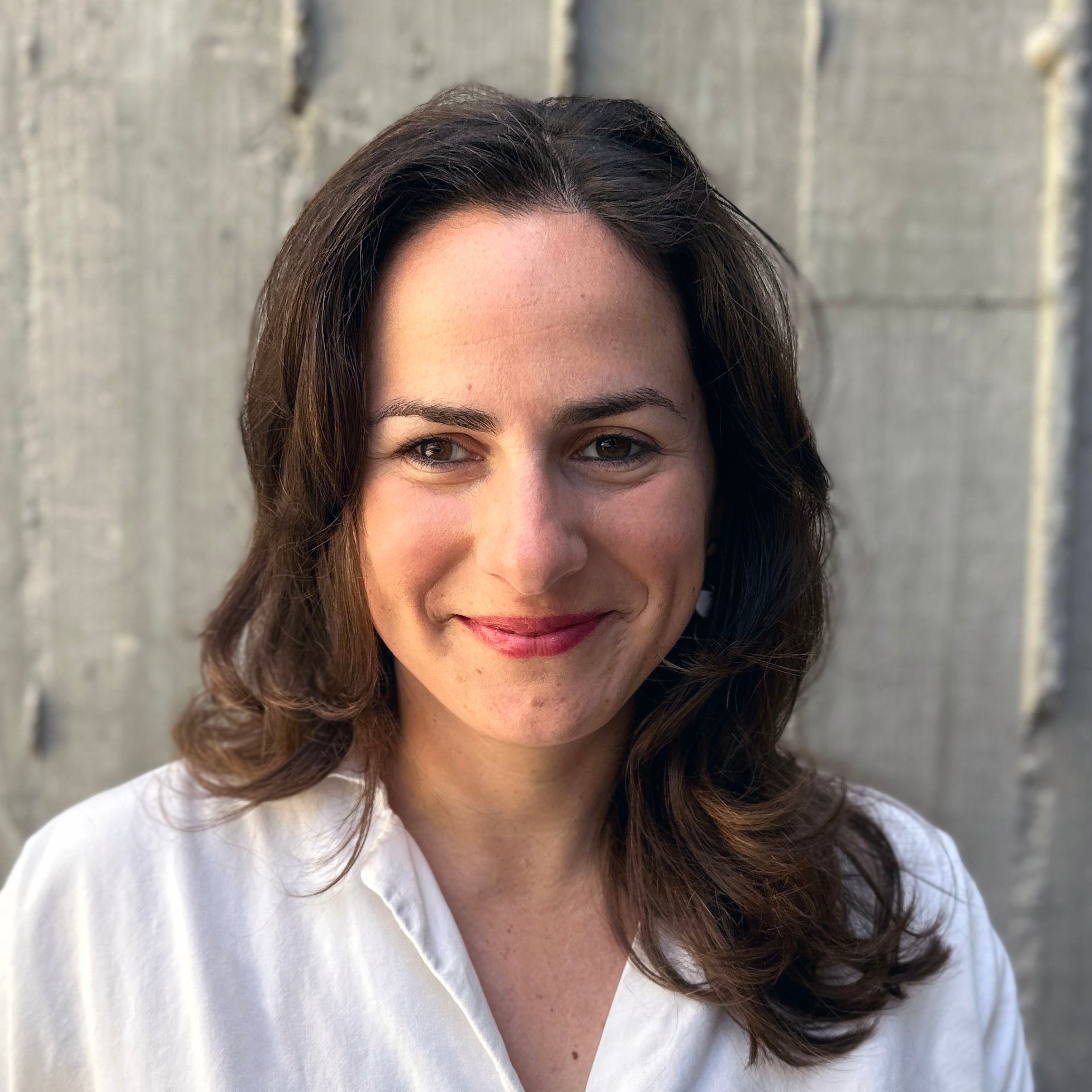 Rachel Gogel is an independent creative executive and educator whose career grew alongside the rise of modern digital design at Meta, The New York Times, and GQ. Since founding her consultancy in 2020, she has partnered with global organizations (Airbnb, Dropbox) and women-led ventures (Chicken & Egg Films, Anew) as a fractional design leader at the intersection of brand, culture, and technology. A queer advocate, Rachel champions marginalized voices through teaching, mentoring, speaking, and writing. Named one of Creative Boom’s “20 graphic designers inspiring us the most in 2025,” her insights have been featured in PRINT, Creative Review, and Designfully. No matter where she is in the world, you can always find Rachel hunting for the perfect chai spot. Learn more: rachelgogel.com.
Related Posts

AI Observer
Raphael Tsavkko Garcia|Analysis
AI actress Tilly Norwood ignites Hollywood debate on automation vs. authenticity
AI Observer
Jameson Proctor|Opinions
Open systems, open futures
AI Observer
Ellen McGirt|Opinions
AI can generate content, but it can’t generate feeling
Business
Kim Devall|Essays
The most disruptive thing a brand can do is be human
Related Posts
AI Observer
Raphael Tsavkko Garcia|Analysis
AI actress Tilly Norwood ignites Hollywood debate on automation vs. authenticity
AI Observer
Jameson Proctor|Opinions
Open systems, open futures
AI Observer
Ellen McGirt|Opinions
AI can generate content, but it can’t generate feeling
Business
Kim Devall|Essays