


Ellen McGirt|Interviews, The Icarus Diaries
February 10, 2026
The face, reconsidered
From literary portraiture to immigrant histories and ancient myth, Jessica Helfand’s evolving painting practice uses AI as a tool of memory. To accompany her new Icarus Revisited series, she is sharing excerpts from her diaries that trace the work as it unfolds
In 2019, artist, designer, writer, and Design Observer co-founder Jessica Helfand published Face: A Visual Odyssey, a compelling examination of the history of images of the human face—from historical mugshots to medical research images to humanoid robots, and beyond. “The face has always been a hieroglyph, at once the instrument of lucidity (we all have one) and an enigmatic canvas (we’re all different),” she wrote in the prologue.
Her timing was impeccable.
With social media and AI, the world has entered an era of human face-centricity, largely against our collective will. (Think: surveillance technology, biometric capture, mass distribution on social media.) As Helfand sees it, we now inhabit “an entire spectrum of seductive technologies—mobile, social, virtual, wearable, and endlessly visual—that challenge how we see ourselves and each other. What happened to our old faces, and how do we get them back?”
That last part turned out to be a clue.
Since the publication of the book, Helfand has been on a visual odyssey of her own, following the threads of her research to produce a body of painting of astonishing size and quality that combines seemingly disparate elements into something wholly new: classical portraiture and artificial intelligence. She has, in many respects, given us our old faces back.
One of her early series, Character Studies, begins with a glorious conceit: how would some of our most beloved fictional protagonists look if they were painted as they were described by the authors who created them? Using the actual words of Jane Austen, Henry James, Marcel Proust, and others as AI prompts, Helfand created painted portraits that infuse the characters with distinct, personal humanity. (With all respect to Kate Winslet, I will never picture Marianne Dashwood any other way again.)
In The Service Society, Helfand scratched beneath the surface of the Boston society portraits created by American artist John Singer Sargent in the late 1800s to uncover a brilliant idea.
“The concept of ‘Boston society’ got me thinking about privilege and its opposite—hidden faces and forgotten stories and silenced, marginalized communities,” she says. What followed was a series of portraits of immigrant servants to the Boston elite, whose faces were informed by AI prompts based on period advertisements, news stories, and recovered letters, many of which described their lives in servitude. (You can learn more about her research here.) The titles of the paintings were often taken from phrases she found in those letters: Four Dollars and The Black, Eighteen Working as Twenty, You’d be a Socialist, Too.
Helfand didn’t just give us our old faces back; she gave us back our histories. And as one of the first fine artists to fully incorporate AI into her practice, she is also helping us glimpse the future.
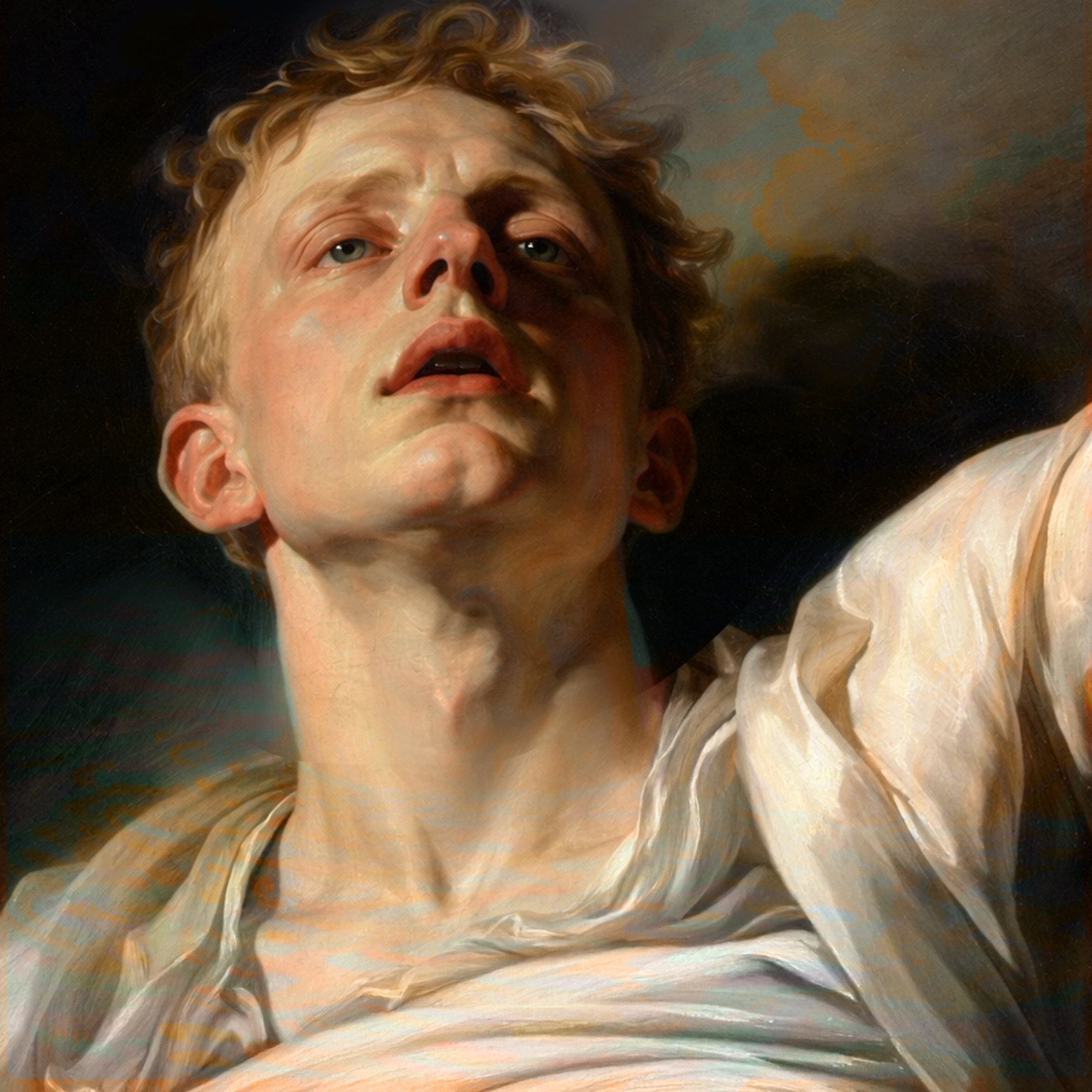
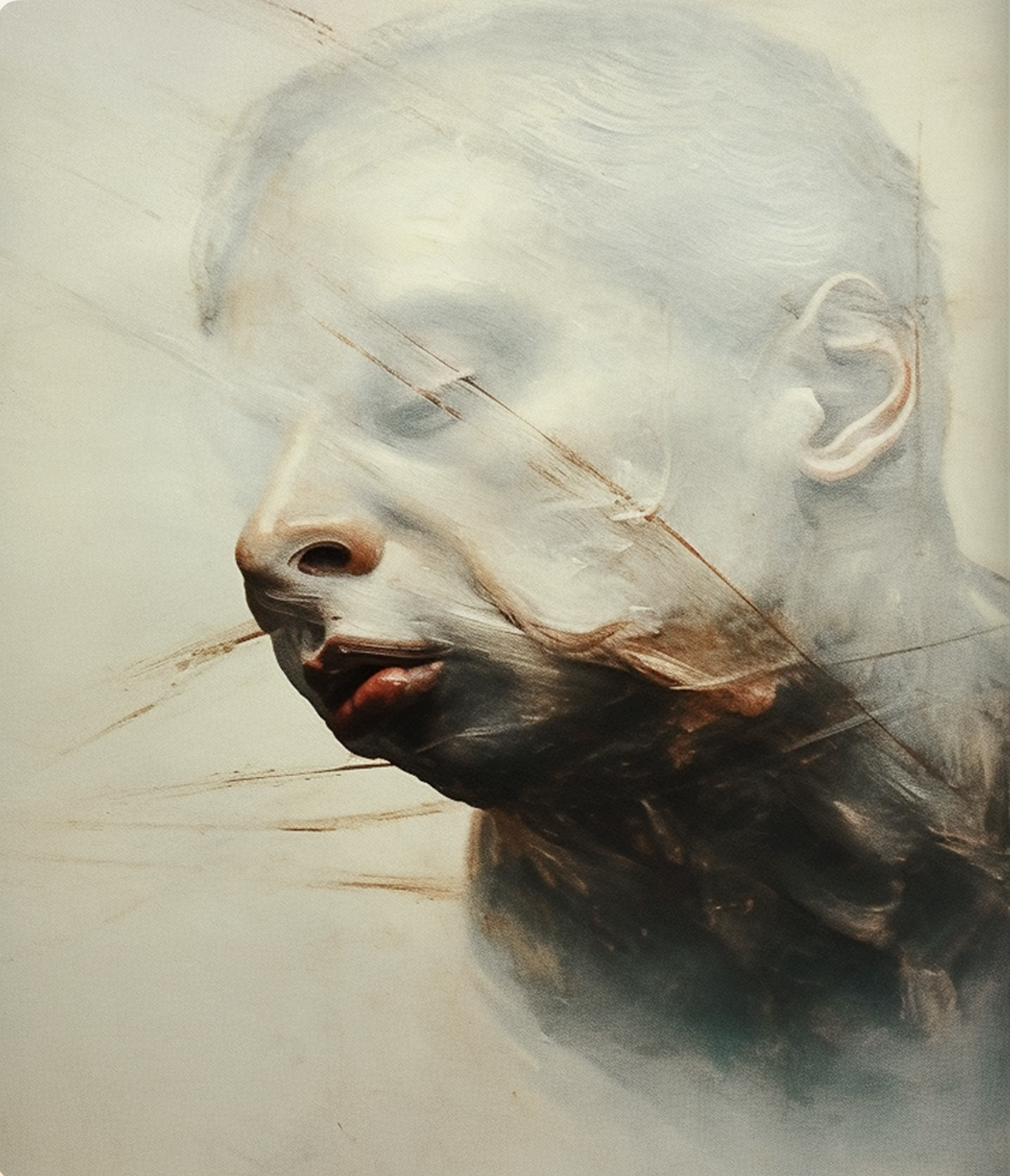
Since 2025, Helfand has been hard at work on Icarus Revisited, a new series that redirects our focus away from Icarus’s body in free fall—the cautionary tale—and toward his face, the window into his inner life. “My primary interest lies in experimenting with myth but also with memory, approaching the larger story as a series of shorter scenes, Icarus himself revived across a range of characters,” she says.
To accompany the Icarus series already in progress, I’ve asked Helfand to share her diary entries and other studio musings as she works. It is a voyeuristic experiment of sorts—an attempt to peek into her artistic process, but also a selfish one: to experience her work as a series of prompts that are entirely human in nature. (And before they find their way into her next book, which I feel certain is incubating in her brain right now.)
Below, I asked Helfand to introduce us to her process by sharing details about her new life as a full time artist.
Q: How do you prepare your body for the physical business of painting?
I get a LOT of sleep. Yoga and going to the gym help too, mostly because I paint standing up and my arms need to be relaxed, especially when I am working on something very large and need ladders. I have to remind myself, too, to stop every once in a while and just sit and look. Very occasionally, I hang something upside down (an old art-school trick) but mostly it is all in the looking. A painter friend of mine once confessed to me that for every hour he spends painting, he spends at least two hours just looking. The body, I believe, needs to make room for quiet contemplation as much as it needs to be ready to engage in the physical work of painting. It’s all active duty.
Q: How do you prepare your mind for the intellectual business of recognition?
Helfand: Such an excellent question and again, curiously, it’s a question of relaxation. Maybe a question of trust. If my mind is relaxed, it is open to discovery. If my mind is open to discovery, the path may appear less certain but the experience is far more compelling.
I should add that leaving the studio does not mean abandoning this process. I think of things while driving, or swimming, or cooking, even (especially) in the middle of the night. If you’re engaged in your work, it need not be dependent on location, and sometimes getting out of the studio is the best thing I can do to keep things moving.
One critical element of my studio practice is auditory. I listen to a lot of fiction—books on tape—which relaxes not just my mind, but my imagination. I have observed in the past that I paint like a method actor: going deep into character and backstory, something so critical, to my mind, for developing a portrait, especially the kinds of portraits I am interested in making: speculative portraits, amalgamations of disparate parts and pieces.
Q: Does your work affect your dreams?
Helfand: Not generally, but I have been known to go back into the studio at night before going to bed, just to say good night to everyone. (The method acting thing, maybe?)
Q: How do you parse the need for isolation to do your work, and the need to be connected to understand the world?
Helfand: I think I probably parse it poorly, or at the least, unevenly. Too much isolation is as bad as too little. But if I had to choose, I’d take the sanctuary of the studio over the endless noise in the world, hands down, any day.
One of the great advantages of incorporating technology into my work is that there is always a way to bring the outside in. If I am painting in a snowstorm, and unlikely to get out for a few days, this might mean doing something as simple as listening to NPR. But there are many ways to do this.
As far as AI is concerned, I am beginning to think that a very accurate dosing of input is not even remotely possible. In my first series—The Service Society— I experimented with language drawn from the letters and diaries of long-lost people, with the idea of infusing my paintings with some kind of human clarity simply by invoking their words. As the project wore on, I began to detect patterns, which affirmed my suppositions, but I worried that I was locked in a closed feedback loop. Had I inadvertently shifted something by re-using language I’d found, only to see it relayed back to me? A false affirmation, if so.
Q: What is a prompt you used, perhaps as a throwaway, that yielded the biggest surprise?
Helfand: At one point during my explorations for The Service Society, I added the phrase “Downton Abbey” and was dazzled by what I saw. AI understands pop culture references better than I would have ever imagined. (This also explains why the introduction of more obscure references often disappoints.)
Q: Research is a wander, a rabbit hole, a nailbiter; it can also be a dead end filled with false promise. When do you abandon your path? How do you know what you’re looking for?
Helfand: I think the best rabbit hole research is when you stumble on an adjacency: a word that veers from expectation, far from the path of intended outcome, setting you in a direction you could not possibly have intended. It’s so easy to resist the pull of something that’s not front-and-center, but honestly, I live for those moments.
And to be honest, this kind of slippage is precisely what I am basing this new work upon. A word, a phrase, an indication, an interpretation: how something as subtle as a feather—literally—can change the direction of an idea. A bird feather is not an eagle feather. A bird wing is not an insect wing. Sometimes my sketches lead me to surprising experiments with gender, race or age. I love those moments, and go where they lead.
I make hundreds of sketches, countless variations on light and shadow and position and tone. Because my focus is the face—something so fundamental, that visual grammar of two eyes and two ears, one nose and one mouth—I am always looking for something more: dislocation, malaise, a kind of emotional veracity. There are days when I think, at least in a developmental sense, I work less as a visual artist and more like a casting director. And here is where I want to mention that because I began my creative life as an actor—an actor who hated to audition but loved the chance to be someone else on stage for two hours every night—I am looking for people I want to know. I may not spend two hours looking to every hour painting, but I do roll around inside the minds of these imagined characters like an understudy, memorizing motives, tracking mood. My children refer to the people I paint as my imaginary playmates. (They’re not entirely wrong.)
False promise is everywhere, and there are days when I can’t get anything started, where every effort feels like a weak and watered-down copy of something I have already done. That line between creating a cogent body of work and repeating yourself is a slippery slope for all artists.
This is where impostor syndrome sometimes creeps in. You question everything, revising, renewing, digesting, doubting. This is, I think, a particularly brutal part of artistic practice.
Philip Guston said it best. “When you’re in the studio painting, there are a lot of people in there with you: your teachers, friends, painters from history, critics… and one by one if you’re really painting, they walk out. If you’re really painting, YOU walk out.”
Q: If you were to ask your favorite LLM what they’ve learned from working with you, what do you think they would say?
Helfand: I’m not sure I have a “favorite LLM” but I suspect that if they talked back, they’d say they wish I wouldn’t repeat myself so much.
I do think, however, that this repetition does serve a purpose: fine-tuning a prompt is not any different from mixing colors, is it?
I am currently pulling language from Latin and Greek, poems and song lyrics, anecdotal phrases and archival sources, in a loose attempt to build a kind of Icarus lexicon. I have this fantasy that repopulating the AI water source with more unusual / powerful / meaningful language can only be a good thing.
Q: Did you try it?
Helfand: No, because that would be like Googling myself, and then what you get is just a dumpster dive of your greatest (or in my case, not so greatest) hits.
Q: Can you name three things that have changed about your practice since you began?
Helfand: Many years ago when I was a resident at The American Academy in Rome, I walked to the art supply store one morning, bought a large piece of (expensive) drawing paper, brought it back to my studio and promptly ruined it. At lunch that day, I ran into one of the artists in residence, and—shamefaced—told her what I’d done.
Nodding reassuringly, she said: “You have to be gentle with yourself with time, and materials.”
It took me many more years to take this to heart, but in the past two years I have begun to use better paint and better canvas and better brushes, and it has made a huge difference in my work.
The second thing is not that dissimilar: I have learned to honor my studio time. In the early days, I thought calling myself an artist was pretentious. Did that change when I began selling my work? A bit. But the real change came when I allowed myself to pay attention to my practice, to bear witness to it—frankly, just to show up for it. The late, great David Pease—longtime Dean at the Yale School of Art and a great mentor and friend to me—once said: “Sometimes, when you go into the studio in the morning, all you can really do is sharpen your pencils.”
The third thing is to trust my gut. People say things that wound you, or belittle you, and it’s hard when you produce this work in isolation, believing, perhaps wrongly, that you actually have something to contribute.
At my most recent exhibition in New York last spring, a woman came up to me at one point and said: How come all of these people have the same nose? (They don’t, by the way.)
And I replied: Maybe because they were all painted by the same artist.
At the beginning, that sort of thing would have made me feel like a total fraud. But now, I actually feel that the work I make is an extension of everything that’s come before. My theatre training. My design training. My love of photography and collage, my experience editing images, my love of the written word, of the power of language and voices and maybe most of all, my obsession with history in all its forms. Honestly, if the worst thing is repeating a nose now and then, I think I’m OK.
Q: What about making these paintings do you love?
Helfand: I love coming into the studio in the morning and reviewing the previous day’s work.
I love painting skin, thinking about the luminosity of color as it blends slowly to achieve depth. Sometimes I feel I am staining the canvas, other times moulding it, physically, one layer at a time. I love bringing these people to life, and in an era that is likely to be remembered for its obsession with screens, doing this on canvas is hugely rewarding to me. I love the aromas of the studio, and the feel of a new brush. (I am hard on brushes, and go through a lot of them.)
Q: Dread?
Helfand: I dread coming into the studio in the morning and reviewing the previous day’s work.
I dread posting an image on Instagram and waiting for the first comment. To be fair, Instagram is a Godsend for artists: I often receive private inquiries about my work, and have had quite a few sales come from these exchanges, but if the first comment is critical or mean, it derails the rest of the conversation.
I dread conversations with people who think AI is the scourge of humanity, that it is coming for our jobs and our minds and our independence. I use AI as an experimental part of my studio process. All artists appropriate: it’s how to do so, and how much to do so, that makes this an fascinating proposition (for any artist).
Q: Is the world still capable of understanding metaphor?
Helfand: A beautiful question that I could not possibly begin to answer, but it does come back to that rabbit hole of adjacencies. My curiosity about Icarus is taking me toward all kinds of things I did not imagine, and the kind of transference that metaphorical thinking allows—idea to word, word to prompt, prompt to image—sits at the core of this endeavor. Sometimes the results are staggeringly simple: yesterday I learned that the common blue butterfly is called the Icarus butterfly. What a thought! Then I read that the adult Icarus butterfly lives approximately three weeks, and suddenly I am back thinking about the tragically short life of a beautiful, winged boy.
Q: What do you do when you don’t know what to do?
Helfand: I sharpen my pencils.
Read Jessica Helfand’s reflections on the series in the diary entries below:
Jessica Helfand|The Icarus Diaries
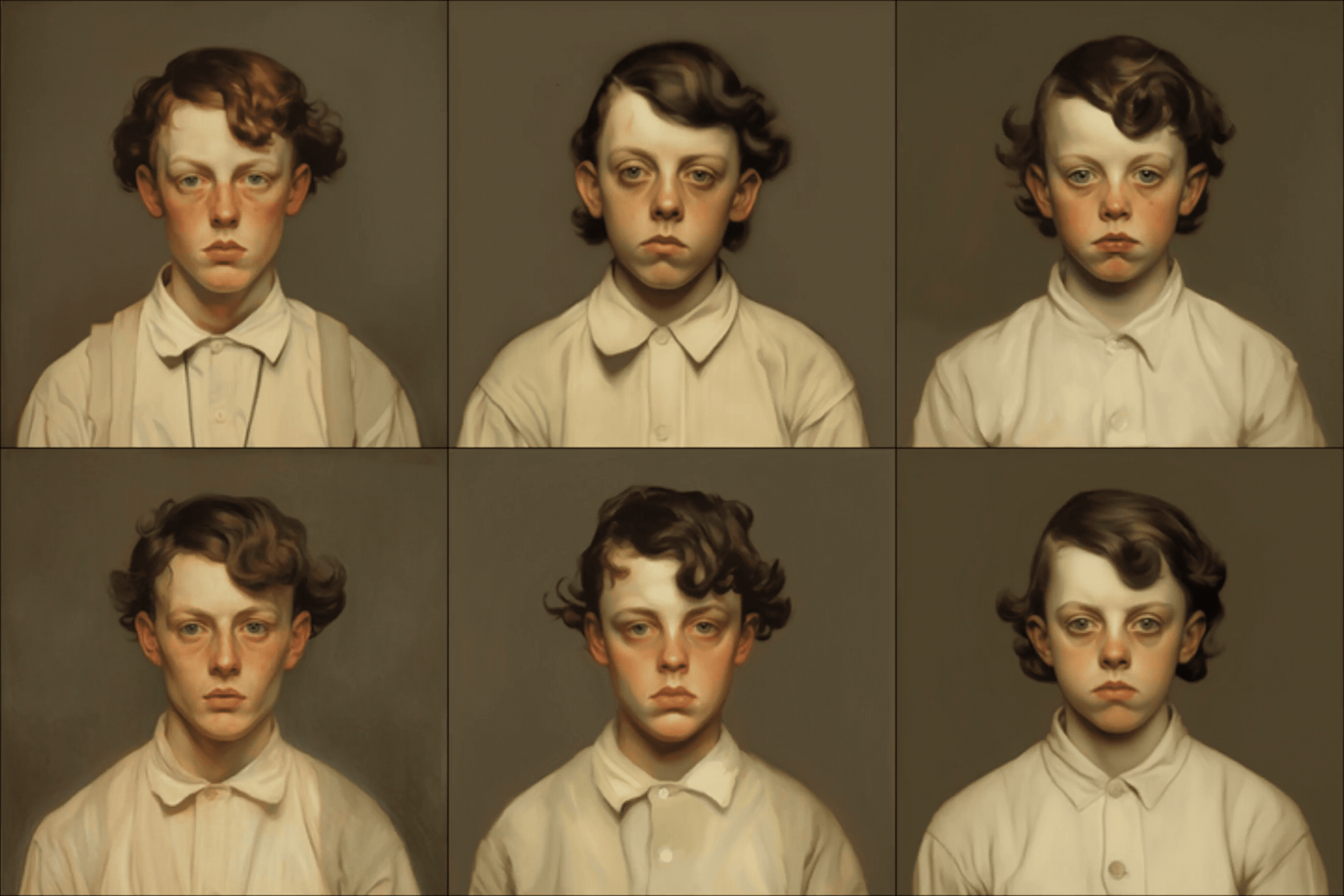
01: Facing Icarus
I am working on a series of paintings about Icarus, beginning, as I always do, by making sketches and combining them in AI with specific texts—in this case, from Ovid—who famously wrote about Icarus in book eight of his fifteen-volume epic poem, Metamorphoses.
Jessica Helfand|The Icarus Diaries
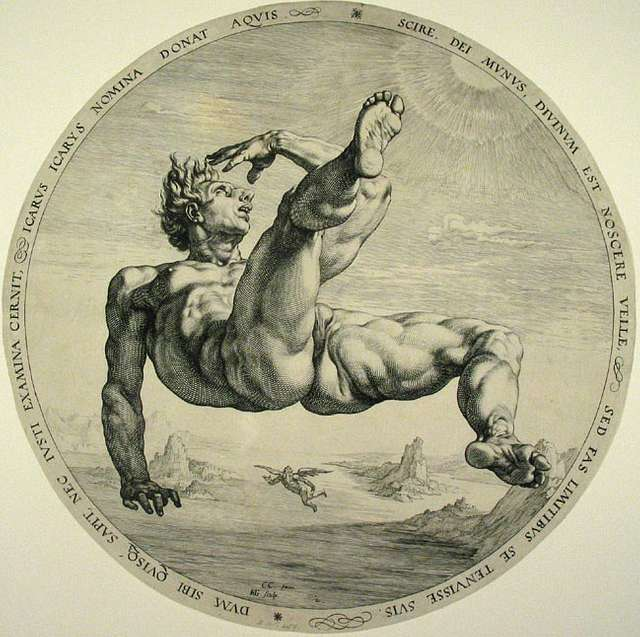
02: The Backstory
Classically, Icarus is shown as a fallen angel, muscled body in freefall. The focus is on his flight, not his face. But who was he, really?
Jessica Helfand|The Icarus Diaries
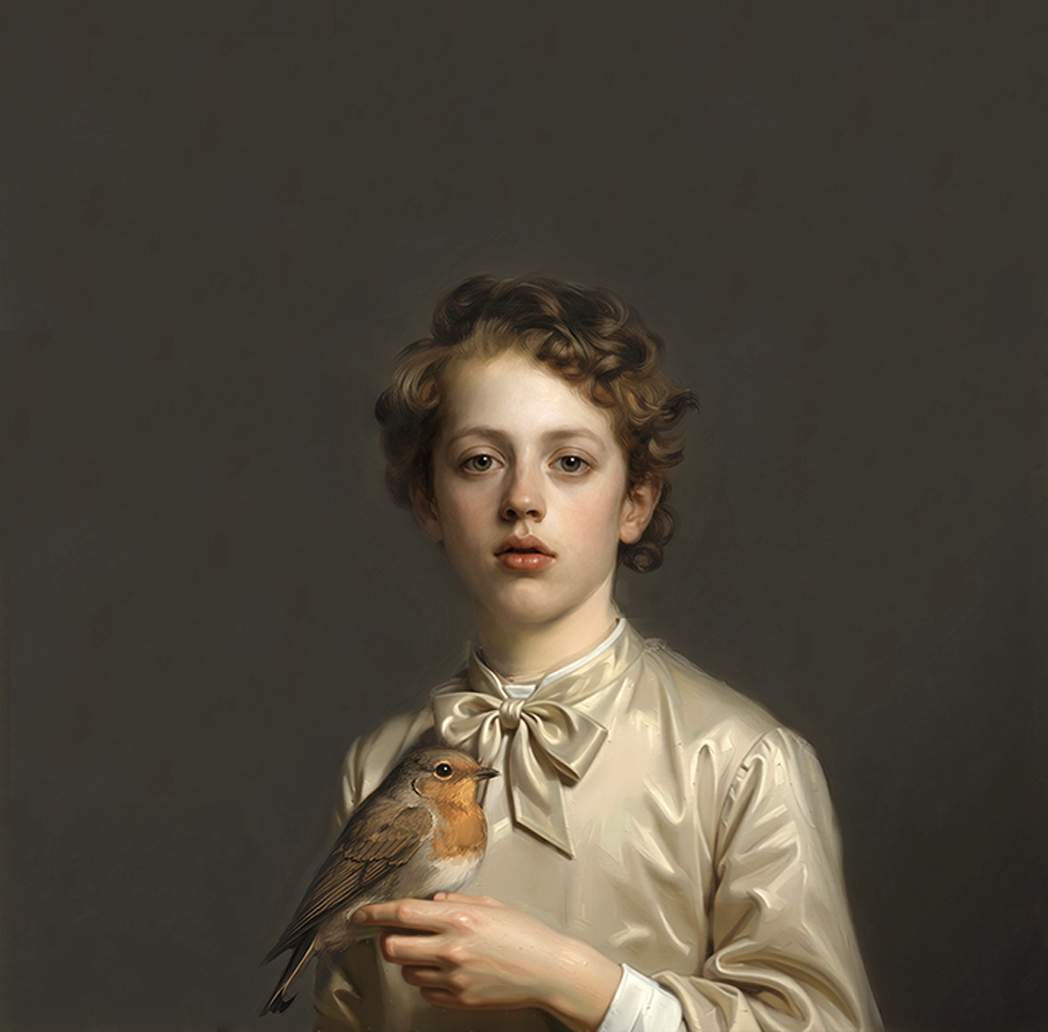
03: Born to Fly
I imagine Icarus as a child, dreaming of adventure. A double portrait of a boy and a bird. A moment of stillness, calm before storm.
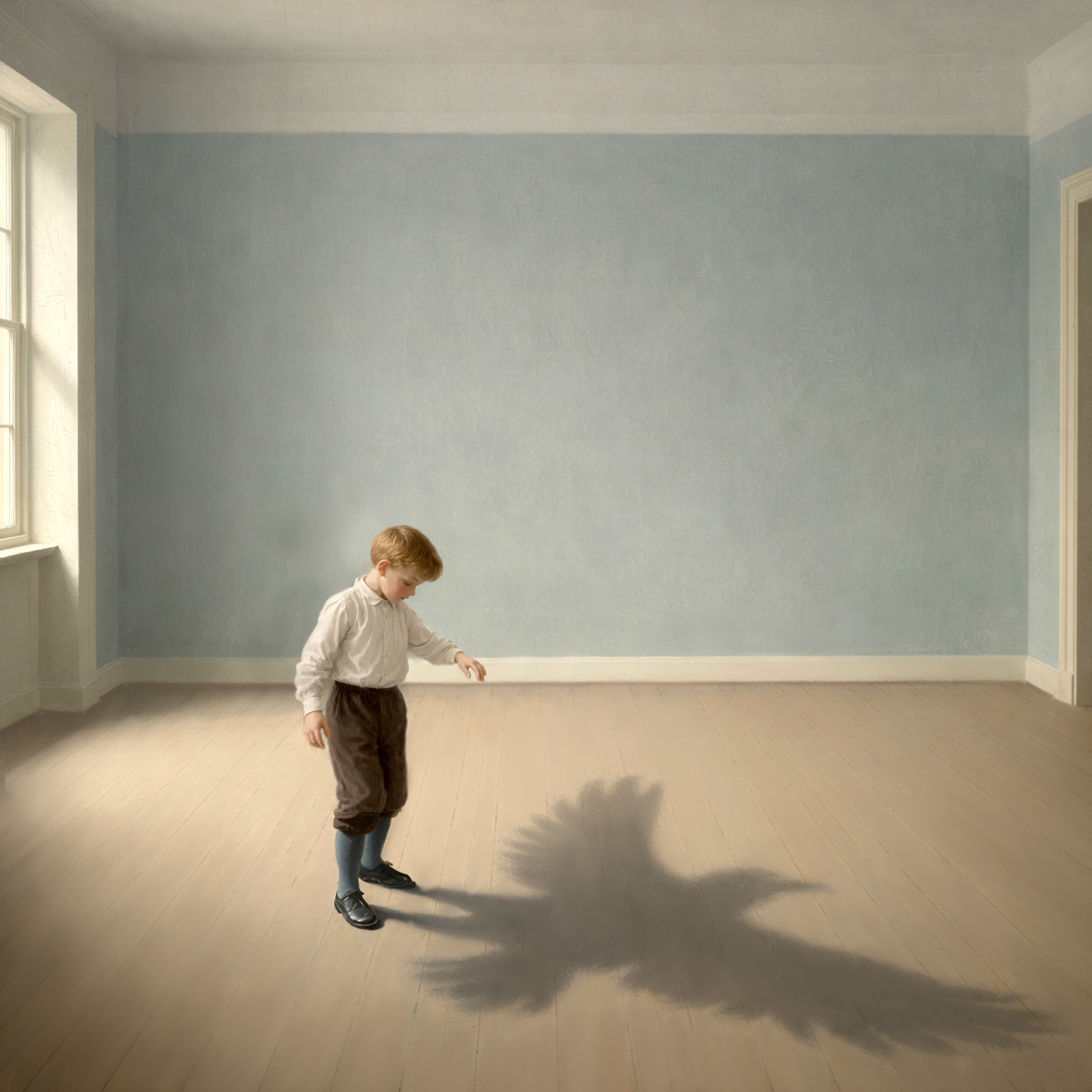
Jessica Helfand|The Icarus Diaries
04: Shadow Box
Flare up like a flame, wrote Rilke,and make big shadows I can move in.
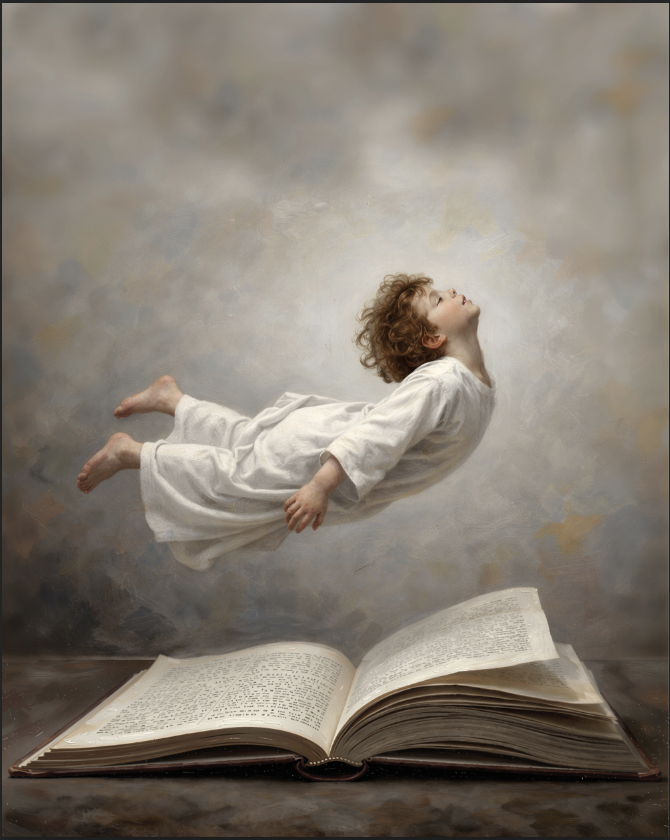
Jessica Helfand|The Icarus Diaries
05: Waxing
I am finding Icarus references everywhere. He’s a symbol for so much: adventure and aspiration, peril and mishap, the embodiment of recklessness, the fragility of youth. I’m still stuck on the youth part.
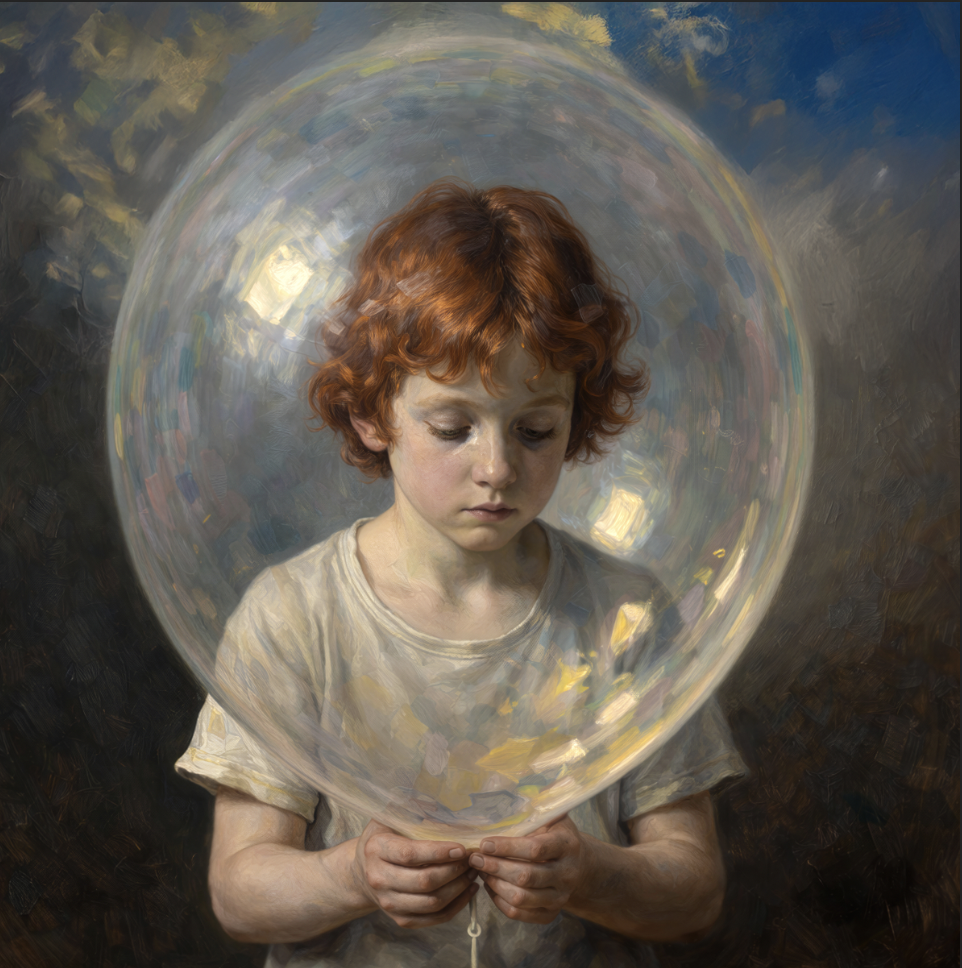
Jessica Helfand|The Icarus Diaries
06: Every Man His Own Balloon
I’ve been thinking about halos. And the halo effect (which is its own kind of myth). The simplicity of that geometric form, a simple curvature above the head. The perfection of it. The divinity of it.
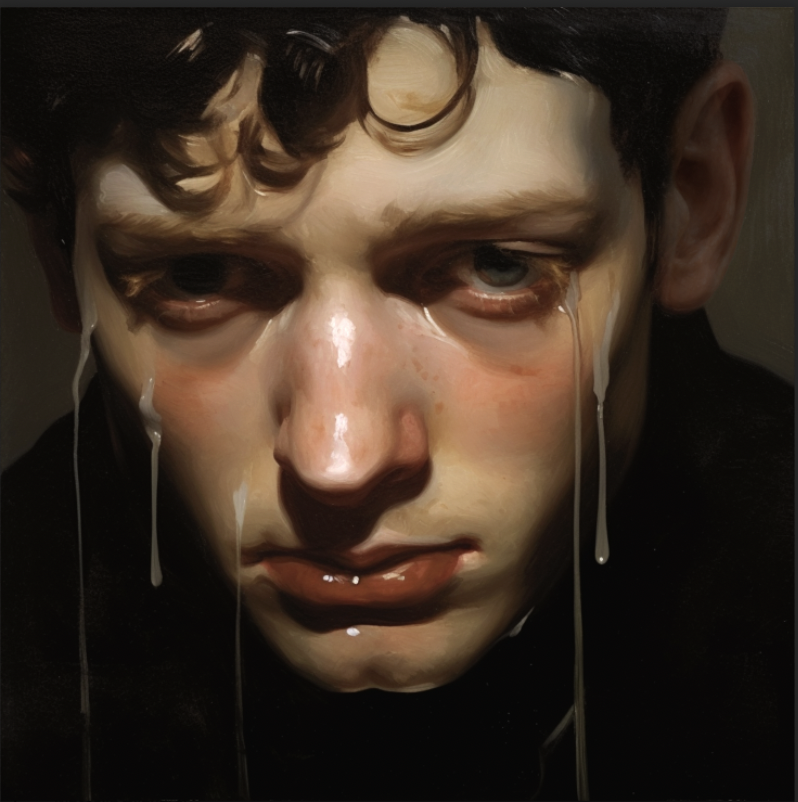
Jessica Helfand|The Icarus Diaries
07: Meltdown
I have been thinking about wax as a medium for simulation, about how I might use it to morph or maneuver the skin into some kind of altered state. Tissue stripped away, facial integrity diluted. A face that dissolves.
Jessica Helfand|The Icarus Diaries
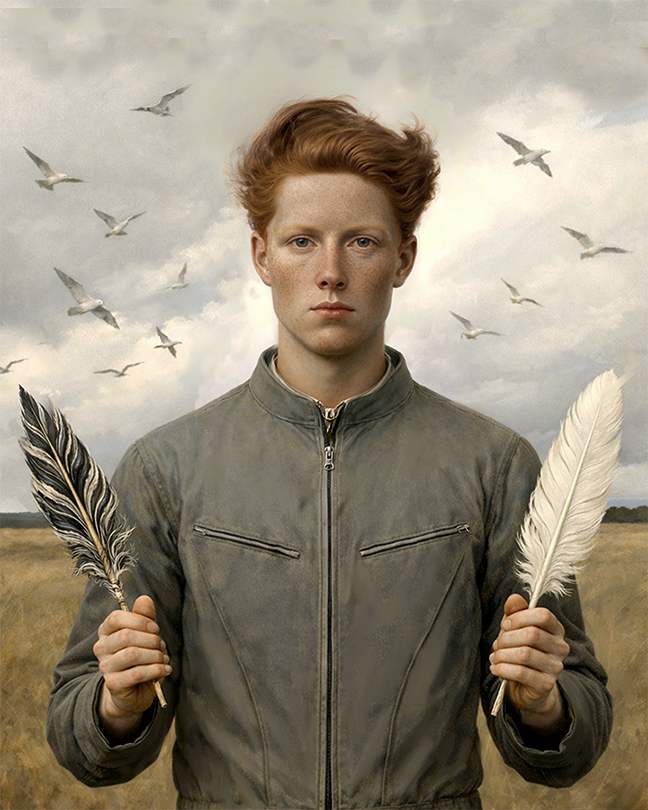
08: Featherweight
Recently I have been thinking of Icarus as a kind of footsoldier, out scavenging in an open field. Acquiring his arsenal. Gathering materials, and weighing his options. (Weighing his fate.)
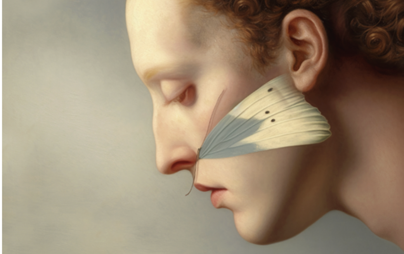
Jessica Helfand|The Icarus Diaries
09: Hullabaloo
Polyommatus Icarus is known colloquially as the common blue butterfly. Its adult lifespan lasts, on average, two to three weeks.
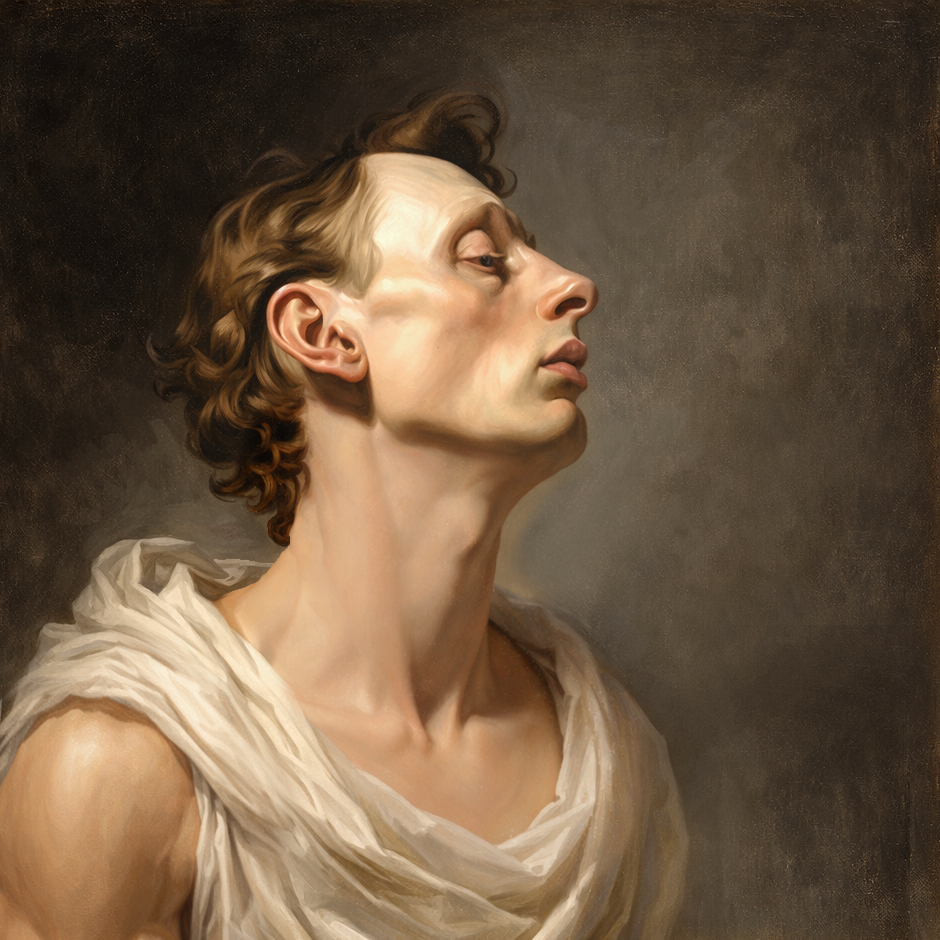
Jessica Helfand|The Icarus Diaries
10: Precipice
I have been thinking about Icarus’s father, Daedalus, and about the often persistent impasse between adults and adolescents that is hardly unique to Greek myth. Unspoken rivalries. Complex legacies. A parable of a different sort.
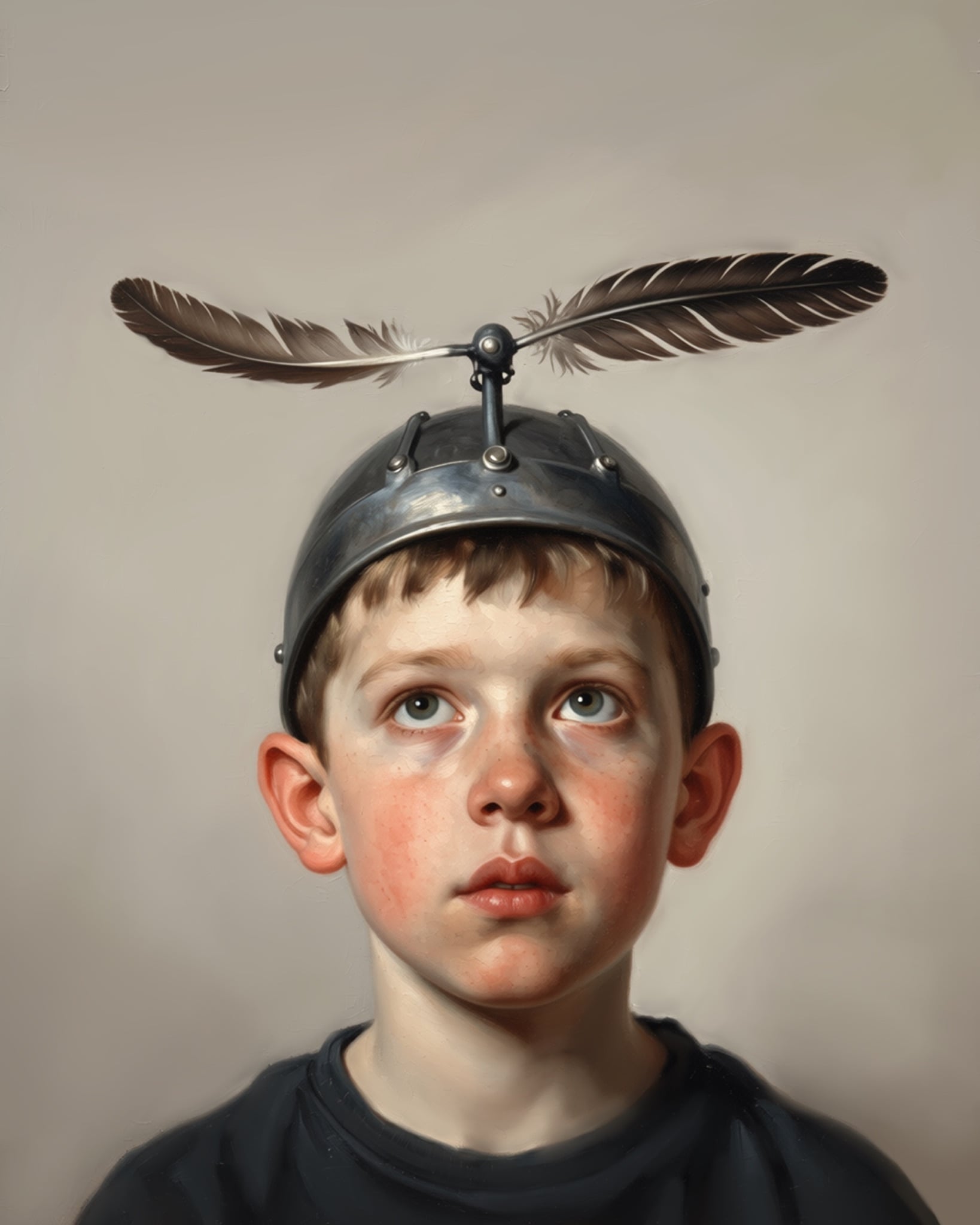
Jessica Helfand|The Icarus Diaries
11: Propeller
Read the introduction to this series. David Moolten imagines Icarus as an immigrant, adrift on a wayward voyage: He doesn’t fall into the sea, but back Toward Russia Bill Callahan imagines him in hiding: Young Icarus flew at night for years He flew and flew and flew … As obsessed with evolution as ever From a … Continued
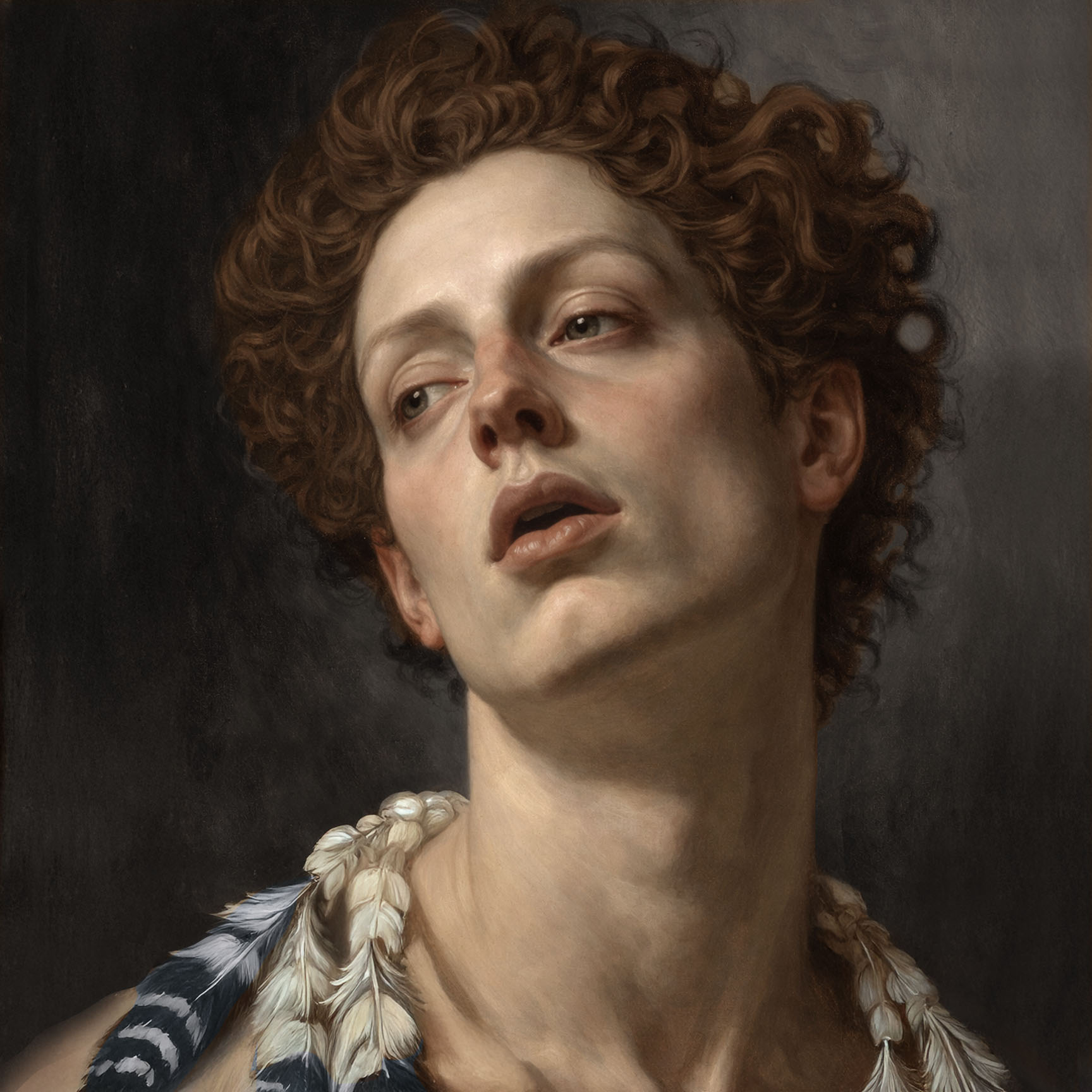
Jessica Helfand|The Icarus Diaries
12: Scout
Read the introduction to this series. Sometimes when I slow down, strange things start to happen. Random associations. Curious deviations. I start to make mistakes, and (I think) the paintings become more interesting. Honor thy error as a hidden intention. (Brian Eno in Oblique Strategies.) I consider gravity—as in the graveness of the situation, and the … Continued
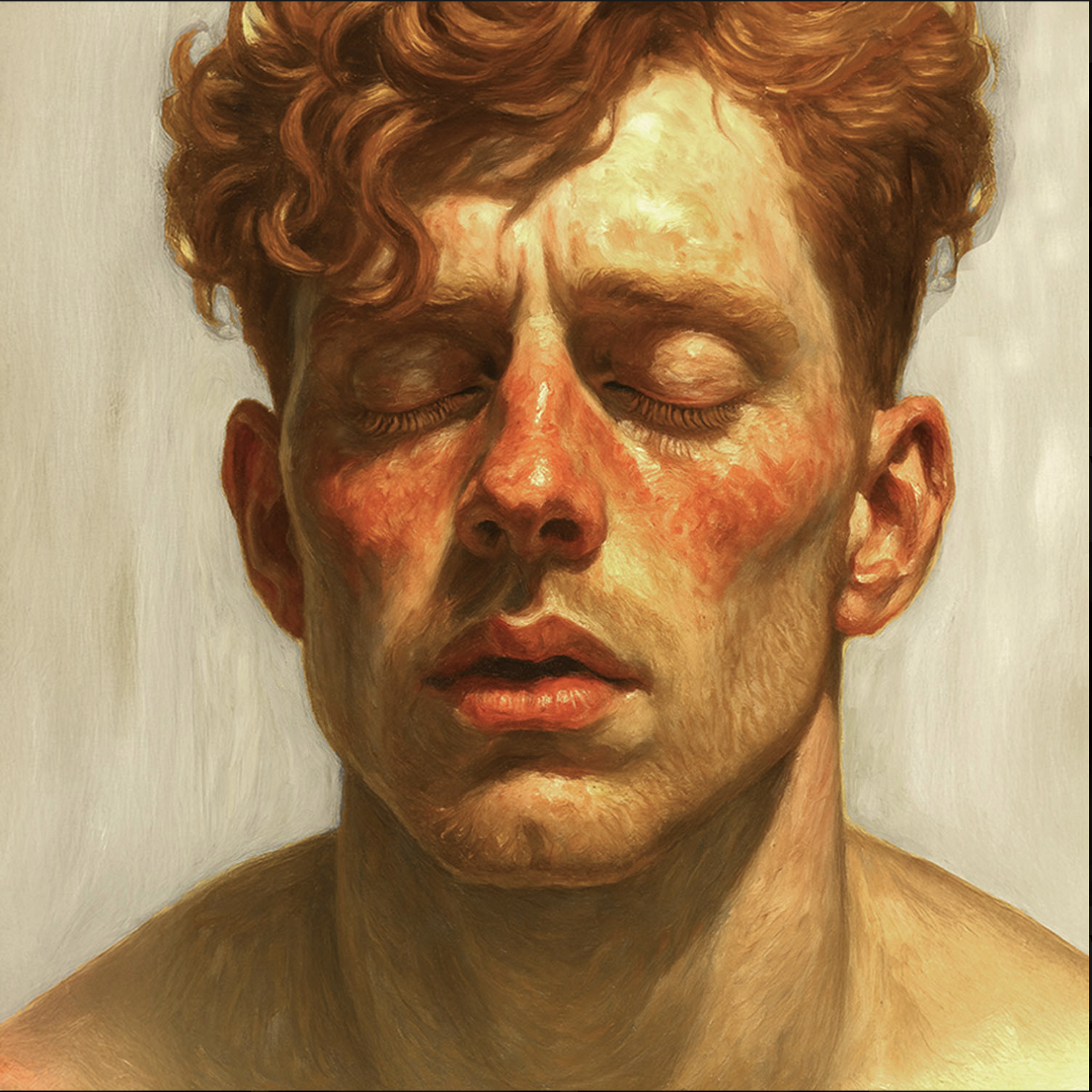
Jessica Helfand|The Icarus Diaries
13: Fire
When I was a student, Gaston Bachelard’s The Poetics of Space was our bible. It never occurred to me to look for other things he wrote and it turns out that he wrote an entire book on the psychoanalysis of fire.
Jessica Helfand|The Icarus Diaries
14: Puppet
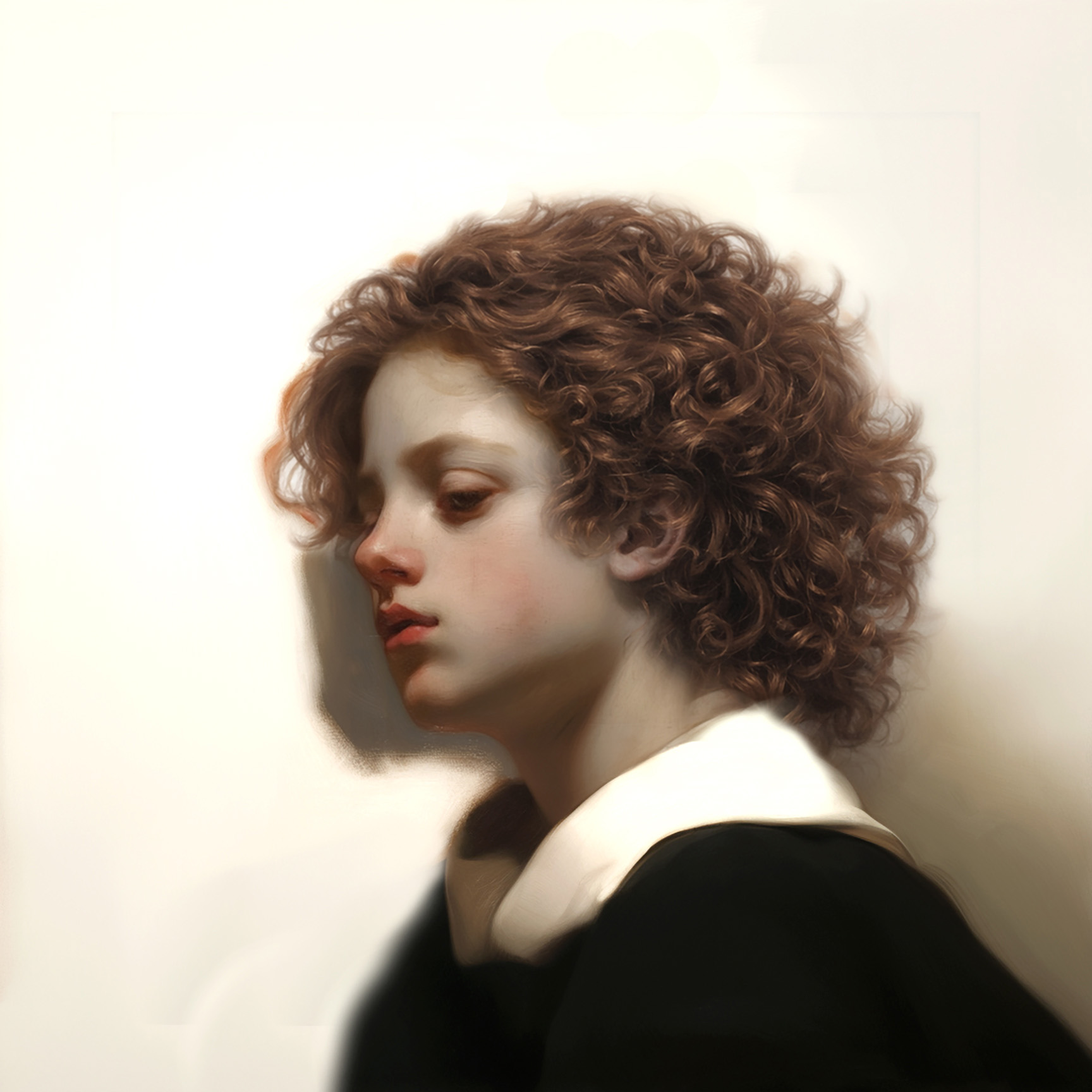
I am picturing Icarus as a choir boy, isolated against a bright background as though pulled from a lineup. Ringlets, voice still high, dressed to fit in with the chorus. The gaze is downward, uncertain, mercurial.
Jessica Helfand|The Icarus Diaries
15: Flight Plan
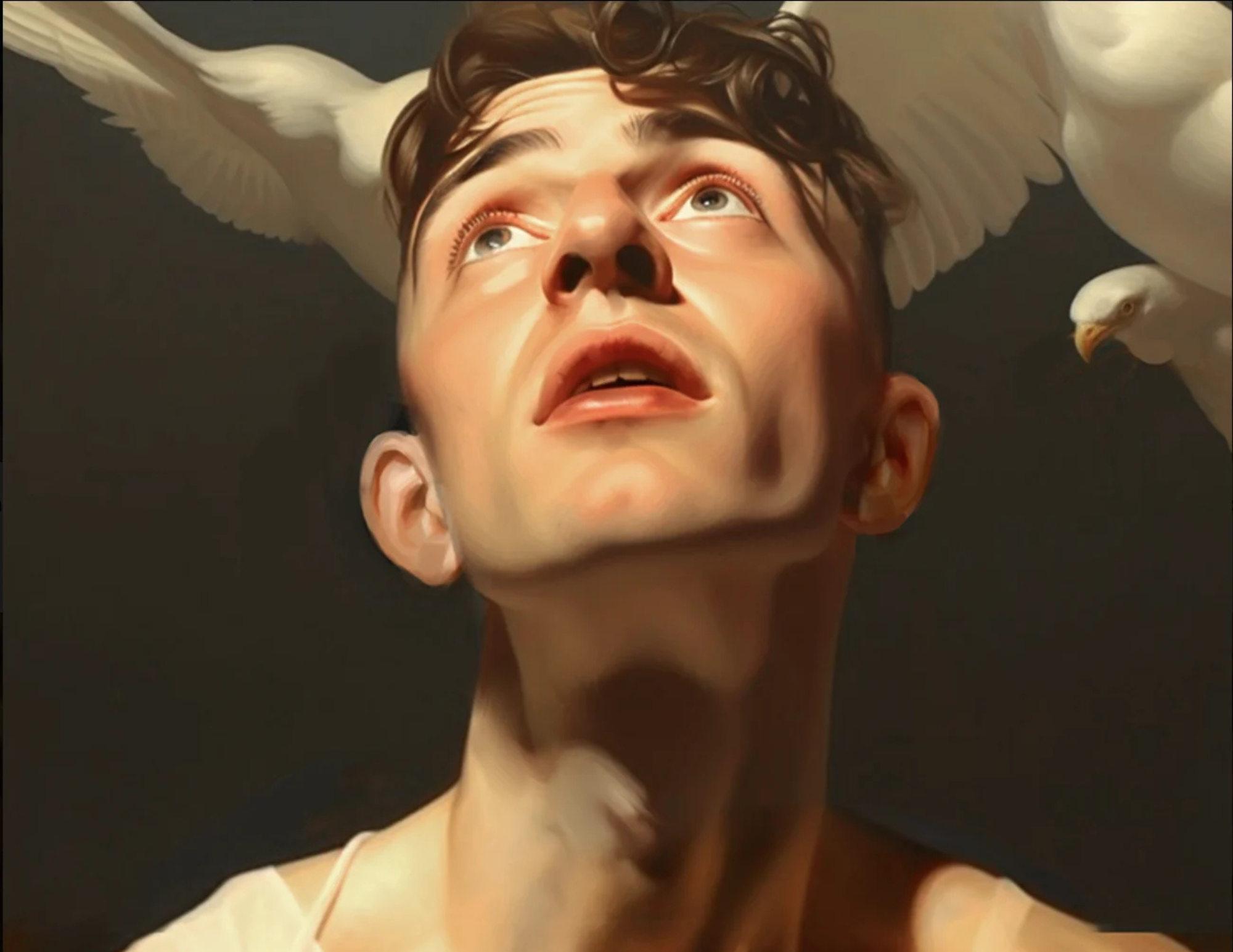
Auden calls Icarusa boy falling out of the sky. I think about that sky and, and what else it might offer. Obstacles. Miracles. Birds.
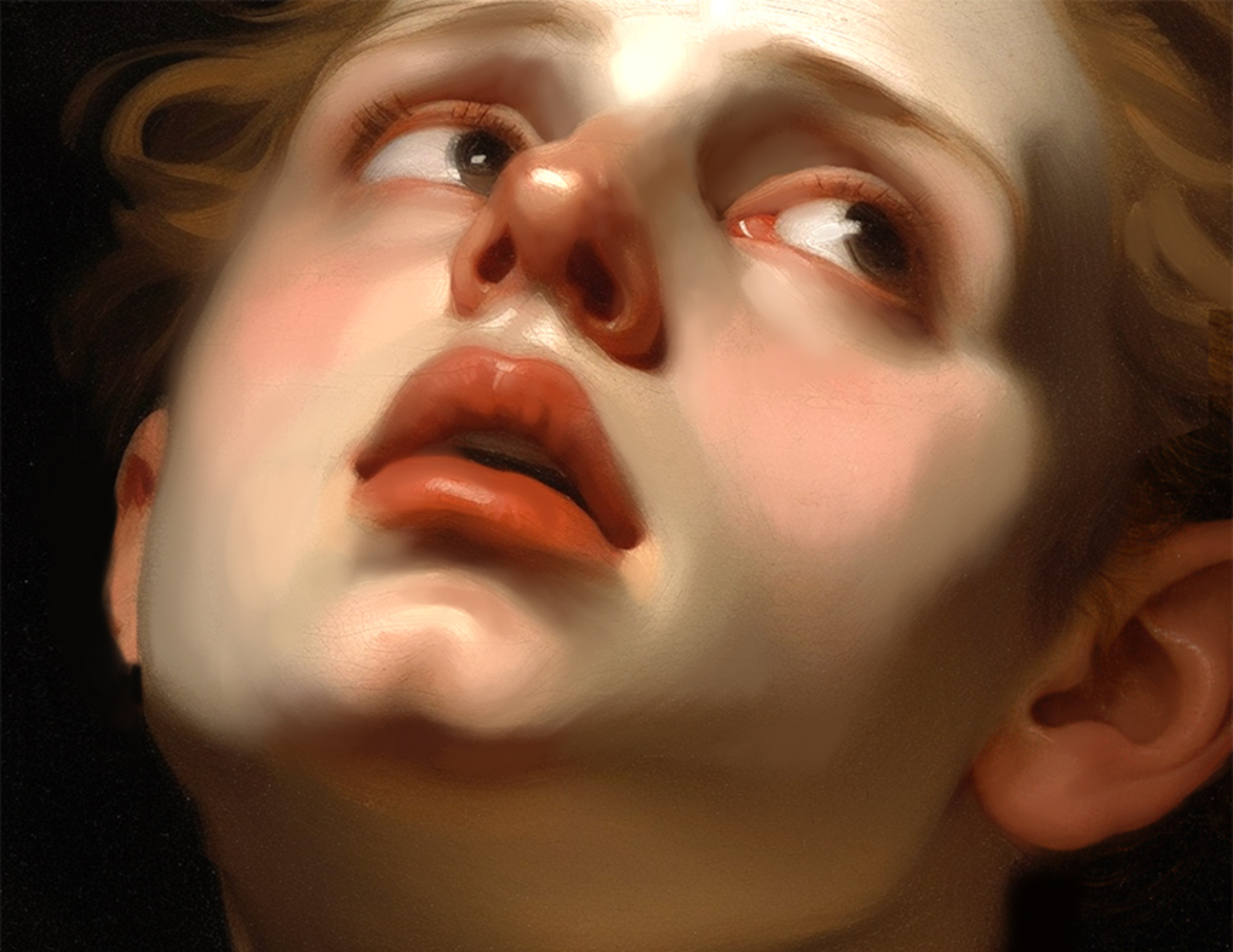
Jessica Helfand|The Icarus Diaries
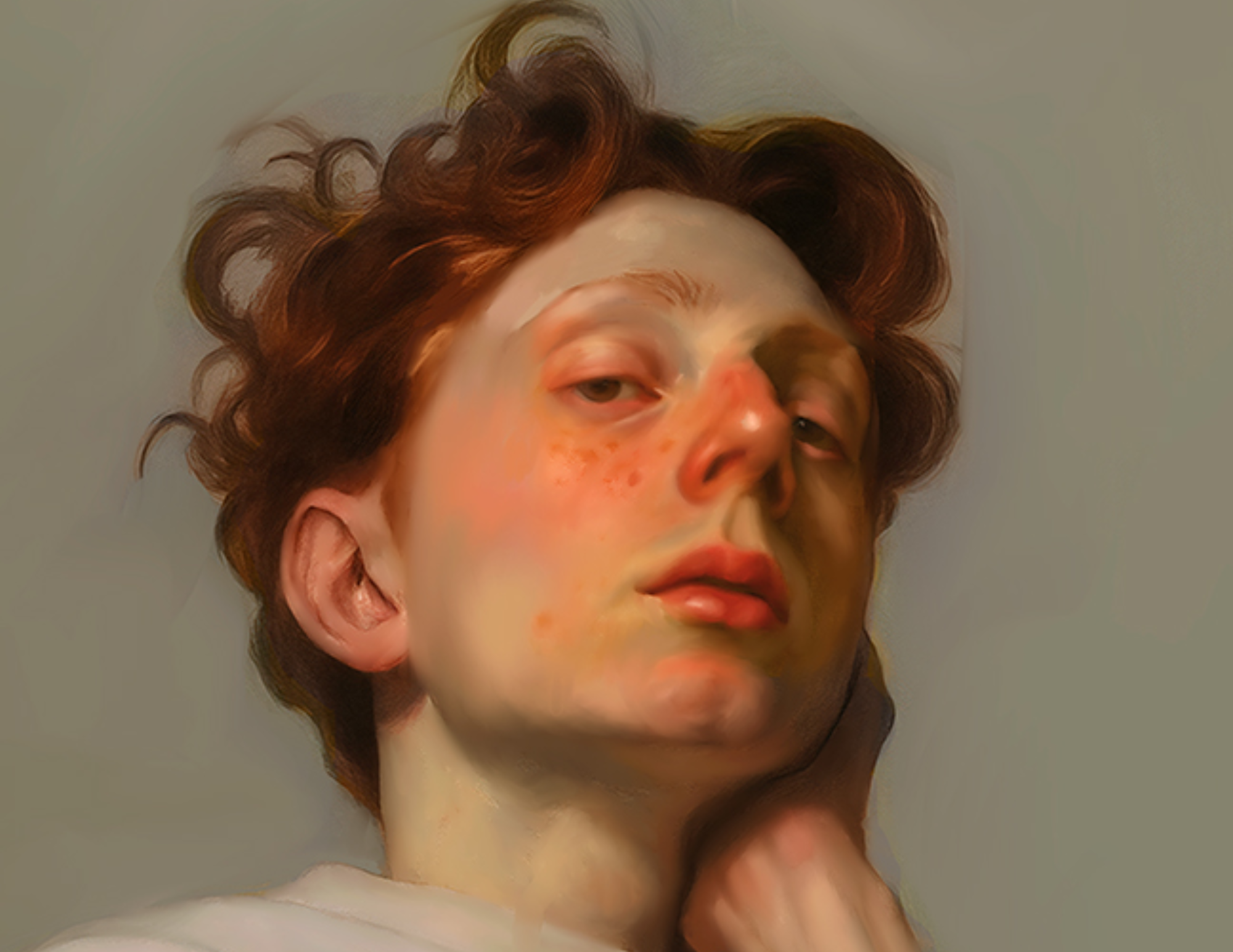
16: Seeing Red
Today was a hard day in the studio. I made a lot of mistakes. I had to start over and over and over again. I hated everything I did. Poor decisions. Many of them. Most, actually.
Jessica Helfand|The Icarus Diaries
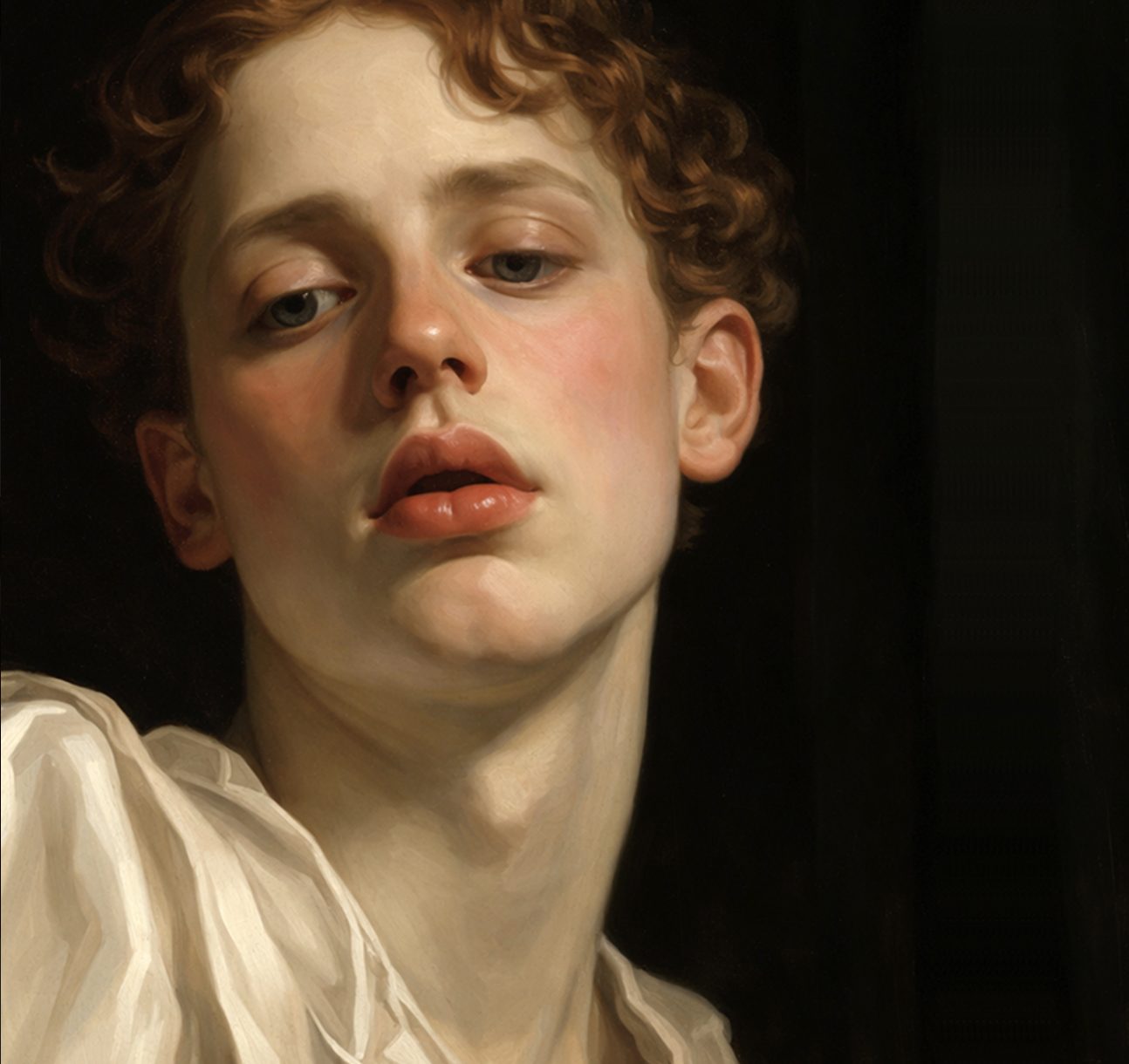
17: Solar Complex
An Icarus Complex is a psychiatric classification characterized by extreme ambition, high-risk behavior, and recklessness. To be Icarian is to be excessively ambitious. Foolhardy. Possibly (probably) to some extent delusional.
Jessica Helfand|The Icarus Diaries
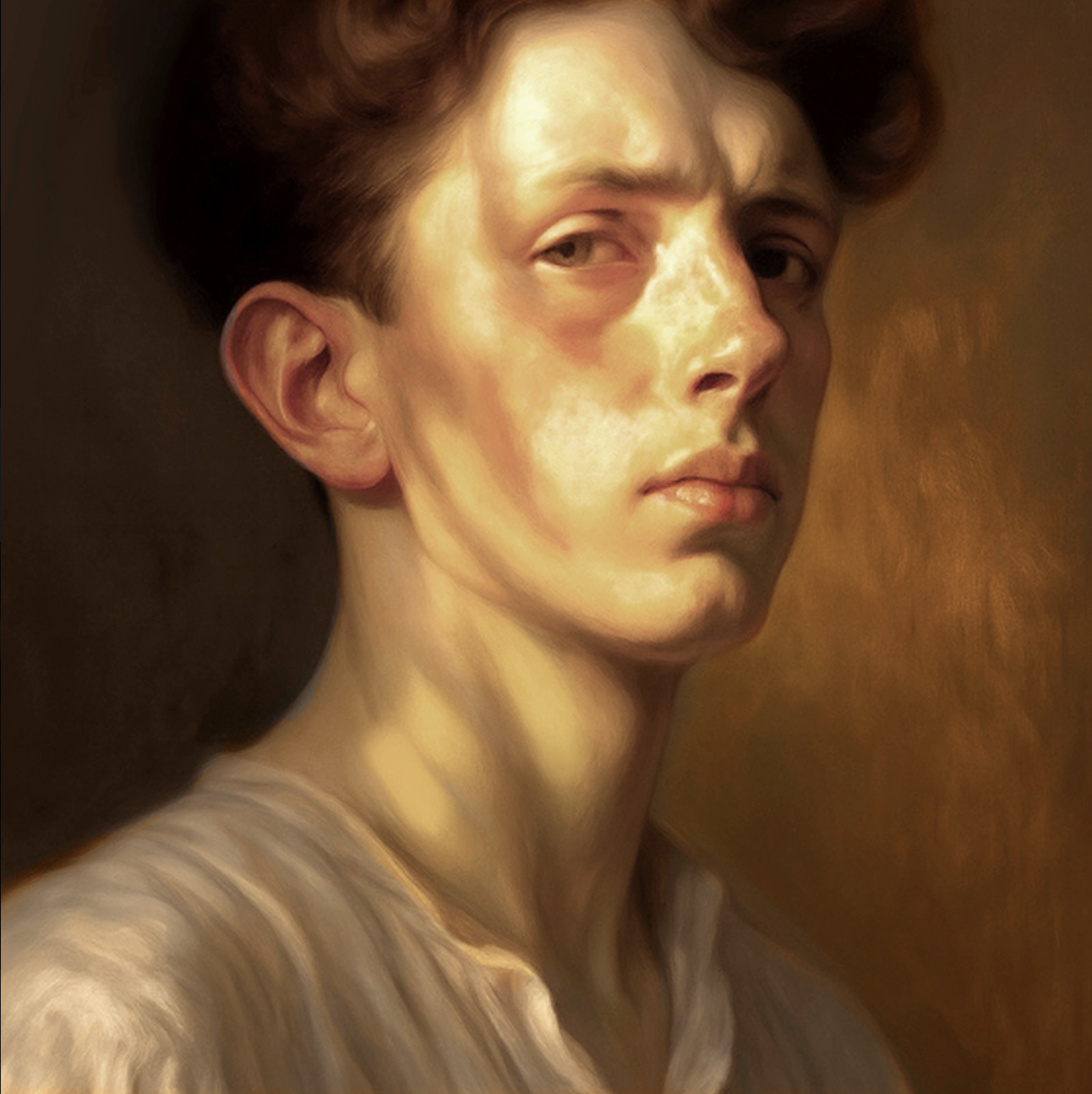
18: Perspective
The poet Mary Bernard called Icarus a disturber of the unseen.
Jessica Helfand|The Icarus Diaries
19: Triumph’s End
I am, I now realize, nearing the end of this exploration. Narratives unpacked, etymologies revealed, a story deconstructed, unpacked, reimagined.
Arts + Culture
Jessica Helfand|The Icarus Diaries
20: Deus ex Machina
I have separately begun a series of drawings exploring the line language that comes from combining an apparatus with a human form. Not quite cyborgs, these hybrid explorations tease at movement and stasis, veering into anatomical dislocation and a new (for me) kind of visual language. Pencil and paper. Some watercolor. Waxed thread, (because, well, wax).
Observed
View all
Observed
Share on Social


By Ellen McGirt
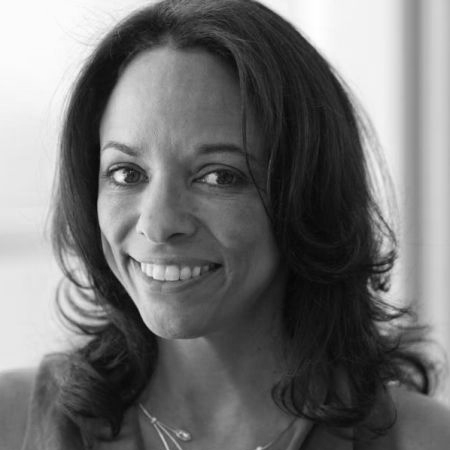 Ellen McGirt is an author, podcaster, speaker, community builder, and award-winning business journalist. She is the editor-in-chief of Design Observer, a media company that has maintained the same clear vision for more than two decades: to expand the definition of design in service of a better world. Ellen established the inclusive leadership beat at Fortune in 2016 with raceAhead, an award-winning newsletter on race, culture, and business. The Fortune, Time, Money, and Fast Company alumna has published over twenty magazine cover stories throughout her twenty-year career, exploring the people and ideas changing business for good. Ask her about fly fishing if you get the chance.
Related Posts
Design Juice
Rachel Paese|Design Juice
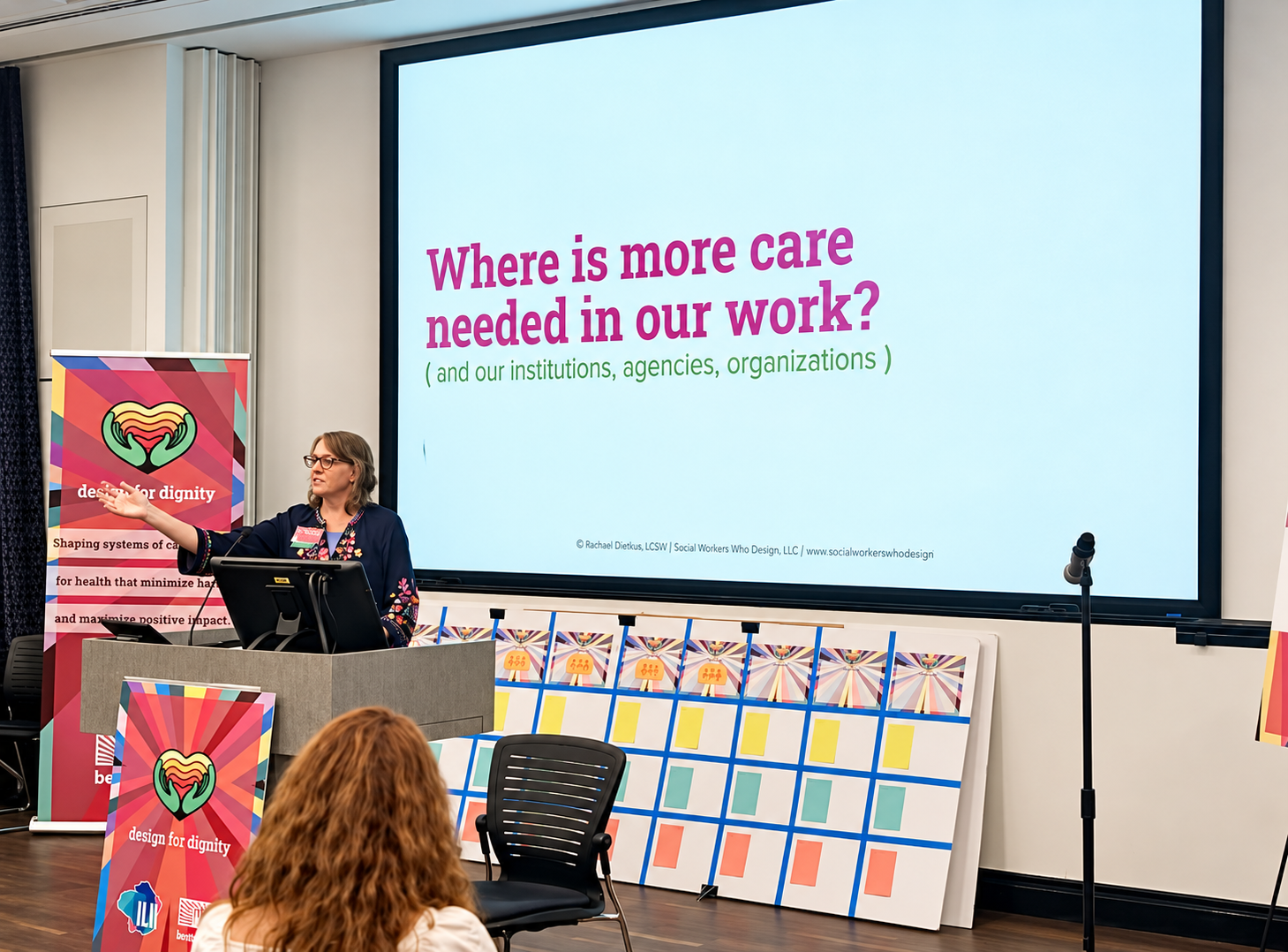
‘What if care were foundational to systems design?’ asks Rachael Dietkus
Arts + Culture
Alexis Haut|Interviews
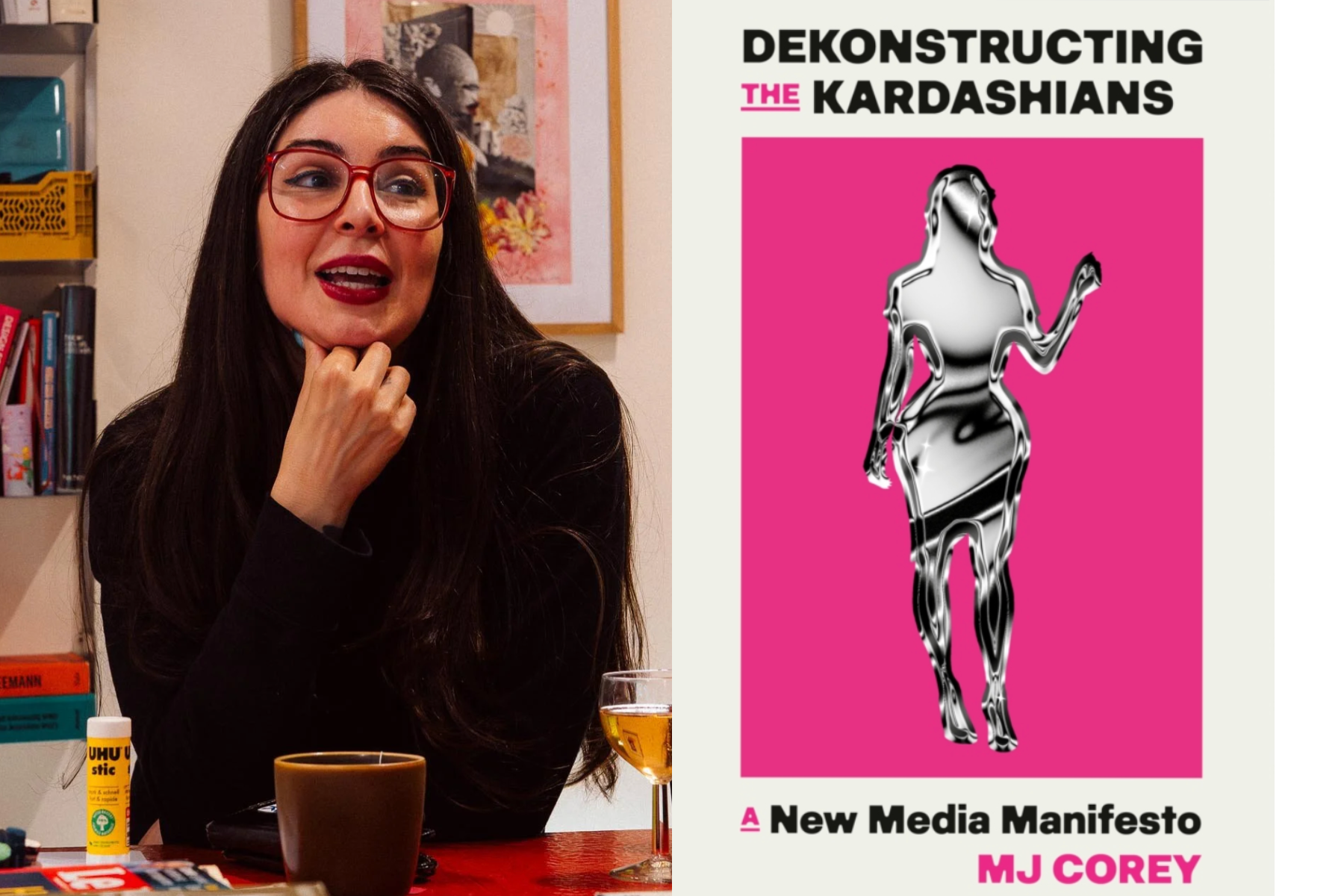
The Kardashians will make you cringe, but first they’ll sell you shapewear
Design Juice
Rachel Paese|Design Juice
Sara Soskolne is a typeface designer who thinks of herself as a craftsperson

Design Juice
Rachel Paese|Design Juice
Ira Blossom created a games-only, print-only newspaper — and it’s sold at a newsstand in New York City
Subscribe to The Observatory
Related Posts
Design Juice
Rachel Paese|Design Juice
‘What if care were foundational to systems design?’ asks Rachael Dietkus
Arts + Culture
Alexis Haut|Interviews
The Kardashians will make you cringe, but first they’ll sell you shapewear
Design Juice
Rachel Paese|Design Juice
Sara Soskolne is a typeface designer who thinks of herself as a craftsperson
Design Juice
Rachel Paese|Design Juice