


Jessica Helfand|The Icarus Diaries
March 2, 2026
07: Meltdown
Read the introduction to this series.
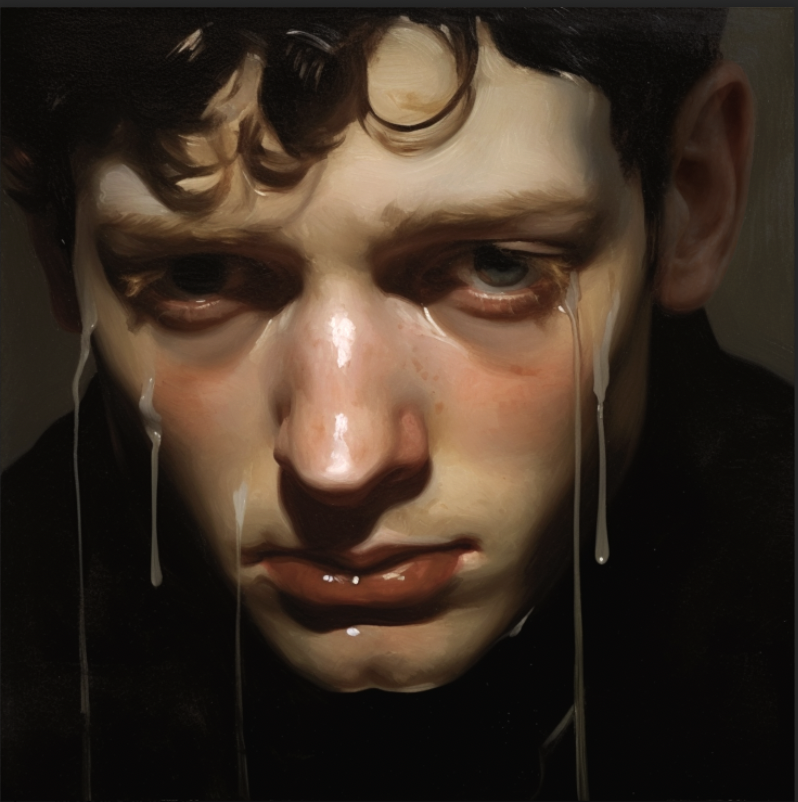
24 x 24 inches
Acrylic, oil, and wax on canvas
2026
I have been thinking about wax as a medium for simulation, about how I might use it to morph or maneuver the skin into some kind of altered state. Tissue stripped away, facial integrity diluted. A face that dissolves.
And with it goes the spirit.
So easy to see all of this as a subtraction, even though wax—as a verb—actually means to grow. (Its opposite: to wane.)
What does a melting face look like? Francis Bacon comes to mind. So does Dali and Munch and I push these artists out of my mind because the experiment here is to let the material lead the investigation.
Not easy. Thinking about subtraction and addition and erosion and diminished beauty is just one big anatomical riddle, as far as I can tell. What melts first? Skin? Hair? How does the face distort? What happens to the eyes? So many questions.

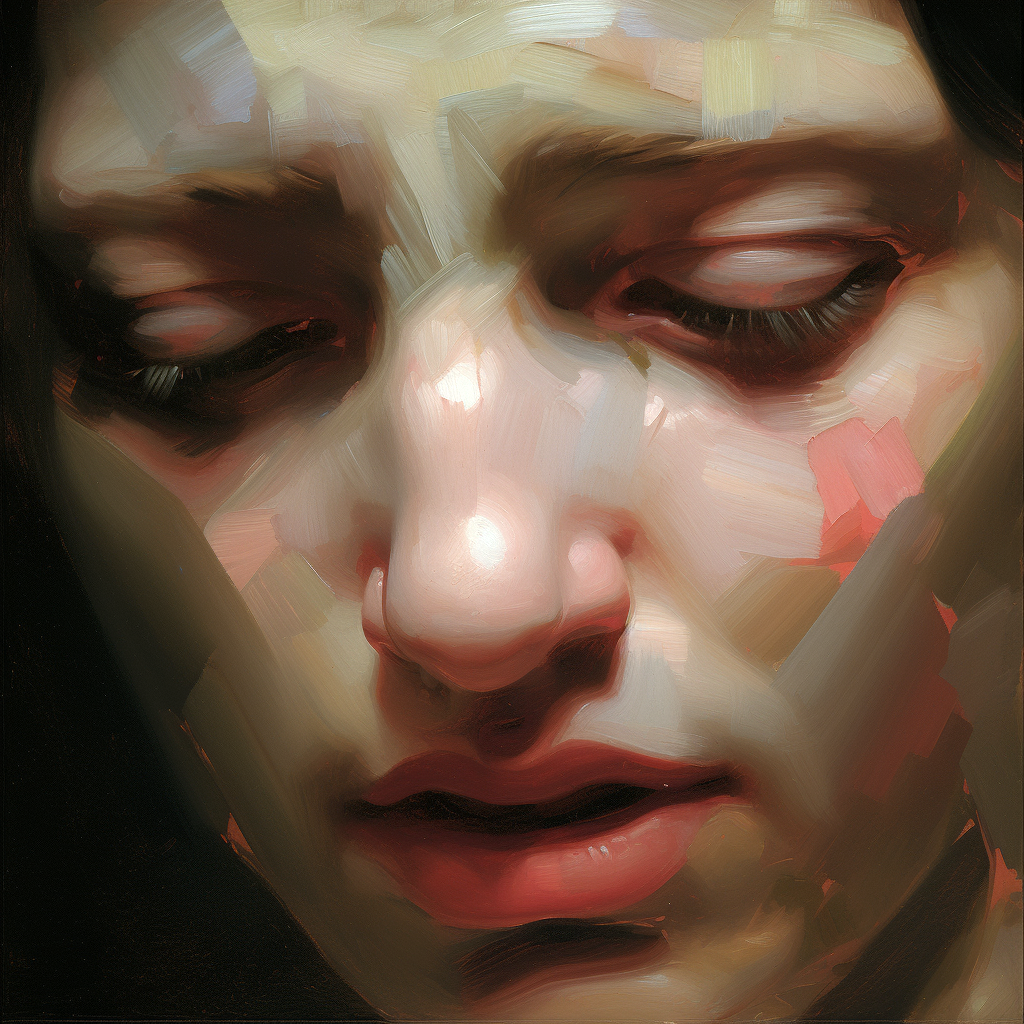
There’s a long, luscious history to wax in classical painting and sculpture known formally, I recently learned, as ceroplastics. The umbrella term incorporates everything from wax effigies toex votos. There’s a rabbit hole of scientific phenomena I could totally lose myself in. (Simulated organs, for example.)
Working with wax, albeit cold wax, is a revelation. It can hold a shape, like clay. It can withstand reworking, and hold up to buffing, and it can absorb color and blend with ease. Using glazes in some parts of a painting and wax in others creates a new topography on the canvas, and I am mesmerized. It feels human and soft and surprisingly forgiving.
Until it isn’t.
I paint wet on wet, and the wax does not comply. It is temperamental, coarse, resistant. It can migrate from porous to inert in an instant. I struggle to make sense of its opacity, its mass. Not so forgiving after all.

Forgiveness of materials is one thing. Of individuals, quite another.
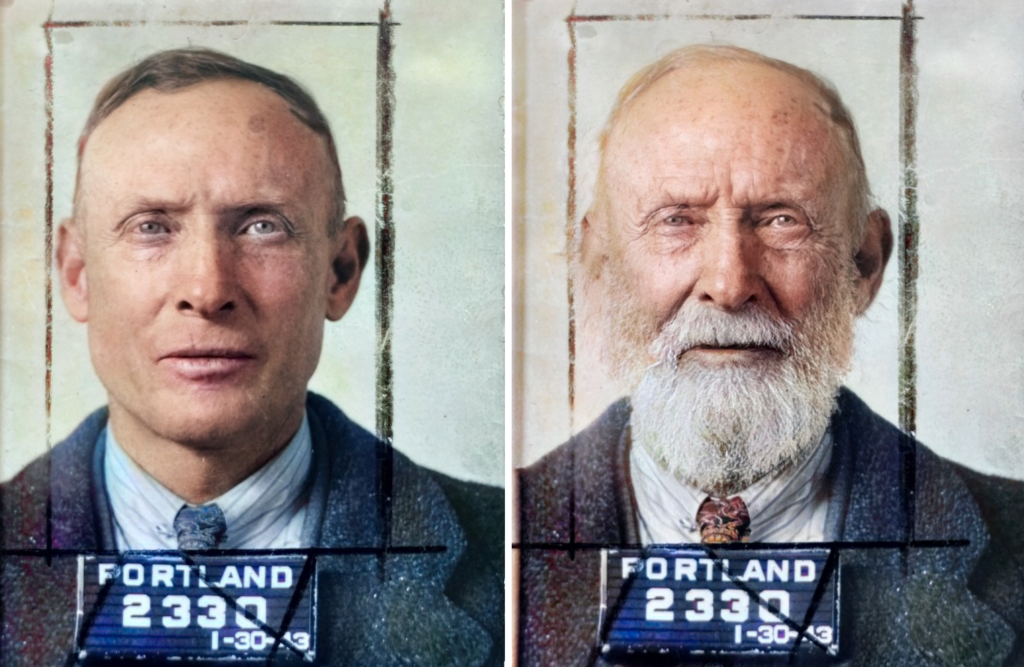
I have always been fascinated with expressions of regret, and spent years collecting mug shots, thinking about people doing bad things, or stupid things, or careless things, trying to pinpoint their remorse, as though remorse is somehow quantifiable, let alone erasable.
I tried to capture it, name it. And then, to change it. I remember using some random app to age a mugshot imagining that the passage of time might result in a greater indication of facial remorse. Had this petty criminal aged in prison, might he have regretted the crime that had gotten him there in the first place?
Can guilt be edited, redacted, extracted?
These aging studies were fascinating to me, but I’m not sure I got any closer to an answer.
Maybe I was thinking about my own mistakes. (A subject for a different diary.)
Thinking back, maybe what I was really looking for was innocence, a word which has moral as well as physical resonances. A lack of injury. A lack of sin.
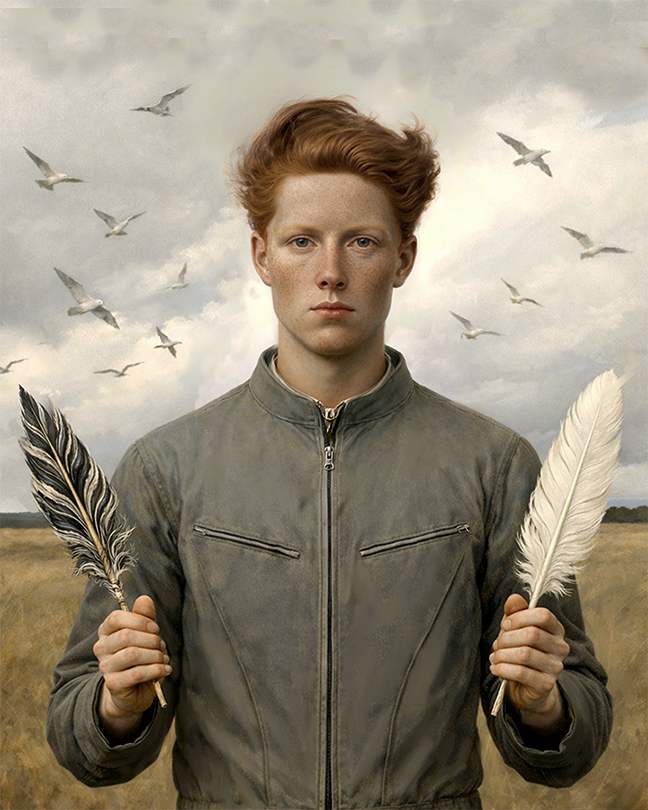
Maybe what I’m looking for in Icarus is no different. His was, after all, an honest mistake: ignoring direction, flying too far and too fast. All that acceleration, the blinding light and soaring temperature.
Melting, I learn, means to reduce from a solid to a fluid state by means of heat. All that vitality, liquified. The person/body/soul where, exactly? In absentia.
In his poem, Ode to Beauty, Ralph Waldo Emerson speaks to melting into nature. There’s an implied cycle here: ashes to ashes, dust to dust, wax to whatever wax becomes when it puddles into nothing. I doubt that Emerson was thinking of Icarus, in general (or of wax, in particular) when he wrote this, but the loop interests me. Melting has its own natural properties, its own internal circuitry and law of diminishing returns.
Melting is also, paradoxically, a time-based action. Painting is a permanent one. To try and capture facial volatility this way might just be a fool’s errand.
Next:
Observed
View all
Observed
Share on Social


By Jessica Helfand
 Jessica Helfand is an artist and writer based in New England. A former critic at Yale School of Art and one of the founding editors of Design Observer, she is the author of several books on visual culture including Self Reliance, Design: The Invention of Desire, and Face: A Visual Odyssey. jessicahelfand.com

Subscribe to The Observatory