


Rachel Paese|Design Juice, Interviews
May 7, 2026
Sam Furness got serious about investing in his curiosity. Now, he’s helping others do the same.
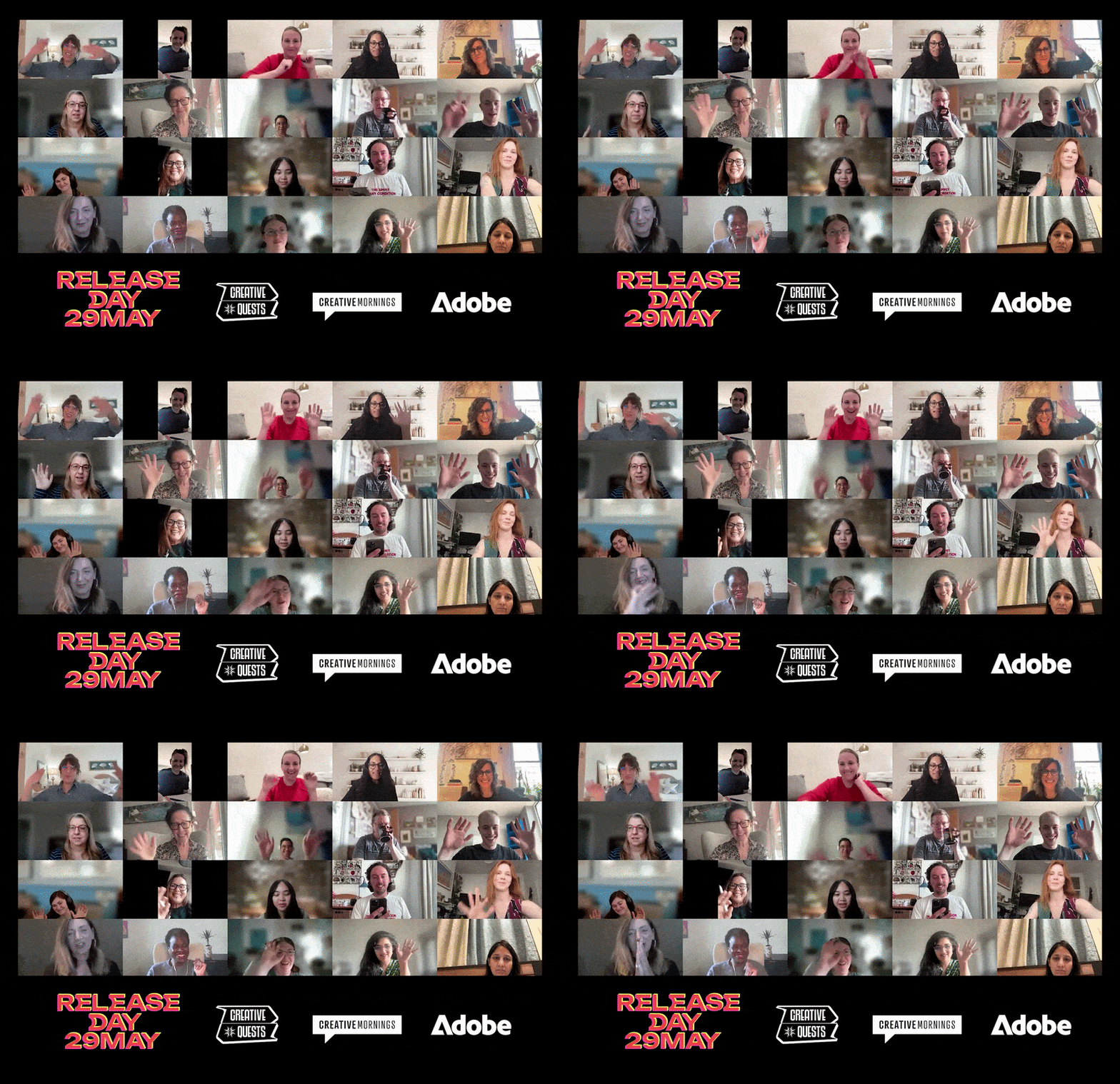
He’s partnering with Tina Roth Eisenberg at CreativeMornings and Adobe on Release Day, a collective deadline to help creatives get their projects into the world.
Sam Furness, cultural producer, experience designer, and founder of Channel Twelve, hates the word hobby.
“‘Hobby’ implies that it’s an activity that doesn’t go anywhere. Try telling that to somebody who works a 9 to 5 soulless job, but they have an art studio in their spare bedroom. That’s where they like bring their soul to life.”
“Hobbies” are exactly the things that take you places, he argues. Furness knows the power of pouring into his own creative curiosity. Years ago, when he felt he had lost his creative spark, he devoted 12 months to 12 different creative endeavors: origami, flight, movement, color, songwriting.
It’s what led him to guiding others to unlock their creative spirit at his company Channel Twelve, to building his Creative Quests programs, and to dream up Release Day in 2025.
Release Day, happening on May 29th, is a collective deadline for any kind of creative project. Projects of all kinds — zines, songs, paintings, websites, essays, and films — will be released simultaneously as a shared online gallery, tagged with #ReleaseDay2026, in what organizers are calling a global fireworks display of creativity.
“It’s a way for people to get over the procrastination, perfectionism, and fear that stops us from sharing the projects that we care about most,” says Furness. “The world needs what you’re making.”
It’s also completely free and open to anyone. This year, he’s partnering with CreativeMornings and Adobe, bringing the reach to the next level.
Tina Roth Eisenberg — founder of CreativeMornings, a global community organization that brings creatives together — met Furness when he was conducting a “virtual field trip” for CreativeMornings during COVID. Hosting thousands of people in each Zoom, these virtual gatherings were a lifeline to many creative folks. “Sam put one on that literally made my heart explode,” shares Roth Eisenberg. His virtual field trip began with the command, “Go get whatever you can to build a hat!” bringing joy to the crowd “with his unicorn enthusiasm that just bulldozes every cynic.”
Roth Eisenberg believes that to be creative is to be optimistic, and also that “living life is inherently a creative act.” Sometimes, she acknowledges, people need permission to define themselves as a creative person.
And it’s the community that gets them there. An expert in creating convenings for creative folks around the world, she’s learned that meaningful convenings foster bravery. “We need more spaces where… you become brave because the environment is so kind.” As a result, people dare to share their work. “They dare to take the mic and pitch themselves. They dare to start a club and create community around something they love.”
This is the exact sentiment that Furness has brought to his vision for Release Day. When you sign up for Release Day, you get access to weekly workshops and an online community of other creatives with the same shared goal.
Design Observer caught up with Furness and Roth Eisenberg to discuss Release Day, but walked away with insights on community, convening, and building a creative practice.
The interview has been edited and condensed for length and clarity.
What felt like the biggest win from Release Day 2025?
Sam Furness: The biggest win was that people actually shared their projects. It helped people get past years of procrastination and actually complete what they’d been working towards. A huge amount of people that were summoning the courage to show version one of their idea.
The psychological experiment of does a collective deadline help us get creative projects out into the world? That was a resounding yes.
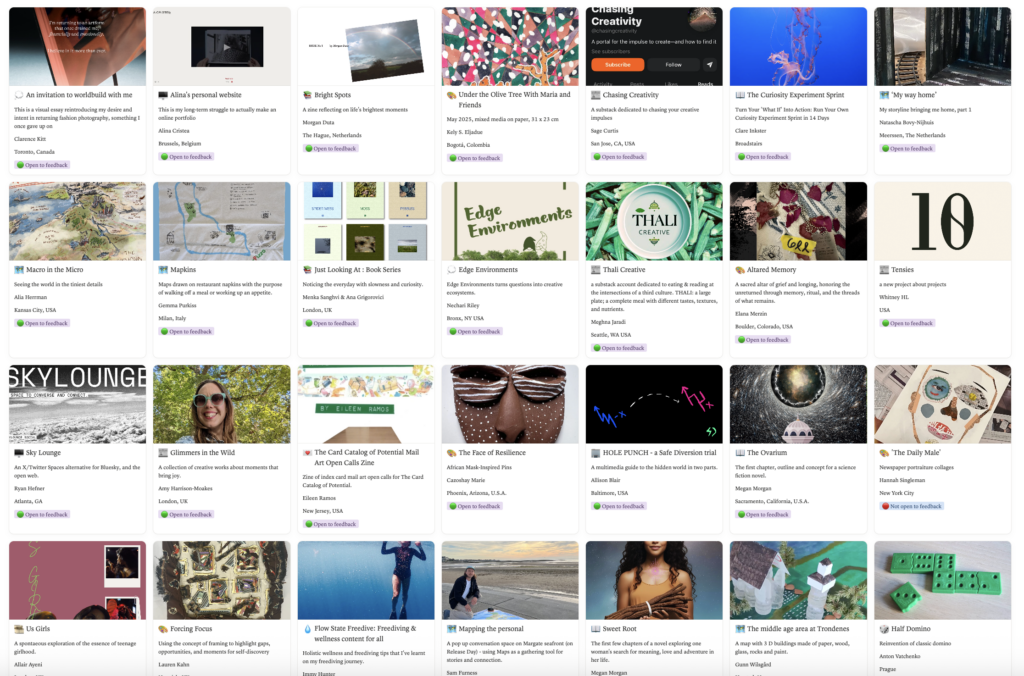
“Creative project” is broad. What kind of diversity does that bring to the Release Day projects?
SF:“Creative” is more of a way that people move through the world. You can do anything creatively.
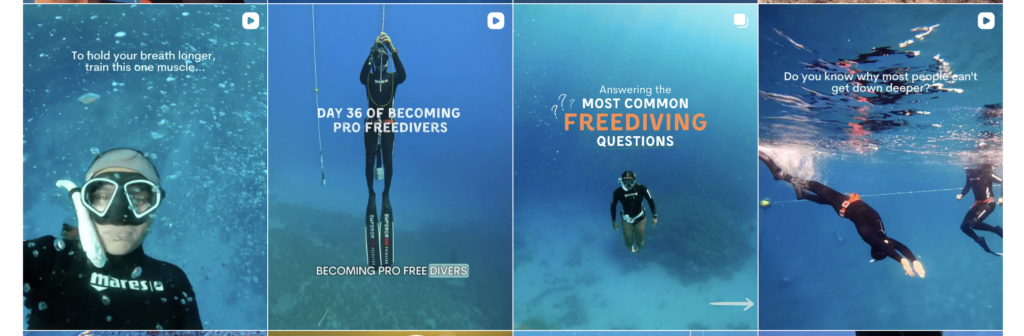
There were all kinds of projects last year. Somebody even launched their free diving career on Release Day. She was exploring it in her spare time and used this as a way to declare to the world. A year later, she’s now a certified free driving instructor, and she’s got 10,000 followers on Instagram. It all started with the public commitment to this being a thing that she believed in.
Tina Roth Eisenberg: Our manifesto at CreativeMornings begins with, “Everyone is creative.” I believe living life is inherently a creative act.
It’s my favorite thing ever when people that don’t define themselves as creative come to our events and realize that it’s a way of living life. To me, it has a lot to do with curiosity.
When you move through the world with curiosity and with a sense that you can design your life, that is a game changer.
Sam, why do you hate the word hobby?
SF: So, the etymology of the word hobby is linked to hobby horses. The connecting notion between hobby horse and hobby, as we use it today, is that it’s an activity that doesn’t go anywhere. And there are so many people that describe things that are so central to their lives as “hobbies.” Telling them this is an activity that doesn’t take you anywhere is downright offensive.
Try telling that to somebody who works a 9 to 5 soulless job, but they have an art studio in their spare bedroom. That’s where they like bring their soul to life. That takes you places.
Instead of hobby, I use the word channel.
Is that connected to the name of your company Channel Twelve?
SF: Yes. This whole journey started with twelve months of me having a different curiosity every month.
It was 2016. I was feeling creatively depleted in my job managing music artists, and I decided that I needed to change up how I was spending my spare time.
Origami was January. February was flight. My grandpa and my grandparents are very, very dear to me. Huge creative inspirations in my life. He’s always been aviation-obsessed, so I wanted to be closer to his passion for a month. March was drawing, April was food. May was like physical movement.
June was color. July what I called “E United.” It was just after Brexit had happened. I spent a month exploring different European cultures’ influence on London by like going to an event with the Portuguese community on Tuesday night, and then I hung out with some French people on Wednesday.
August was animation. September was installation. October was photography. November was songwriting, and December was storytelling.
What does it look like when you offer creative people the opportunity to connect with each other?
TRE: CreativeMornings has been gathering the creative community for 18 years. I sometimes call it Church for Creativity.
I feel like it has created a safe container where people show their work. They dare to take the mic and pitch themselves. They dare to be brave. They dare to start a club and create community around something they love. That’s what community is to me.
Can you each tell me about what led you here? Did you always consider yourself a creative person?
TRE: I grew up in the Swiss Alps in a tiny town with two entrepreneurial parents. Luckily, I had an extremely eccentric aunt in Zurich who was deeply creative, and she lived a wildly courageous creative life. She gave me permission just to be myself, to be creative, and to live my life the way I wanted to.
So when I decided to move to New York 26 years ago, I realized, My God, I’m not too much for anyone. I can have as many ideas as I want here. So I built a life in New York City as a designer and then started multiple creative businesses that were all sort of design-centric and community-centric.
Now, at CreativeMornings, I feel like I’m in service to the creative community.
SF: I grew up on the sunny streets of South London. I was very lucky to grow up in a super creative family. My dad is an amazing guitarist and musician. My granny is a mixed media artist. My mom is an interior designer.
I studied theater at university, and when I left, I very quickly realized that the world was not set up for living a creative life.
I ended up working behind the scenes in the music industry, managing some of the biggest British music artists of the last 20 years. I did that for about eight years.
I wrapped up music managing in the beginning of 2022, and I’d been running my company, Channel Twelve and our Creative Quest program for about eighteen months at that point, and just took the leap.
Now, we envision a future where there’s more infrastructure to support creativity and curiosity in our daily lives.
Are you each doing a project for Release Day?
TRE: Yes! I used to go to art school and I used to work as a graphic designer. I used to love to scribble in my sketchbook. It was such a part of who I was, and so I’m reconnecting with Art School Tina.
SF: I am so here for Art School Tina.
I’ve got two things I’m working on. One is a song for my daughter. Songwriting has always been the creative expression that I’m most proud of, but it’s the one I make the least time for. I really want my daughter — who’s only just about to turn four months old — to see me as somebody that makes things.
From Creative Quests, we are putting out a manifesto that’s inspired by 10 years for our 10 year Quest-iversary this year. It’s a manifesto for living a creative, curiosity-fueled life.
What would you tell someone who wants to develop a creative practice?
SF: The world is your studio. You don’t need the tools.
You can change the way that you see the world by getting really serious about your curiosity — treating your curiosity like the creative practice. Especially these days, given how distracted we are, nurturing your curiosity is more important than ever.
TRE: Start right where you are and bring a sense of play. Brush your teeth with your non-dominant hand. Force yourself to create a different breakfast tomorrow morning. Walk a different way to work. Just do whatever you can to step out of your routine.
Just by doing that, you instantly have to make creative decisions.
Those small acts in your everyday will make you realize just how many decisions we have completely automated and where you can bring playfulness back into it.
Observed
View all
Observed
Share on Social


By Rachel Paese
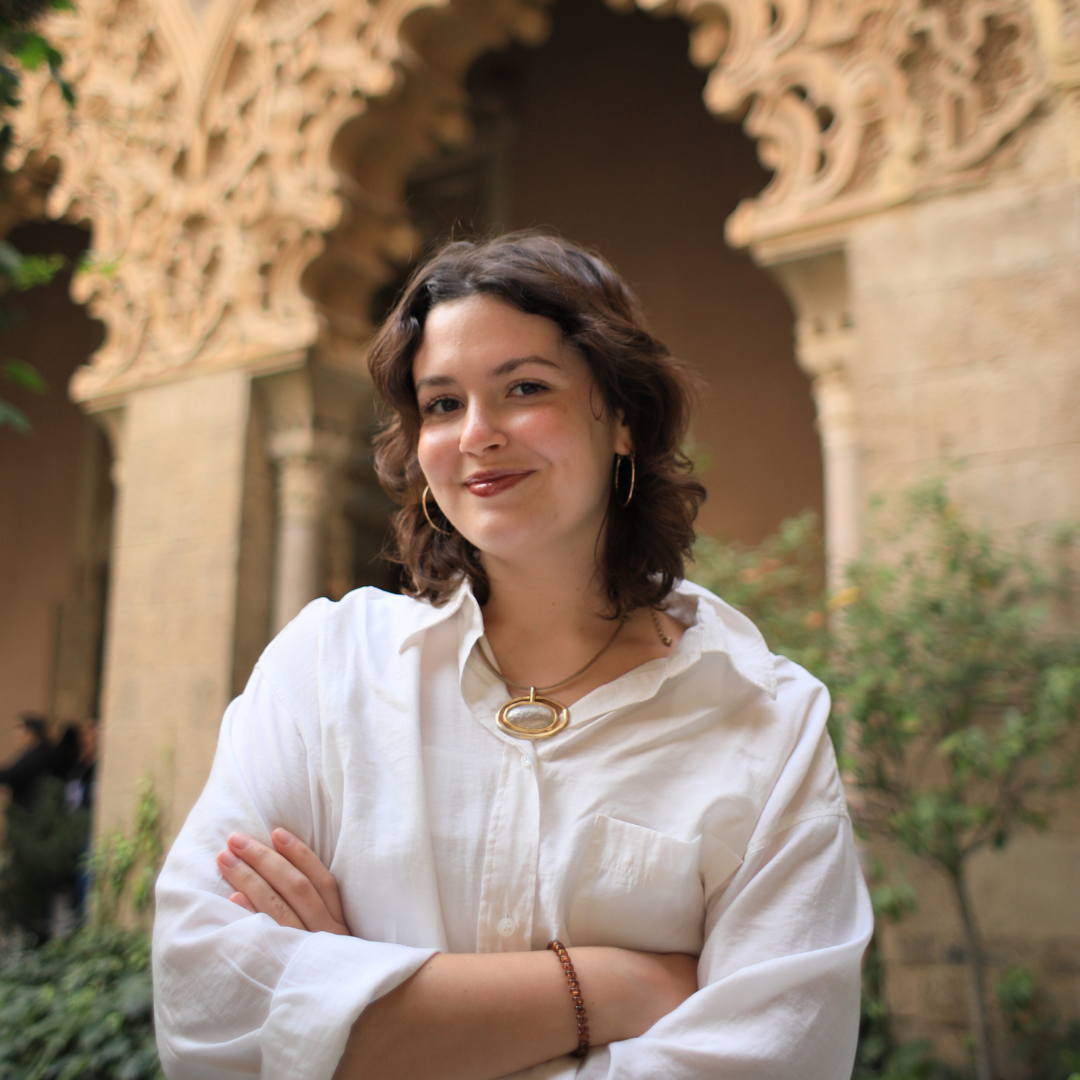 Rachel Paese is Design Observer’s Deputy Editor, and she loves giving curious people access to stories that change the way they see the world. It began with a major in English, and then evolved with a project that sharpened her editorial instincts the old-fashioned way: founding and leading her own multimedia magazine at the University of Kansas. After college, she carried that passion to education, helping students in Spain and Thailand think beyond their culture. Today, she brings that same spirit to Design Observer, working to connect readers with the people and ideas shaping a better future. Connect with her on LinkedIn, and ask her about her quest to sew her own wardrobe.
Related Posts
Design Juice
Rachel Paese|Design Juice
‘What if care were foundational to systems design?’ asks Rachael Dietkus
Arts + Culture
Alexis Haut|Interviews
The Kardashians will make you cringe, but first they’ll sell you shapewear
Design Juice
Rachel Paese|Design Juice
Sara Soskolne is a typeface designer who thinks of herself as a craftsperson
Design Juice
Rachel Paese|Design Juice
Ira Blossom created a games-only, print-only newspaper — and it’s sold at a newsstand in New York City
Subscribe to The Observatory
Related Posts
Design Juice
Rachel Paese|Design Juice
‘What if care were foundational to systems design?’ asks Rachael Dietkus
Arts + Culture
Alexis Haut|Interviews
The Kardashians will make you cringe, but first they’ll sell you shapewear
Design Juice
Rachel Paese|Design Juice
Sara Soskolne is a typeface designer who thinks of herself as a craftsperson
Design Juice
Rachel Paese|Design Juice