


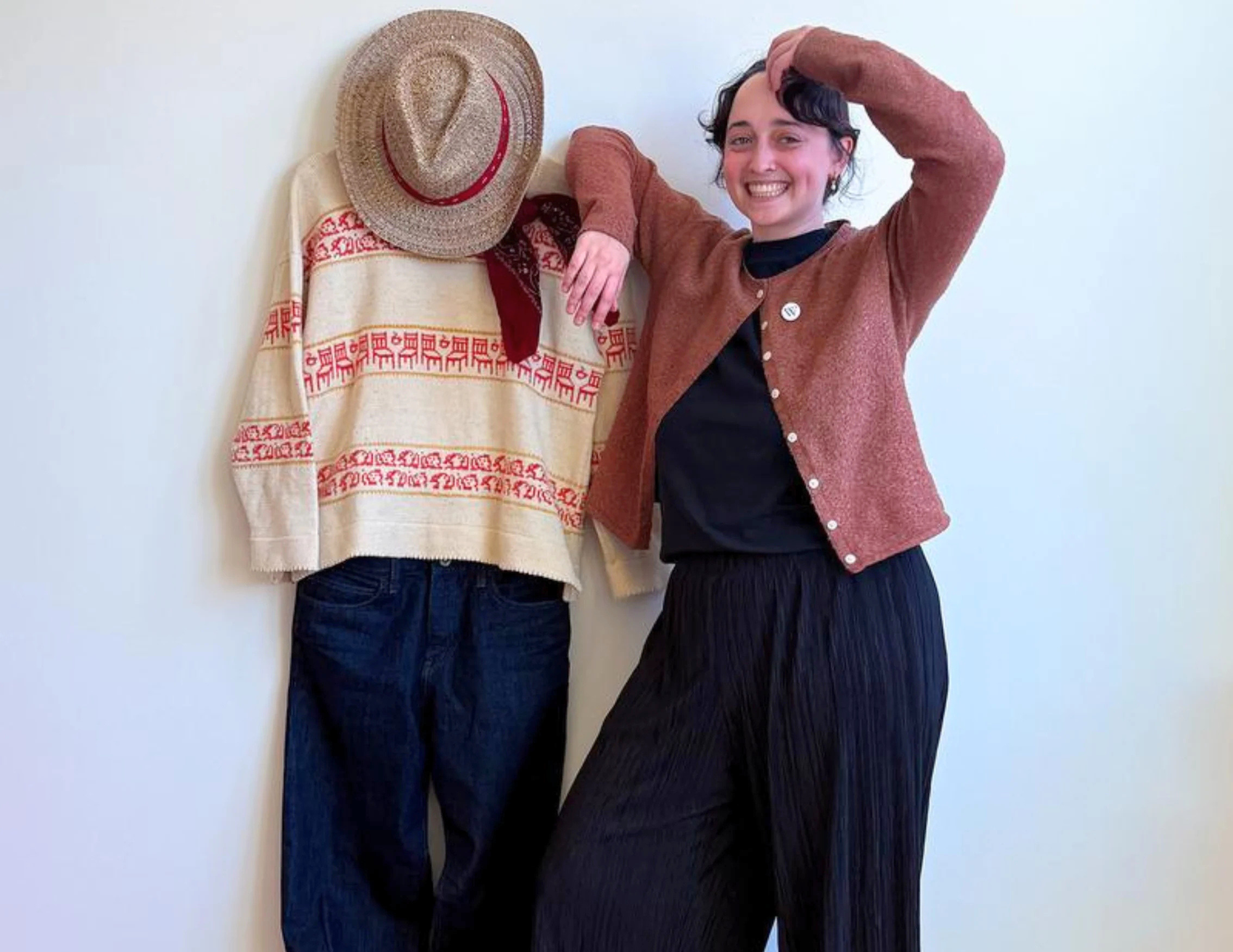
Rachel Paese|Design Juice, Interviews
May 5, 2026
In a world that feels impossible to change, emerging designer Deborah Khodanovich is starting small
The RISD MFA student turned her love of gossip into a typeface and a philosophy: that designing for your immediate community is where real change begins
“I love gossip,” says Deborah Khodanovich, MFA student at the Rhode Island School of Design and creator of her very own gossip-inspired typeface. She took Gutenberg’s first lead type font, Textura, and subverted its authoritative, biblical connotations, turning it into a tool for storytelling.
Culminating in a downloadable typeface, an icon set inspired by Susan Kare’s Cairo glyphs, a textile project, a book of images of women gossiping, and a sociological study, this project aimed to answer her guiding question: “What does gossip look like?”
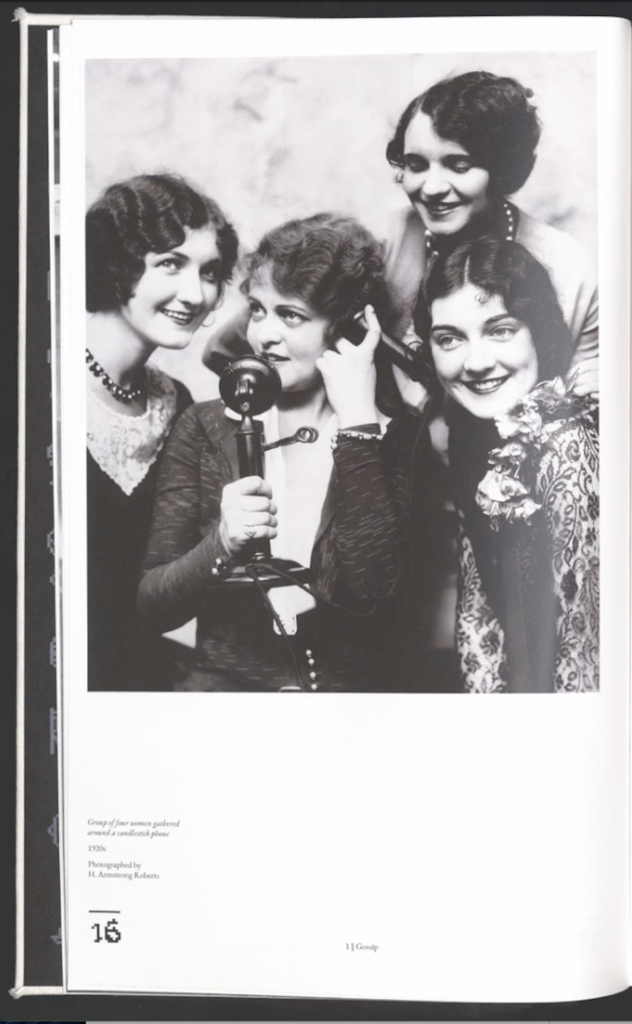
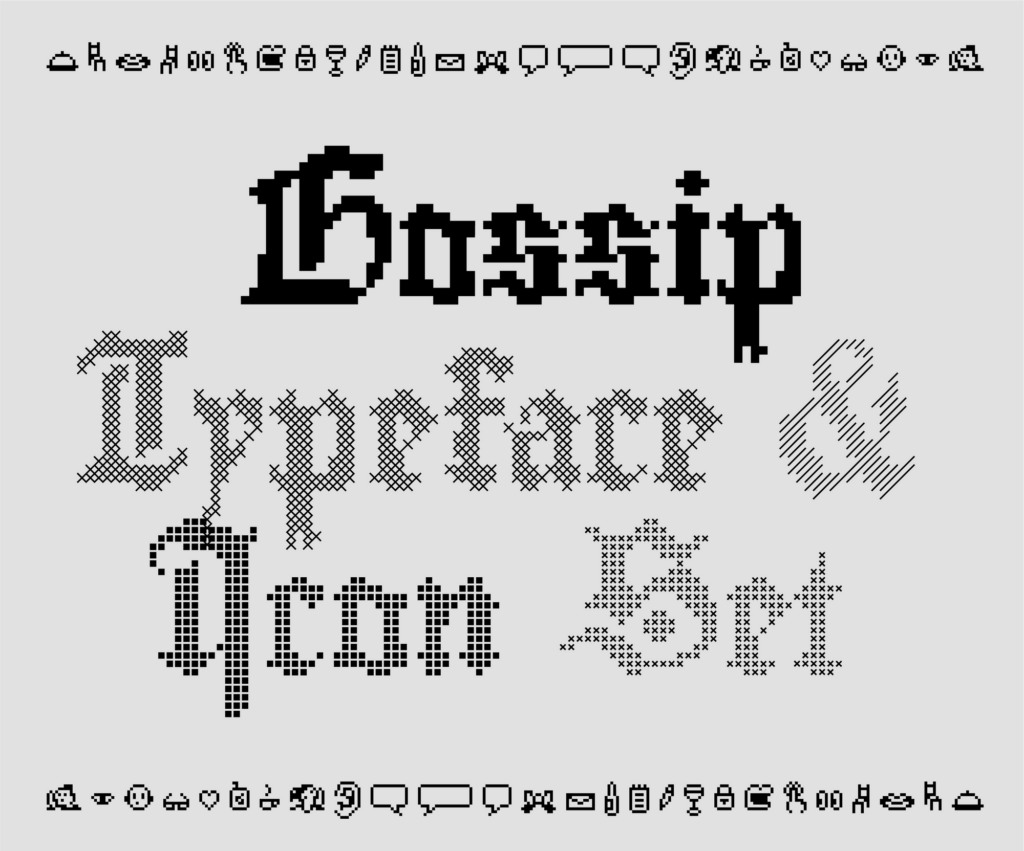
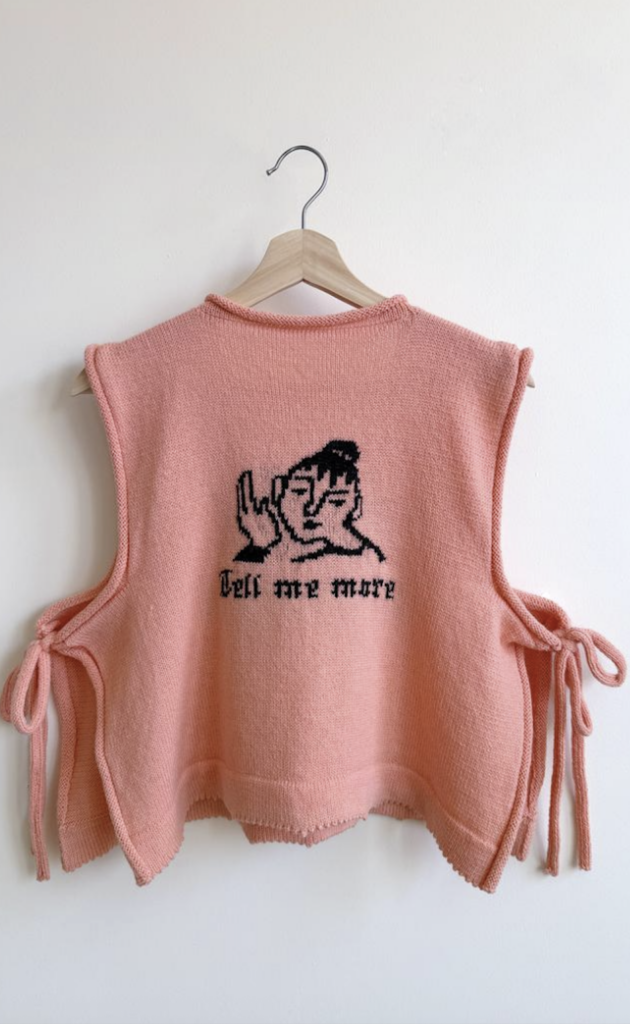
Her research explored the ways gossip has persisted around textile labor, and the ways women have been demonized for it. At its core, the project celebrated gossip’s role in forming and maintaining strong communities.
Community is a topic of interest for Khodanovich, but also at the core of how she maintains her hope that she can make a difference in the world. She’s guided by the question, “What does it mean to design for a local rather than a public?”
Despite a world that’s presenting significant challenges and fears for emerging designers — like the current job market and a troubling political climate — this is her guiding beacon of hope, and what inspired her current thesis project: a Relational Citation System for her MFA cohort to cite co-authored, oral, and transmitted knowledge.
Khodanovich’s spirit, and all of the values that drive her design practice, can be summed up in the quote she cited in her gossip data narrative project from Witches: The Transformative Power of Women Working Together by Sam George-Allen:
“I have surrounded myself, by luck and by design, with women who ask a lot of me, who give a lot to me, who are willing to sit at my kitchen table and argue with me for hours until we both have straightened out how we see the world, how we think the world should be.”
Design Observer caught up with Khodonavich over video chat, and gossiped about learning, designing local, and what it feels like to be an up-and-coming designer in a complicated world.
The interview has been edited and condensed for length and clarity.
What role has gossip played in your own life?
I’m someone who’s outwardly saying I love gossip. I think where I’ve gotten some pushback is just where people disagree on the definition of gossip.
But for me, it’s a way to connect with the people around me. It’s how I know what’s going on in my friends’ lives. Who should we be looking out for?
For instance, just before I came here for school, my childhood dog passed away and I was obviously very heartbroken. My God, was I devastated. I wasn’t able to talk to anybody. I texted one person, my roommate, and I remember she messaged me back and said, “do you want me to tell everybody?” I felt so cared for. It was technically gossip, but it meant that I knew she was going to reach out to all the people in my immediate community and let them know.
The next day, one friend stopped by with flowers, another with food. That to me is gossip for the purpose of strengthening yourself in a community.
What brought you to your MFA and the topics you’re currently exploring?
Graduating in 2020 was for my undergrad meant that I didn’t get a real thesis year, so I knew I would come back to school eventually.
But to say how I got here, I have to say that I’m a huge camp-lover. I grew up spending the summer at a super lefty camp.That’s really one where my love of gathering, workshopping, and creating programming came from. It’s also where gossip is the best type of currency. Everyone knew I was a gossip growing up.
It was an important part of us trying to understand what’s happening. So I’ve been totally obsessed with gossip for so long.
Then, studying exhibition design in undergrad really made me realize I could work with people and how great it could be.
How has your experience with exhibition design in your undergrad influenced the work you do now?
What I love about it is that you have to be there. It’s a physical place that you have to experience.
Now, the overall idea of my research is: what does it mean to design for a local rather than a public? And graphic design often is something that you want to be very loud, and I say, what if we don’t? What if we do it just for the people that are here? That feels like what exhibition design is to me.
And the other piece that I love about exhibit design is it has to be collaborative. For exhibition design, you need the curators, you need the original artists who are showcasing their work in it, you need the collaboration of the space you’re using, the people who are designing all the graphics, the marketing people, the people who are installing and creating a three dimensional experience, whether there’s a publication or a catalog.
Then, there’s also a collaboration with the viewer and how they engage with it. I just think that’s what’s so beautiful about our world: the fact that like we just do better and cooler things when we work with each other.
What does it mean to design local?
There’s this one writing that I’m referencing a lot in my research on the building of liberated zones by Ed Whitfield. He talks about how we often get very numb and stuck thinking about changing the world because there’s so much pressure.
Like, yeah, my plastic straw is going to ruin the world, but the Oscars just threw out all of their red carpets. Is my little straw going to make a difference? Probably not. And that can numb us from doing anything. His argument is that we can build liberation in small spaces and it doesn’t have to be loud. It can just be right here with the people I’m surrounded by. We can create a space that is absolved of the things that we struggle with or that aren’t good for the world.
So when I think about designing local, I think, how can I design just for my friends around me? Is there a tool I can make to make their lives easier?
Tell me more about your current thesis project.
The big project I’m working on is a citation style that I’m designing. And it’s all about citing relational knowledge.
So the pitch is, basically, how to cite gossip. If this conversation, for example, weren’t being recorded or transcribed or published, it’s still valuable in the way we produce knowledge and the way we think.
So, I’m coming up with a citation system so we can reference people that helped us come up with the things that we’re talking about.
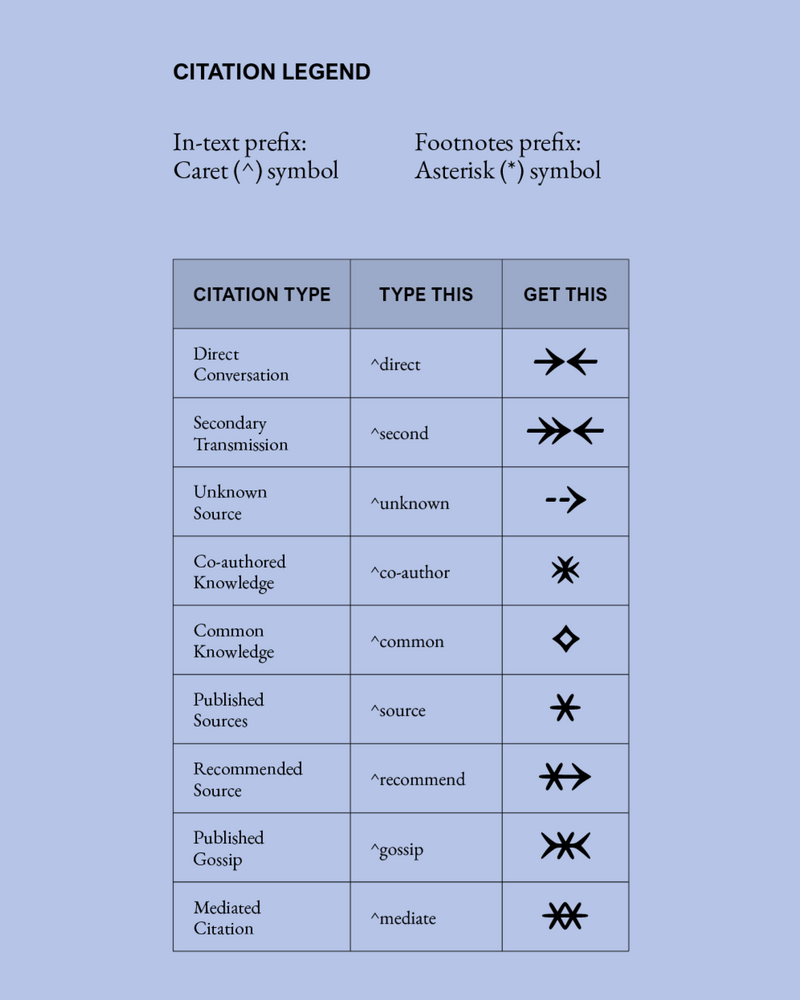
It started because my friend was working on a master’s thesis a couple of years ago and said, “Ugh, Plato keeps citing all of his buddies, why can’t we do stuff like that?” And I was like, “Actually, we should be able to do stuff like that.” So this is me trying to do that.
Is there a way you would encourage designers of all ages and in all sectors to design locally?
I don’t feel like I’m the person that should even answer that, but, to me, it’s being in tune with the people around you as much as possible.
Try and support the people around you. Read their stuff and look at their projects when they need help.
You’re surrounded by other young designers? What do you talk about with one another? Are there fears about stepping into the professional design world right now?
You know, the job market’s not great. And a lot of us are international students and our visa is dependent on a lot of strict requirements. And also America is not great right now and Trump’s not great right now. So there’s like a lot of worry all across the board.
Some people are more stressed than others, and we all handle stress differently. Some people handle it by ignoring it, some people handle it by making spreadsheets and applying to everything they can find.
Do you discuss AI? What are some of the recurring thoughts and feelings?
Yeah, we talk a lot about it.
We talk a lot about the ethics around it. How should we be using it? Should we be using it at all? Some people are like completely against it and refuse to touch it. Some people use it a lot.
We think a little bit less about if it will it ruin jobs for us, and more: how can we use this as a tool for making things that we couldn’t have done before?
Do you have an example of when AI has helped produce something inspiring?
I have a friend Faith, and she’s really into like digital landscapes and the relationship between being sucked into a screen and existing out in the real world and making things with nature. She wanted to make a giant book every image of the sun that her AI tool could find.
And then she would did this categorization of the photos with AI. There’s a whole religious category and a sunset at the beach category. Without AI, it would be tons and tons of labor to actually be sifting through all these different web pages.
That’s like a project that you need tons of time and funding for, and she was able to do it pretty quickly and then focus more time on creating a taxonomy.
Tell me about your plans for after you graduate in the spring.
I’m hoping to get the citation system into a real organization so people can start using in a real way.
I don’t exactly know what’s next yet. I feel very privileged to have right now, and we’ll see where that goes.
Observed
View all
Observed
Share on Social


By Rachel Paese
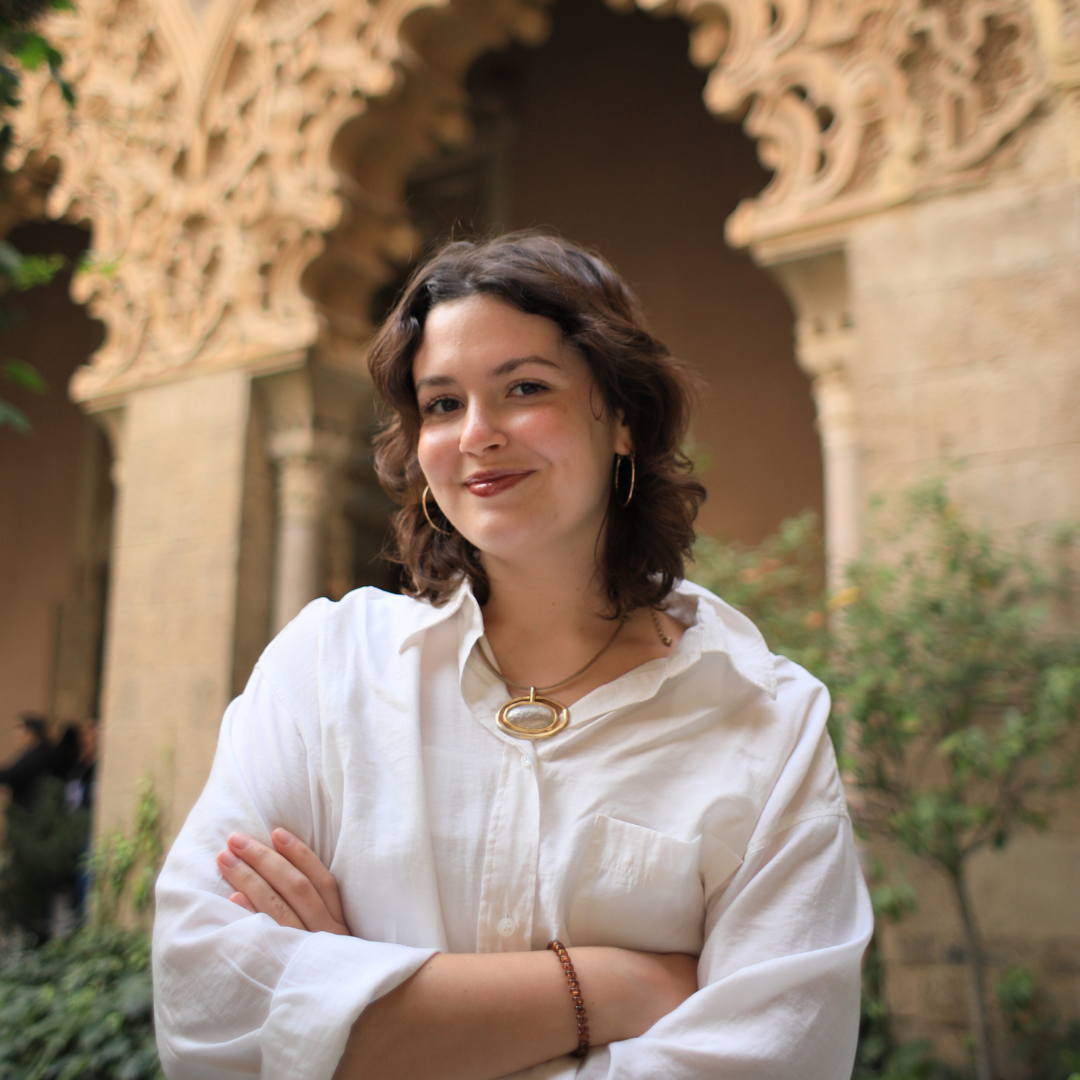 Rachel Paese is Design Observer’s Deputy Editor, and she loves giving curious people access to stories that change the way they see the world. It began with a major in English, and then evolved with a project that sharpened her editorial instincts the old-fashioned way: founding and leading her own multimedia magazine at the University of Kansas. After college, she carried that passion to education, helping students in Spain and Thailand think beyond their culture. Today, she brings that same spirit to Design Observer, working to connect readers with the people and ideas shaping a better future. Connect with her on LinkedIn, and ask her about her quest to sew her own wardrobe.
Related Posts
Design Juice
Rachel Paese|Design Juice
‘What if care were foundational to systems design?’ asks Rachael Dietkus
Arts + Culture
Alexis Haut|Interviews
The Kardashians will make you cringe, but first they’ll sell you shapewear
Design Juice
Rachel Paese|Design Juice
Sara Soskolne is a typeface designer who thinks of herself as a craftsperson
Design Juice
Rachel Paese|Design Juice
Ira Blossom created a games-only, print-only newspaper — and it’s sold at a newsstand in New York City
Subscribe to The Observatory
Related Posts
Design Juice
Rachel Paese|Design Juice
‘What if care were foundational to systems design?’ asks Rachael Dietkus
Arts + Culture
Alexis Haut|Interviews
The Kardashians will make you cringe, but first they’ll sell you shapewear
Design Juice
Rachel Paese|Design Juice
Sara Soskolne is a typeface designer who thinks of herself as a craftsperson
Design Juice
Rachel Paese|Design Juice