


July 16, 2026
The design-led business advantage: prioritizing the customer experience
As customer experience quality declines, the companies sustaining design-led performance stand out
I was fortunate enough to come into my own as an agency executive when design-led businesses were experiencing a golden age. Chief design officers had a seat at the table, and design was framed as a consistent driver of business success. I believe another golden age is possible, but it will not arrive on its own. It will be built, company by company, by leaders who decide that the customer experience is worth designing. But first, we have to reckon with what happened.
The decline of “design-first” and the cost we’ve paid
In recent years, design has ceded ground in the boardroom. There are many reasons: a decade-long prioritization of efficiency over experience, the failure of design thinking to prove its ROI at scale, and the overhiring and subsequent correction of the 2020-2022 tech boom, which hit design and UX teams disproportionately hard. Chief design officers have been eliminated at firms that once celebrated them, and businesses have either shuttered or drastically downsized their design departments.
As a result, customer experience quality in the United States fell to a new low in 2025, the fourth consecutive year of decline, according to Forrester. In 2024 and 2025, 25% of brands had statistically significant losses in experience quality while only 7% improved. Gartner’s annual CEO survey found that among the top ten business priorities of CEOs in 2023 and 2024, the customer ranked second to last. Growth ranked first.
Companies pursuing growth while deprioritizing the customers generating it have lost the connective tissue that design-led organizations work hardest to maintain.
The design-led era of the 2000s and 2010s was not handed to the companies that benefited from it. Apple, Airbnb, IBM, and Nike made a deliberate organizational decision to treat their customer experience as a responsibility. The financial results followed long enough that McKinsey and the Design Management Institute eventually put numbers to what practitioners already knew.
The road to a design-first business
The companies recovering or sustaining design-led performance are not necessarily reinstating a chief design officer or reviving design thinking as a methodology. They require a decision by leadership to treat the customer experience as something that can be owned, measured, and improved.
The CEO owns the experience
When Airbnb rebuilt its product after the pandemic, CEO Brian Chesky mapped every customer interaction from end-to-end and took personal ownership of adapting the company’s business model for changing times. Customers wanted longer stays to accommodate their new digital nomad lifestyles, opportunities to spend more time in nature, upgraded services once they were in a new destination, and more seamless operations for hosting. So Airbnb rose to the occasion, with Chesky at the helm, making drastic business decisions to save the company. That approach reflects a core conviction: the CEO should always be the chief product officer. When experience decisions are made without leadership involvement, they get subordinated to cost decisions. That subordination is how the decline happens, one budget cycle at a time.
Look for where experience breaks down
From sales to onboarding, from a complaint call to a resolution, from a free tier to a paid one, these handoffs are almost universally unowned and unmeasured, and they are where customers form their most lasting impressions. H-E-B, the Texas grocery chain that consistently ranks among the highest-rated retailers in the United States for customer experience, operationalizes this through its Cart to Home team, which works across the entire organization to redefine what a good experience means. The team is successful, in large part, due to a deeply localized approach to its communities and generous customer policies. Things like 90-day returns, pharmacy care, and even store formats designed for different neighborhoods keep people coming back. In other words: H-E-B accounts for every step of the customer journey, no matter how small.
If you want good a external experience, focus on the internal experience
H-E-B empowers store managers to make decisions of goodwill on the spot, without a policy manual telling them to. In fact, the company prides itself on being at the forefront of disaster relief efforts, with store managers having the right to make game-time decisions such as giving away free groceries when a crisis arises. According to Forrester, lower employee engagement is one of the persistent, measurable drivers of declining customer experience quality. Employee experience and customer experience are not separate problems.
Customer success is the new standard
Costco evaluates every pricing, curation, and membership decision against one standard: “keep costs down and pass the savings on to members.” Instead of marking up products for profit, Costco relies on annual membership fees to drive revenue, which helps customers feel more in control of their shopping experience. A standard precise enough to apply is the difference between a values statement and a design brief.
Design earns its seat back by speaking the language of the boardroom
Design lost influence because its advocates argued for it on its own terms, as a cultural value, a creative practice, a marker of organizational sophistication. That argument does not survive a budget cycle. Phil Gilbert, who built IBM’s design practice from a handful of designers to more than 1,600 professionals over a decade, did it by reframing design investment as a high-value product deserving the same resource rigor as any top-performing business unit.
Costco’s membership fees represent more than half of its net operating income, meaning the entire profitability of the business depends on whether customers believe the relationship is worth maintaining. Every design initiative needs a business case in those terms. When renewal rates fall after a service interaction, the service interaction is the design problem.
Design-led companies still outperform. Customer experience quality is still declining across the broader market. The distance between those two facts is where the next golden age gets built, by the leaders who recognize it and decide to act.
Observed
View all
Observed
Share on Social


By Kate Watts
 Kate is the CEO of Fifty Thousand Feet. She is a 25-year veteran of the digital agency world having started her career at MarchFirst and Digitas. She then went to the global digital experience agency Huge, founding their DC office and building it into their fastest-growing office in the US. Her success there led to her taking on the Presidency of Huge US where she oversaw their domestic offices and worked with major brands including Target, HBO, Audi, and Pfizer. Leaving Huge, Watts founded Faire Design, an integrated brand experience consultancy, which she later sold to The Atlantic.
As a 3x agency + consultancy founder, Kate achieved an early exit to The Atlantic — their first ever acquisition in 164 years — and led digital transformation, GTM, product design & development, UX, marketing, branding, and communications projects for Fortune 500 & SMB clients across various industries. Kate has also held roles as fractional CMO, COO, and CXO, enabling and empowering teams to deliver exceptional business outcomes.
Kate is the CEO of Fifty Thousand Feet. She is a 25-year veteran of the digital agency world having started her career at MarchFirst and Digitas. She then went to the global digital experience agency Huge, founding their DC office and building it into their fastest-growing office in the US. Her success there led to her taking on the Presidency of Huge US where she oversaw their domestic offices and worked with major brands including Target, HBO, Audi, and Pfizer. Leaving Huge, Watts founded Faire Design, an integrated brand experience consultancy, which she later sold to The Atlantic.
As a 3x agency + consultancy founder, Kate achieved an early exit to The Atlantic — their first ever acquisition in 164 years — and led digital transformation, GTM, product design & development, UX, marketing, branding, and communications projects for Fortune 500 & SMB clients across various industries. Kate has also held roles as fractional CMO, COO, and CXO, enabling and empowering teams to deliver exceptional business outcomes.
Related Posts
Business
William Richardson|Commentary
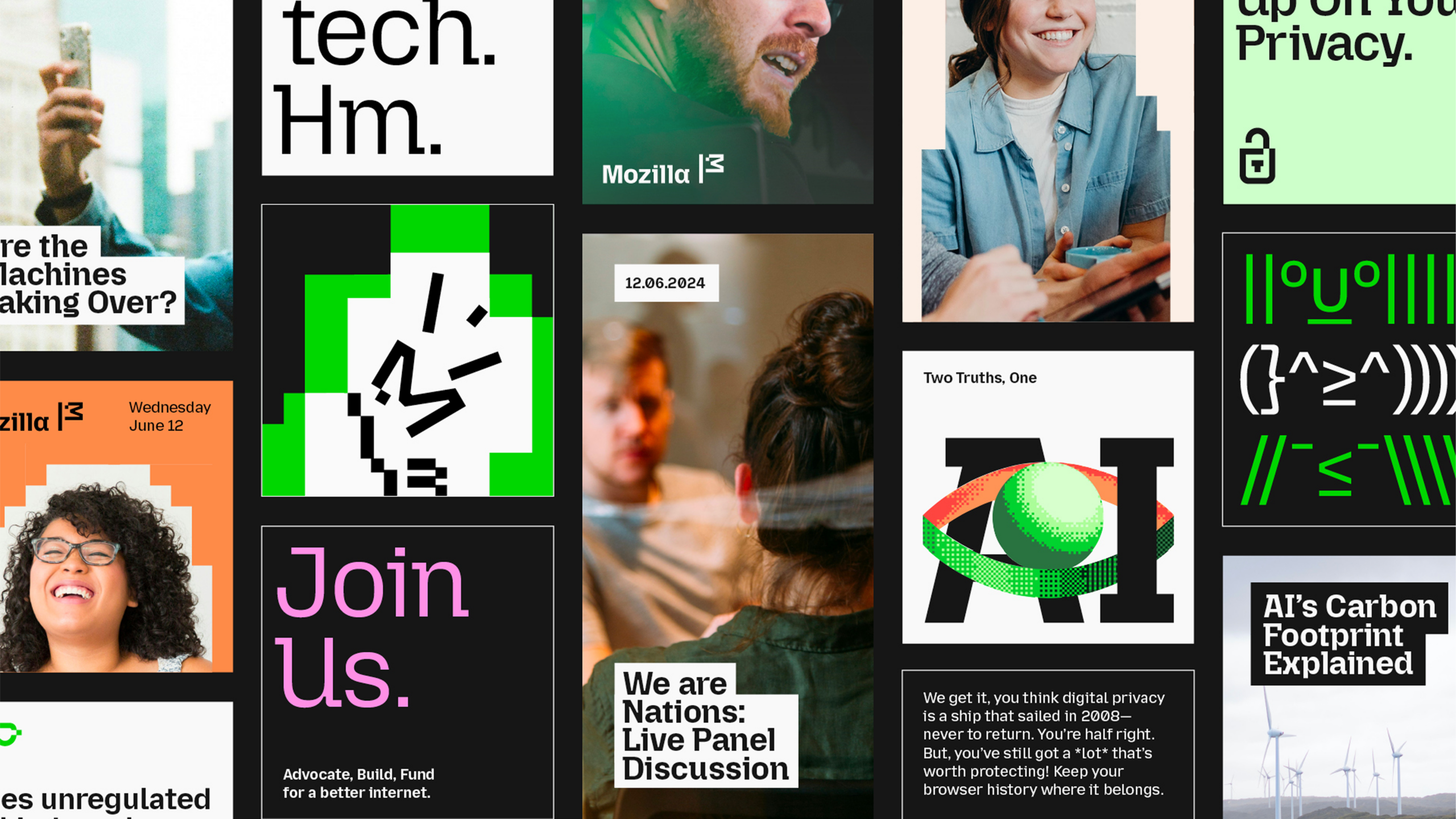
Brands cannot afford to speak in the same voice as countless others right now. Typeface designers can help.
Arts + Culture
John Ball|Commentary
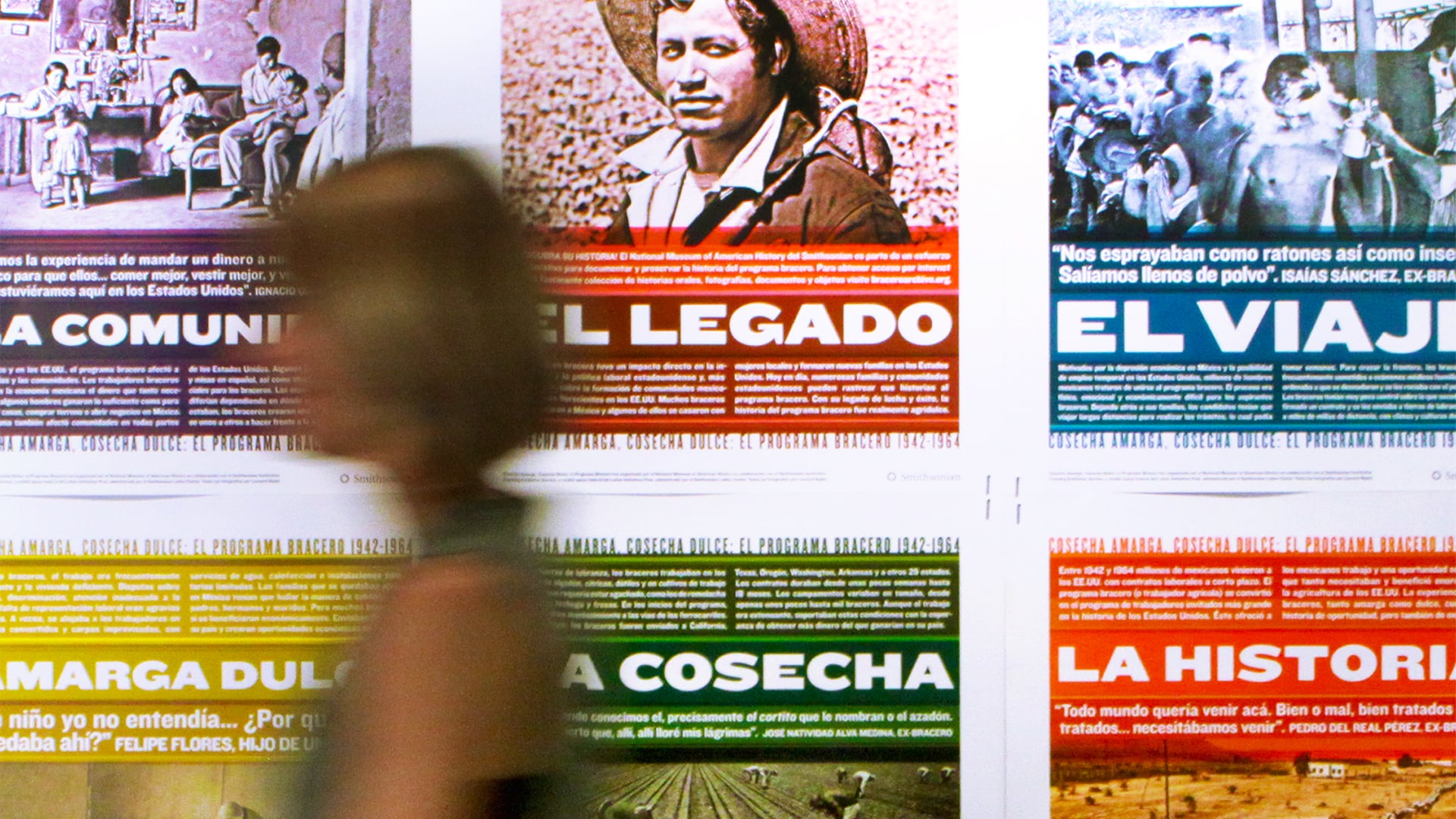
The Smithsonian was ordered to flag “inaccurate information.” I designed a poster series that required complicated truths.

Business
Chris Mele|Commentary
Radical collaboration requires friction
Business
Helder Santo|Commentary
AI will offer you confidence and conviction. Don’t fall for it.
Subscribe to The Observatory
Related Posts
Business
William Richardson|Commentary
Brands cannot afford to speak in the same voice as countless others right now. Typeface designers can help.
Arts + Culture
John Ball|Commentary
The Smithsonian was ordered to flag “inaccurate information.” I designed a poster series that required complicated truths.
Business
Chris Mele|Commentary
Radical collaboration requires friction
Business
Helder Santo|Commentary