


July 1, 2026
Performance review: United States of America
Review period: 1776–2026
Author’s note: This performance review is a literary device meant to examine democratic governance through the familiar structure of workplace feedback. The goal is to help us evaluate whether our public institutions are living up to the values they claim — and our role in holding them accountable when they do not.
United States,
Two hundred and fifty years is an unusually long review cycle.
What follows is necessarily incomplete. This review period spans wars and social movements, technological revolutions and constitutional crises, domestic struggles and international ambitions. The objective is not to recount every event, but to identify the tensions that appear often enough to warrant continued attention.
After 250 years, the most important findings are not your accomplishments or failures, but instead the unresolved tensions that continue to shape the experiment — and the lives of all who interact with it.
- Who belongs?
- How should power be used?
- What does a democracy owe?
Recurring tensions
Observation 1: Membership
Question you struggle with: Who belongs?
Core observation:
Over the review period, you’ve expanded participation while repeatedly finding new ways to limit it.
Your history is not a steady expansion of the American “we.” It is an ongoing negotiation over who counts, who belongs, and who gets to participate. Time and again, you’ve expanded the definition of “we” while resisting those expansions, often until the cost of exclusion became impossible to ignore. Expanding participation is one of the primary ways democracies strengthen themselves. The challenge is doing so consistently rather than reluctantly.
Examples:
You continue to debate who fully belongs in the American democratic project through questions of voting access, representation, and citizenship.
Some of your greatest contributions — from world-changing music and scientific discovery to entrepreneurship and civic leadership — have come from the very people you were simultaneously keeping at the margins of American life.
The cost of exclusion has never been paid by the excluded communities alone. Time and again, you’ve limited your own capacity for innovation, creativity, leadership, and public trust by denying full participation to people already helping shape the nation.
This pattern has surfaced repeatedly across American history. A few examples include:
- You declared that “all men are created equal” while continuing to enslave millions of people.
- You expanded the republic by removing sovereign Indigenous peoples from lands protected by treaty and by force.
- You denied women the right to vote nearly 150 years after declaring government derived its legitimacy from the consent of the governed.
- You permitted Jim Crow segregation and—even today—unequal access to the ballot long after promising equal protection under the law.
- You removed selective barriers to participation only after decades of advocacy, organizing, and legal challenge by the disability community.
Development priorities:
Expand participation in alignment with your stated values. Your strongest democratic periods — and many of your greatest breakthroughs — have emerged when more people could contribute, not fewer.
Observation 2: Authority
Question you struggle with: How should power be used?
Core observation:
Throughout the review period, you’ve celebrated liberty while repeatedly using power in ways that limit it.
Domestically and internationally, you’ve struggled to distinguish preserving order from preserving freedom. You’ve also struggled to distinguish democratic leadership from domination — often defending freedom while denying other people the same right to determine their own futures.
You have often justified the use of power in the name of democratic ideals without consistently reflecting them in practice. Power itself is not the problem. Democracies need power to function. The challenge is exercising it in ways that remain accountable to the people and principles from which it derives its legitimacy.
Examples:
You continue to test the limits of state power through immigration enforcement (ICE), policing, surveillance, executive authority, and other forms of state violence — reigniting longstanding concerns about due process, public safety, civil liberties, human rights, and the legitimate use of state authority.
This is only the latest expression of a much older pattern. Throughout the review period, similar tensions have appeared in many forms, including:
- You suspended civil liberties during the American Civil War in the name of preserving the Union.
- You incarcerated more than 100,000 Japanese Americans without due process during World War II, prioritizing fear over constitutional protections.
- You repeatedly justified military and economic intervention abroad in the name of defending freedom while limiting the self-determination of others.
- You have repeatedly expanded the reach of state power through surveillance, executive authority, policing, and new technologies—often faster than the legal, ethical, and democratic safeguards designed to govern them.
- You continue to restrict gender identity, bodily autonomy, and access to gender-affirming care, testing the limits of public authority over individual lives.
Development priorities:
Use power in alignment with your stated principles rather than convenience. The legitimacy and accountability of your authority depends not only on its effectiveness toward short-term goals, but also on its restraint and ability to earn and maintain public trust.
Observation 3: Responsibility
Question you struggle with: What does a democracy owe?
Core observation:
Throughout the review period, you’ve struggled to consistently uphold the obligations that accompany democratic life. Every generation inherits the benefits of the social contract — and the responsibility to maintain and improve it for those who come next.
Yet, you continue to debate not only what government should do, but which commitments your own social contract requires you to keep — and to whom those commitments are owed. These obligations extend beyond today’s electorate to the institutions, shared resources, and ultimately future generations entrusted to your care.
Healthy democracies revisit priorities over time, adapting to changing needs, evidence, and public expectations. They do not repeatedly reopen settled, foundational commitments every time political power changes hands. Doing so weakens confidence in the promises you’ve already made, undermining your effectiveness in the role — both today and for future generations.
Examples:
You continue to revisit commitments you’ve already made through recurring debates over disaster response, public education, disability accommodations, healthcare, economic security, and the public safety net—raising longstanding questions about what you owe, to whom you owe it, and which responsibilities cannot simply be negotiated away.
This pattern has repeatedly shaped American governance. A few examples include:
- You recognized public education as a shared civic responsibility, while funding and access remained deeply unequal.
- You committed to protecting older Americans from poverty, yet repeatedly questioned its durability.
- You recognized safe working conditions and fair wages as a matter of public responsibility, yet inconsistently protected them.
- You repeatedly question public commitments at times when people depend on them most—including disaster relief, healthcare, reproductive autonomy, housing, and the public safety net.
Development priorities:
Honor your commitments. Your social contract is one of your most important public promises. Continue improving it where necessary, but stop treating its core commitments as temporary or optional. Fulfilling the obligations of that contract is one of your primary responsibilities in this role. The continued legitimacy of one depends on the reliable performance of the other.
Final comments
United States,
You’ve survived longer than many expected — falling short of your own standards more times than you care to admit.
You have expanded rights while denying them. Built institutions while neglecting them. Produced extraordinary prosperity alongside profound inequality and harm. Served as both an example and a warning, at home and abroad.
The review period suggests that your greatest challenges have rarely been failures of aspiration. Often, they have been failures of alignment.
Your stated values have regularly outpaced your follow-through.
Every time you’ve brought your actions closer to those values, the return has been extraordinary: rights secured, lives improved, scientific discovery, artistic expression, civic innovation, economic opportunity, and public trust that strengthens your leadership at home and abroad. The review suggests that your greatest opportunity isn’t simply correcting past failures, but removing barriers that continue to limit your own potential.
The recurring questions remain familiar: Who belongs? How should power be used? What does a democracy owe?
Not because you lack answers, but because you continue to apply them unevenly.
Development plan
Before the next review period, we’d like to see measurable progress in three areas:
- Who belongs? Remove barriers to voting and full participation in civic and public life.
- How should power be used? Exercise public authority with greater restraint, accountability, and care—in service of liberty and justice for all.
- What does a democracy owe? Honor the public commitments you’ve made, even when doing so becomes politically inconvenient.
Progress on these development priorities will be reviewed at our next meeting. I expect to see evidence of meaningful progress.
Observed
View all
Observed
Share on Social


By Ashleigh Axios
 Ashleigh Axios is the founder and CEO of Public Servants LLC, a civic innovation consultancy focused on strengthening public institutions and community well-being through design, research, and communication. She previously served as Creative Director and Digital Strategist in the Obama White House, co-led the government-focused consultancy Coforma, and directed brand and marketing initiatives at Automattic. Axios is a trustee of the Rhode Island School of Design (RISD), her alma mater, and a former president of AIGA and AIGA Washington, D.C., where she launched DotGov Design to support and connect government designers. Her current work explores how design practice, institutional trust, and civic participation intersect in the 21st century.
Related Posts

Business
William Richardson|Commentary
Brands cannot afford to speak in the same voice as countless others right now. Typeface designers can help.
Arts + Culture
John Ball|Commentary
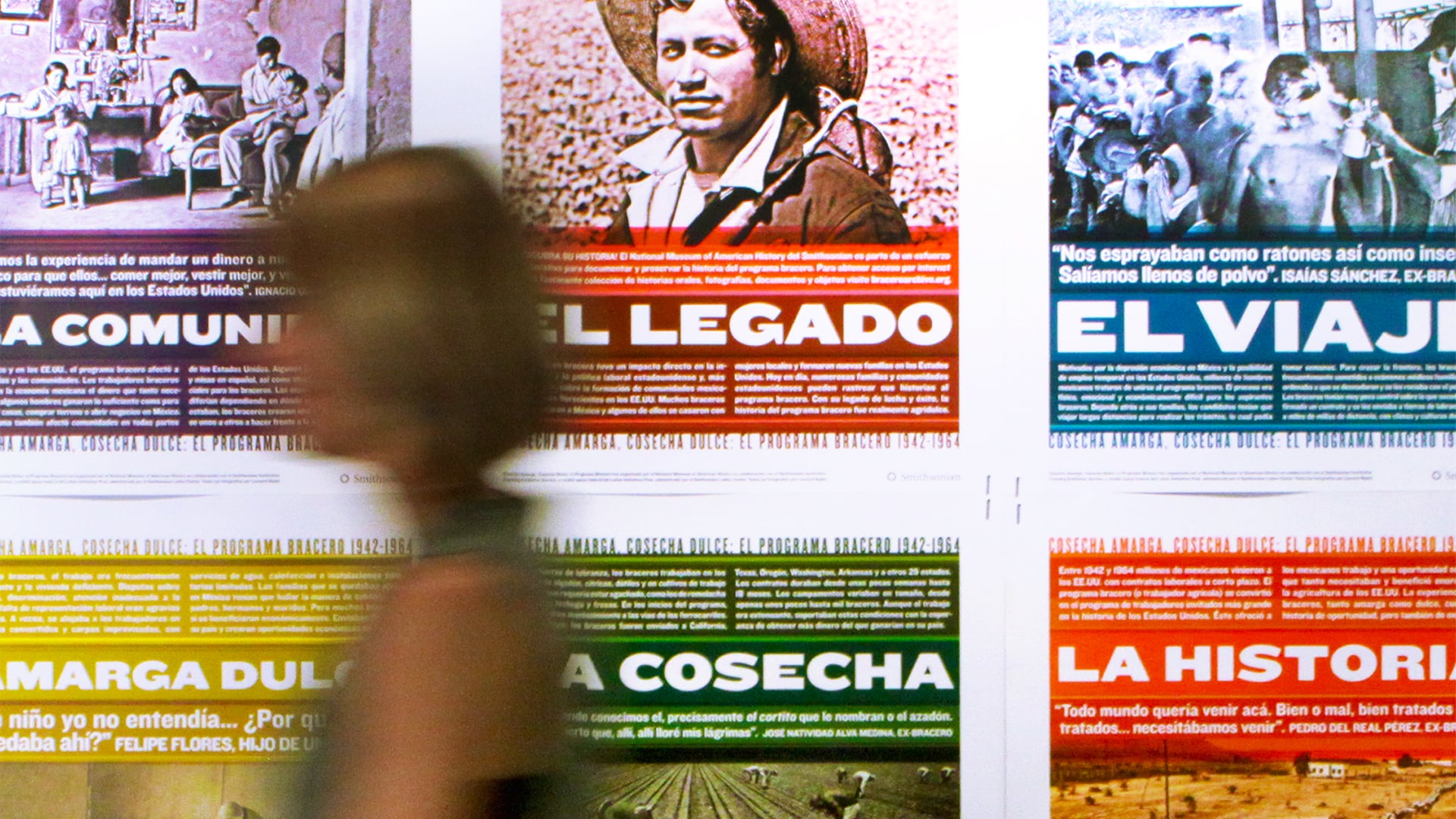
The Smithsonian was ordered to flag “inaccurate information.” I designed a poster series that required complicated truths.

Business
Chris Mele|Commentary
Radical collaboration requires friction

Business
Helder Santo|Commentary
AI will offer you confidence and conviction. Don’t fall for it.
Recent Posts
S13 E8 DB|BD at Aspen: Eric Ries Would Like to Apologize S13 E7 DB|BD at Aspen: Proactivity is the Key to Survival With Edelman’s Dave Fleet AI, aspen business and society program, aspen institute, corporate culture, Delta, economic equity, government, harvard business school, hbs, innovation, leadership, Mastercard, Pfizer S13E5 DB|BD at Aspen: Innovation Requires Collaboration with Professor Linda Hill S13 E4 DB|BD at Aspen: Dean Erika James Says a Prepared Leader is a Disciplined OneSubscribe to The Observatory
Related Posts
Business
William Richardson|Commentary
Brands cannot afford to speak in the same voice as countless others right now. Typeface designers can help.
Arts + Culture
John Ball|Commentary
The Smithsonian was ordered to flag “inaccurate information.” I designed a poster series that required complicated truths.
Business
Chris Mele|Commentary
Radical collaboration requires friction
Business
Helder Santo|Commentary