



November 19, 2026
Anthropic’s IPO filing confesses the potential for catastrophic mishaps
The filing uses the word “adverse,” as in potential “adverse events,” some 247 times
One of the more interesting legacy skills of being a longtime business journalist is the willingness to read lengthy business documents, like annual and quarterly reports, or the increasingly rare S-1 or IPO filing.
I’ve read hundreds by this point.
An S-1 is the first chance potential investors get to see the hopes, plans, and dreams of a company seeking to access capital markets. They are heady documents, filled with legalese and official seals. Company founders love to point to the nostalgic drama of their garage, dorm room, or kitchen table origins, but opening themselves to global scrutiny in search of buckets of cash remains one of the most fraught business rites of passage in the modern age.
IPO filings are often the first time a company publicly articulates its plans to make money and grow its customer base, how it will use the money it raises, who is in charge, and what can go wrong.
They often reflect the idiosyncrasies of their leaders.
Ice cream maker Ben & Jerry offered early shares to Vermont residents by running ads in the local paper. Jim Koch, founder of Samual Adams, made sure regular people could participate in the offering by adding coupons for shares on six-packs of beer. Amazon chief Jeff Bezos attached a characteristically blunt letter to the company’s first filing, saying, yes, the company was losing money, and investors could expect more of that while the company continued to make “bold rather than timid bets.” And in a rookie mistake, Google co-founders Sergey Brin and Larry Page gave an interview to Playboy magazine that was published during the company’s designated quiet period, forcing the company to attach copies of the interview (and correct some of their boasts) as an appendix to the official S-1 filing.
The Anthropic S-1 filing, which clocks in at 417 pages including attachments, isn’t like any other I’ve ever read. Cloaked in the trappings of a federal document, it has the soul of a science fiction novel, promising untold benefits and warning of potentially catastrophic mishaps.
“If Powerful A.I. is directed at solving humanity’s hardest problems and the risks are managed responsibly, the potential is extraordinary.” Good things like compressing scientific discovery from years to months, helping eliminate diseases, providing expert education to underserved students, transforming struggling economies, that sort of thing.
But what they want us to know, in the spirit of full disclosure, is that they can lose control of this thing they’re building at any time. That’s where we come in.
“A.I. can be misused by those who wish to do harm, for example to conduct cyberattacks or to design biological weapons.” And this. “Authoritarian governments may use A.I. to create high-tech surveillance states, deepen repression, and make themselves much more difficult to dislodge.” Anthropic is a public benefit corporation, meaning it has a chartered mandate to consider social good. And yet, they warn, “Our A.I. models may behave in unintended, misaligned, or autonomous ways, including by taking harmful actions that no user or third party directed.”
The filing uses the word “adverse,” as in potential “adverse events,” some 247 times.
There has been a lot of fervent analysis of the money involved—the company is targeting a fully diluted valuation of roughly $1.4 trillion and reported revenue of $33.2 billion during the first nine months of 2026. Unlike OpenAI, the company mostly serves enterprise customers; more than 11,900 customers spend over $100,000 a year as of Sept. 30, and more than 1,900 spend over $1 million a year.
While impressive, it joins a crowded and equally iffy field.
AI and related businesses are currently so overweight in investment portfolios that, if it turns out to be a bubble, the impact on all of us would be, well, adverse at best. Bloomberg has the best take on this; but the “Magnificent Seven” (Nvidia, Apple, Microsoft, Alphabet, Amazon, Meta, and Tesla) make up roughly 35% to 38% of the S&P 500, while tech stocks more broadly now count for nearly half.
While I think Anthropic’s call for our attention to this matter is disingenuous, they’re also not wrong.
I’ll end with former Indeed CEO Chris Hyams, who has been spending his time teaching AI ethics at Austin-based HBCU Huston-Tillotson University, while speaking out about AI’s impact on workers and democracy.
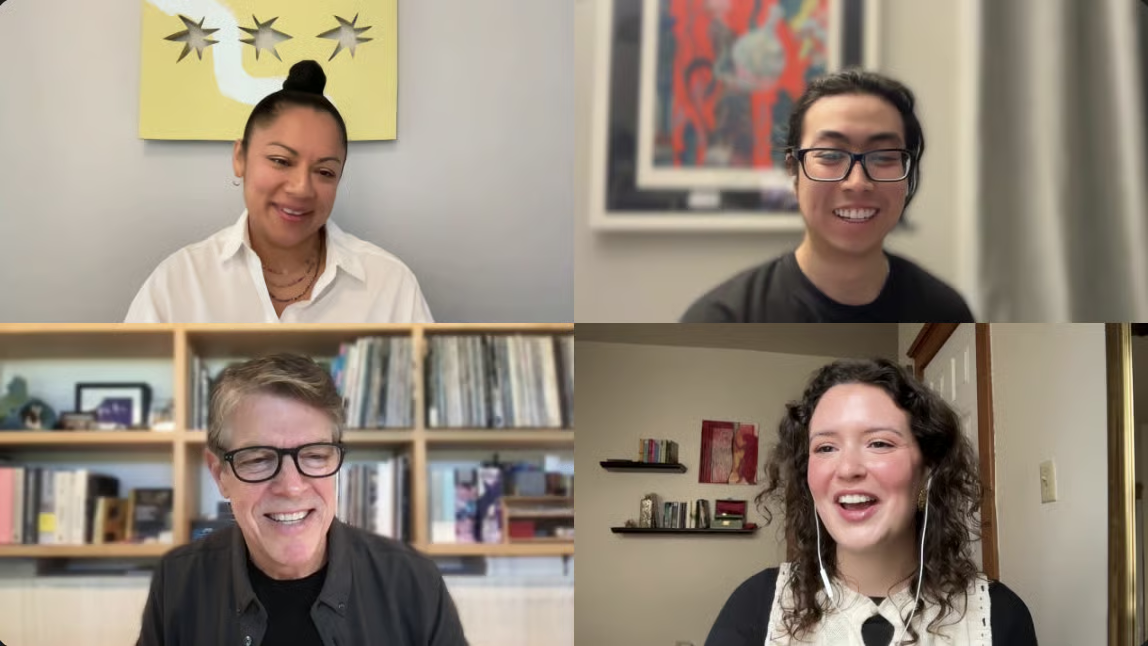
We spent an hour together recently recording an episode of the DBBD podcast, and he took all of this on directly.
“The last time we invented something that was potentially earth-changing in terms of the extraordinary good that it could bring and also the extraordinary harm was the Manhattan Project,” he says. The wartime race to build the atomic bomb was followed by decades of global arms-control work to contain it — the kind of conviction Hyams believes AI now demands. “I’m not optimistic because what I think is required is the greatest act of radical collaboration in the history of mankind since [then],” he says. “But I’m hopeful because we’ve pulled ourselves from the brink multiple times, and this feels like a brink.”
P.S. Did someone who loves you send you this newsletter? Welcome! Subscribe here.
This edition of The Observatory was edited by Rachel Paese.
This is the web version of The Observatory, our weekly dispatch from the editors and contributors at Design Observer. Want it in your inbox? Sign up here. While you’re at it, come say hi on YouTube, Instagram, LinkedIn, or TikTok — and don’t miss the latest gigs on our Job Board.
Join our community on Substack
We already have more live conversations in the works. Join the community we’re building on Substack to be part of them. Design Observer has always been free, and The Observatory always will be, but when we’re looking to build more than a newsletter. Join us!
Observed
Anthropic’s IPO is an unprecedented test of “investor gullibility,” writes New Construct in their IPO research letter. “Never, in the history of the world, have we seen an IPO valuation this high or one with as much risk.” NYU Professor Aswath Damodaran was more circumspect. In a lengthy LinkedIn post, he noted that justifying a $1.476 trillion valuation requires astronomical assumptions that depend on many things going right. “There is clearly movement towards profitability…but where will the profit margins end up after Anthropic has gone through its growth pains?”
TikTok in hot water with the European Union. The European Union’s executive preliminarily found TikTok in breach of the Digital Services Act (DSA) for “failing to adequately assess and mitigate the risk of users falling into rabbit holes that could harm their well-being.” The Commission flagged the “For You” feed that shows young users and vulnerable adults a continuous stream of content that can negatively affect their mental health.
Jensen Huang fucked everyone, explains Brian Phillips in this rollicking analysis for The Ringer. The f-bomb-laced breakdown of the fallout from Nvidia’s chief’s hasty resignation is funny until you think about it.
The only person not being blamed for the recent nationwide air traffic ground stop is Jensen Huang. It’s Biden’s fault, says Trump. Transportation Secretary Duffy blames Congress, and also copper wires.
Help me keep my in-house design job! “My boss is IN LOVE with AI and wants everyone to use Claude, automate workflows etc. I feel like I need to be proactive to somehow keep this job,” writes one Redditor. “Sounds like you need to become the brand guardian,” came one answer. “If people are just using Claude then you need effectively promote yourself to manager, everything people facing needs to be signed off by you.” Click through for more great advice.
Read more at designobserver.com or in your Substack feed.
Happenings
Design Miami (December 1–6, 2026 | Miami, FL): The intersection of high-end design collectibles, investment, global cultural identity, and commerce.
Podcasts
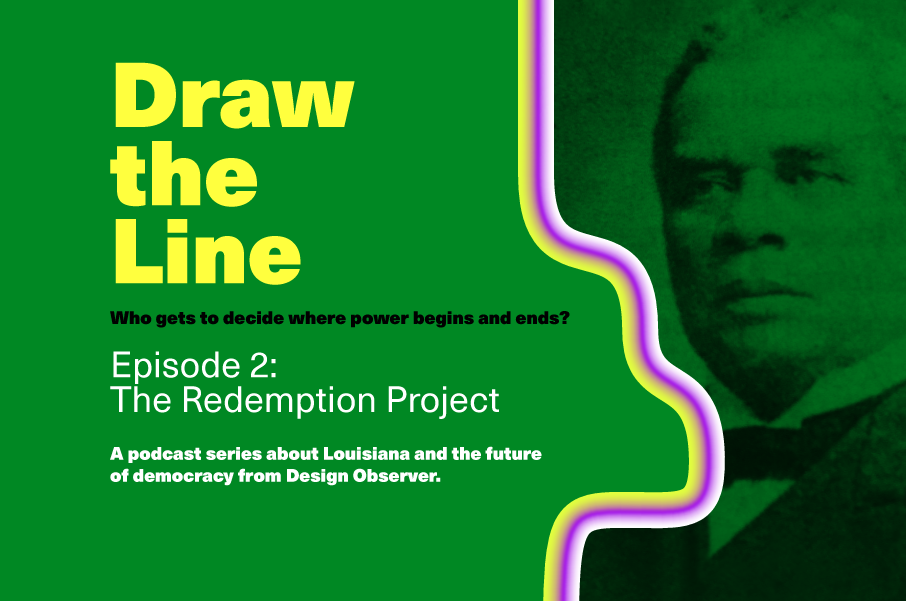
Draw the Line
Episode 2 is out now.
In the spring of 2026, the Supreme Court’s ruling in Louisiana v. Callais gutted the Voting Rights Act, and majority-Black districts across the South started to disappear. To understand how we got here, we must go back to the moment Black Louisianans first won the vote. In episode two of Draw the Line, host Ellen McGirt travels to Donaldsonville, LA.
The story may sound familiar, but the future is still unwritten.
Design of Business | Business of Design
DB|BD is back!
This season we are thinking about radical collaboration. DB|BD host Ellen McGirt interviewed eight thoughtful, important, and provocative leaders who are thinking deeply about AI, sustainability, and the role of business in a chaotic world.

Job board
Hiring a designer? Post your role on the Design Observer Job Board to reach a highly engaged audience of designers, creative leaders, and studios across the Design Employment Network.
Production & Vendor Coordinator at Air Line Pilots Association, Tysons, VA.
Product Designer at Strottman, Atlanta, GA.
Product Development Specialist at Ravenhill Studio, Los Angeles, CA.
End marks
Want to hear how other business leaders like Chris Hyams are defining this current moment and thinking through solutions? Explore the most recent season of The Design of Business | The Business of Design.
In the last episode of the season, Eric Ries offers a blueprint for how to design a profitable company that still has a soul. Hear Ellen McGirt’s live conversation on stage with him at the Aspen Business and Society Summit.
This is the web version of The Observatory, our weekly dispatch from the editors and contributors at Design Observer. Want it in your inbox? Sign up here. While you’re at it, come say hi on YouTube, Instagram, LinkedIn, or TikTok — and don’t miss the latest gigs on our Job Board.
Observed
View all
Observed
Share on Social


By Ellen McGirt
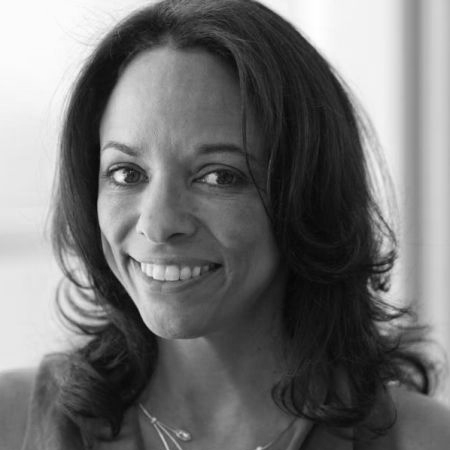 Ellen McGirt is an author, podcaster, speaker, community builder, and award-winning business journalist. She is the editor-in-chief of Design Observer, a media company that has maintained the same clear vision for more than two decades: to expand the definition of design in service of a better world. Ellen established the inclusive leadership beat at Fortune in 2016 with raceAhead, an award-winning newsletter on race, culture, and business. The Fortune, Time, Money, and Fast Company alumna has published over twenty magazine cover stories throughout her twenty-year career, exploring the people and ideas changing business for good. Ask her about fly fishing if you get the chance.
Related Posts
The Observatory Newsletter
Ellen McGirt
Civic design has a responsibility
The Observatory Newsletter
Ellen McGirt
Courthouses are designed to keep us apart
Draw the Line
Ellen McGirt|Audio
Episode 2: The Redemption Project
The Observatory Newsletter
Rachel Paese
The professional responsibility that’s not in your job description
Subscribe to The Observatory
Related Posts
The Observatory Newsletter
Ellen McGirt
Civic design has a responsibility
The Observatory Newsletter
Ellen McGirt
Courthouses are designed to keep us apart
Draw the Line
Ellen McGirt|Audio
Episode 2: The Redemption Project
The Observatory Newsletter
Rachel Paese