


November 12, 2026
Courthouses are designed to keep us apart
And that can make us forget we’re actually neighbors
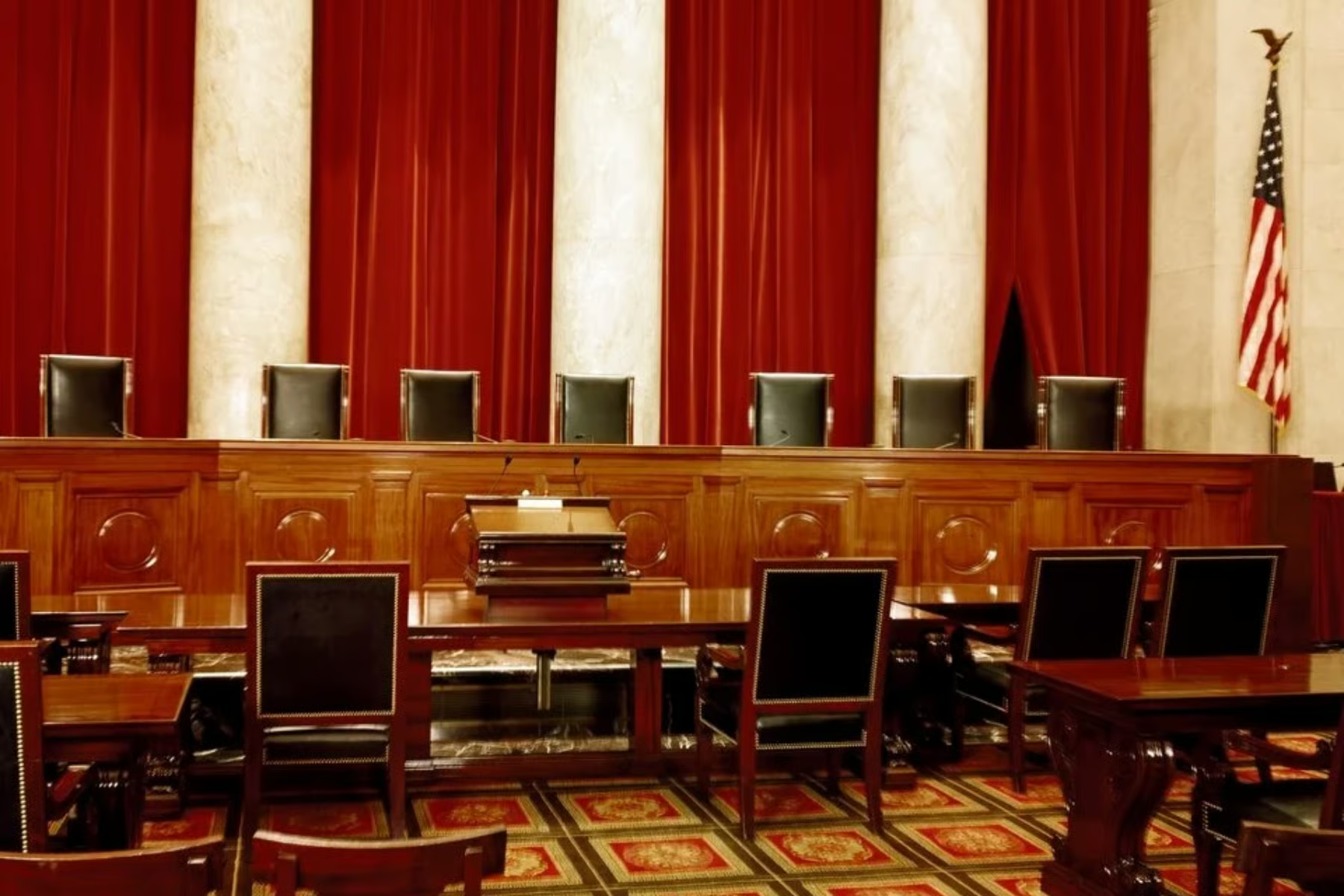
Modern courthouses in the U.S. are designed to keep people apart. In fact, it’s one of their most important features.
All courthouses have some sort of public lobby, and if budget allows, include referential artwork or other grand architectural features that reflect municipal pride, judicial wisdom, and the serious work that happens in the building.
But behind the scenes, architects describe two hidden, restricted routes. One is for judges, staff, and jurors; another is for defendants in custody, who enter through a private entrance and are steered to secure rooms to meet with counsel. This makes a total of three “circulation zones,” public, private (staff), and secure (incarcerated), and the only place these three populations meet is in the courtroom itself.
This design also has the unintended effect of turning a detainee’s first courtroom appearance into a dramatic reveal. (Take, for example, the collective shock of seeing a gray-haired Sean Combs for the first time after his arrest.)
An early example of modern courthouse design is Washington, D.C.’s E. Barrett Prettyman U.S. Courthouse, completed in 1949-1952 and designed by Louis Justement. To bring his mandate to life, he had to design circulation routes around each courtroom, both vertically and horizontally, which became the broader template for courthouses built since. (And an important area of focus for architectural firms.)
So, this feature of separation by design is something that I was generally aware of, but hadn’t really thought much about until I attended a hearing at the Courthouse in Shreveport, Louisiana last week, and found myself in an elevator with Phillip “Bert” Callais, the “non-African American voter” from the Baton Rouge area who was the lead plaintiff in the Louisiana v Callais, which ultimately gutted the Voting Rights Act this spring. In the same elevator was the legal team for Press Robinson, the trailblazing civil rights figure and educator who was the lead plaintiff in a case arguing for a different version of the map — and that temporarily won two majority-Black districts in Louisiana.
That case, Robinson v. Callais, has pitted these two men in a legal wrangle over the definition of a “fair map” for four years.
Robinson, who was also on hand for the hearing, took a different elevator. “I’ve never met him,” when I later pointed out Callais to him. “But here we are.”
The hearing seemed like a signal from the Callais camp that, despite their clear victory, they want to revisit some version of their initial complaint, likely this December, ostensibly — at least to my ears — to eliminate the one remaining Black majority district.
I’ll keep reporting on that.
But on that seasonable morning in Shreveport, timed poignantly on the last day of early voting in Louisiana, there we all were.
I was unexpectedly moved by the tableau in front of me — two legal combatants who have become towering figures in voting rights circles and who now hold a permanent place in U.S. history, sharing the same route to exercise their rights, with no special mechanism to separate them.
This is the messy nature of civic work; for democracy to work, we all need access to the same tools, and the systems and structures we’ve built can only obscure for so long the fact that we are actually neighbors.
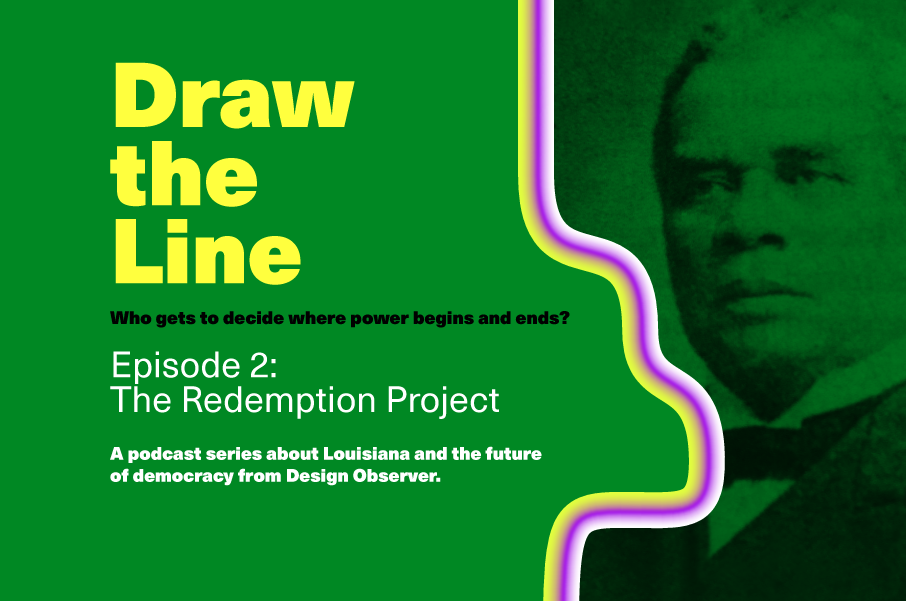
The latest episode of Draw The Line, our special documentary series on the Callais decision, gerrymandering, and democracy, is here. This episode revisits the not-so-recent past when Black Louisianians first won the vote — and the subsequent fight between neighbors that has continued nearly unabated until today.
Please listen, share, and boost.
P.S. Did someone who loves you send you this newsletter? Welcome! Subscribe here.
This edition of The Observatory was edited by Rachel Paese.
This is the web version of The Observatory, our weekly dispatch from the editors and contributors at Design Observer. Want it in your inbox? Sign up here. While you’re at it, come say hi on YouTube, Instagram, LinkedIn, or TikTok — and don’t miss the latest gigs on our Job Board.
Join our community on Substack
We’re building a community on Substack, and we hope you join us. Design Observer has always been free, and The Observatory always will be, but when we’re looking to build more than a newsletter.
Podcasts
Draw the Line
Episode 2 is out now.
In the spring of 2026, the Supreme Court’s ruling in Louisiana v. Callais gutted the Voting Rights Act, and majority-Black districts across the South started to disappear. To understand how we got here, we must go back to the moment Black Louisianans first won the vote. In episode two of Draw the Line, host Ellen McGirt travels to Donaldsonville, LA.
The story may sound familiar, but the future is still unwritten.
Design of Business | Business of Design
DB|BD is back!
This season we are thinking about radical collaboration. DB|BD host Ellen McGirt interviewed eight thoughtful, important, and provocative leaders who are thinking deeply about AI, sustainability, and the role of business in a chaotic world.

YouTube
Hear behind-the-scenes commentary from the voices of Draw the Line.
Observed
What a map from 1580 can teach us about data visualization, gerrymandering, and political conquest. “Mapa de Teozacoalco” is an intricately hand-drawn map by an unnamed Indigenous cartographer, created in response to a request from King Philip II of Spain to help his court understand the land he wanted to exploit. But could European eyes understand the mapmaker’s worldview – one that depicts “the yuhuiayu‘s unity and wholeness?” says Professor Laura Klein. “For the mapmaker, the king’s interpretation carried profound personal and political stakes.”
Typeface as an act of liberation. Russian visual standards have mandated Ukrainian lettering for 300 years. A new font called Zakon, drawn from the work of Ukrainian artists and designers, was introduced last week to remove Russian influence. “The letters in which the word ‘Ukraine’ is written are also part of our state identity,” says Ukrainian Parliament Chair Ruslan Stefanchuk. “Decolonization should also concern how Ukraine presents itself.”
Wharton professor Ethan Mollick, out with his latest book “Co-Existence” – a field guide to AI, says sure, worry about the apocalypse, but it’s the little things that are actually going to get us. Lack of oversight and vision isn’t helping. “I talk to CEOs all the time, and I think they don’t know what to do with this technology.”
The market is wavering on geothermal energy stocks, as tech companies turn to natural gas to fuel their AI data center expansions. But climate goals don’t have to be abandoned. “The pitch for geothermal is it can provide uninterrupted power without greenhouse gas emissions,” says Politico.
Famed British architect Norman Foster has designed his first-ever wristwatch in collaboration with the watch brand Lebond. “We wanted to look again at something very familiar and reconsider it as a complete object, with the case, the strap, the dial and the movement all part of a system,” he says.
The secret to massive scale is to think very small. Nano-small, in fact. A team at MIT is making headway turning nanoparticles into useful materials, with applications in medicine, agriculture, photonics, and more. “This is a new approach in nanoparticle assembly that hasn’t been investigated before. It’s exciting to have a new tool that is so counterintuitive,” says Professor Rob Macfarlane. Click through to get into the (very tiny) weeds.
Read more at designobserver.com or in your Substack feed.
Happenings
Leading Design London (November 11–12, 2026 | London, UK): An executive-level masterclass-style conference built explicitly for design directors, leaders, and team managers.
BODW (November 18, 2026 |Hong Kong) Asia’s premier annual event on design, innovation, and brand strategies featuring global creative leaders. This year, DesignInspire offers an international exhibition about creativity organized by the Hong Kong Trade Development Council (HKTDC).
Design Miami (December 1–6, 2026 | Miami, FL): The intersection of high-end design collectibles, investment, global cultural identity, and commerce.
Find a full list here or keep an eye on your Substack feed.
Job board
Hiring a designer? Post your role on the Design Observer Job Board to reach a highly engaged audience of designers, creative leaders, and studios across the Design Employment Network.
Design Manager at Council on Foreign Relations, New York, NY.
Assistant Professor, Graphic Design for Interactive and Digital Media at The University of Texas at Austin: College of Fine Arts: Department of Design, Austin, TX.
Assistant or Associate Professor of Industrial Design at Western Washington University, Bellingham, WA.
End marks
How does design help define the national “we?” Sometimes it’s courthouse design, ballot design, the design of district lines, or the design of democracy itself. Jessie McGuire reflected on design’s role in shaping national identity back in July, and now is the moment to revisit it. Read the article and check out snippets from Design Observer’s conversation with McGuire on Instagram, TikTok, or YouTube.
This is the web version of The Observatory, our weekly dispatch from the editors and contributors at Design Observer. Want it in your inbox? Sign up here. While you’re at it, come say hi on YouTube, Instagram, LinkedIn, or TikTok — and don’t miss the latest gigs on our Job Board.
Observed
View all
Observed
Share on Social


By Ellen McGirt
 Ellen McGirt is an author, podcaster, speaker, community builder, and award-winning business journalist. She is the editor-in-chief of Design Observer, a media company that has maintained the same clear vision for more than two decades: to expand the definition of design in service of a better world. Ellen established the inclusive leadership beat at Fortune in 2016 with raceAhead, an award-winning newsletter on race, culture, and business. The Fortune, Time, Money, and Fast Company alumna has published over twenty magazine cover stories throughout her twenty-year career, exploring the people and ideas changing business for good. Ask her about fly fishing if you get the chance.
Related Posts
Draw the Line
Ellen McGirt|Audio
Episode 2: The Redemption Project
The Observatory Newsletter
Rachel Paese
The professional responsibility that’s not in your job description

The Observatory Newsletter
Ellen McGirt
A design lesson from Major League Baseball
Design Juice
Rachel Paese|Design Juice
Typography is an accessibility, usability, and customer care issue, says Charles Nix
Subscribe to The Observatory
Related Posts
Draw the Line
Ellen McGirt|Audio
Episode 2: The Redemption Project
The Observatory Newsletter
Rachel Paese
The professional responsibility that’s not in your job description
The Observatory Newsletter
Ellen McGirt
A design lesson from Major League Baseball
Design Juice
Rachel Paese|Design Juice