


November 23, 2026
The “pop art nun”
Sister Mary Corita Kent's work addressed a commercialized, violent world with joy, reflection, and thanksgiving
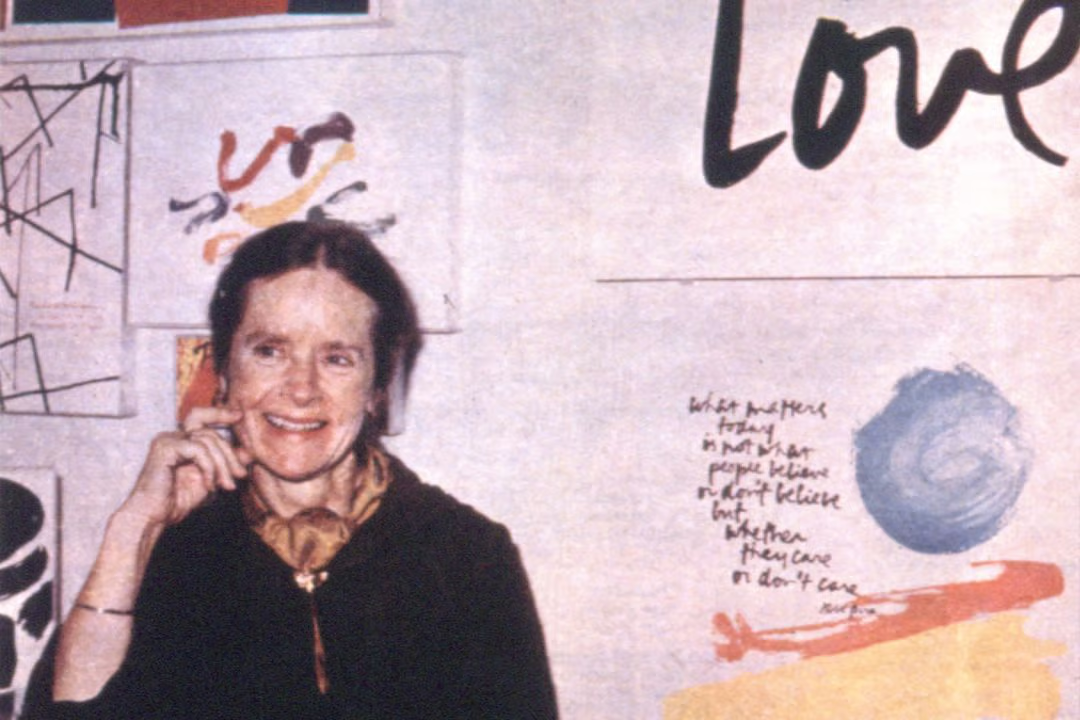
“You don’t have art off in a little niche someplace. You have no distinction between what is art and what is not art; you do everything as well as you can.”
That was Sister Mary Corita Kent, the “pop art nun” whose work addressed the persistent hum of a commercialized, violent world with joy, reflection, and thanksgiving.
It was the 1960s, and intersecting tensions were spilling out of televisions and into the daily lives of Americans of every age — the Vietnam War, the fight for racial justice, political assassinations, protests on college campuses. Into this cultural chaos, Sister Corita, who ran the art department at the progressive Immaculate Heart College in Los Angeles, turned her personal passion for printmaking into a powerful form of social commentary.
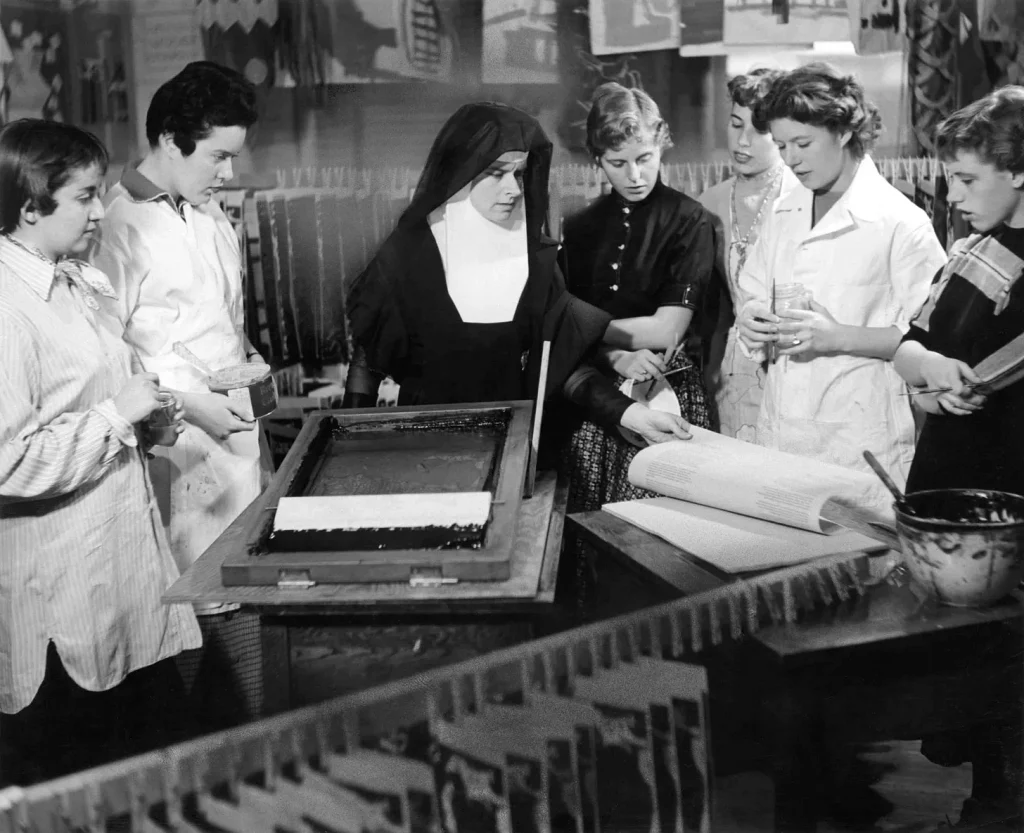
Sister Corita leaned into the consumer and pop culture aesthetics of the day, often infusing ad slogans, grocery signs, spiritual language, poetry snippets, and images of war and social protest to turn the week’s headlines into a bold, compelling visual language. Like the consumer impulse she harnessed, she was focused on scale. “Corita wanted her art to be accessible,” says Nellie Scott, director of the Corita Art Center. “She used this traditionally commercial medium to widely disseminate her work. It’s a very democratic medium.”
She was, by all accounts, a fiercely dedicated teacher, sometimes challenging her students to revisit how they saw the world while pushing beyond their limits. One such exercise, to create 100 drawings in a single day, produced both groans and breakthroughs. “Sometimes you can take the whole of the world in, and sometimes you need a small piece, to take in,” she said.
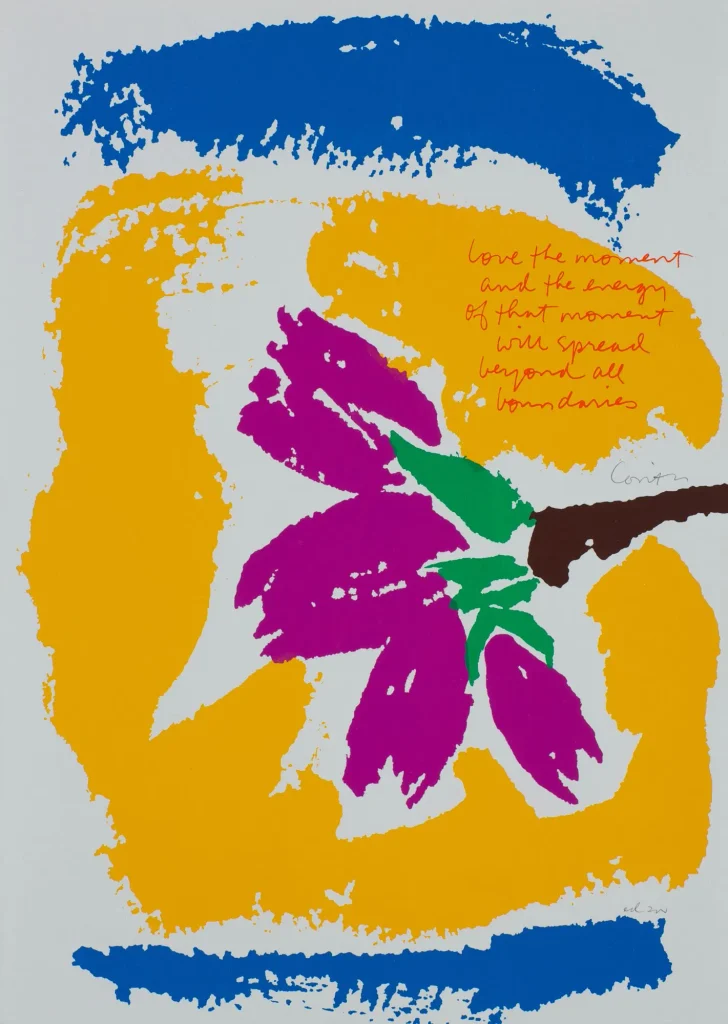
What she wanted for the rest of us was clear. “Love the moment,” declares a print featuring magenta tulips, surrounded by bright swaths of blue and yellow. Reclaim violence.
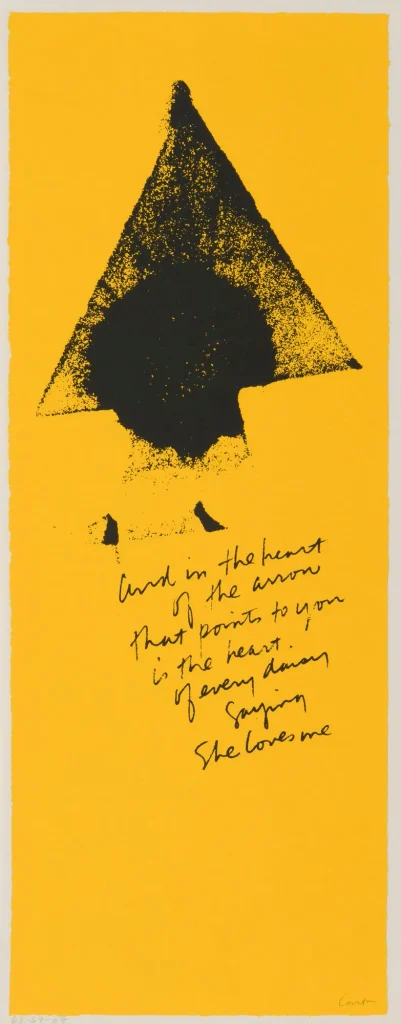
“And in the heart of the arrow that points to you is the heart of every daisy saying she loves me,” a stark black arrow on a yellow ground.
“I’m glad I can feel pain” is a poignant print marking Robert Kennedy’s murder. “Social fabrics are the only thing that holds us together. I’m trying to be strong. I’m trying to direct all my energies to positive things,” she said.
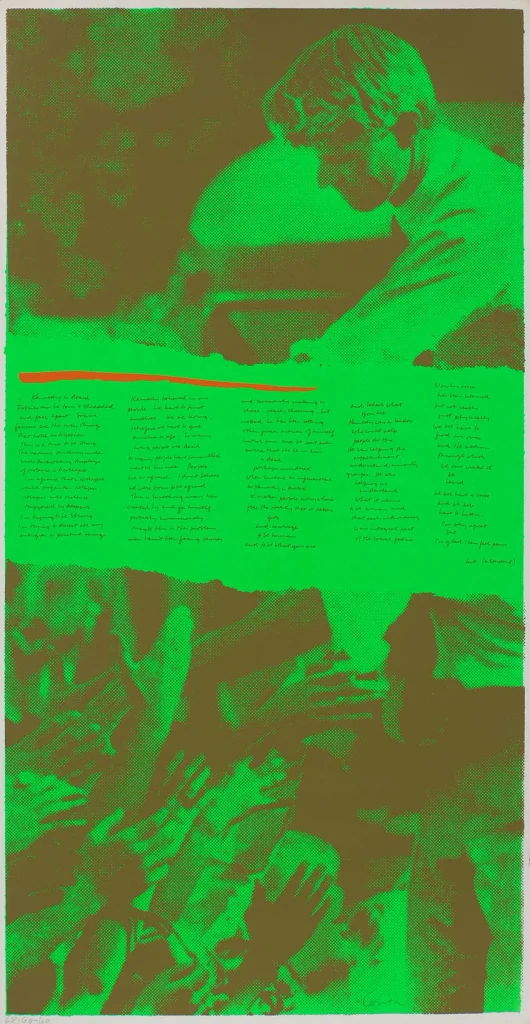
You can spend some time with her work at the Corita Center’s wonderful online collection, and I hope you do.
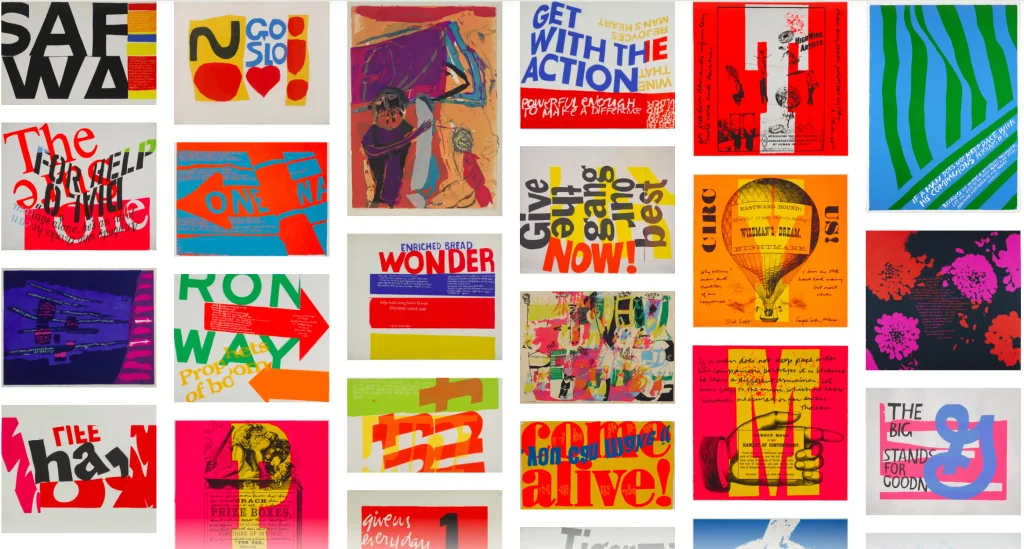
As we slip into a week dedicated to celebrating family and moving merchandise, I’m reminded of the role each of you play in navigating a complex world: the thinkers, the redesigners, the weavers of social fabric. “Poets and artists notice the common place, how good it is,” Corita said.
We are so very grateful for you.
Wishing you a week of common place good. Enjoy Thanksgiving if it’s a holiday for you, and please let us know how we can continue to support your work.
The Observatory will be dark next week and will return on Dec. 7th with some fun updates and other positive things.
P.S. Did someone who loves you send you this newsletter? Welcome! Subscribe here.
This edition of The Observatory was edited by Rachel Paese.
This is the web version of The Observatory, our weekly dispatch from the editors and contributors at Design Observer. Want it in your inbox? Sign up here. While you’re at it, come say hi on YouTube, Instagram, LinkedIn, or TikTok — and don’t miss the latest gigs on our Job Board.
Join our community on Substack
We already have more live conversations in the works. Join the community we’re building on Substack to join the next one.
Nvidia Observed
The evidently indispensable Jensen Huang was reinstated today as CEO of the chipmaking giant, amid turmoil in the Trump administration and the stock market. Here’s a roundup.
Points if he shows back up in a red leather jacket. Trump personally called into a Nvidia board meeting yesterday and argued for his return, reports Semafor. “President Trump was totally involved and this is a great decision by the NVIDIA board. We have to protect our geniuses,” said White House communications director Steven Cheung.
Welcome to in-your-face oligarchy, says former Indeed CEO Chris Hyams. “This further clarifies what we already knew: the Trump administration and the tech industry have no intention of holding anyone accountable for anything, as long as AI can continue to prop up the stock market,” he wrote on X.
Sleeping with customers, subordinates, and (alleged) spies is fine now. Huang resigned in disgrace some 264 hours ago, setting a new redemption record. As of press time, the stock market has rebounded; that said, long-time tech analyst Daniel Bader has joined the “gobsmacked” community, saying he’s never seen anything like this before. “This was not an outcome that we saw even two days ago.”
“The Nvidia Board Just Confirmed Its Own Irrelevance.” Bloomberg’s Beth Kowitt, similarly gobsmacked, finds a bright light in the haze. “The one thing giving me solace right now is that Nvidia’s board apparently has worse instincts than I do,” she writes. See also: “clown-like governance,” and a huzzah from Elon Musk. “The mistake has been corrected.”
Maybe Netflix can take it from here? Mashable’s helpful tick tock of the year of Huang’s alleged shenanigans that led to his resignation everything being fine.
Read more at designobserver.com or in your Substack feed.
Podcasts
Draw the Line
Episode 2 is out now.
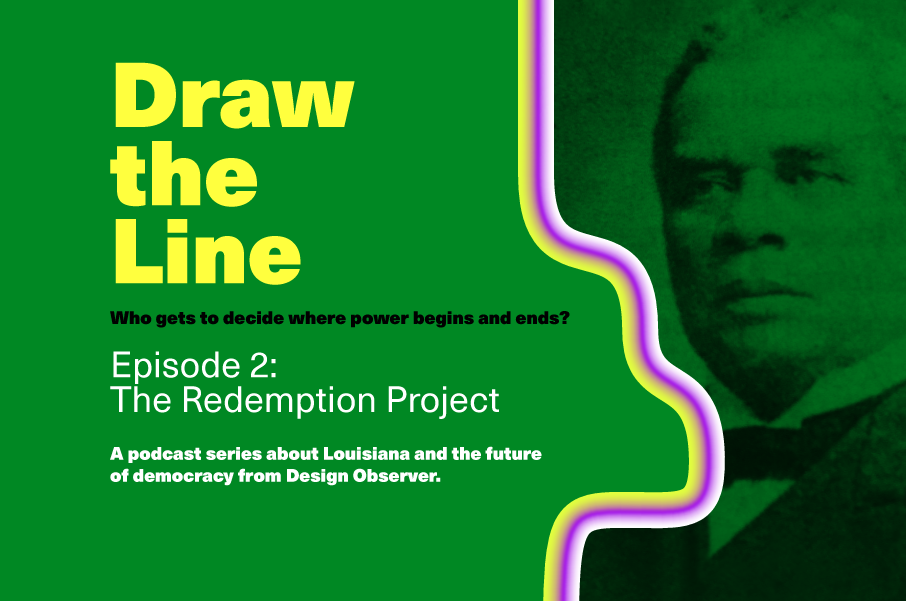
In the spring of 2026, the Supreme Court’s ruling in Louisiana v. Callais gutted the Voting Rights Act, and majority-Black districts across the South started to disappear. To understand how we got here, we must go back to the moment Black Louisianans first won the vote. In episode two of Draw the Line, host Ellen McGirt travels to Donaldsonville, LA.
The story may sound familiar, but the future is still unwritten.
Design of Business | Business of Design
DB|BD is back!
This season we are thinking about radical collaboration. DB|BD host Ellen McGirt interviewed eight thoughtful, important, and provocative leaders who are thinking deeply about AI, sustainability, and the role of business in a chaotic world.
Job board
Hiring a designer? Post your role on the Design Observer Job Board to reach a highly engaged audience of designers, creative leaders, and studios across the Design Employment Network.
Dean, College of Design at University of Kentucky, Lexington, KY.
Tenure-track Assistant Professor of Foundations at James Madison University, Harrisonburg, VA.
Interior Designer at Cass Calder Smith Architecture + Interiors, San Francisco, CA.
End marks
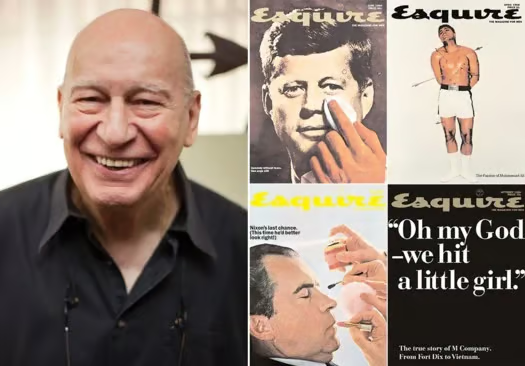
In the first installment of the six-part recipe series, read the story behind George Lois’s stuffing recipe. Adam Harrison Levy also explores Lois’s Greek immigrant roots, family recipes, and the food memories that shaped a design icon.
This is the web version of The Observatory, our weekly dispatch from the editors and contributors at Design Observer. Want it in your inbox? Sign up here. While you’re at it, come say hi on YouTube, Instagram, LinkedIn, or TikTok — and don’t miss the latest gigs on our Job Board.
Observed
View all
Observed
Share on Social


By Ellen McGirt
 Ellen McGirt is an author, podcaster, speaker, community builder, and award-winning business journalist. She is the editor-in-chief of Design Observer, a media company that has maintained the same clear vision for more than two decades: to expand the definition of design in service of a better world. Ellen established the inclusive leadership beat at Fortune in 2016 with raceAhead, an award-winning newsletter on race, culture, and business. The Fortune, Time, Money, and Fast Company alumna has published over twenty magazine cover stories throughout her twenty-year career, exploring the people and ideas changing business for good. Ask her about fly fishing if you get the chance.
Related Posts

The Observatory Newsletter
Ellen McGirt
Anthropic’s IPO filing confesses the potential for catastrophic mishaps
The Observatory Newsletter
Ellen McGirt
Civic design has a responsibility
The Observatory Newsletter
Ellen McGirt
Courthouses are designed to keep us apart
Draw the Line
Ellen McGirt|Audio
Episode 2: The Redemption Project
Subscribe to The Observatory
Related Posts
The Observatory Newsletter
Ellen McGirt
Anthropic’s IPO filing confesses the potential for catastrophic mishaps
The Observatory Newsletter
Ellen McGirt
Civic design has a responsibility
The Observatory Newsletter
Ellen McGirt
Courthouses are designed to keep us apart
Draw the Line
Ellen McGirt|Audio