


November 12, 2026
Civic design has a responsibility
After a near-record midterm turnout, we debriefed with three designers on Substack live. Here's what you missed:
After a historic midterm election in the U.S., experts who work on democracy and civic engagement were in good spirits.
They had reason to be.
According to political scientist Michael McDonald, voter turnout was the second-highest in a midterm year since 1914, exceeded only by the 2018 midterms, though that number could climb. While the overall number was notable, the local story was more so. In districts that previously had voting protections under the now-gutted Voting Rights Act, turnout appeared to skyrocket.
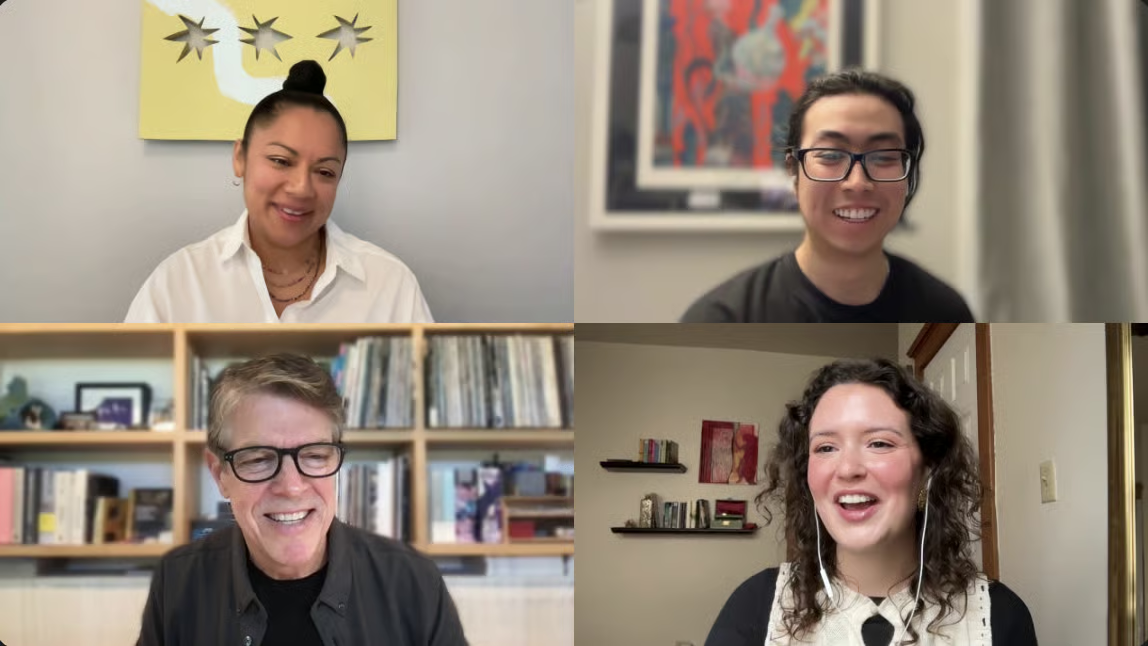
In a timely conversation led by Design Observer deputy editor Rachel Paese, John Ball, who leads brand and campaign studio MiresBall; Jessie McGuire, who recently wrapped a ten-year run at the Cooper Hewitt National Design Award-winning studio Thought Matter; and Justin Wong, a New York design director and president of AIGA New York, discussed the current state of politics and the role of designers in democracy.
All shared their reaction to the news.
“As a millennial, this is the first unprecedented event that felt positive,” said McGuire about the election results. “I really felt that in my bones,” said McGuire.
While each brought rich experiences in civic design to the conversation (Ball has been profiled in our Design Juice column and McGuire shared her insights with Design Observer for America’s 250th), the conversation turned particularly lively when the group explored the need to clarify design’s role in public life.
Is a civic campaign the same as a commercial one — like selling soda? When does the framework shift and why does that matter? What happens when when design is co-opted?
The group made three important distinctions: designing to inform, designing to persuade, and designing for belonging.
“I think you’re using a lot of the same skills. You’re just using them towards a different objective,” says Ball, a civic campaign designer who recently led a voter-education campaign for the San Diego Foundation.
The very nature of the subject means that following a typical product rollout — or influencer strategy — is a dangerous gambit.
“When you’re communicating civically, you’re dealing with issues that are very serious,” says Wong. “This means you’re talking about people’s rights, you’re talking about their communities, you’re talking about access to resources.” Wong, who considers himself a keen observer of the field, says there is a higher responsibility to truth and information. “I want designers to really be thinking about and questioning what their role is. And how far they can push what their responsibility is in shaping civic platforms.”
“I feel like commercial design’s whole role now is to persuade,” says McGuire, who discussed her work designing an “I Voted” sticker, voter-registration murals, and highlighting the invisible labor of sanitation workers on New York City garbage trucks. But this work is more complex than hawking soda: civic designers aim to transform someone’s experience in their own community. “My civic information and my civic institutions have to help me [as a citizen] enable my independent judgment… and understand something in the most factual way possible.”
The panel offered granular insights into recent successful campaigns, including Mayor Zohran Mamdani and Texas Senator-elect James Talerico. They also offered a passing nod to the strength of the Trump brand.
“Both Trump administrations have certainly used commercial branding tactics to obscure what we as individuals should be thinking about,” said McGuire. “If nothing else, Trump both times proves the power of branding… with great power comes great responsibility,” said Ball.
And special thanks to civic information designer Emma Werowinski from the Center for Civic Design for joining the call and shouting out the agency in the chat. “Democracy is a design problem,” is their motto, and we agree.
Who would you like to hear from next? Talk to us.
Catch the full live recording below, and if you want to join us for the next one, subscribe on Substack here.
P.S. Did someone who loves you send you this newsletter? Welcome! Subscribe here.
This edition of The Observatory was edited by Rachel Paese.
This is the web version of The Observatory, our weekly dispatch from the editors and contributors at Design Observer. Want it in your inbox? Sign up here. While you’re at it, come say hi on YouTube, Instagram, LinkedIn, or TikTok — and don’t miss the latest gigs on our Job Board.
Join our community on Substack
If this conversation sounded up your alley, there are many more to come. Join the community we’re building on Substack to be part of them. Design Observer has always been free, and The Observatory always will be, but when we’re looking to build more than a newsletter. Join us!
Podcasts
Draw the Line
Episode 2 is out now.
In the spring of 2026, the Supreme Court’s ruling in Louisiana v. Callais gutted the Voting Rights Act, and majority-Black districts across the South started to disappear. To understand how we got here, we must go back to the moment Black Louisianans first won the vote. In episode two of Draw the Line, host Ellen McGirt travels to Donaldsonville, LA.
The story may sound familiar, but the future is still unwritten.
Design of Business | Business of Design
DB|BD is back!
This season we are thinking about radical collaboration. DB|BD host Ellen McGirt interviewed eight thoughtful, important, and provocative leaders who are thinking deeply about AI, sustainability, and the role of business in a chaotic world.

YouTube
Catch insights from designers across disciplines on our YouTube, including Jessie McGuire.
Observed
Nvidia CEO Jensen Huang is in the hot seat after confirming a romantic affair with a woman who has been determined by U.S. intelligence agencies to be a spy for China. The company’s board of directors has opened up an investigation into the matter, but is the chip chief too big to control? “Everything [Huang] talks about drives the industry,” Bob O’Donnell, the chief analyst at TECHnalysis Research, tells the New York Times. “He’s had the Midas touch with technology.”
Tesla will wind down production of its Cybertruck at its Austin plant next year, CEO Elon Musk announced on Friday. Musk says the facility will now be focused on [failing to deliver – Ed. note] its Cybercab robotaxi. While the Cybertruck was long touted as a futuristic alternative to legacy pickups, the math never mathed: sales totaled 23,798 units in 2024, 25,771 units in 2025, and 13,800 units through the first nine months of 2026, according to Tesla Cybertruck Sales Figures.
After a dressing down, the Met dresses down. After a planned 2027 Met Gala exhibit featuring the controversial designer John Galliano drew ire, the Met is offering a plan B: ExtraOrdinary: Fashion and the Poetics of the Everyday. The May exhibition will highlight the craft and beauty of mundane genres like jeans and T-shirts, along with clothes made from non-traditional materials and avant-garde takes on fashion staples. “The ordinary is never quite as simple as it seems,” The Costume Institute’s lead curator Andrew Bolton said in a press statement.
The failed design project of Republican gerrymandering. Massive voter turnout, particularly in Black communities in the South, made the U.S. midterm “Blue wave” possible. “Let’s be clear: voters overcame unbelievable voter suppression across this country, and in particular in the south, to make sure that they were able to cast their vote in their voice,” Power Coalition CEO Ashley Shelton told the Guardian.
Yoshitomoro Gara is back in New York after a nine-year absence, and is delighting a new generation of art fans. The Japanese superstar artist, showing at David Zwirner, is shaking up an otherwise moribund fall season, says Artnet. “Nara’s huge-headed girls are everywhere, brandishing knives and holding guns, ready to fight,” says Andrew Russeth. Gurl, same.
Read more at designobserver.com or in your Substack feed.
Happenings
Leading Design London (November 11–12, 2026 | London, UK): An executive-level masterclass-style conference built explicitly for design directors, leaders, and team managers.
BODW (November 18, 2026 |Hong Kong) Asia’s premier annual event on design, innovation, and brand strategies featuring global creative leaders. This year, DesignInspire offers an international exhibition about creativity organized by the Hong Kong Trade Development Council (HKTDC).
Design Miami (December 1–6, 2026 | Miami, FL): The intersection of high-end design collectibles, investment, global cultural identity, and commerce.
Find a full list here or keep an eye on your Substack feed.
Job board
Hiring a designer? Post your role on the Design Observer Job Board to reach a highly engaged audience of designers, creative leaders, and studios across the Design Employment Network.
Design Director at Rudy, New York, NY.
Assistant/Associate Professor of Product Design at University of Kentucky College of Design, Lexington, KY.
Senior Project Manager at Miscreants, Remote.
End marks
Want to hear from more expert designers who consistently come face-to-face with civic design challenges? Check out Design As Governance, hosted by Lee Moreau.
This is the web version of The Observatory, our weekly dispatch from the editors and contributors at Design Observer. Want it in your inbox? Sign up here. While you’re at it, come say hi on YouTube, Instagram, LinkedIn, or TikTok — and don’t miss the latest gigs on our Job Board.
Observed
View all
Observed
Share on Social


Related Posts
The Observatory Newsletter
Ellen McGirt
Courthouses are designed to keep us apart
Draw the Line
Ellen McGirt|Audio
Episode 2: The Redemption Project
The Observatory Newsletter
Rachel Paese
The professional responsibility that’s not in your job description

The Observatory Newsletter
Ellen McGirt
A design lesson from Major League Baseball
Subscribe to The Observatory
Related Posts
The Observatory Newsletter
Ellen McGirt
Courthouses are designed to keep us apart
Draw the Line
Ellen McGirt|Audio
Episode 2: The Redemption Project
The Observatory Newsletter
Rachel Paese
The professional responsibility that’s not in your job description
The Observatory Newsletter
Ellen McGirt