


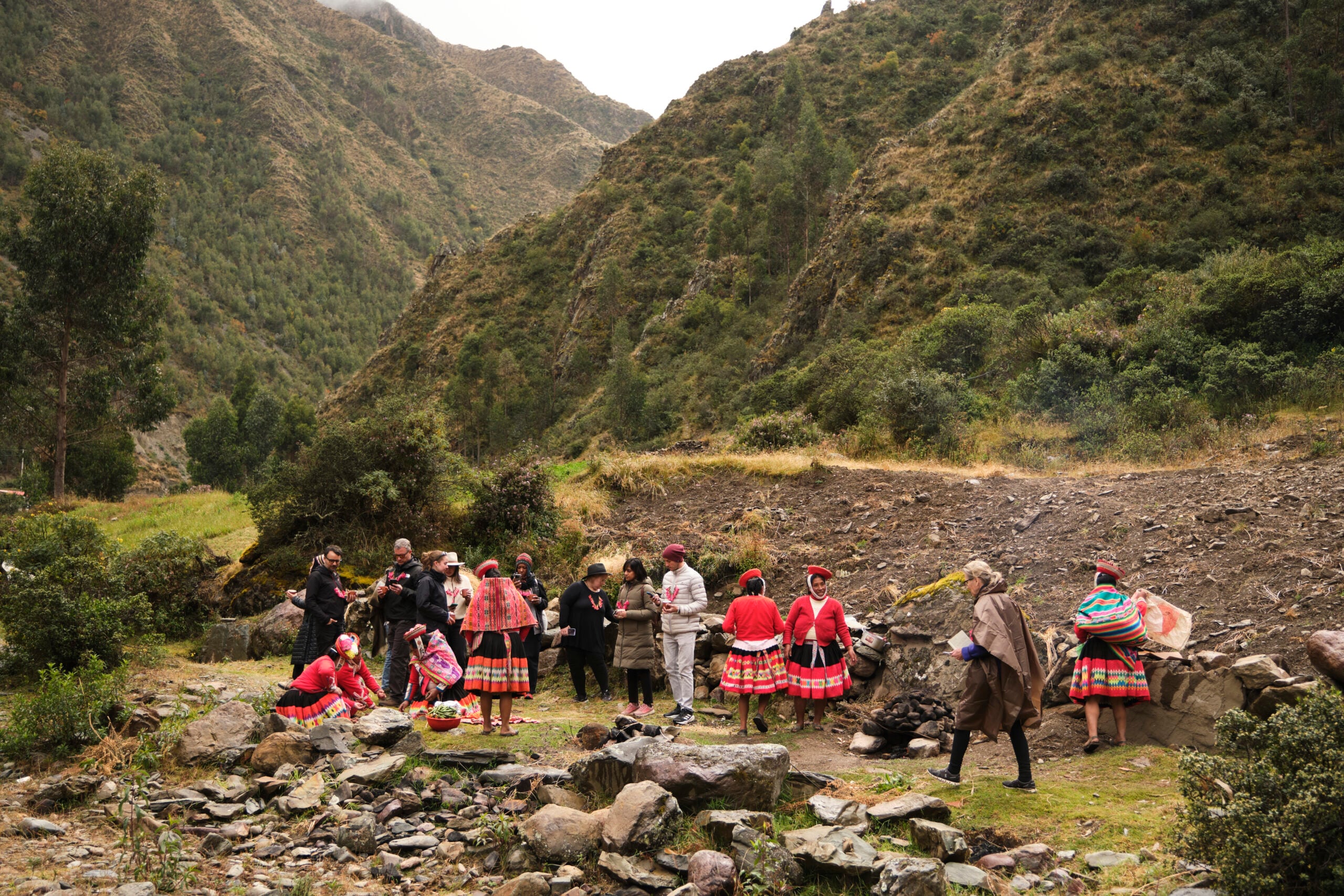
Laura Sofia Cardozo|Peru's Sacred Valley
April 28, 2026
The value of multigenerational memory in design practice
How Indigenous knowledge frameworks can inform a design practice that considers future generations
Editor’s note: This is the third installment of a series on design lessons learned from Reclaiming Value, Murmur Ring’s four-day multi-disciplinary immersion in Peru’s Sacred Valley. Along with insights from individual participants, the series explores the question: what makes a meaningful convening? Read more of the series here.
What if we shift the conversation around design and innovation towards remembrance?
I came to the Reclaiming Value: Sacred Valley Design Immersion within the ongoing process of reshaping how I approach design. I’ve been heavily influenced by Indigenous frameworks, which are rooted in living systems that honor past wisdom, present responsibility, and future legacies. To operate at the convergence of multiple histories and epistemologies seems necessary in order to meet the current moment.
As a dual citizen of Colombia and the United States and a professional working directly with diaspora communities, my work is rooted in honoring the multigenerational memory that lives within Indigenous, Black, and brown communities in places like Tulsa, Chicago, the Osage Nation, Tamaya (Santa Ana Pueblo), and beyond.
My current project at Breakout, the Global Eahou Immersion, is a partnership with the Purple Maiʻa Foundation and led by my project co-director, Kānaka ʻŌiwi (Native Hawaiian) activist and creative, Keoni DeFranco. Together, we are bringing together a values-aligned cohort to explore how ancestral knowledge, technology, and entrepreneurship can shape a regenerative, inclusive economy. Through moʻolelo (storytelling) and the values of aloha ʻāina (love of the land), the cohort moves in the spirit of ʻEahou’—a vision of empowered, sovereign community and fresh beginnings, carried forward by the wisdom of the past, present, and future.
In each community, memory lives not in individuals alone, but in the collective act of remembering together what one generation may have lost and another reclaimed.
In Peru, we began to articulate together why multigenerational knowledge should matter to designers as community builders and stewards of culture.
On multigenerational knowledge: a powerful blueprint for designers
Multigenerational value is the journey of remembrance. It is the intentional act of walking alongside ancestors, elders, peers, and future generations, all at once. This value system challenges linear time and invites us into a more expansive, cyclical understanding of knowledge, memory, and responsibility.
Consider Indigenous knowledge, such as the North American-based Haudenosaunee Confederacy. The confederacy, composed of the Mohawk, Oneida, Onondaga, Cayuga, and Seneca nations, is considered one of the first and longest-lasting participatory democracies in the world. The Haudenosaunee’s Seventh Generation Value principle, which posits that the decisions we make today should result in a sustainable world seven generations into the future, offers a powerful blueprint for designers.
Across Indigenous nations, similar frameworks emerge. It’s not about immediate impact, but about enduring responsibility — what Kānaka Maoli call ‘kuleana,’ the inseparable bond between privilege and responsibility to land and community. The question becomes: What wisdom do we nurture in ourselves today that will benefit the lives of people and the world we may never meet?
Embracing these Indigenous frameworks requires us to confront an uncomfortable truth.
When influence is borrowed but knowledge is dismissed
We cannot discuss Indigenous frameworks without acknowledging how Colonial settler systems have suppressed and devalued traditional knowledge—even as they’ve benefited from it.
Consider the Haudenosaunee Confederacy’s Great Law of Peace. Scholars have documented its significant influence on the U.S. Constitution, yet this contribution remains contested or absent from mainstream historical narratives. Meanwhile, the very method that preserved this wisdom for centuries, oral tradition, has long been discredited by academic institutions that privilege written, peer-reviewed Western formats.
This isn’t just historical injustice. The devaluation of Indigenous knowledge systems continues today,.from the dismissal of Indigenous scientists in climate research to the appropriation of Indigenous ecological knowledge without credit or consent. Western institutions extract what serves them while denying legitimacy to the epistemologies that produced it.
As designers, we must ask: What patterns within our own field perpetuate this extraction?
Indigenous frameworks: cultural perpetuity
The Siksika (Blackfoot) worldview can offer designers a reimagination of Maslow’s Hierarchy of Needs. Rather than a pyramid with self-actualization at the peak, the Siksika model positions Cultural Perpetuity as central to both self and community actualization. This shift is profound: Maslow saw self-actualization as something individuals must earn through sequential achievement; the Blackfoot understand belonging and purpose as innate, but always in service to community continuity. The focus becomes not individual accomplishment, but the perpetuation of cultural memory, values, and collective wellness. All other layers, including physiological needs, safety, belonging, and purpose, exist in relationship to this center.
Lessons from Reclaiming Value the Sacred Valley
The Sacred Valley immersion became a living laboratory for these principles. What does it actually look like to design for Cultural Perpetuity? How do concepts like kuleana and seventh-generation thinking translate into tangible practice?
Several key themes emerged.
1. Narrative change through local ways of knowing
Traditional knowledge and traditional technologies are not relics of the past. They are valid, living systems that hold critical insights for land stewardship, economic resilience, and cultural continuity.
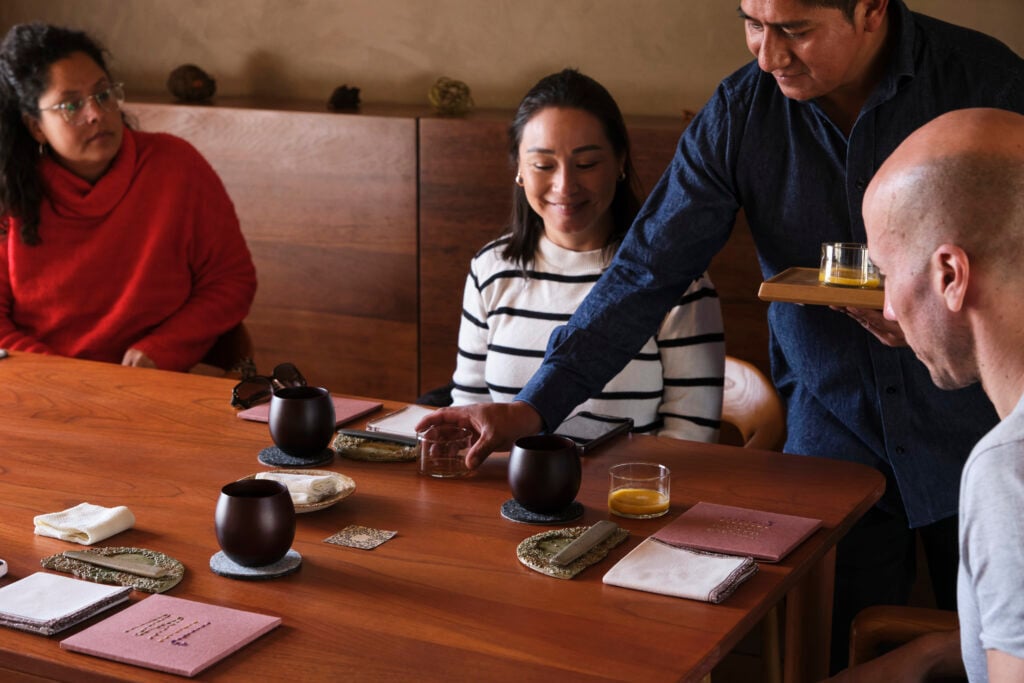
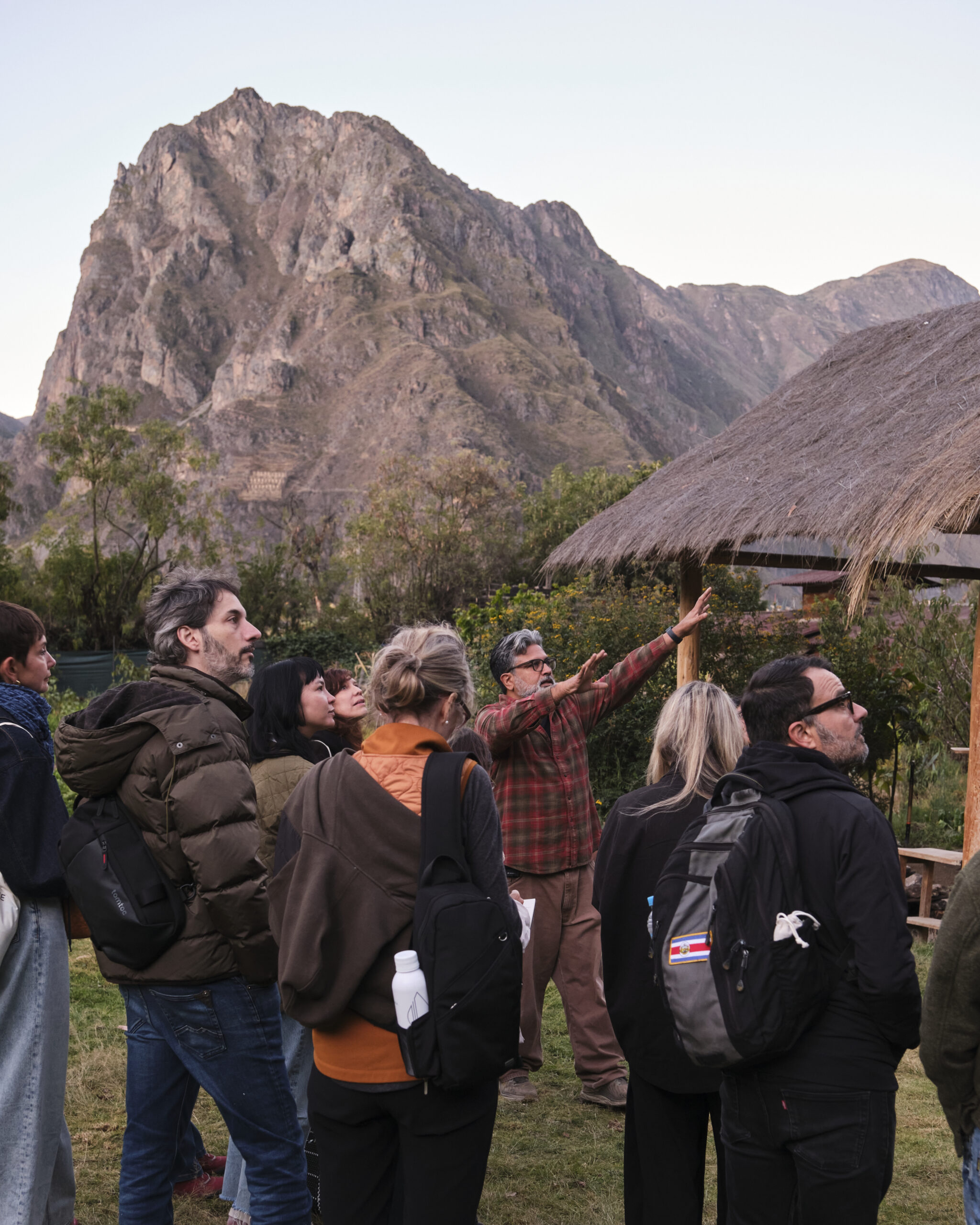
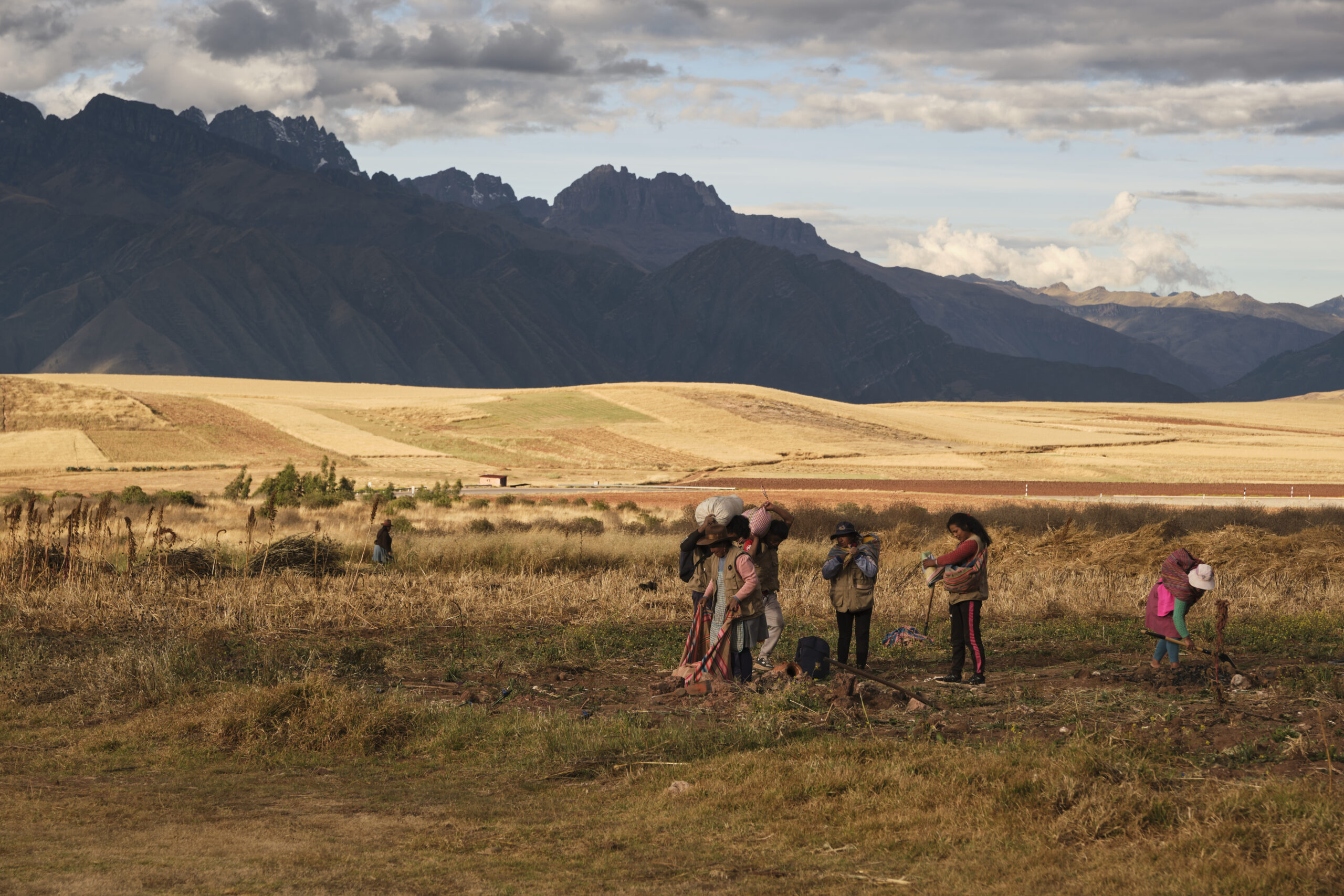
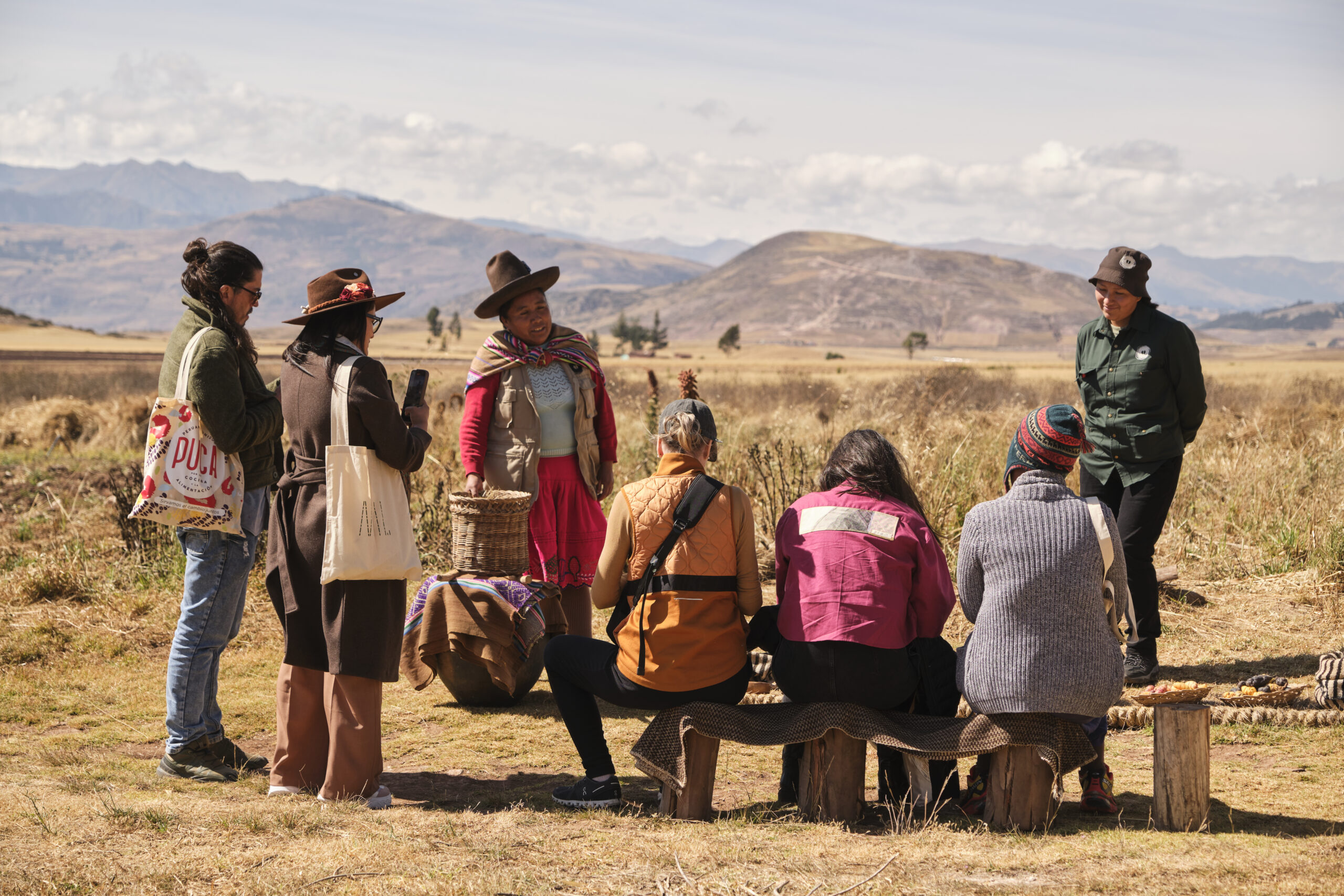
Through local storytelling, the cohort was immersed in ancestral wisdom that transformed my Sacred Valley experience. At MIL Centro, a restaurant and research space dedicated to Andean biodiversity, we arrived during El Día del Campesino, one of the most significant days in the Andean calendar. This celebration honors Incan traditions, farmers, and the land, and coincides with Inti Raymi (Festival of the Sun). Our local guide wove ancestral stories of the region’s biodiversity and traditional food systems into the agricultural methods still practiced today.
In the Sacred Valley, storytelling wasn’t ornamental—it was an act of resistance. It was a method of reclaiming Indigenous identity from the extractive narratives that dominate tourism and development. Through song, ritual, and oral history, community members articulated a different kind of value, rooted in relationship rather than commodification.
2. Innovation Through Adaptation
In the Sacred Valley, storytelling wasn’t ornamental—it was an act of resistance. It was a method of reclaiming Indigenous identity from the extractive narratives that dominate tourism and development. Through song, ritual, and oral history, community members articulated a different kind of value, rooted in relationship rather than commodification.
3. Economic inclusivity and Indigenous self-determination
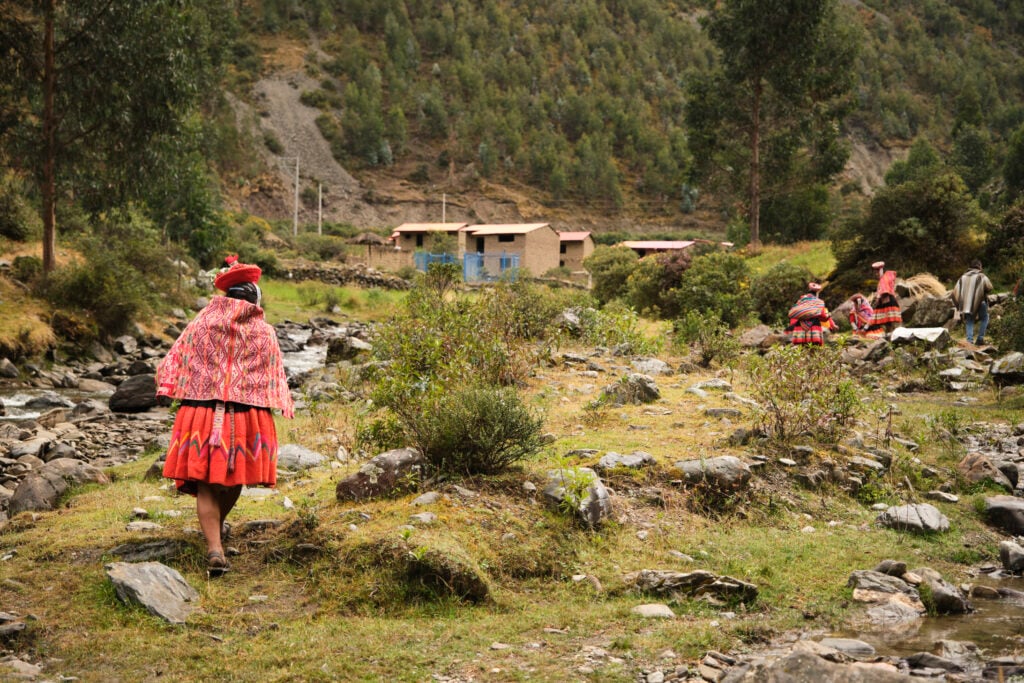
Awamaki’s work demonstrates what economic self-determination looks like in practice. The artisan cooperatives don’t just participate in global markets—they control them on their own terms. The women set their own quality standards and production pace through a supply chain that honors their way of life and respects their natural resources. This means rejecting the extractive rhythms of fast fashion in favor of timelines that align with agricultural cycles and community needs.
Their model represents a circular economy grounded in ancestral knowledge, collective decision-making, and intergenerational reinvestment. Unlike conventional fair trade models that still position Indigenous communities as suppliers within someone else’s system, Awamaki centers community agency at every level—from design to distribution to profit sharing.
This is what true self-determination looks like: not just surviving in the margins, but shaping economic systems from the inside out.
Designing for continuity in a fragmented world
Perhaps the most critical question we must ask ourselves as design professionals is this: How do we design for continuity when the systems around us are structured for fragmentation?
Multigenerational knowledge offers an answer. It teaches us to slow down. To listen deeply. To design with — not for — communities. It asks us to honor complexity rather than flatten it for scale, and to understand that what we build today echoes into the future.
We must also reckon with how power has shaped modern thought and widely defined what is sacred, scientific, or sustainable. Designers have been complicit in this — through our processes, our aesthetics, our silences. We have legitimized certain ways of knowing while marginalizing others. Now, we have a chance to design differently.
Designing with multigenerational knowledge is not about romanticizing the past. It is about designing for radical presence, with full awareness of what came before and fully accountable to what lies ahead. It means centering cultural perpetuity in our processes; honoring Indigenous frameworks as valid, essential, and transformative; understanding that land embodies kinship, collective memory, and health.
Most importantly, it means recognizing that remembrance is not passive nostalgia. Remembrance is active resistance. It is how we reclaim what has been lost, protect what remains, and imagine what is still possible.
As designers seeking to build a better society, this is our kuleana:To design like the seventh generation is already watching.
More from this series:
Arts + Culture
Ellen McGirt|Peru’s Sacred Valley
Ashley Lukasik is designing a more meaningful way to convene
Introducing a series on design lessons learned from a multi-disciplinary immersion in Peru’s Sacred Valley
Arts + Culture
Ashley Lukasik|Peru’s Sacred Valley
Foraging design futures in Peru
A four-day cultural immersion in Peru’s Sacred Valley fosters four principles for the future of design, informed by the region’s centuries-old Indigenous philosophies
Arts + Culture
Masha Safina|Peru’s Sacred Valley
The layers of value creation
Our modern perception of value is shaped by scarcity. Alternative systems that center abundance and relational exchange offer a more hopeful future.
Observed
View all
Observed
Share on Social


By Laura Sofia Cardozo
Related Posts
Arts + Culture
Wayne Suiter Matamoros|Peru's Sacred Valley
Looking to Latin America for the future of design innovation
Arts + Culture
Martín Zabaleta|Peru's Sacred Valley
Designing with the Andean principle of Ayni: “What will we choose to give back?”
Arts + Culture
Masha Safina|Peru's Sacred Valley
The layers of value creation
Arts + Culture
Ashley Lukasik|Peru's Sacred Valley
Foraging design futures in Peru
Subscribe to The Observatory
Related Posts
Arts + Culture
Wayne Suiter Matamoros|Peru's Sacred Valley
Looking to Latin America for the future of design innovation
Arts + Culture
Martín Zabaleta|Peru's Sacred Valley
Designing with the Andean principle of Ayni: “What will we choose to give back?”
Arts + Culture
Masha Safina|Peru's Sacred Valley
The layers of value creation
Arts + Culture
Ashley Lukasik|Peru's Sacred Valley