


April 27, 2026
New technology always forges a new creative path
Some of it revolutionary, some of it mundane.
It was sometime back in mid-60s that music, as we knew it, began to die. At least, I’m sure that was how it felt at the time.
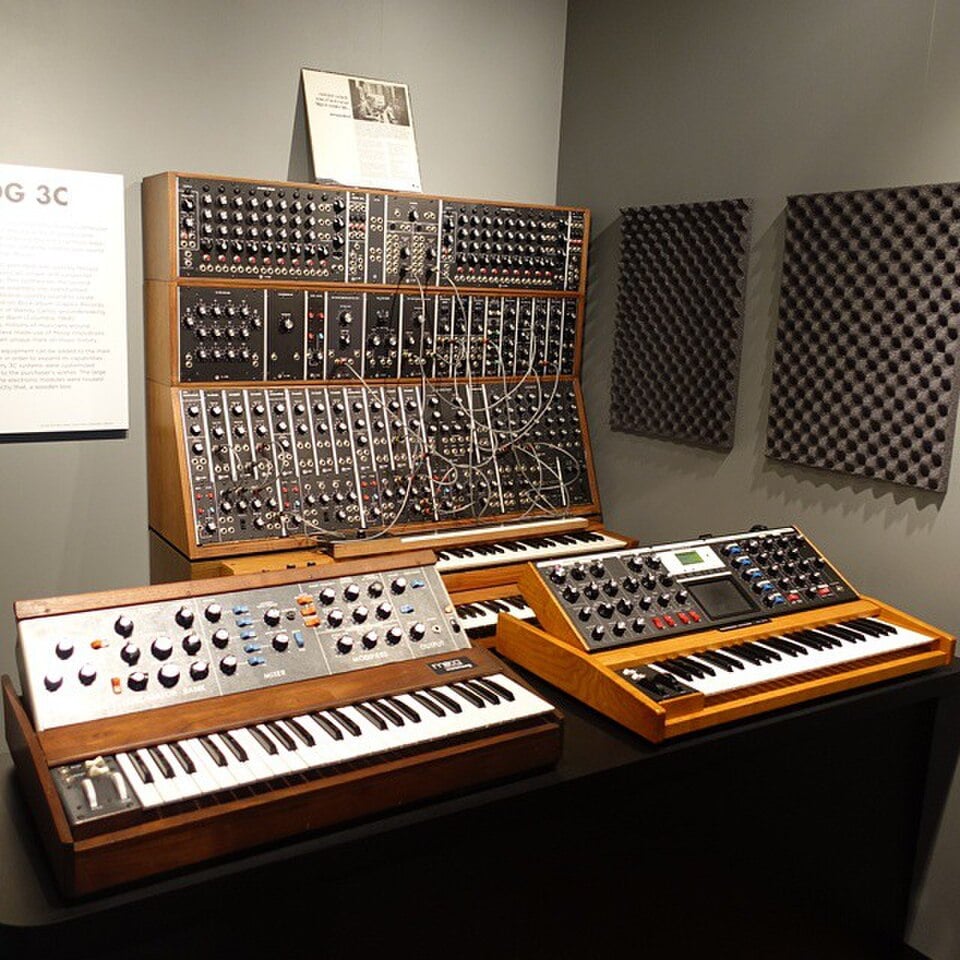
In 1964, the Moog synthesizer was born. It was the creation of an engineer named Robert Moog, who no doubt thought that naming it after himself would be a good thing. (It’s also pronounced mogue — like “vogue” — not Moog, like a cow with speech difficulties.) And it was, eventually. The original Moog was a big machine that could replace a wide variety of musical notes with, again, what felt like the click of a button. It sounded electronic and futuristic, but could also produce many of the sounds that human musicians trained for years to make. By 1970, the Minimoog had arrived. It was affordable and accessible, and it changed music and sound design forever.
The synthesizer was immediately (and correctly) perceived as an existential threat by orchestras, studio musicians, and classicists, who instantly hated it. In fact, the American Federation of Musicians banned the use of the Moog on any union productions for a time. For his part, Moog believed that they didn’t understand what they were dealing with — that synthesizers were a new type of instrument entirely, that required study and expertise, not that “all the sounds that musicians could make somehow existed in the Moog.”
I wonder what Dr. Moog would make of the moment we’re in now, in which a new technology threatens to replace yet another existing cultural order.
The Lumière brothers’ Cinématographe film technology did eventually replace local theater and vaudeville. The Daguerreotype and early photography did replace much documentary and portrait painting. And Bob Dylan pissed everyone off by plugging in a guitar. But what came next — the film industry, the power of image-making, new schools of painting, and Bob Dylan singing “We Are the World” — are reminders that new technology always forges a new creative path, some of it revolutionary, some of it mundane.
Let’s be clear, this isn’t really a conversation about what we creatively value. It’s also very much about money and gatekeeping: who controls the new form, and who gets left behind.
In her first story for Design Observer, reporter Kajsa Kedefors traveled to this year’s Art Basel in Hong Kong to explore the debut of Zero 10, the new digital-art initiative that brought generative AI and blockchain-based works to the fair. “Art Basel is becoming a forum for what art and authorship mean in the age of AI,” she says. “It’s a fascinating way to examine the tension between the traditional art market, built on scarcity and originality, and a technology built on replication and scale.” And who is buying it? “What does ‘authorship’ mean when the artist is partially a machine?”
Click through for an inside look. (And to find how much someone was willing to shell out for robot dogs with the heads of billionaire tech moguls Elon Musk and Mark Zuckerberg piked onto them.)
Speaking of how new technologies can change how artists work, Design Observer co-founder Jessica Helfand has been sharing how she uses AI in her painting practice, to think, to explore, to inform. Her current series, Icarus Revisited, redirects our focus away from Icarus’s body in free fall—the cautionary tale—and toward his face, the window into his inner life.
“I consider gravity—as in the graveness of the situation, and the internalized struggle against time and space—reflected in a face. His face. Or hers. (Or theirs.),” she writes. “In my experiments with AI, I find no apparent fidelity to gender, to biologic fusion, to the merging of male and female. You can’t fertilize an image, but you can blend two images, which is to say, two faces. (Or more than two.) That’s when the alchemy goes rogue.”
Where are you going rogue? Where are you coloring outside of the lines? Let us know.
More news and observations below.
Ellen McGirt
Editor-in-Chief
LinkedIn
Instagram
Threads
Ellen@designobserver.com
P.S. Did someone who loves you send you this newsletter? Welcome! Subscribe here.
This edition of The Observatory was edited by Rachel Paese.
This is the web version of The Observatory, our (now weekly) dispatch from the editors and contributors at Design Observer. Want it in your inbox? Sign up here. While you’re at it, come say hi on YouTube, Reddit, or Bluesky — and don’t miss the latest gigs on our Job Board.
Some fine print
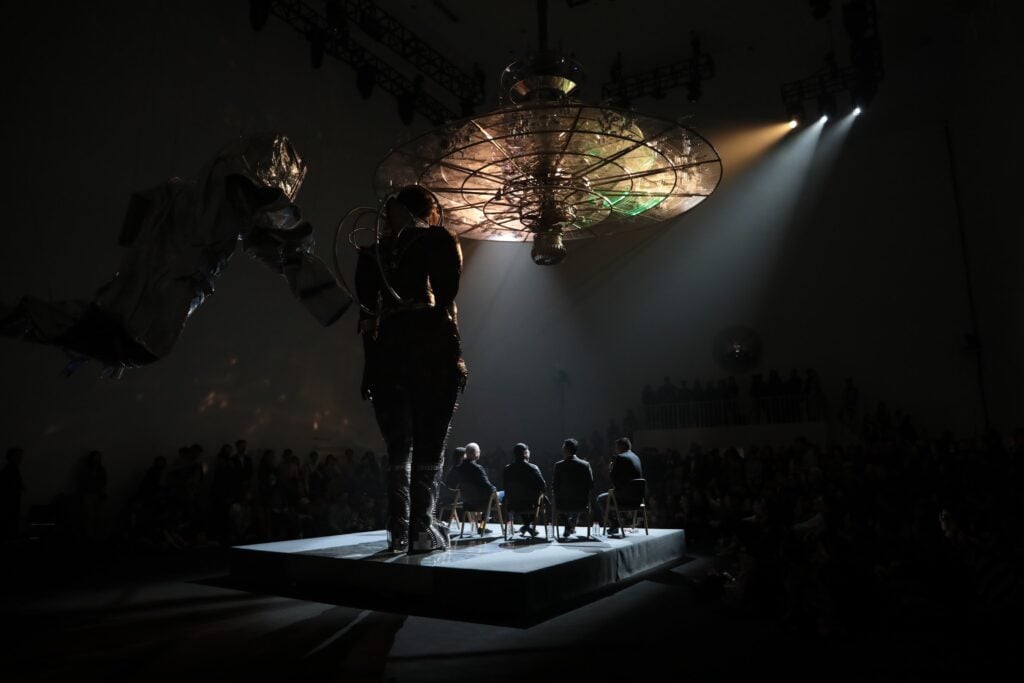
Art Basel Hong Kong featured an AI and digital art exhibit. The artists and their work tell a story about the ways technology is changing — or not changing — how art is made and sold. By Kajsa Kedefors.
The face, reconsidered. From literary portraiture to immigrant histories and ancient myth, Jessica Helfand’s evolving painting practice uses AI as a tool of memory. To accompany her new Icarus Revisited series, she is sharing excerpts from her diaries that trace the work as it unfolds. Interview by Ellen McGirt.
Landlines. #90s Tik Tok. Medievalcore. Strategists are proclaiming that 2026 is the year of nostalgia. For brands that want to get ahead, this isn’t just a trend. By Matt Colangelo.
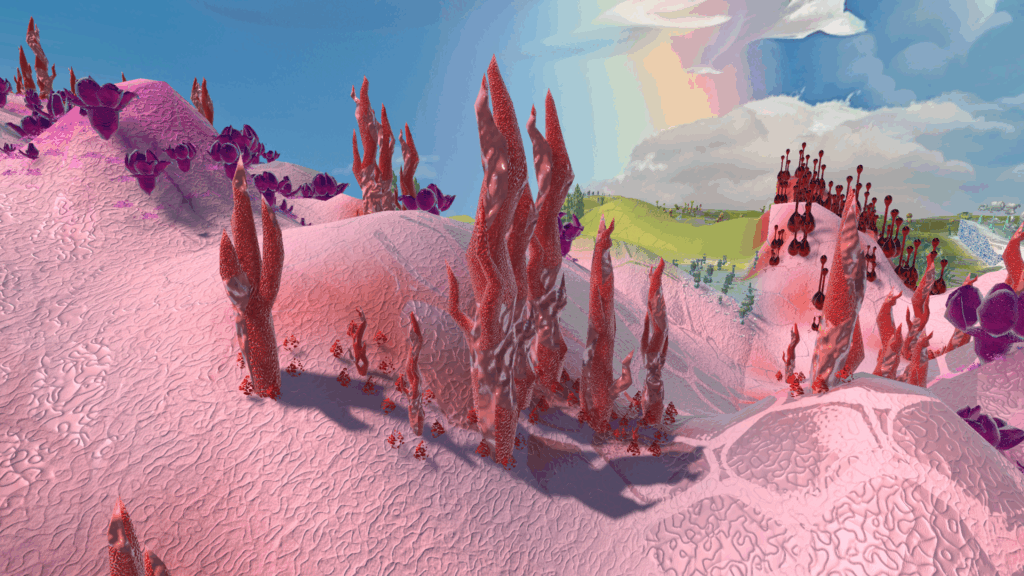
Dancing with AI: how next-gen game designers are taking the lead. A new generation of visual artists and creators is using artificial intelligence to create art with machines, without sacrificing their humanity in the process. By Baxstar Jonmarie Ferguson.
Observed
Trailblazing designer and Design Observer co-founder Michael Bierut has been awarded the 2026 President’s Medal by the Architectural League of New York. Past honorees include Walter Hood, the Aga Khan, Christina Figueres, Renzo Piano, Richard Serra, and Henry Cobb. A longtime partner at Pentagram, Bierut has spent more than four decades shaping how architecture is experienced through graphics. “I learned early on that to understand a city, you had to understand its architecture,” he says. “And by making architecture understandable, you could make urban life better for everyone.” More here.
McDonald’s (yes, the one with the French fries) made its Milan Design Week debut with a GIANT swimming pool-sized ball pit. I’m not kidding. The truly delightful installation is inspired by the work of Damien Hirst, again, not kidding, with the stated aim of “weaving together play, memory and critical reflection.” Could someone please share the notes from the meeting that approved this? I want to understand this alchemy.
A new museum billed “as the world’s first museum of AI arts,” is set to open June 20 in Los Angeles. Dataland is co-founded by Turkish-American media artist Refik Anadol and will be housed at The Grand LA, the Frank Gehry-designed complex in downtown Los Angeles’ Grand Avenue Cultural District.
Designers make better entrepreneurs than many may think, says Vivienne Castillo. “The traits that get pathologized in corporate environments (the tendency to question assumptions, to challenge briefs before executing them, to care about systemic implications when leadership wants tactical outputs) are the exact same traits that allow entrepreneurs to build things that matter,” she writes. “Design as a discipline was never meant to be purely executional, and the designers who push back on decisions aren’t being difficult, they’re doing exactly what their training prepared them to do.”
Populous, you’re going to be Populous. The global design firm announced long-time design lead Loren Supp has been tapped as Senior Principal and Head of Design, Western U.S. His past work includes sports stadiums, airports, and cultural venues, and he has expertise in integrating AI into professional practice.
Job board
Hiring a designer? Post your role on the Design Observer Job Board to reach a highly engaged audience of designers, creative leaders, and studios across the Design Employment Network.
Senior Partnership Manager at WovenWorks, Plano, TX.
Multimedia Senior Associate at The Climate Reality Project, Washington, DC.
Sr. Manager Industrial Design at Toyota Material Handling North America, Greene, NY.
End marks
After you explore all the ways artists playing with tech and AI in brand new ways at Zero 10 at Art Basel Hong Kong, revisit Dancing with AI: how next-gen game designers are taking the lead to witness game designers’ innovative spirit.
Games like Jonah King’s queer sci-fi virtual reality game Honey Fungus and Kelsey Falter’s role-playing game Le Zoo are undoubtedly infused with human creativity, but their distinct intricacies are made possible with AI counterparts.
This is the web version of The Observatory, our (now weekly) dispatch from the editors and contributors at Design Observer. Want it in your inbox? Sign up here. While you’re at it, come say hi on YouTube, Reddit, or Bluesky — and don’t miss the latest gigs on our Job Board.
Observed
View all
Observed
Share on Social


By Ellen McGirt
 Ellen McGirt is an author, podcaster, speaker, community builder, and award-winning business journalist. She is the editor-in-chief of Design Observer, a media company that has maintained the same clear vision for more than two decades: to expand the definition of design in service of a better world. Ellen established the inclusive leadership beat at Fortune in 2016 with raceAhead, an award-winning newsletter on race, culture, and business. The Fortune, Time, Money, and Fast Company alumna has published over twenty magazine cover stories throughout her twenty-year career, exploring the people and ideas changing business for good. Ask her about fly fishing if you get the chance.
Related Posts
The Observatory Newsletter
Ellen McGirt
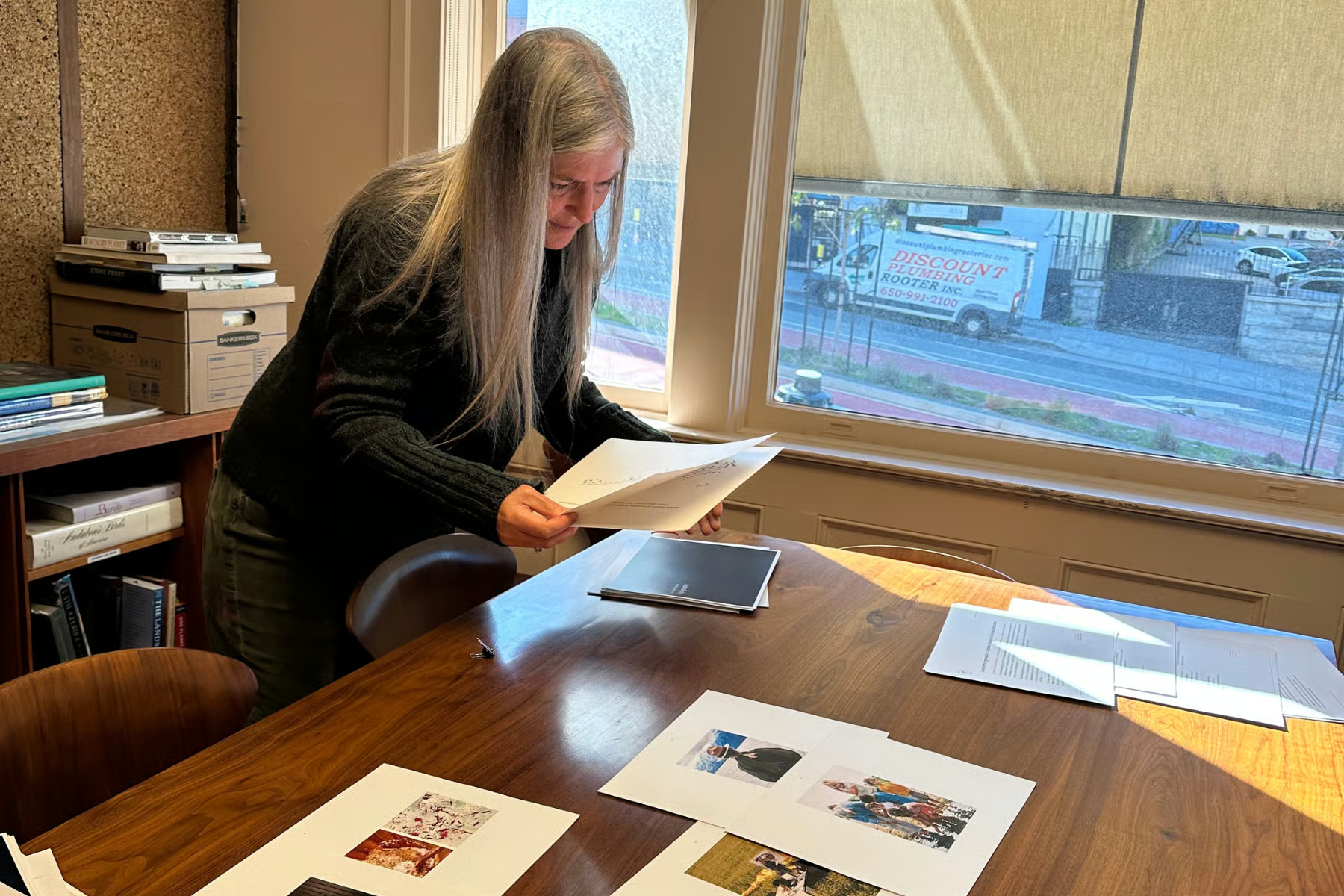
Who gets to decide where power begins and ends?
The Observatory Newsletter
Rachel Paese
You need an observation practice
Draw the Line
Audio
BONUS: Live from Essence Fest – The Work Gets Personal
Draw the Line
Audio
BONUS: Live from Essence Fest – The Accounting
Subscribe to The Observatory
Related Posts
The Observatory Newsletter
Ellen McGirt
Who gets to decide where power begins and ends?
The Observatory Newsletter
Rachel Paese
You need an observation practice
Draw the Line
Audio
BONUS: Live from Essence Fest – The Work Gets Personal
Draw the Line
Audio