


Jessica Helfand|The Icarus Diaries
March 17, 2026
09: Hullabaloo
Read the introduction to this series.
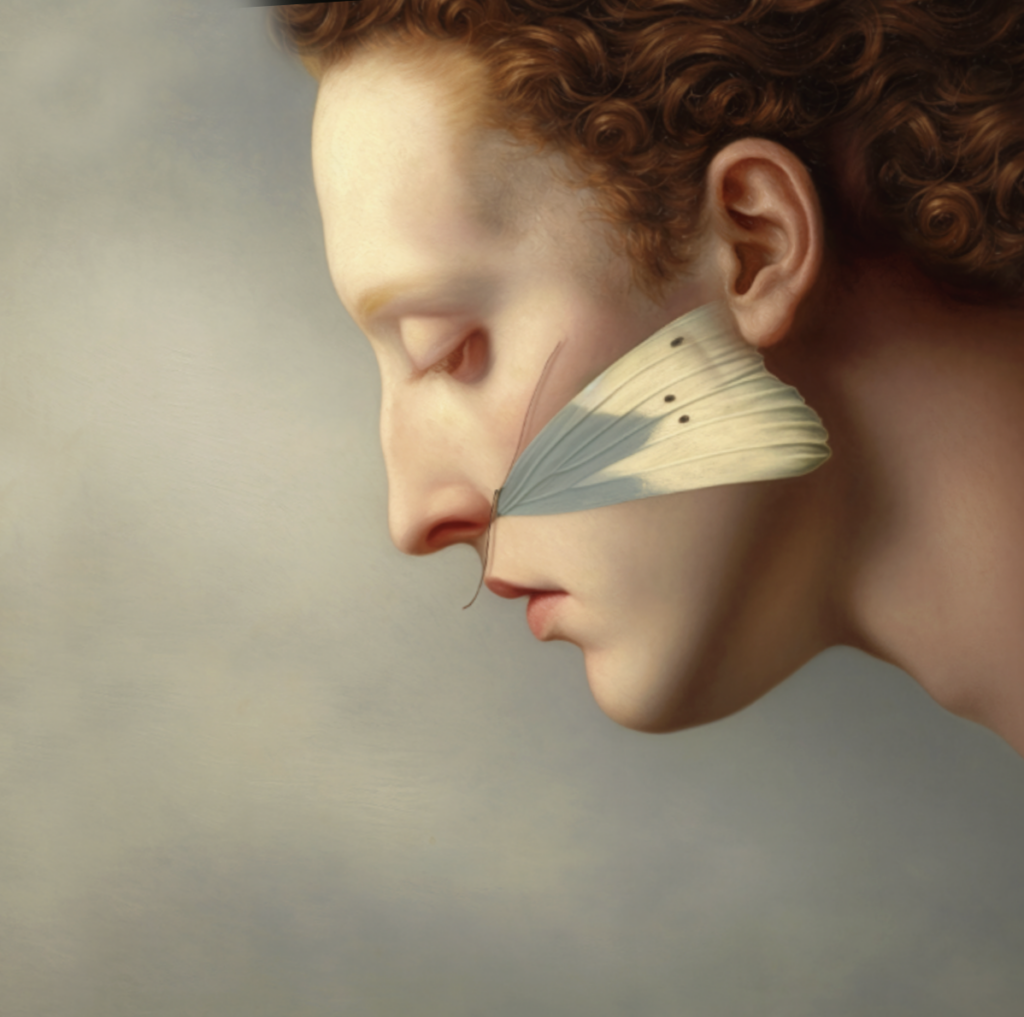
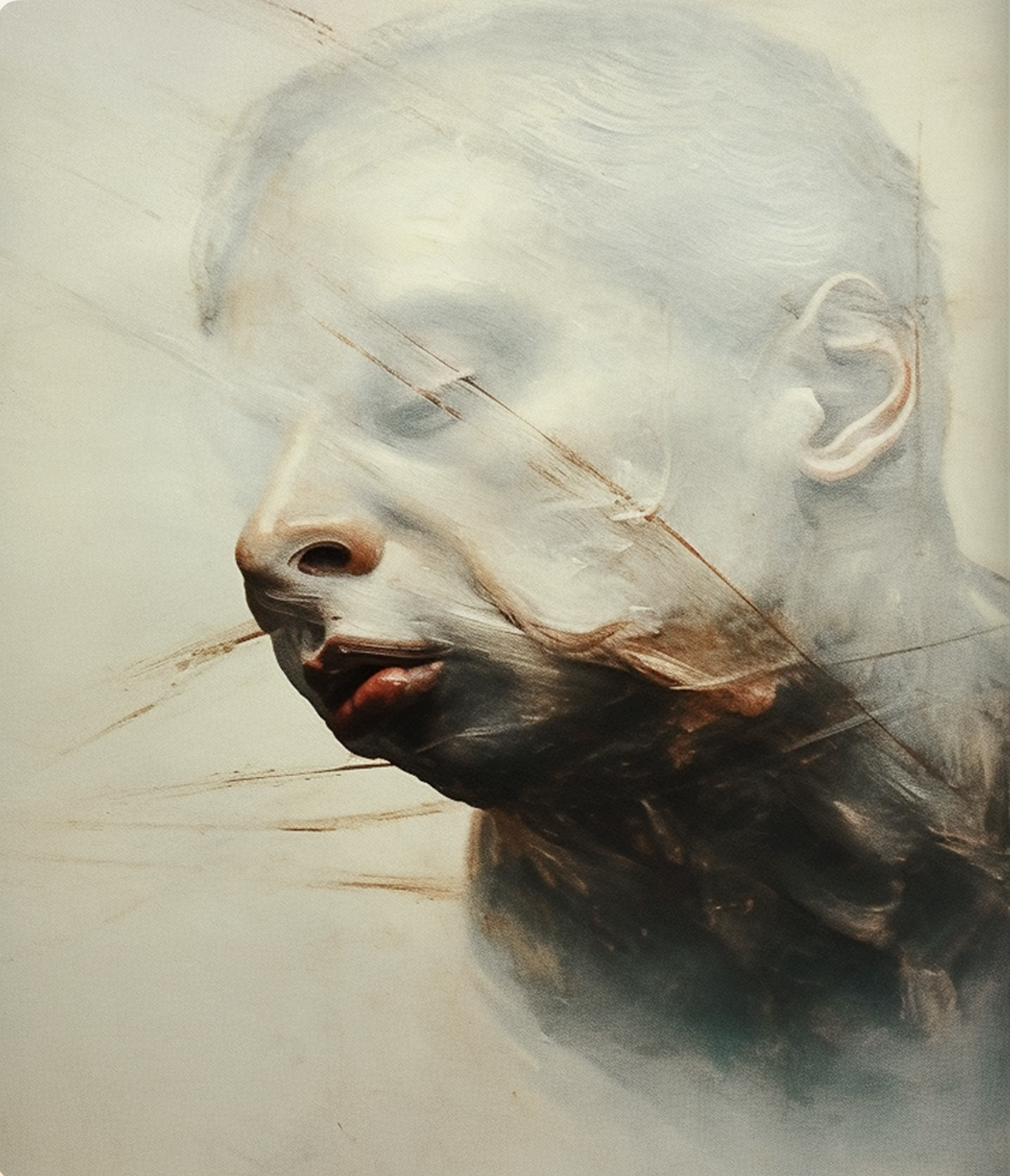
12 x 12 inches
Oil and cold wax on canvas
2025
Polyommatus Icarus is known colloquially as the common blue butterfly. Its adult lifespan lasts, on average, two to three weeks.
A life too brief, like that of its namesake.
A wing not attached to the upper arm but to the … upper lip? Groucho glasses spring briefly to mind. Ovid, after all, described Icarus as something of a goofball. (In his play, Ovid wrote, he hindered his father’s marvelous work.)
By all indications, Icarus did not inherit his father’s talents. Not so hard to imagine him as an adolescent, volatile and moody and bored, at loose ends and dreaming of adventure. Defined less by duty than defiance.
(He wanted to defy what, exactly? His father? His fate?)
In his own haunting song about Icarus, Adam Guettel writes:
Icarus was not an achiever
Always resented what his father could do
Was sick and tired of the hullabaloo
Which later rhymes with this delicious little run:
Aerodynamic mythological coup
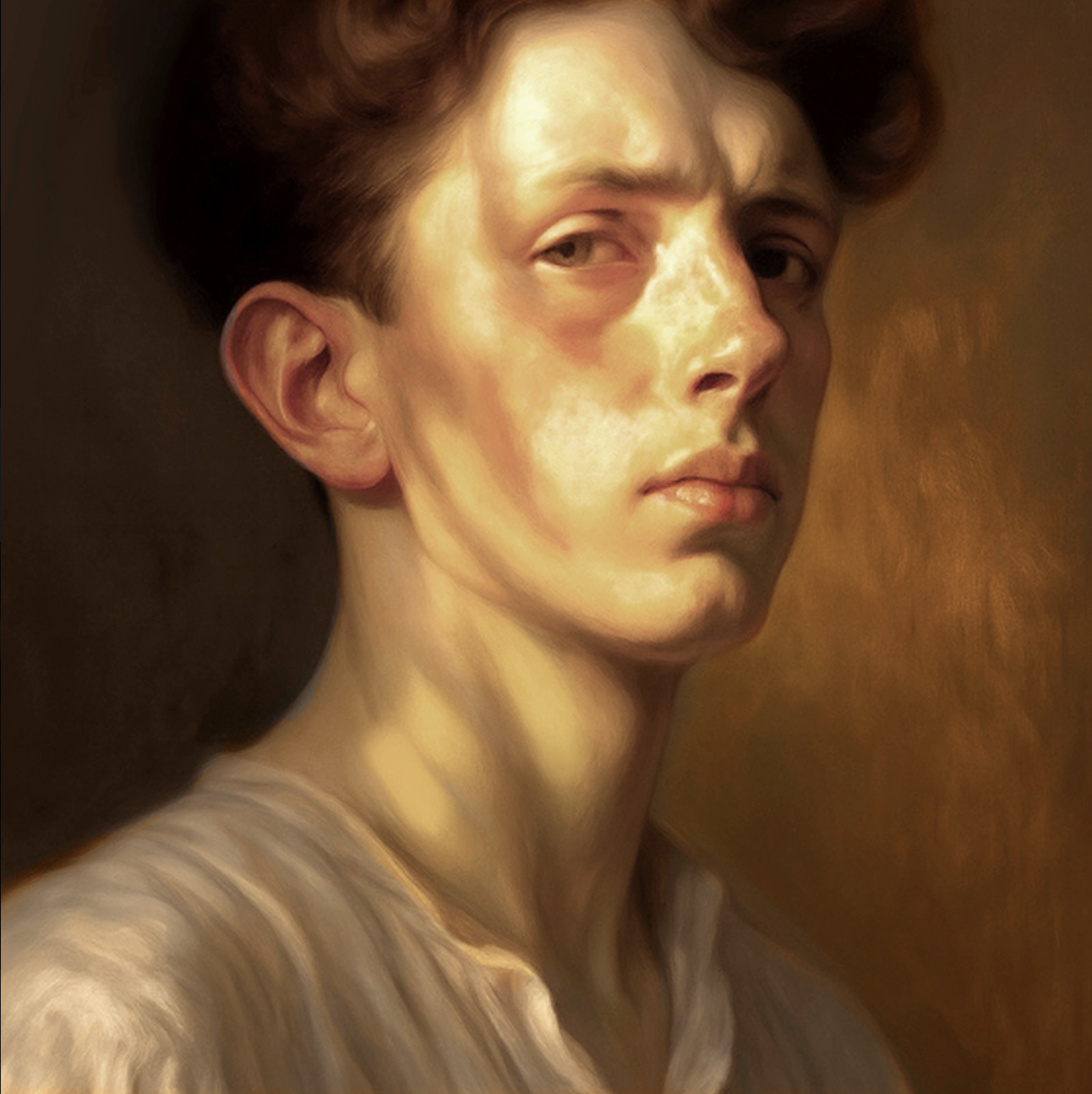
AI gets confused when I go from natural references to aeronautical references to literary references : the visual results are always more compelling to me when they’re discordant, even wrong. I like trying to confuse it even more, like asking for Renaissance lighting but setting the date to 1975.
Or treating a butterfly wing like a human prosthetic.

For this painting, I am hybridizing these two, neutralizing the (gendered) color palette, abstracting and attenuating the shape—a maneuver perhaps related to those wing balloons—and leaning into a more airborne form.
I sometimes think of John Cage’s chance operations as a model for AI: released from the limitations of my own choices, I am collaborating with a tool that injects other references, often random ones. Word adjacencies—that slippage between the right word and the almost right word—does it matter? The liminal space between things is far more interesting to me than achieving a planned outcome. (I rarely, if ever, think about a planned outcome.)
These investigations are now only interesting to me when there’s an implied dimension of—I don’t know—tentative mystery? Imminent mortality? Irony of some kind? Tension?
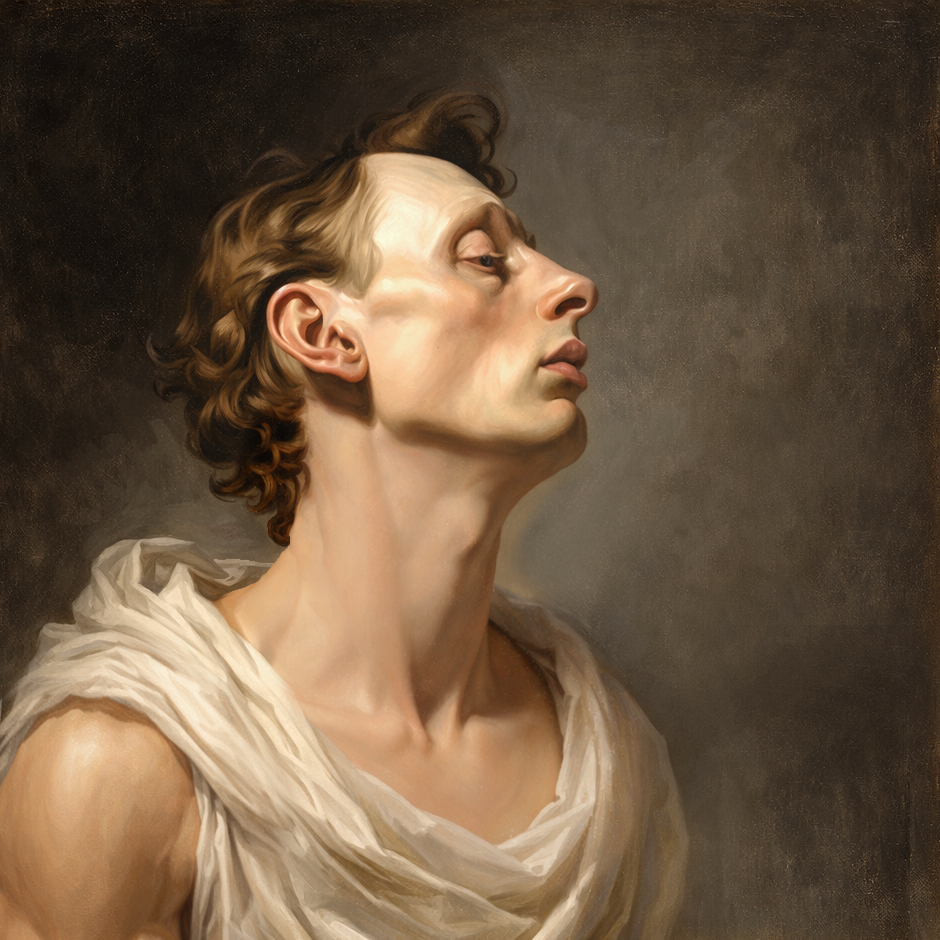
Tension calls to mind triangulation, a curious idea for a portraitist. Susan Sontag called this kind of triangulated pose—in which the subject looks away from the position in which he or she is seated—the Politician’s Gaze. (“It is,” she wrote, “the gaze that soars”.)
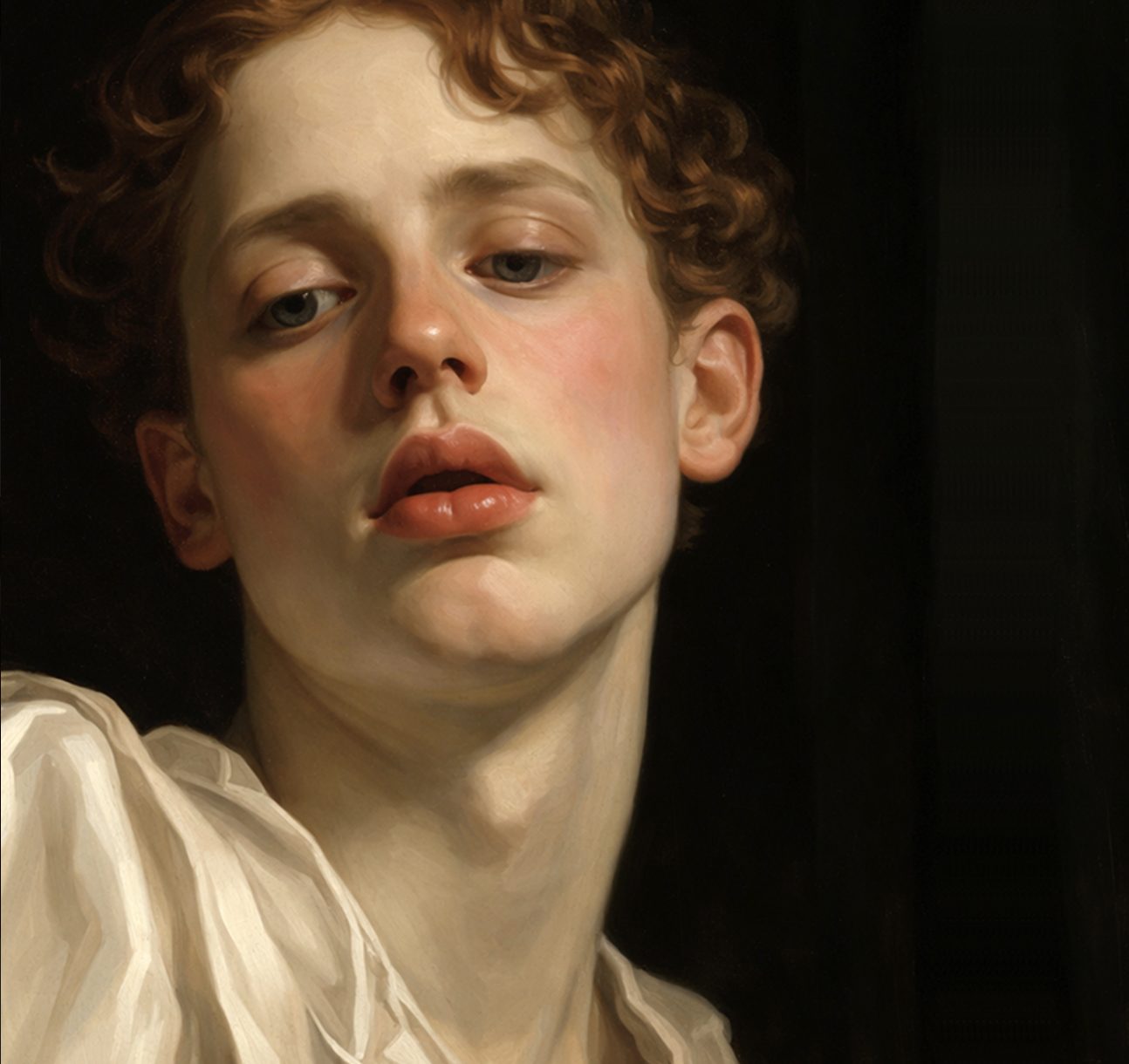
Soaring takes it back to the sky, here, still and deep, an abyss of pure black.
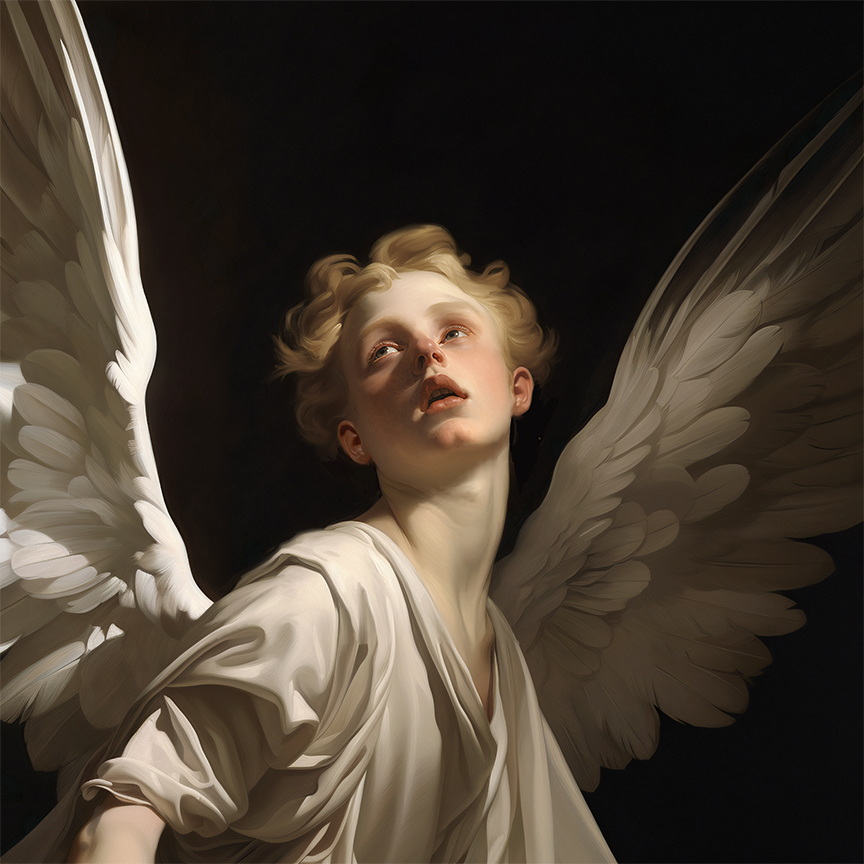
24 x 24 inches
2025
I imagine Icarus primed for takeoff, like a plane. (Or, I suppose, like a butterfly.)
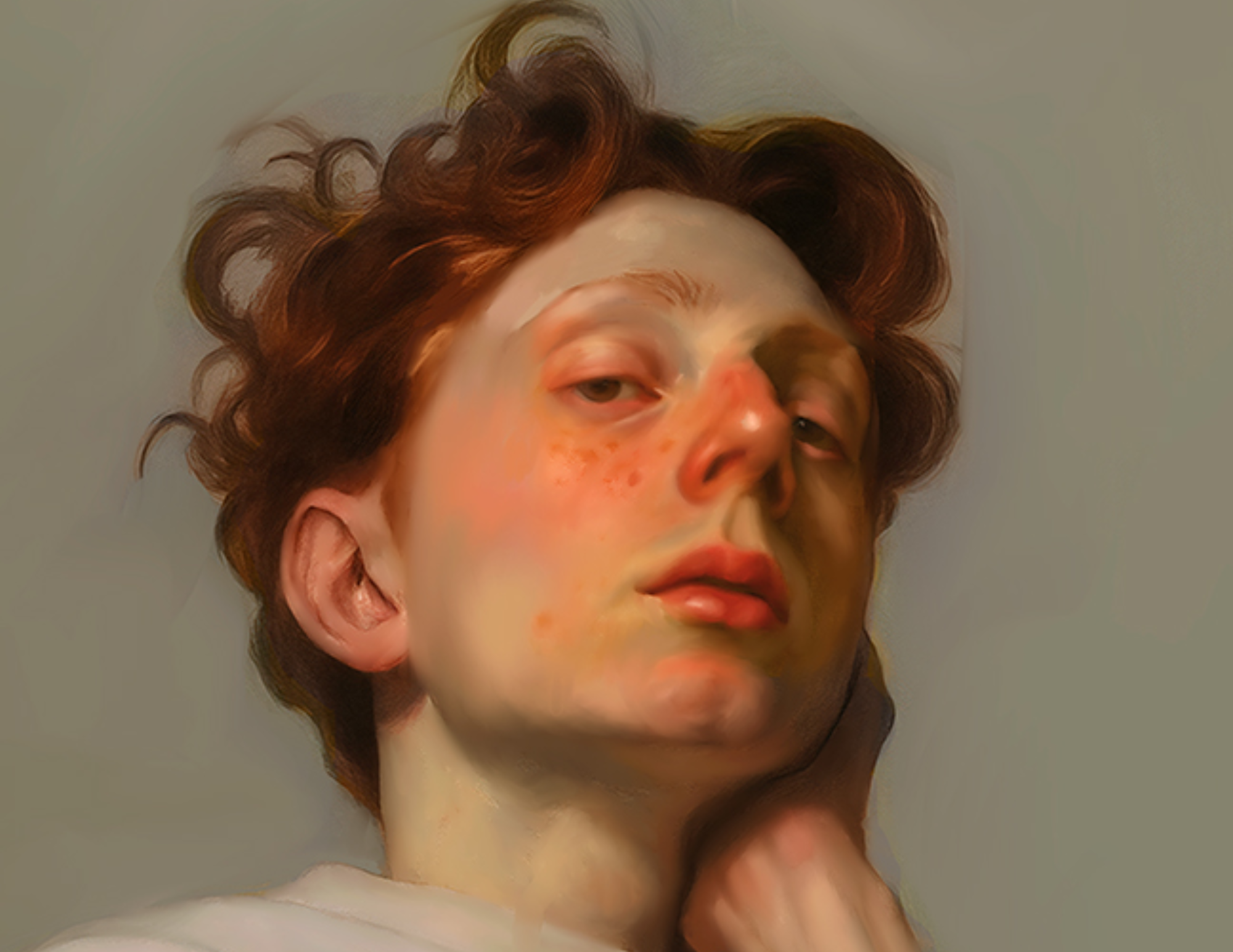
But the torque of the body, the extension of the neck, the idea that he’s at the starting line of a race: this moved me to a new place. “Shuttle”—suggesting a back and forth— turns out to be a word once synonymous with a missile, a dart, a projectile. Each a form of one-way travel. Each inherently violent.
When combined with plumage, the projectile becomes a pawn in a game (badminton), a birdie that careens through the air. Until it doesn’t.

To look at a shuttlecock diagram is to see a constellation all its own, a centered anchor recalling the shape we have come to associate with the sun—that which gazes upon all things, in the words of Sophocles’ Electra.
A Copernican reckoning, that distant star and its dazzling, blinding, beckoning light. No wonder Icarus was mesmerized.
Observed
View all
Observed
Share on Social


By Jessica Helfand
 Jessica Helfand is an artist and writer based in New England. A former critic at Yale School of Art and one of the founding editors of Design Observer, she is the author of several books on visual culture including Self Reliance, Design: The Invention of Desire, and Face: A Visual Odyssey. jessicahelfand.com
Subscribe to The Observatory