


Jessica Helfand|The Icarus Diaries
February 10, 2026
03: Born to Fly
Read the introduction to this series here.
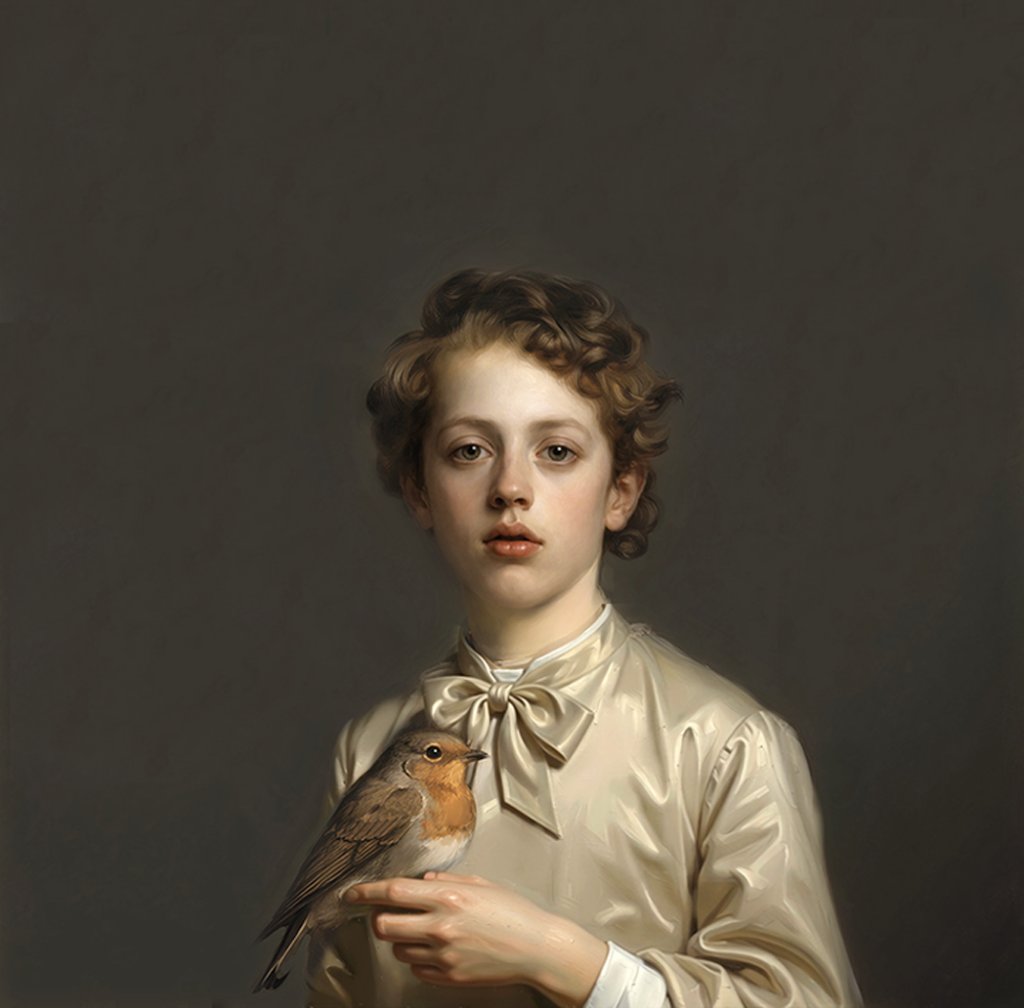
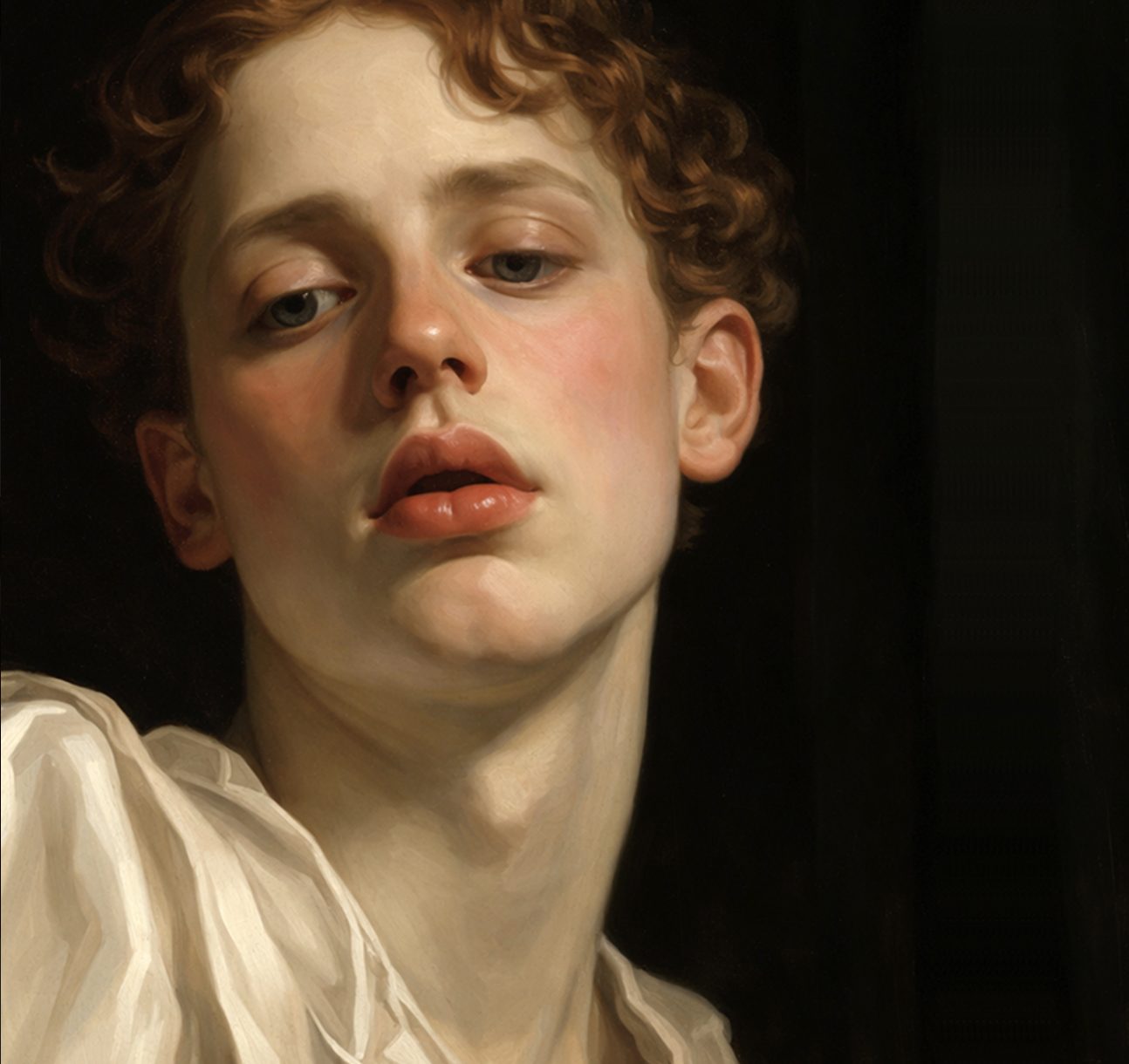
24 x 24 inches
2025
I imagine Icarus as a child, dreaming of adventure. A double portrait of a boy and a bird. A moment of stillness, calm before storm.
I’ve been thinking about Bougereau, who in his own day made modern interpretations of mythical stories. This face—its roundness and palette—is a nod to him, in a way.
I will come back to that bird and to its likeness. Later, I will think about feathers, in general. (And about partridges, in particular.)
But for the moment, I am thinking only of children, and their parents. About filial devotion, family decorum. About flight as fancy.
Minos rules everything but he does not rule the heavens, says Daedalus, father of Icarus, exiled in Crete and dreaming of his own escape. Daedalus is central to so much, here: designer, engineer, craftsman, maze-maker. (So elaborate was his labyrinth, Ovid writes, he was scarcely able to recover the entrance himself.)
To create a puzzle and be puzzled by it? (I will return to this later, too.)
I look at his name—Daedalus—and see other things. Dad. Dead. “Lus” which sounds a lot like “lux,” and translates as light. In Latin, “Lus” is a masculine diminutive suffix. Maybe Icarus was his father’s suffix, a mini-Daedalus. There is nothing diminutive about Daedalus. (Children are, by definition, all diminutive.)
Next:

Observed
View all
Observed
Share on Social


By Jessica Helfand
 Jessica Helfand is an artist and writer based in New England. A former critic at Yale School of Art and one of the founding editors of Design Observer, she is the author of several books on visual culture including Self Reliance, Design: The Invention of Desire, and Face: A Visual Odyssey. jessicahelfand.com
Subscribe to The Observatory