


May 4, 2026
The Supreme Court has gutted the Voting Rights Act
Redistricting is one of the most persistent design problems in American life. Now, it’s an emergency.
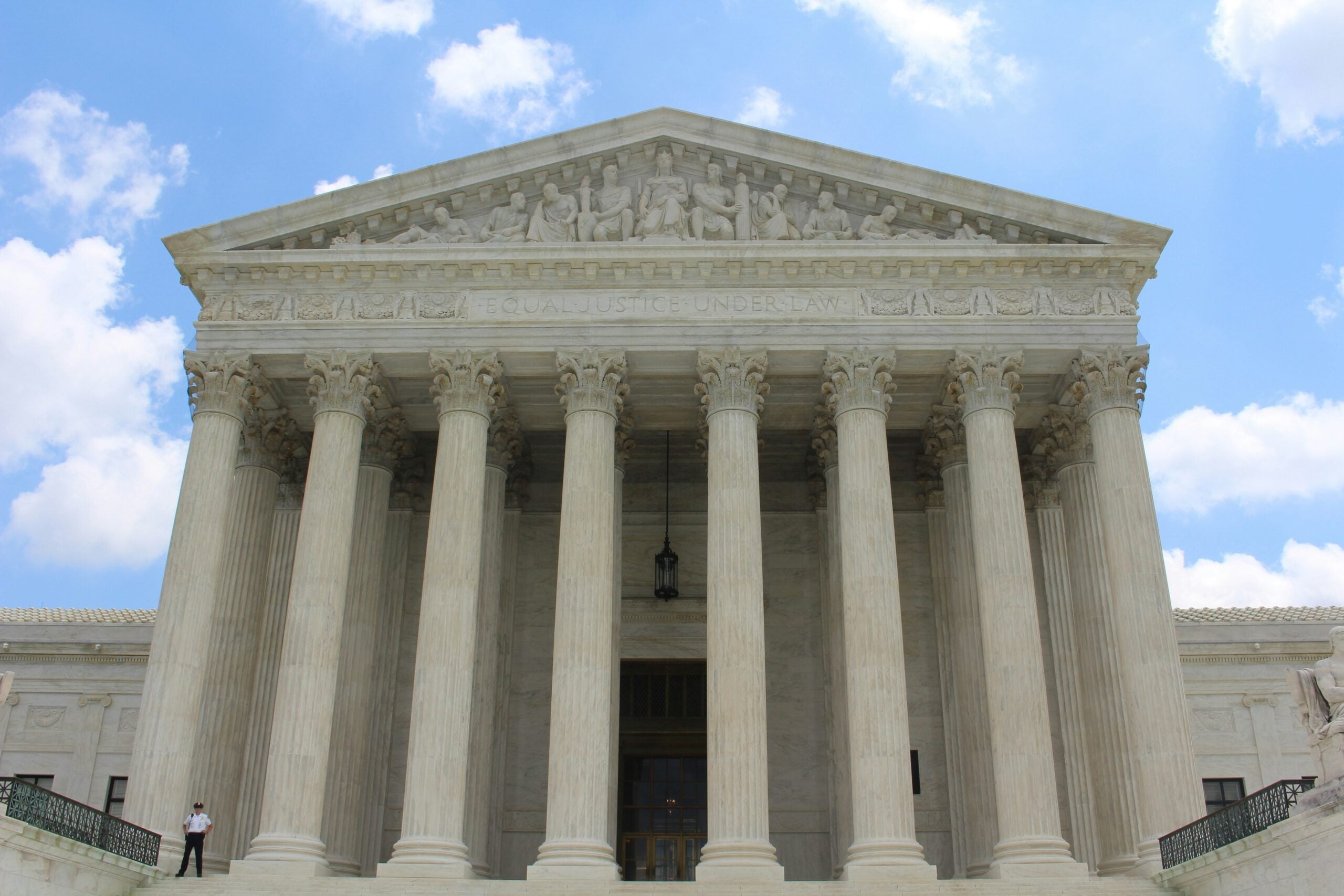
On April 29th, the Supreme Court issued its decision in Louisiana v. Callais, a case which purported to examine whether Louisiana’s latest congressional map was an unconstitutional racial gerrymander. Design Observer was already in this story when it landed, and I want to tell you why and what we know.
The 6-3 ruling, written by Justice Samuel Alito, struck down Louisiana’s second majority-Black congressional district and, while doing so, effectively gutted Section 2 of the Voting Rights Act — the last major enforcement mechanism left after Shelby County v Holder took down Section 5 in 2013. (If you don’t understand all these details just yet, don’t worry — we have a plan for that.)
Justice Kagan said the quiet part clearly in her dissent, which she read aloud from the bench: this decision renders Section 2 “all but a dead letter.” She is right. And she added that only Congress — not six justices — had the authority to decide the law was no longer needed.
Redistricting is one of the most consequential design problems in American life: lines drawn on a map determine whose voice counts, whose neighborhood thrives, and whose representation vanishes. That is exactly the kind of design we exist to examine, and we’ve been on the ground since March doing exactly that. The story is complex, a series of escalating districting challenges designed to erode the power of Black and other “minority” voters. And because the story is complex and the history is nuanced, it’s easy to miss the project that was behind them.
What I keep returning to is this: these cases didn’t start as voting rights cases. Davante Lewis — a plaintiff in the original Robinson litigation, a Louisiana elected official, and one of the sharpest legal minds I’ve encountered — explained it to me this way when we spoke in Baton Rouge before the decision: “They start very narrow, and this has been the strategy — to have a narrowly defined issue that then you can make into a broader implication that can completely change the face of voting and civil rights in the country.” Shelby County is one of the counties in Alabama. Now, there is no preclearance — a highly effective tool under which municipalities with a history of racial discrimination were required to have requests to change voting districts reviewed by the Department of Justice— anywhere. Callais began as a single district along the Red River. Now, there may be no Black congressional representation in a state that is one-third Black, or anywhere else.
Alanah Odoms, the executive director of the ACLU of Louisiana, said it plainly in a press call the morning after the decision: “Louisiana is the test case. It always has been. What works here will be exported.”
As Lewis, Odoms, and others predicted, Louisiana Governor Jeff Landry moved immediately — calling for a redistricting measure and suspending the state’s congressional primaries, even though absentee ballots had already been received and early voting was set to begin Saturday for a consequential local election. State Sen. Royce DuPlessis, a Black Democrat from New Orleans, who has been focused on voting rights, told me that erasure has already begun. “This is going to cause mass confusion among voters — Democrats, Republicans, white, Black, everybody. What they’re effectively doing is changing the rules of the game in the middle of the game. It’s rigging the system,” he says.
That is not hyperbole.
Coalition is the hardest leadership work there is. It requires you to hold your own conviction while genuinely making room for someone else’s, and to find the place where those things become the same fight. Coalitions, many experts believe, are worth the effort, and are the greatest strength of a multiracial democracy. They are part of what’s being targeted, and what is required now.
Janai Nelson, president and director-counsel of the NAACP Legal Defense Fund, who argued this case before the Supreme Court, told me that coalition is “messy and challenging and it does require compromise.” And yet, she said, it is also “some of the best of what we can do in this diverse country.”
The Power Coalition for Equity and Justice is living proof of that.
Ashley Shelton, the founder, has spent a decade building something that most people said couldn’t be built in Louisiana. “Everything that we’ve done, they told us we couldn’t do it. Every single thing,” she says. And then she listed them — non-unanimous juries, re-enfranchisement of formerly incarcerated people, expanded voting rights, and a second majority-minority congressional seat. All of it won, legally. All of it is now at risk. “I’m not waiting on anybody to let me do anything,” she said. That work — organized, strategic, and collective — is what we’re reporting on.
We are producing a ten-part podcast series called Draw the Line about this case, the Voting Rights Act, Louisiana, and the people who refuse to accept that this is how the story ends. We’ve been on the ground ahead of this story and understand clearly that the ripple effect is fast and profound. So we’re bringing the focus back to them and what happens now — because what is being dismantled in Louisiana was built for all of us in the US and beyond. And what replaces it will be, too.
More soon.
Ellen McGirt
Editor-in-Chief
LinkedIn
Instagram
Threads
Ellen@designobserver.com
P.S. Did someone who loves you send you this newsletter? Welcome! Subscribe here.
This edition of The Observatory was edited by Rachel Paese.
This is the web version of The Observatory, our (now weekly) dispatch from the editors and contributors at Design Observer. Want it in your inbox? Sign up here. While you’re at it, come say hi on YouTube, Reddit, or Bluesky — and don’t miss the latest gigs on our Job Board.
Some fine print
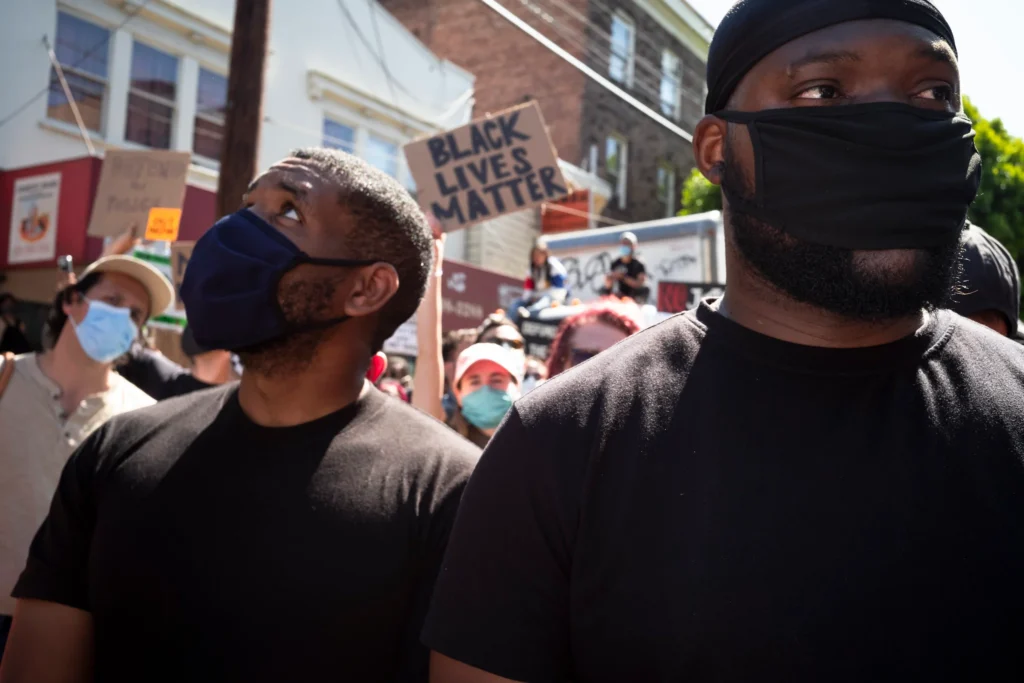
New kids on the bloc? The cynical attempt to dissuade young, Black, male voters predicted the voting rights crisis we now face. By Ellen McGirt.
What role does design play in creating democratic cities? A look at what representation means around the world. “The only meaningful task of design, now, is to help people transform the ways that they obtain food, energy, materials, and water — in cities, or outside them,” argues UK-based John Thackara. “The state and the judiciary can either build or destroy democratic cities through policy formulation and implementation,” and the powerful must be held accountable, says New Delhi-based Sunil Abraham
How public art can shape the next chapter of U.S. history. Tara Gupta Dabir explored the removal of Confederate monuments in the U.S., inadvertently signaling the backlash that followed. “Public art is pushing us to begin redefining the role of spaces like Monument Avenue and what they could be. These acts of defiance symbolize the start of something bigger, a broader movement to reclaim spaces originally designed to incite fear.”
Podcasts
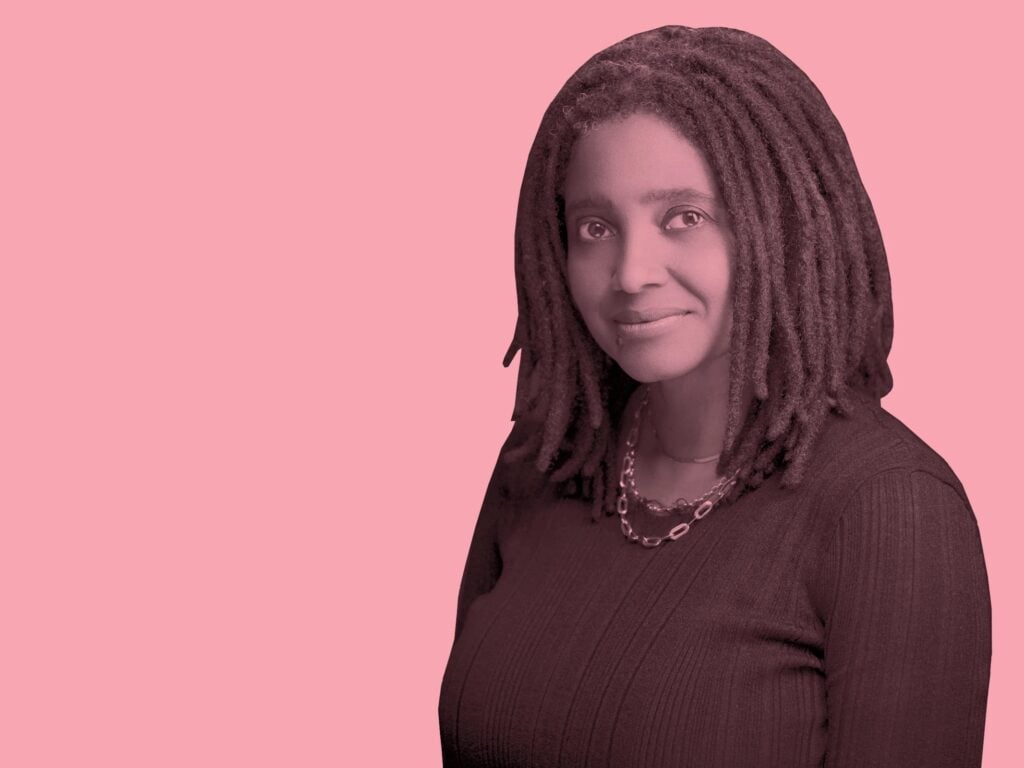
Poetry is anti-capitalist with Tracy K. Smith.
“We have a lot of devices and, you know, products and platforms that are seeking to capture our attention, monetize our attention, and replace our innate vocabulary with something that serves their ends, serves their purposes,” says Pulitzer Prize-winning poet Tracy K. Smith. “One thing I really love about poetry is that it invites us into a quiet and beholden space where there’s another voice…if you can listen in the right way, it can give you access to many things beyond just that single imagination.”
Observed
What are you observing? Tell us.
Tonight is the Met Gala, a fundraiser for the very necessary Met Costume Institute and an event now overshadowed by its unfashionable co-chairs. Derek Guy, the indefatigable fashion expert who comments under the handle @dieworkwear, has some viewing tips. “Events like this provide work for countless tailors, embroiderers, textile specialists, and artisans. These people often work on other types of cultural productions, such as the costuming for films, theatre, and TV shows. The Met Gala helps sustain these craft industries and thus keeps the production quality high for the areas of culture you care about.” So, relax and enjoy the show.
May is diversity month in Europe, who knew? Well, Lamborghini did. Douglas Arrighi Pereira, Chief People, Culture and Organization Officer of Automobili Lamborghini, said: “For us, diversity, equity, and inclusion are values that are embedded in the way we work and framing our strategy. The recognition and engagement of our people, in addition to the external certifications obtained, reinforce that we are evolving in the right direction.” He went on to talk about family leave, anti-bias training, and gender equity. Just like the good old days.
Finally, a cool new design tool for luthiers. Luthiers are violin makers who traditionally learn how to make specific come to life via “painstaking” craft process involving experimenting with various materials. MIT engineers have found a way to streamline the work using a new simulation tool that understands the instrument’s potential physics and can produce realistic sounds. More from a paper published in the journal npj Acoustics.
China stands up to Trump. Beijing has directed companies not to honor US sanctions on private refiners linked to the Iranian oil trade, including heavyweight Hengli Petrochemical (Dalian) Refinery Co. Experts say the move indicates China’s defense of its economic strength. “They want to have as many levers as possible,” Ja Ian Chong, an associate professor of political science at the National University of Singapore, tells Bloomberg. “This should be seen in the context of increasing controls. It is not a one-off.”
Trailblazing designer and Design Observer co-founder Michael Bierut has been awarded the 2026 President’s Medal by the Architectural League of New York. Past honorees include Walter Hood, the Aga Khan, Christina Figueres, Renzo Piano, Richard Serra, and Henry Cobb. A longtime partner at Pentagram, Bierut has spent more than four decades shaping how architecture is experienced through graphics. “I learned early on that to understand a city, you had to understand its architecture,” he says. “And by making architecture understandable, you could make urban life better for everyone.” More here.
TIME is out with its 100 Most Influential Companies 2026 list, and as you would imagine, AI is getting all the buzz. But head over to the design and build category to enjoy a snapshot of the remarkable breakthroughs coming from the physical world: wildfire-proof home building (KB Designs); wildlife-saving infrastructure (Kraemer North America); trailblazing underground mapping technology (Exodigo); and an investment group underwriting the sustainable energy and infrastructure transforming rural China (Guizo Group). Jump scare alert: WeWork is back, evidently.
Job board
Hiring a designer? Post your role on the Design Observer Job Board to reach a highly engaged audience of designers, creative leaders, and studios across the Design Employment Network.
Technical Designer at VCNY Home, North Bergen, NJ.
Design Partner at Explorers, Remote.
Publication Designer Flagship Publishing Inc, Remote.
End marks
Prolific production designer Grace Yun, known for her work on Past Lives and Hereditary, is back for a second season of Netflix’s anthology series, talking about how she designed sets for Beef with an eye for class, race, and the interpersonal tension that defines the show. “There’s a bit of this East-meets-West kind of clash that’s going on,” she tells The Credits. One character, “borrows from these more Western, established interior design eras. A nod to a bit of neoclassical, but also a California aesthetic, along with British cottage chic.” The other “is way more into a minimalist, limited-palette aesthetic, something that feels quite clean, orderly, and icy.”
Read Design Observer’s interview with Yun here.

This is the web version of The Observatory, our (now weekly) dispatch from the editors and contributors at Design Observer. Want it in your inbox? Sign up here. While you’re at it, come say hi on YouTube, Reddit, or Bluesky — and don’t miss the latest gigs on our Job Board.
Observed
View all
Observed
Share on Social


By Ellen McGirt
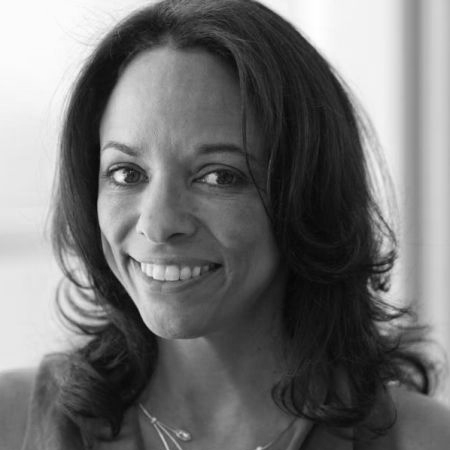 Ellen McGirt is an author, podcaster, speaker, community builder, and award-winning business journalist. She is the editor-in-chief of Design Observer, a media company that has maintained the same clear vision for more than two decades: to expand the definition of design in service of a better world. Ellen established the inclusive leadership beat at Fortune in 2016 with raceAhead, an award-winning newsletter on race, culture, and business. The Fortune, Time, Money, and Fast Company alumna has published over twenty magazine cover stories throughout her twenty-year career, exploring the people and ideas changing business for good. Ask her about fly fishing if you get the chance.
Related Posts
The Observatory Newsletter
Ellen McGirt
Who gets to decide where power begins and ends?
The Observatory Newsletter
Rachel Paese
You need an observation practice
Draw the Line
Audio
BONUS: Live from Essence Fest – The Work Gets Personal
Draw the Line
Audio
BONUS: Live from Essence Fest – The Accounting
Subscribe to The Observatory
Related Posts
The Observatory Newsletter
Ellen McGirt
Who gets to decide where power begins and ends?
The Observatory Newsletter
Rachel Paese
You need an observation practice
Draw the Line
Audio
BONUS: Live from Essence Fest – The Work Gets Personal
Draw the Line
Audio