February 18, 2026
05: Waxing
Read the introduction to this series.
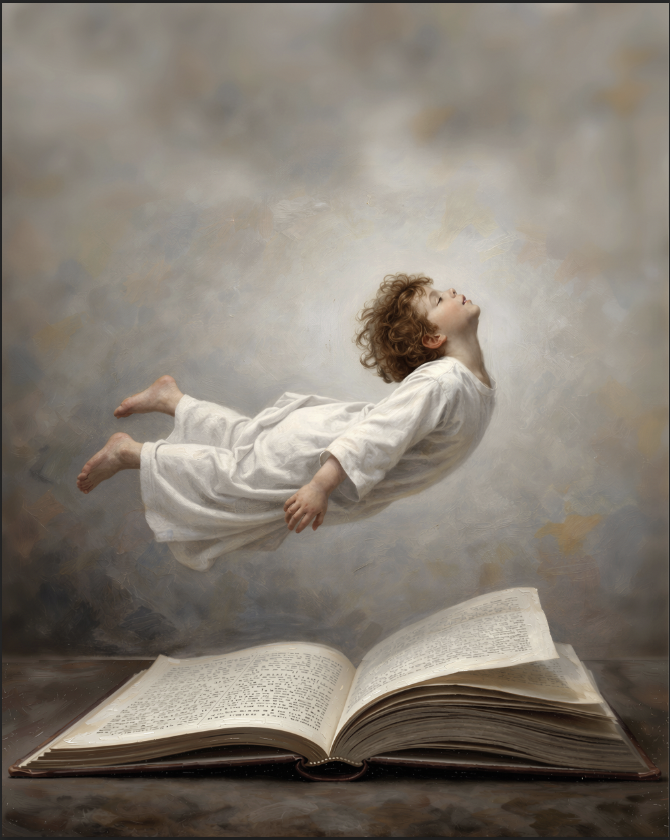
60 x 48 inches
Oil and wax on canvas
2026
I am finding Icarus references everywhere. He’s a symbol for so much: adventure and aspiration, peril and mishap, the embodiment of recklessness, the fragility of youth.
I’m still stuck on the youth part.
In Raymond Queneau’s absurdist 1968 retelling, Icarus is imagined as a bit of a louche, drinking absinthe in a bar in Paris and hanging with a courtesan named Hélène (phonetically referred to as “LN”). He’s a wanderer, this Icarus: lost and impressionable, an adult-child.
I can’t stop thinking about this sentence, though.
Icarus was only fifteen pages old when he escaped.
Ages as pages. (An alternate universe.)
I have been thinking also about the materiality of painting. And where Icarus is concerned, that means wax.
I’m curious about wax as a medium but also as a material intended to … bond. (Hard not to think about parental bonding, here.)
I am noodling on encaustic (the word itself invented by the Greeks, and meaning “to heat or burn in”), a process requiring a torch and proper ventilation which I will get to later, mostly because I’m too impatient. (Also: it’s hard-core winter here in New England, and opening the windows is not an option.)
For the minute, I’m using cold wax: I like its quiet luster, its weight and sheen. Adding it makes the sky feel less porous, less welcoming, somehow. I am painting a heavy sky, which befits its heavy role in this story — although painting is not the right word, because I will slap the paint around a little, with knives and rags, using my whole hand, my wrist and fist. I’m adding it to the painting of the book, too, trying to get at something iconic and architectural. I see that book as a prop, but also as a kind of proxy for an origin story: book as bedrock.
Sometimes when I paint like this I erase and start over, so there is erosion in the texture. Erosion — like error, like erasure — feels like a very human thing to me.
I think of these two paintings as portraits of ways of being more than being itself. They’re situational, and speculative. One child floating, sleepwalking, hovering. The other still and stoic, fronting an empty volume, dressed as the man he imagines himself becoming. Both playing with personas — a word with a Jungian root, but also a theatrical one. (Mask.)
In Queneau’s novel, Icarus is a kind of actor. I think about this, too, about my own curiosity about method in general, and method acting in particular. Stanislavsky comes to mind.
The title seems obvious, now. All children are actors, rehearsing for adulthood.
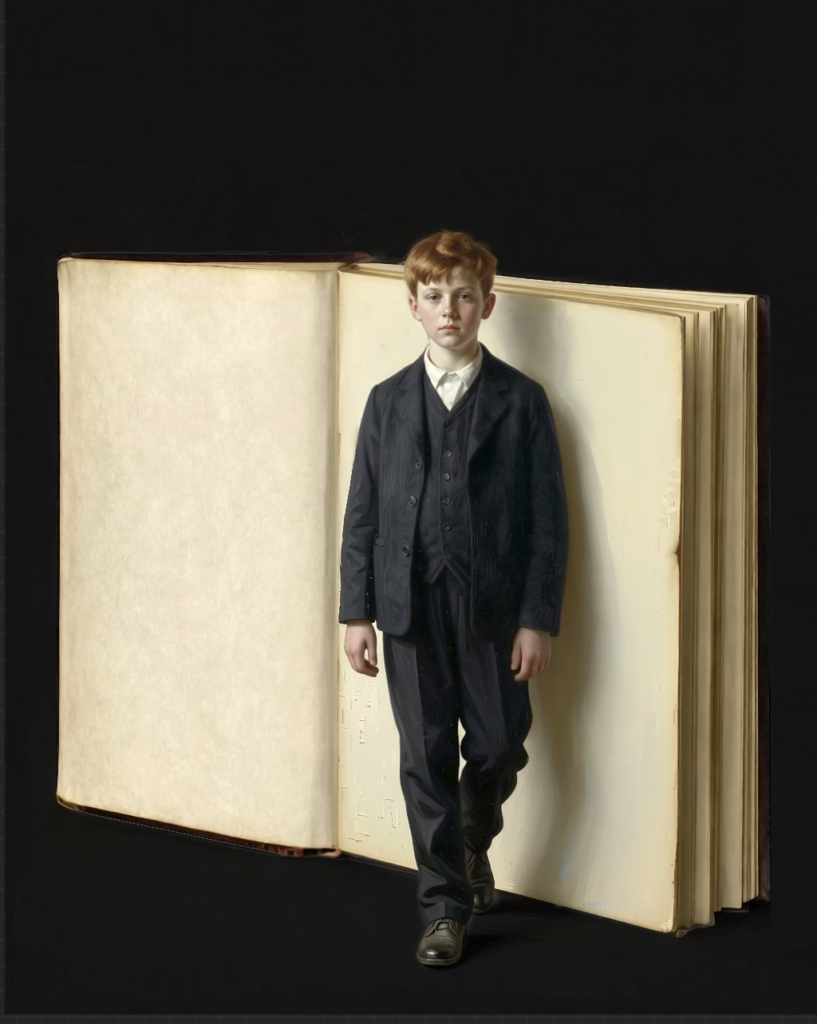
60 x 48 inches
Oil and wax on canvas
2026
Observed
View all
Observed
Share on Social


By Jessica Helfand
 Jessica Helfand is an artist and writer based in New England. A former critic at Yale School of Art and one of the founding editors of Design Observer, she is the author of several books on visual culture including Self Reliance, Design: The Invention of Desire, and Face: A Visual Odyssey. jessicahelfand.com