February 18, 2026
A devotion to the human face
Jessica Helfand's research-driven portraiture
In 2019, artist, designer, writer, and Design Observer co-founder Jessica Helfand published Face: A Visual Odyssey, a compelling examination of the history of images of the human face — from historical mugshots to medical research images to humanoid robots, and beyond. “The face has always been a hieroglyph, at once the instrument of lucidity (we all have one) and an enigmatic canvas (we’re all different),” she wrote in the prologue.
Her timing was impeccable.
With social media and AI, the world has entered an era of human face-centricity, largely against our collective will. (Think: surveillance technology, biometric capture, mass distribution on social media.) As Helfand sees it, we now inhabit “an entire spectrum of seductive technologies — mobile, social, virtual, wearable, and endlessly visual — that challenge how we see ourselves and each other. What happened to our old faces, and how do we get them back?”
That last part turned out to be a clue.
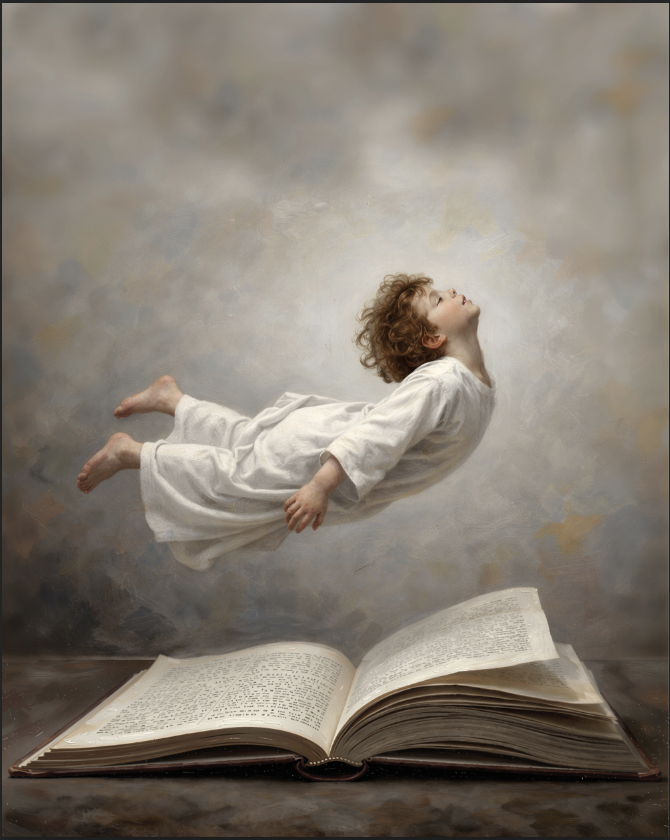
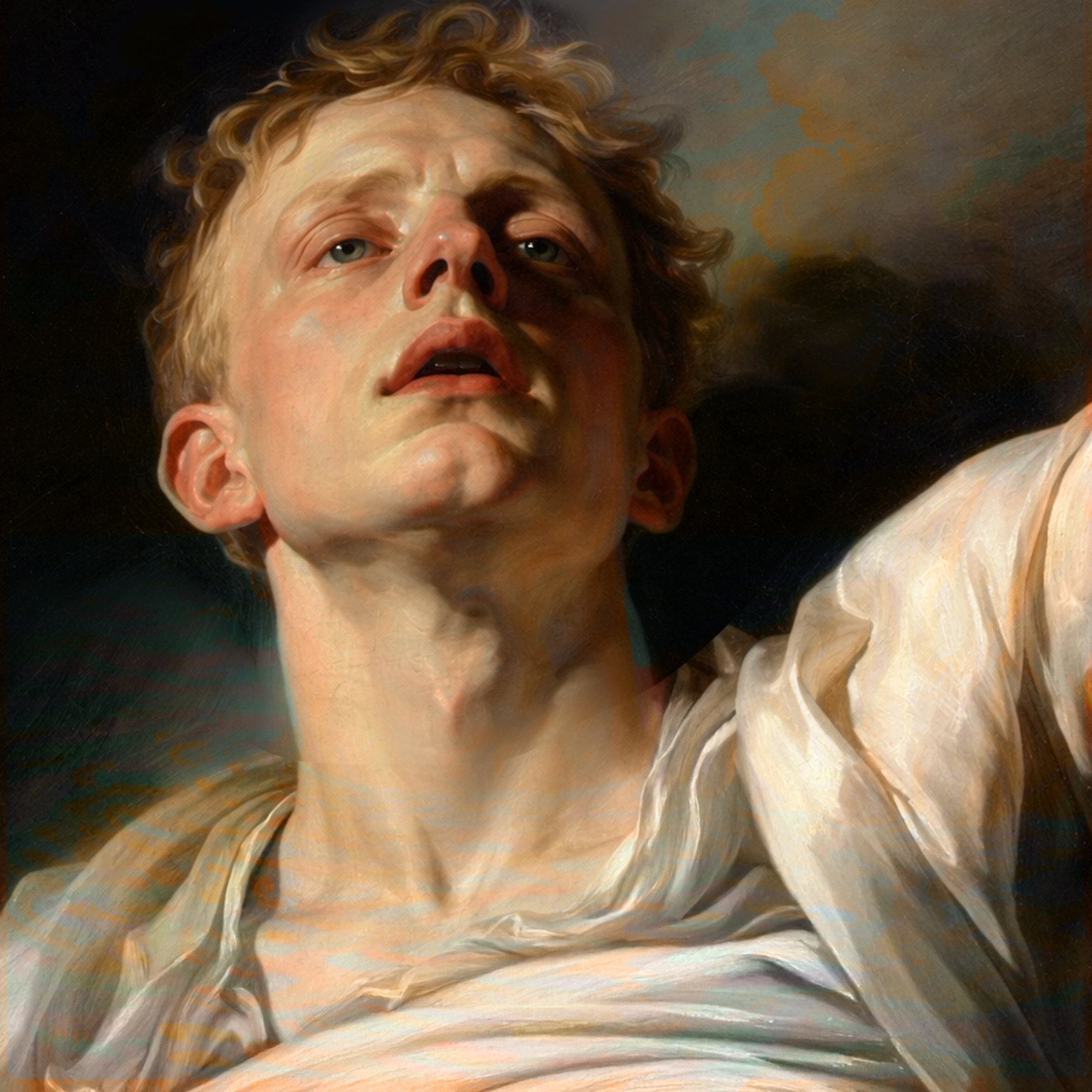
Since the publication of the book, Helfand has been on a visual odyssey of her own, following the threads of her research to produce a body of painting of astonishing size and quality that combines seemingly disparate elements into something wholly new: classical portraiture and artificial intelligence. She has, in many respects, given us our old faces back.
One of her early series, Character Studies, begins with a glorious conceit: how would some of our most beloved fictional protagonists look if they were painted as they were described by the authors who created them? Using the actual words of Jane Austen, Henry James, Marcel Proust, and others as AI prompts, Helfand created painted portraits that infuse the characters with distinct, personal humanity. (With all respect to Kate Winslet, I will never picture Marianne Dashwood any other way again.)
In The Service Society, Helfand scratched beneath the surface of the Boston society portraits created by American artist John Singer Sargent in the late 1800s to uncover a brilliant idea.
“The concept of ‘Boston society’ got me thinking about privilege and its opposite—hidden faces and forgotten stories and silenced, marginalized communities,” she says. What followed was a series of portraits of immigrant servants to the Boston elite, whose faces were informed by AI prompts based on period advertisements, news stories, and recovered letters, many of which described their lives in servitude. (You can learn more about her research here.) The titles of the paintings were often taken from phrases she found in those letters: Four Dollars and The Black, Eighteen Working as Twenty, You’d be a Socialist, Too.
Helfand didn’t just give us our old faces back; she gave us back our histories. And as one of the first fine artists to fully incorporate AI into her practice, she is also helping us glimpse the future.
Since 2025, she has been hard at work on Icarus Revisited, a new series that redirects our focus away from Icarus’s body in free fall — the cautionary tale — and toward his face, the window into his inner life. “My primary interest lies in experimenting with myth but also with memory, approaching the larger story as a series of shorter scenes, Icarus himself revived across a range of characters,” she says.
To accompany the Icarus series already in progress, I’ve asked her to share her diary entries and other studio musings as she works. It is a voyeuristic experiment of sorts — an attempt to peek into her artistic process, but also a selfish one: to experience her work as a series of prompts that are entirely human in nature. (And before they find their way into her next book, which I feel certain is incubating in her brain right now.)
Click through for an interview about how she paints, then head to her diaries to understand why she paints. “I tell myself that of all the Greek myths, the story of Icarus is the one most people know,” she begins. “Joan Didion wrote: I write entirely to find out what I’m thinking, what I’m looking at, what I see and what it means. That’s the goal, here: to reason through the making. To dig a little deeper. To go wider. (Weirder.)”
Here’s to always going wider and weirder.
Ellen McGirt
Editor-in-Chief
LinkedIn
Instagram
Threads
Ellen@designobserver.com
We hope you had an excellent three-day weekend, if it was a holiday for you. Next week, The Observatory will arrive on Monday, as usual.
P.S. Did someone who loves you send you this newsletter? Welcome! Subscribe here.
This edition of The Observatory was edited by Rachel Paese.
The big think
Why can’t we all live in an Olympic Village?
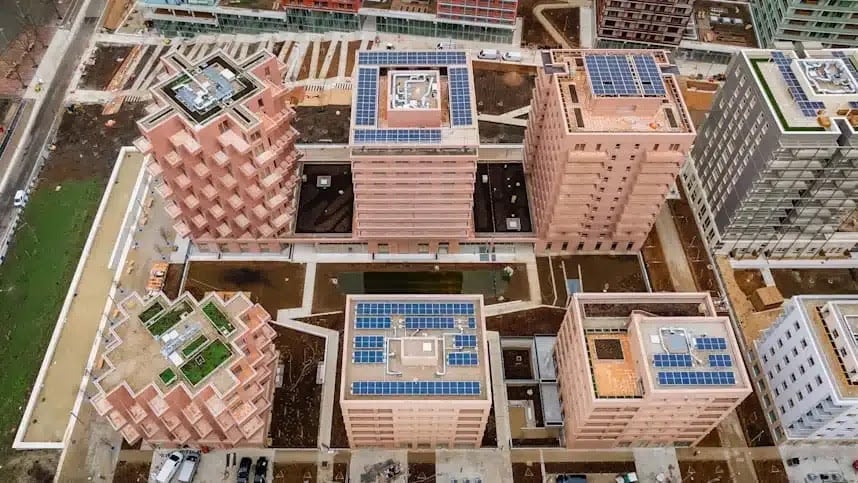
Every few years, a self-contained community rises in a new corner of the world — built to house, feed, transport, and protect some of the most competitive athletes on earth. This year, nearly 3,000 competitors from 90 countries. On paper, these villages are mini-utopias, mirroring the Olympic ideal itself. They are logistical marvels and social experiments: places where people united by focus and discipline gather around global sport’s tentpoles — respect, humanity, aspiration, humility, openness. You walk around. You make friends. You make memories. You represent your nation. If you’re lucky, you launch the next best version of yourself.
Each time an Olympic Athlete Village rises and then falls dormant, it raises important design questions. How do you build an intentional community from a standing start? And how do you retrofit one without stripping away what made it work? More to the point, why is it so hard to create affordable communities that feel this good?
Milan is about to find out. The primary village that welcomed athletes to the Milan–Cortina Games is slated to become student housing. Already, some of the features that made it feel like a community, such as bike racks, video lounges, and food stations, have been scrubbed from the plans. According to The New York Times, the remodel is unlikely to solve the actual problem. “Critics say the converted rooms will be too few to meaningfully address a vast shortage of university housing and too expensive for many students.”
Of course, Olympic villages are no utopias, and plenty of good intentions get lost in translation. But they are extraordinary demonstrations of what coordinated design and political will can accomplish in a compressed, highly public timeframe. We know how to build environments that foster dignity, connection, and focus. We know how to remove friction and anticipate need. One big difference is that the villages become part of the media coverage, the spectacle, the civic pride. They are a type of competitive game, themselves.
This explains in part why the same level of investment and care isn’t applied to, say, refugee settlements and public housing. Nothing would make many in the design world happier than to see this level of global attention focused on celebrating the big wins of small village-making for the most vulnerable. There may never be a global medal ceremony for breakthroughs in walkability, equitable access to shared resources or winning mechanisms to build social trust, but there should be.
Podcasts
Designing for the Unknown – The Future of Cities is Climate Adaptive with Michael Eliason

Michael Eliason, founder of Larch Lab, is an architect, researcher, writer and urbanist, and architect based in Seattle.
In the aftermath of the fires in Southern California, Michael helped host Ellen McGirt understand how we can build or rebuild communities to anticipate the significant climate changes imperiling our world and make us healthier, happier, more connected people.
“It’s really just having a broader understanding that the way we have designed our cities and neighborhoods for the last 50 years is not conducive to these places where people can thrive and adapt to a changing climate,” Elaison says. “…when we start to look at mobility and climate and community amenities and housing and affordability in a more comprehensive way, we can create the cities that we always talk about wanting to have but can never really seem to induce through our current kind of status quo.”
Observed
What are you observing? Tell us.
New patent filings suggest North West is planning a fashion empire. Good thing her mother (Kim Kardashian) knows the law. #NOR11
The Trump administration has revoked a 2009 government declaration that determined that carbon dioxide and other greenhouse gases threaten public health. The declaration, known as the endangerment finding, has been the government’s central argument for regulating greenhouse gas emissions to mitigate the effects of climate change. Worth a read.
Damned if you don’t, ‘grammed if you do. A new exhibition brings together Chinese artist Yin Xiuzhen, whose critique of capitalism is stitched from old T-shirts, and Japanese artist Chiharu Shiota, whose “dizzying, knotty installations” have made her a social media phenomenon. While elaborate, the Guardian says the installations fall short. “Art institutions are in a tough bind…Either they put on interesting, clever, powerful art that no one comes to see, or they bow to the pressure of hosting pretty, vacuous immersive installations that will look good on Instagram in the desperate hope of selling some tickets.” Through May 3.
Don’t blame AI. Photography has always been the domain of tricksters and liars.
The Pope is into fonts. To commemorate the 400th anniversary of St. Peter’s Basilica in Rome, the Vatican is announcing several new initiatives, including a new font based on the handwriting of Michelangelo Buonarroti. The institutional font, “Michelangelus,” was developed by Studio Gusto and will be included in the Microsoft Office package. IT experts reviewed thousands of Michelangelo’s letters and personal notes, which contained new ideas, requests for funds, and updates on the basilica’s construction.
A landmark convening positions Cairo as the AI innovation and investment hub for Africa and the Middle East. AI Everything Middle East & Africa (MEA) Egypt, brought together technology leaders, investors, and policymakers from over 30 countries to share ideas on building smart, sustainable cities. Egypt’s AI strategy has six pillars: Intelligence, Meaning, Governance, Availability, Abilities, and Skill. More here and here.
People watching at New York Fashion Week.
A unique research collaboration finds a chemical collaboration for the built world. Researchers affiliated with the Center for Development of Functional Materials (CDMF) at the Federal University of São Carlos in Brazil have made a breakthrough in the Nobel Prize-winning field of metal-organic frameworks (MOFs), a novel molecular architecture with important applications in water remediation and sustainable solar power. The work is part of a unique global research collaboration, and encourages scientists funded by its grants to work with others. Chemists: insert valence bond theory joke here.
A long list of broken promises on self-driving cars from Tesla. “Elon Musk promised 500 cars in Austin, coverage for half the US population, fully unsupervised rides, and expansion to 8-10 cities, all by the end of 2025. None of it happened.” Electrek spills the tea.
Judy Chicago exits “nightmare” project with Google. The visual artist, along with her husband, architect and photographer Donald Woodman, was set to complete a major commission for the search giant in the Chicago Loop. “We were told that Google wanted to turn the Thompson Center into a space that was so warm and hospitable that it would entice employees to go to the office rather than stay home and work remotely in their pajamas,” she told ArtNet. The problems started almost immediately. “We’re really profoundly disappointed that we couldn’t produce something that the people of Chicago would be happy with,” she said.
You’ve been kissing wrong your whole life. The legendary internet cartoonist Chris (Simpsons artist) has just released a new animation series, im glad i know that now thank you, in collaboration with Blink Industries and animation director Mike Greaney. The first of the trio of films is kissing; come for the animated advice, stay for the unique merch.
Job board
Hiring a designer? Post your role on the Design Observer Job Board to reach a highly engaged audience of designers, creative leaders, and studios across the Design Employment Network.
Graphic Designer at P3 Properties, East Rutherford, NJ
Senior Brand Designer at Redscout, Remote
Creative / Graphic Designer (Web, Brand & CMS) at Metro Light and Power LLC, Englewood, NJ
End marks
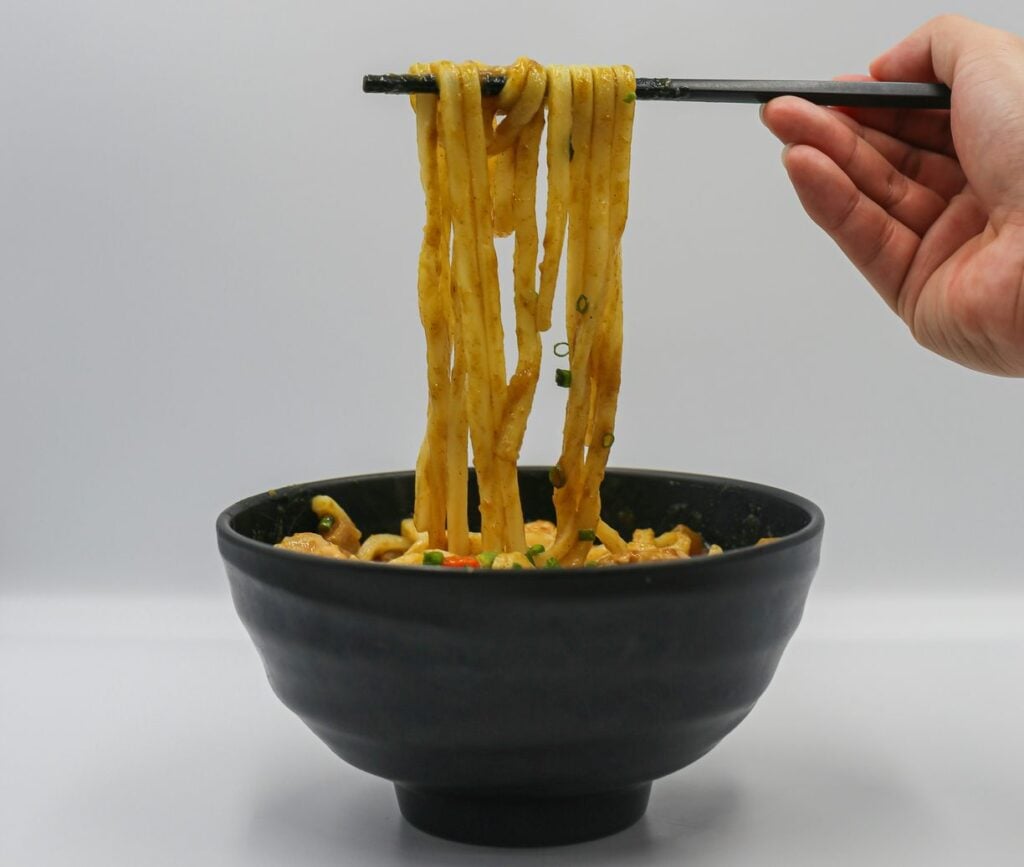
In your Lunar New Year celebrations, don’t forget to include a bowl of noodles. Not only do they symbolize longevity, they also embody it.
Noodles have been around for at least 4,000 years. This means they predate paper, table forks, bristled toothbrushes, and eyeglasses. Talk about longevity of design.
Happy Lunar New Year!
Observed
View all
Observed
Share on Social


By Ellen McGirt
 Ellen McGirt is an author, podcaster, speaker, community builder, and award-winning business journalist. She is the editor-in-chief of Design Observer, a media company that has maintained the same clear vision for more than two decades: to expand the definition of design in service of a better world. Ellen established the inclusive leadership beat at Fortune in 2016 with raceAhead, an award-winning newsletter on race, culture, and business. The Fortune, Time, Money, and Fast Company alumna has published over twenty magazine cover stories throughout her twenty-year career, exploring the people and ideas changing business for good. Ask her about fly fishing if you get the chance.