


May 15, 2018
A Bee C: Paul Rand’s Bee Fixation
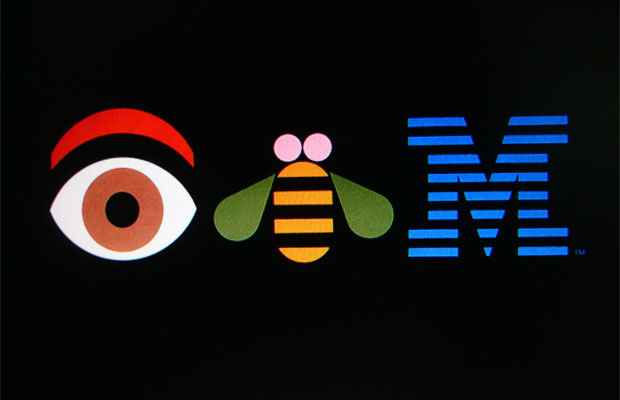
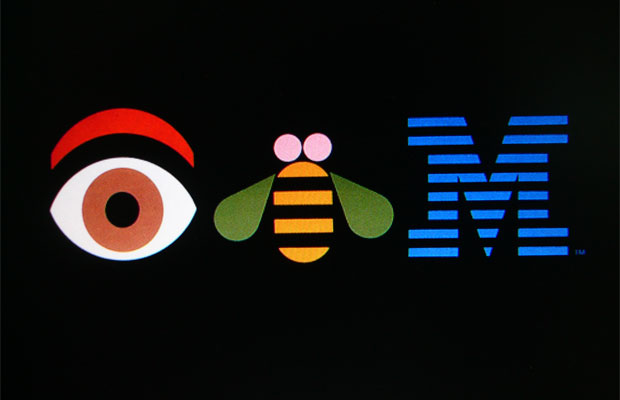
The 1981 Eye-Bee-M rebus is Paul Rand’s most iconic poster (the equivalent, say, of Lucian Bernhard’s Priester Match or Milton Glaser’s Dylan poster). It has become synonymous with the playful side of his IBM design direction—and a little controversy arose because the higher-ups believed that by toying with the sanctity of the corporate logo, the floodgates would open to anarchy.
The poster became a classic because it humanized the corporation. It also revealed Rand’s little-known interest in apiary, as bees play a small though significant role in Rand’s oeuvre.

Let me explain.
Rand’s last retrospective prior to his death was at the Cooper Union from October 4 to November 8, 1996 (curator Georgette Balance). During his penultimate public talk with me as interlocutor at Cooper Union’s Great Hall a month before he died on November 26, 1996, he talked about how nature influenced his work. To underscore the point, the cover image on the accordion-folded timeline/catalog accompanying the exhibit was a leaf—a simple high contrast impression that was ghostly yet beautiful. It was like leaves within a womb that was the larger leaf. Printed in a dark forest green, Rand extolled its perfection. There was absolutely nothing, he said, in the man-made designed world that could equal its exquisite shape, pattern—or its internal logic and inherent abstraction.
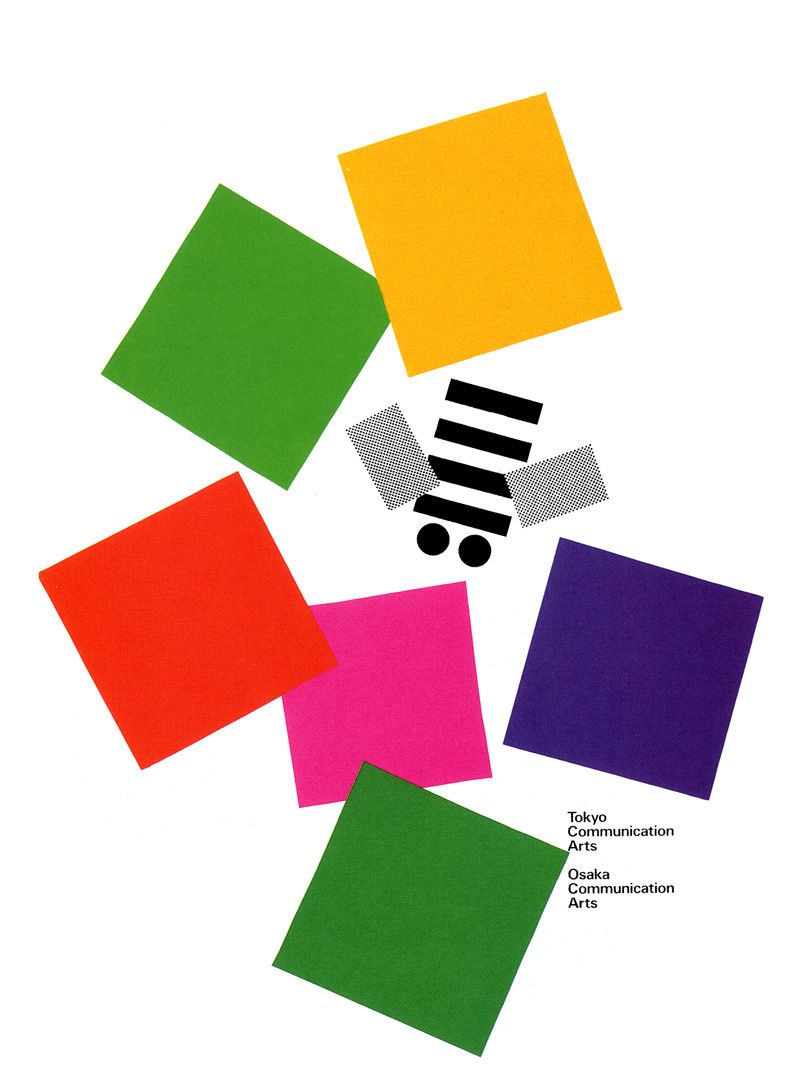
It made me want to explore how else nature influenced his work, which was not a difficult task because he transformed so much of what he encountered in his world—especially in his garden—into graphic elements. Of these natural wonders one sticks out more than any other: the common bumblebee. He made his bees from circles, rectangles, triangles, and bright colors. They were playful and powerful.
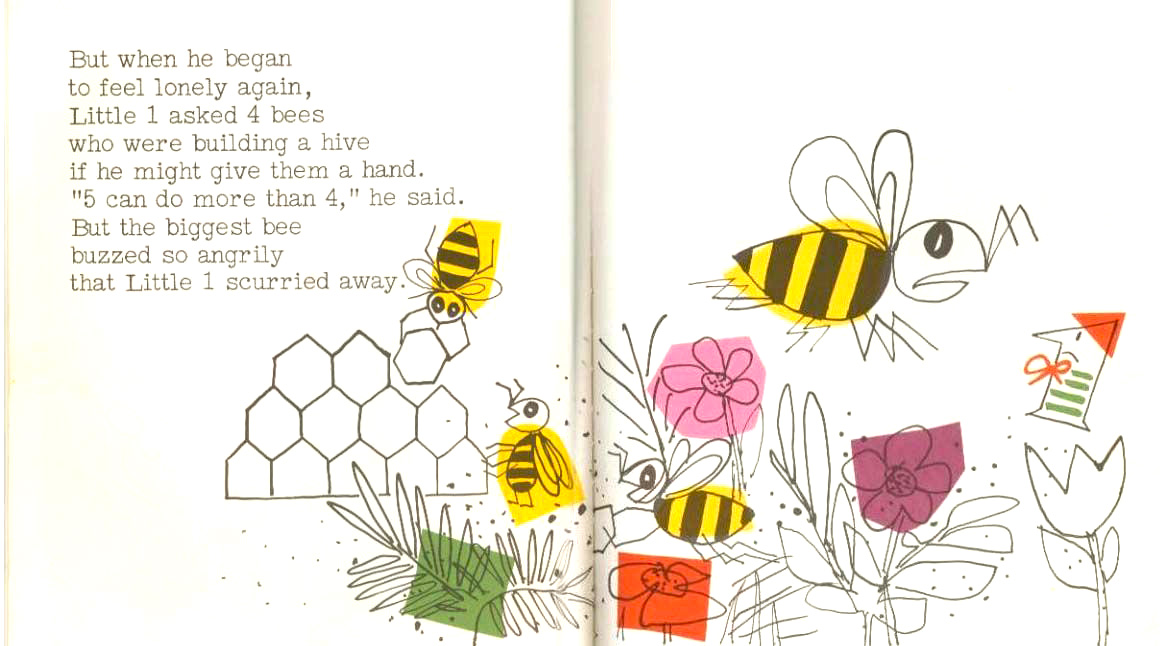
The IBM rebus was just one of his favorite abstractions. Although he was not as obsessed with bees as Cezanne with apples and pears or Morandi with vases and bowls, Rand’s bees were the perfect evocation of how he used geometric form and primary color to evoke representation and symbol. It is, therefore, no coincidence that when Rand painted for the pure pleasure of making pictures, his subjects were mostly of nature and natural things—although, paradoxically, in these paintings there were no bees to speak of.


Observed
View all
Observed
Share on Social


By Steven Heller
 Steven Heller is the co-chair (with Lita Talarico) of the School of Visual Arts MFA Design / Designer as Author + Entrepreneur program and the SVA Masters Workshop in Rome. He writes the Visuals column for the New York Times Book Review, a weekly column for The Atlantic online and The Daily Heller.
Related Posts

Innovation
Ashleigh Axios|Essays
Innovation needs a darker imagination

Business
Kim Devall|Commentary
The most disruptive thing a brand can do is be human
AI Observer
Lee Moreau|Commentary
The Wizards of AI are sad and lonely men
Business
Louisa Eunice|Essays
The afterlife of souvenirs: what survives between culture and commerce?
Subscribe to The Observatory
Related Posts
Innovation
Ashleigh Axios|Essays
Innovation needs a darker imagination
Business
Kim Devall|Commentary
The most disruptive thing a brand can do is be human
AI Observer
Lee Moreau|Commentary
The Wizards of AI are sad and lonely men
Business
Louisa Eunice|Essays