


October 8, 2026
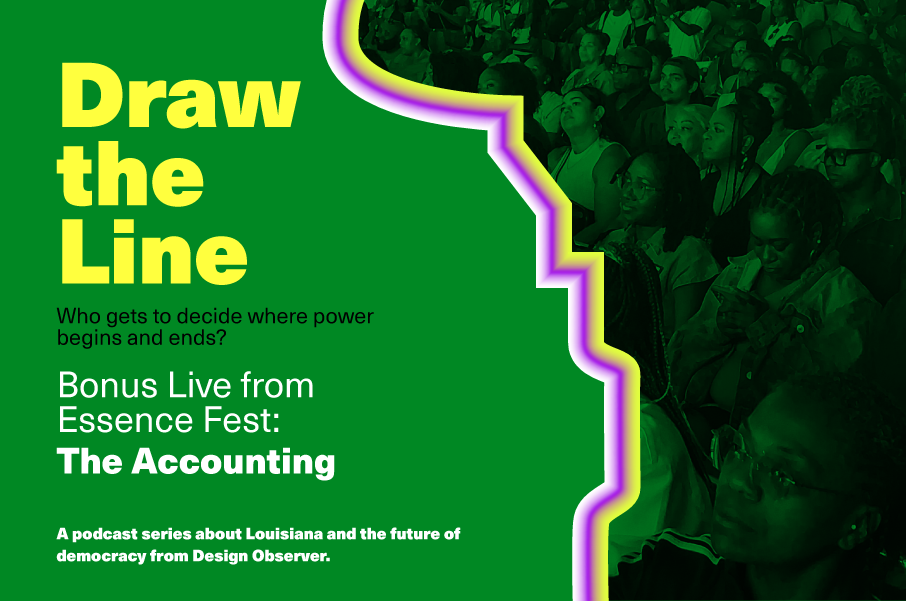
BONUS: Live from Essence Fest – The Accounting
Instead of hanging at a cookout, a determined group of Black women convened during Essence Fest on July 4 to do something even more American: demand more from their democracy. In this special reporter’s notebook episode, we are presenting an all-star panel as they “spill the tea” about the redistricting fight, the Callais decision, and what it means for Louisiana — and the rest of us. Stay tuned to the end for a special message on what to do if you have any questions about voting.
Panelists
- Elizabeth Booker Houston (moderator), a Memphis-based lawyer, professor, and social media commentator on law, politics, and civic engagement.
- Ashley Shelton, the founder, president, and CEO of the Power Coalition for Equity and Justice.
- Sen. Royce Duplessis, the Louisiana state senator representing New Orleans, an attorney, and a member of the Legislative Black Caucus.
- Demetria McCain, the Director of Policy at the NAACP Legal Defense and Educational Fund (LDF), overseeing work on economic justice, criminal legal reform, and education equity.
And the extraordinary host, Tonya Boyd-Cannon
In this episode:
Power Coalition for Equity and Justice
Lawyer’s Committee on Civil Rights
Get help voting: Election Protection, 866-OUR-VOTE. The free, nonpartisan hotline led by the Lawyers’ Committee for Civil Rights Under Law; call 866-687-8683.
This series was made possible in part by the Power Coalition for Equity and Justice, which builds civic power in communities across Louisiana. You’ll hear from many of their staff and coalition members in this series, but all editorial decisions are Design Observer’s own. Head to their website for more.
TRANSCRIPT AND RESOURCE LIST
TONYA BOYD-CANNON [Speaker 6] 00:01 When I ask, do we have any power voters in the room?
TONYA BOYD-CANNON [Speaker 7; confirm] 00:04 You say, I am a power voter.
TONYA BOYD-CANNON [Speaker 6] 00:08 I’m gonna drop the key because some people are looking at me like that’s too hot, Tonya.
ELLEN McGIRT [unlabeled] 00:12 It’s the 4th of July at the Essence Festival in New Orleans, the annual gathering by and for Black women. But instead of hanging at a cookout, hundreds of Black women are celebrating the nation’s 250th birthday in a hotel ballroom to do something even more American. Demand more from their democracy. It’s a Power Coalition party with a purpose.
TONYA BOYD-CANNON [Speaker 7; confirm] 00:37 All right, here we go, everybody. I am a power voter. I am a power voter. I am a power voter.
[MUSIC] [Speaker 4] 00:58 So I should body.
ELLEN McGIRT 01:03 I’m Ellen McGirt, and this is Draw the Line, a 10-part podcast series about how the fight over a line on a map ended up invalidating one of the most consequential laws in American history, and the people fighting day in and day out for a fair democracy. In this special reporter’s notebook episode, we’re presenting an all-star panel as they spill the tea about redistricting, the Callais decision, and what it means for Louisiana and the rest of us. Oh, and if you have voting issues anywhere in the United States, you’ve got friends you may not know about. So stay tuned for an important phone number at the end. This is Coalition Independence Day, the accounting.
TONYA BOYD-CANNON [Speaker 6] 01:49 Here we go. Our next conversation is one we’ve all been waiting for. In the wake of Louisiana versus Callais, questions about voting rights, representation, and the future of our democracy have never been more important. To lead this conversation, I’d like to welcome our moderator, Elizabeth Booker Houston. She’s a lawyer, professor, influencer, and a well-respected voice on law, politics, and civic engagement.
ELIZABETH BOOKER HOUSTON [Speaker 5] 02:16 Thank you so much. Hi, New Orleans. Hello. How y’all doing? Thank you so much for uh having me today as your moderator because I’m very excited to introduce this illustrious panel and also talk about voting rights. We know that this is both a timely and a necessary conversation. We gather at a pivotal moment for American democracy. We know that our voting rights, it’s not something that’s ever been just self-executing, right? We have had to fight for this. We know that we’ve had to fight to get our constitutional rights and to make sure that they are actually real for Black Americans and for communities of color and for those whose voices have often been too excluded from the political process. Today those struggles continue, and the Supreme Court’s decision in Callais represents another defining moment in the ongoing debate over representation, equal political opportunity, and the future of our democracy. Yet history reminds us that moments of setback have often been followed by renewed organization, coalition building, and civic participation, right? We know we’re gonna fight back. And so this conversation is not just about the court decision and what has happened in the past, but it’s about where we go from here and talking about the future. It’s about protecting democratic participation and about ensuring that every community has an opportunity to be heard. And it’s about what leadership looks like when the legal landscape changes. And so we’re fortunate to be joined by extraordinary leaders whose work spans litigation, legislation, organizing, and public service. And so together they represent different complementary approaches in advancing civil rights and democratic participation. But we are delighted to be joined by Ashley Shelton, the founder, president, and CEO of the Power Coalition for Equity and Justice. Um, we are joined by State Senator Royce Duplessis, attorney and lead sponsor of the Louisiana Voting Rights Act. And we are also joined by Demetria McCain, Director of Policy with the Legal Defense Fund. Thank you, Demetria. Um, and then we’ll also hear from Janai Nelson, the president and director-counsel of the Legal Defense Fund, and the phenomenal Black woman who argued the Callais case in front of the Supreme Court. We’ll hear from her after the panel. Um but I want to jump right in. And so, Ashley, I would like to start with you if that’s okay. We know that court decisions shape the legal landscape, but movements are built by people, not judges. And a recent Washington Post article said that Black communities across the South are energized and engaged after the Callais decision. What are you hearing from communities across Louisiana?
ASHLEY SHELTON [Speaker 2] 04:48 I think we are absolutely seeing so much in participation and engagement. Royce knows when we were at the Capitol and they were voting on this bill because our legislature was in session when the decision came down and then they moved a set of maps to take away our second majority minority district. And so to be clear, with Robinson versus Landry, we were able to actually gain a second majority minority district. Yes. And so for what, two years, we’ve had uh Representative Cleo Fields in that seat. And, you know, subsequently the decision came down, and then our legislature moved really quickly. And there was a lot of subterfuge because our legislature kept saying that it’s not our fault. The Supreme Court is making us do it. But what they weren’t saying was that they didn’t have to take away a majority-minority district, they just had to draw a better map. That’s all they had to do. And then our friends said the Legal Defense Fund drew like eight different ways.
ELIZABETH BOOKER HOUSTON 05:43 Even the baby knows that’s nonsense.
ASHLEY SHELTON 05:45 See, right, even the baby knows this is not right. Okay. So the Legal Defense Fund literally drew eight different ways that we could create two majority minority districts here in Louisiana. But one of the things I’m so proud of is that the people of Louisiana showed up and showed out. And so when we had the first conversation, yes, when we had the first conversation about this map, and there was a lot of subterfuge, drama, no information about when the maps were going to be heard in committee, but it didn’t matter because we worked with communities across this state from all over Louisiana, buses coming in from all over, and there were over 500 people that took over the entire Senate side at the state capitol. We took, they couldn’t even, they didn’t even have enough Senate committee rooms for all of the people to sit in. And, you know, in that powerful moment to see the four Black men that have served as, you know, congressmen in this state in the entire history of the state of Louisiana, with the exception of the one Congressman Menard that they didn’t even let actually participate in Congress. But these were the only four Black men that had ever been elected to represent the state of Louisiana within our congressional delegation. [Editor’s note: Charles Edmund Nash also served, from 1875 to 1877; the four at the hearing were Louisiana’s living Black former and current members of Congress.]
And to see them sitting at that table testifying, it was so powerful because you couldn’t deny that you want to tell me we don’t need fair representation, that we don’t need the tool that is Section 2 of the Voting Rights Act to be able to make sure that I can elect a candidate of choice. And again, I’ll say it again, I said it earlier. We have one of the most powerful congressional delegations in the country. We’ve got uh Johnson as the speaker, we got Scalise, the majority whip, Letlow’s on appropriations, and somehow we are still winning the race to the bottom and not getting the things that we need. And so it’s important to have someone that was that is African American, that understands what it means to live in this state as a Black person. And so, you know, and so I say all of that to say that again, over 500 people in the Capitol on the first day, the map was heard. The the second, you know, hearing on this map, they literally changed the day. So we were supposed to hear it on a Wednesday at nine o’clock. Then it turned into Tuesday at four o’clock. They locked the building down, we couldn’t go into the committee rooms, we couldn’t wait, we couldn’t sit down. On the first day, that first Friday, they closed the cafeteria. People couldn’t even eat. And so, you know, it’s those kinds of things. But we were ready because we had buy we had 500 box lunches because we I was like, we’re not gonna play games, right? And and folks stayed that first day, that Friday, they stayed from 9 a.m. when the hearing was about to start, until 7 p.m. was the when the last person was heard. And then that day they started at 4 and they thought that they had outsmarted us, they were there until 6:30 a.m. Okay, and so what they wanted to say, they were like, oh, these are paid actors. I was like, paid actors don’t stay till 6:30 in the morning, baby. And I said, and also in the state of Louisiana, when you testify or when you sign a red card or green card, it’s an affidavit. It’s a sworn affidavit. And see, and that’s what they don’t want to have a conversation about is that like paid actors got to put their actual address on this card. Like this is a sworn affidavit. And so I think that it’s those kinds of things that, you know, for me, that I was just so proud about how community showed up. We’ve seen a surge in volunteers. So many folks that want to also, you know, they’re like, hey, I want to do a voter registration drive. So like at the end of the day, we’re seeing this resurgence in the community, and I think that they overcalculated and they made a mistake. Because, you know, what was interesting too, there was so much control in how the hearings went around these maps. They didn’t want anybody calling them racist, they didn’t want anybody calling them thieves. And then, y’all, let me just also say, too, that wasn’t lost on any Black person in Louisiana. We have the second largest Black population proportionally in the country. And so for them to disenfranchise one of the largest Black populations in the country is unbelievable to me. We’re not gonna tell lies about where we are and what this decision really means for Black folks and what it means for Black folks, also too, not just for the South, because that was the other thing that I think we saw all of this beautiful organizing in Tennessee and every state reacting to this decision. And I feel like when the South is on fire, you know, people ignore us and they’re like, the South is just being the South. And what I’ve remind folks is as goes the South, goes the nation. And that it has never taken more than a year for any terrible thing that got seeded in the South to be in somebody else’s community within a year. And what we’re seeing with these particular sets of decisions, right, with Callais in the aftermath, is that they’re moving quickly, they’re canceling elections, nullifying elections that have already happened. And do you know, so there’s an exponent on what usually takes a year is happening much, much faster. And if you don’t think it’s the playbook for 2028, then you are sadly mistaken. We are seeing, and they are using this decision as a proving and a testing ground for the things that they want to do. And what I love is the resistance that we’re seeing coming out of the South. We are going to fight and we’re gonna stand. And then, too, for the great leadership of friends like my friend right here, Senator Royce Duplessis, and others that have just stood in the gap. And again, and I want to remind folks, we’ve been fighting this fight since 2022. It’s really longer than that, but we’ve been in either a legislative session or federal court since 2022, 21. I’m sorry, thank you, Jared. And then we did census and redistrict, you know, we did census and redistricting before we even got to court, right? And so we’ve been fighting this fight for a really, really long time. And I think that people think that this April 29th was the day. And I was like, April 29th was not the day. I was like, because I’m I was like, but the cells in my body tell me if you’ve been working on this for a very long time. And the citizens of the state of Louisiana have taken that journey with us every single day. They have showed up and showed out, they have not missed a hearing, a road show, a committee hearing. They’ve missed nothing. And I think that’s what I’m accountable to. And I think that’s the thing too, that as we think about the future, and folks are like, oh my gosh, okay, we’re gonna have to think about our legal strategy and we’re gonna have to think about all these things. And again, we’re gonna have to abandon race, work around race. And it’s like, I woke up Black today, uh I woke up Black yesterday. I’ve been waking up Black, so I don’t think I can abandon, abdicate, or work around it, okay? We’re gonna stand in it and we’re gonna make sure that we restore our voting rights in this country, and we have an opportunity to do that in November.
ELIZABETH BOOKER HOUSTON 12:00 Thank you for that. Yes, uh, all roads lead to the South. Appreciate the people of Louisiana and what you’ve done. They really tried to say y’all were actors. Ain’t their president a reality show ho? [standards check] Anyway, let me move on. So, all right, Demetria. So, while Black communities as a whole are energized following the Callais decision, we have also heard from potential voters, especially young voters, a feeling of despair and hopelessness that their vote doesn’t matter. Voter apathy is at an all-time high. What would you say to those who feel discouraged and like their vote doesn’t matter?
DEMETRIA McCAIN [Speaker 8] 12:32 I actually uh I guess it depends on what corner of the world you’re in, but because I’m kind of inspired by the young people too. I had an opportunity to be in Georgia not too long ago. Uh as you might know, the day that they had the rallies in Georgia is the day that the Georgia’s Georgia legislature decided to not go forward, at least at that time, with the map redrawing, right? And so when I was there, there was a host of young people, college students, students uh who are in their 20s, um, speaking out and talking about some of these issues. And so I don’t want to paint a whole generation as if they’re apathetic, but I will say this, and this is not just young people, this is people even of my age who are feeling apathetic, is and at least for me, I have a 24-year-old and 26-year-old. My 24-year-old is still in my house, housing prices are still high, and as they say, the rent is too high, it’s too much. And so you’ve got to make these things real to people, right? And so we work on economic justice issues, criminal legal issues, as well as education equity issues. Right now, the things that they’re doing to the loans, student loans, that impacts the younger people. They’re putting caps on how much people can take out, and they’re also looking at certain careers that are they think are worthy of a student loan. These are things that our teams are working on. I’m the director of policy, and so these are the kind of things that we’re working on. People thought they were gonna get loan forgiveness for working at a nonprofit, they’re attacking that, and by attacking that, they’re attacking the nonprofit sector because they don’t want anybody to work with organizations like ours, okay? And so, fortunately, that particular thing that that actually last week was uh revived and saved through litigation. Who knows where it will go because the courts have different levels, but these are the things that impact young people, and so I always talk to people about the real things on the ground. It’s like, hey, do you drink water? Water is political, it may not be something that you deal with at the federal level, but you’re gonna deal with it at the local level. Are you getting clean water? We do water equity work in Georgia. Is that water something that you can afford? If you can’t pay the water bill, is your county going to foreclose on your home and put a lien on it? So talking to people at a very real level, no matter what age group they’re in. But let me tell you, there are some younger people who are out there doing the thing. And so people are dismayed. And so I invite everybody in this audience to not just say go vote, but talk to people about the why. Because studies have actually been done recently in about like a year and a half or so, that younger people do not necessarily, on the whole, react to people saying your ancestors died for your vote. That doesn’t work. So we gotta get real, we gotta get tangible, we gotta talk about the policies that impact people who want to vote or who feel despaired.
ELIZABETH BOOKER HOUSTON 15:28 Thank you. Yes. Thank you for bringing up the student loan situation. I was seven out of ten years of student loan forgiveness when I got forced out of my federal job. I’m not paying it. I’ve been forgiven because I’m a Christian. So, anyway. God is good all the time. I’m not paying it. So, Senator, you’ve been on the front line of these debates inside of the Louisiana legislature, as Ashley has pointed out, and it’s safe to say that the Louisiana Black Caucus has had a very difficult year, and that’s really an understatement. Mercifully, all of the state legislatures in the South have concluded their legislative sessions for this year. And in the aftermath of the Callais decision, we saw a theme across the South, right? Of white majorities eliminating Black opportunity districts as a Memphian. I want to fight over that. We know the worst is still yet to come, especially as states turn to legislative redistricting. And so, what lessons can we draw from the recently concluded Louisiana legislative session as we prepare for the redistricting and voting rights battle ahead? Because we know they’re not just gonna stop here in 2026.
ROYCE DUPLESSIS [Speaker 3] 16:43 First, I just want to thank Ashley, Power Coalition, LDF, and the great work that you all are doing. This is yes. All of these different things that are going on, they didn’t happen overnight. For me, the lesson that I would say I took away, it was almost sort of like a reaffirmation, but this is the first time I’ve ever personally experienced it. Even after we went through redistricting in 2022, as as difficult as that process was, coming out of this most recent, unexpected redistricting session that we went through, it reminded me that democracy is never really over. It’s not like at the end of the fourth quarter of a football game, that’s like the end of it. This game never ends. And that ties directly to the question that was asked about voter apathy, that we have to remind young people and voters, even some old people, that voting is just one component of being engaged and being civically involved and holding your leaders accountable and making sure your voice is heard. That is just one piece of a much larger puzzle. So this session that we went through is just one piece of a much longer journey. And we didn’t get here overnight, and we won’t get out of this overnight, but this fight ain’t over. This fight’s just beginning. So that’s what I took from it. So look, the litigation is gonna continue, but there will be midterms in November, right? And the question is, what do we do with that anger? What do we do with that frustration? Do we choose to say we’re gonna register our contempt by protesting by not by not participating? Well, first I want to honor that frustration and acknowledge the reason why people feel frustrated. We have to challenge ourselves as elected leaders, we have to challenge ourselves as organizers, as litigation strategists to say what can we do differently? Because clearly what we did just now didn’t work. We got mopped in these state legislatures across the country because we weren’t thinking 10, 20 years ahead, right? So now we know that the players at the state level, my hope is that nationally, everybody gets the wake-up call. Look, when the decision came down in April, and the first thing, it was like two schools of thought out there. We knew they were gonna take action. We just didn’t know they were gonna do it when they did it. And when I saw whoever it is that’s running for Senate or governor in Tennessee posted that red map of getting rid of the Shelby County district.
ELIZABETH BOOKER HOUSTON 18:59 Oh, Charlane Oliver. Yeah, yeah, yeah.
ROYCE DUPLESSIS 19:02 Basically, she was like, We’re about to do this. And that’s when I knew that the orders were gonna come from the White House to whether you had two districts like Louisiana or whether you had one like Mississippi or one like Tennessee, they were coming for them and they were coming for them now. Suspend an entire election. 40,000 ballots had already been returned in this most recent primary election that we were undergoing. So they didn’t care. It was win at any cost, move the goalposts. But again, the game is never over. It never ends. Because if the game had been over, then we would still have the map that we had in 2022. Now we had better maps, right? We had better maps because we knew that the that Senate Bill 8 that ultimately passed had problems. But we as the Black Caucus couldn’t vote against that map because it did create a second majority Black district. Even though they were saying, well, this is drawn based on politics. It was almost like they knew ahead that this court, that this Supreme Court would ultimately strike it down. So, in a lot of ways, we need to look to history because we’ve been here before. We were here in the early 90s. And the great thing that I’m inspired by is everything that Ashley said, I’ve been in many, many, many, many committee hearings. I’ve been probably in more committee hearings than certainly anybody in this room, but that night, when we stayed up, we started the committee hearing at 7 p.m. and we didn’t end until like 5:30 in the morning, right? It wasn’t just the fact that hundreds of people showed up and showed their commitment, which inspired me, which reminded me of how fortunate I am to be able to serve in this position, but it was also a reminder that those folks that’s pushing that agenda, they are not on the right side of history, and they’re not even on the right on the side of the majority of the people in this state, right? Because we we’re talking about the number of people who showed up to oppose it, but we don’t talk about the number of people who didn’t show up to support what they were doing. Nobody showed up to support what they were doing. That’s the story we need to tell when we’re out in the community. That’s the story that we need to point out is that y’all may have the numbers in this building, but the majority of the people in Louisiana do not agree with what’s being done. So we cannot give up, we cannot fall into despair. Yes, it’s gonna be easy. We have to be honest about the fact that it will be difficult. But again, if history is any guide, those who came before us went through much worse and overcame so much more. So I trust in the brilliance of the let of the litigators, I trust in the brilliance and the hard work of the organizers and the people who know how to go out and reach everyday voters, those who are disaffected to those who are chronic voters. That we’re gonna work together in collaboration for these upcoming elections, whether it’s voting for or against constitutional amendments, right? Because uh, yes, water is political, and I have an amendment on the ballot that Jessica and I we’re gonna be working to get that across the finish line uh this November, because we believe in clean drinking water. But whatever the issue is, for me, I’d say the biggest lesson. Coming out of this past session is that it’s not over. It may feel like it in the moment, right? But this defeat is just temporary. This is not forever. We’re not gonna give up.
ELIZABETH BOOKER HOUSTON 22:09 Yes. I love that because we need to focus on the resilience that we have as a people. And so thank you for that. And I also I thought you were asking which in Tennessee were opposing it. You were talking about Senator Marsha Blackburn. Blackburn, that’s what I’m saying. That woman’s as messy as the rat nest on her head she calls hair. I hate that lady. [standards check] That’s what it was.
ROYCE DUPLESSIS 22:27 It was Marsha Blackburn. She posted that picture of an all-red Tennessee and I almost lost it.
ELIZABETH BOOKER HOUSTON 22:32 She did. I did lose it. Yeah, we all lose it. I went to Nashville Capitol and I screamed at them up and down. That’s why I’m toned right now. I was running up and down them steps, screaming at every white supremacist as they came out the building. Awful. Yeah. Good exercise, good workout. Recommended.
ROYCE DUPLESSIS 22:49 I’m glad you mentioned it. I gotta take a moment of uh personal privilege to say this. The conversations we were having behind the scenes, and I’m gonna let y’all in on this, they were try they were literally trying to silence us. One of our colleagues got y’all saw got kicked off the committee, even though they said he stepped down, made him get off the committee for expressing the frustration that was justified because they were trying to turn his mic off. So I’m talking to Senate leadership and I’m saying, how dare you all try to limit what we say. You got the supermajority anyway, you’re gonna get the outcome. So now you don’t even want us to talk? You don’t even want us to register our opposition? How dare you? And I said, y’all better look at what they’re doing in Tennessee. These boys up there setting flags on fire. They coming in here with bullhorns. We at least up in here trying to have civil debates with y’all. But I’m saying that’s how afraid and fragile they are where they don’t even want us talking. They don’t even want us saying that we oppose what you’re doing. They just want us to come in there, vote no, and then go and you know act like nothing ever happened. So again, I just want to take a moment to salute everybody who’s doing what they’re doing in Tennessee. That was my purpose for saying that.
ELIZABETH BOOKER HOUSTON 23:52 We like to fight in Memphis. Okay.
ASHLEY SHELTON 23:55 The Louisiana too.
ELIZABETH BOOKER HOUSTON 23:56 Oh, yes, that’s why I love it here. So Ashley, it wasn’t just the Callais decision that we know has rocked Black communities. Especially, I want I want to get local and talk specifically about New Orleans because we saw the undoing of Calvin Duncan’s election as criminal clerk of Orleans Parish, and then the sustained attacks against the city of New Orleans, and then the failure of any equity legislation to even make it out of committee. Not even get to the floor for a vote, but just make it out of committee. And that includes the Louisiana Voting Rights Act and others. So, how do organizers and activists transform disappointment into sustained civic engagement, which is what the senator here was talking about, about keep how you have to keep fighting?
Learn more:
- Get help voting: Election Protection, 866-OUR-VOTE. The free, nonpartisan hotline Damon Hewitt describes, led by the Lawyers’ Committee for Civil Rights Under Law; call 866-687-8683.
- Tonya Boyd-Cannon: Mississippi Free Press: Tonya Boyd-Cannon. A profile of the New Orleans soul singer and Season 8 “The Voice” finalist who emceed the event.
- Elizabeth Booker Houston: Contributor bio. The Memphis-born lawyer, professor and political commentator who moderated the panel.
- Ashley Shelton and the Power Coalition: powercoalition.org. The coalition behind the event, including the sample ballots Shelton mentions.
- Demetria McCain: Legal Defense Fund staff bio. LDF’s director of policy.
- Janai Nelson and the Legal Defense Fund: naacpldf.org. The civil rights law organization founded by Thurgood Marshall in 1940; Nelson argued Callais.
- Royce Duplessis and the Louisiana Voting Rights Act: SB 365, Louisiana Legislature. The bill text and history; see also Louisiana Illuminator: the bill falters in committee.
- The Callais decision: SCOTUSblog: Louisiana v. Callais. Docket, opinion and dissent.
- Louisiana’s first Black congressmen: Verite News: Charles Nash and Louisiana’s first Black congressman. Nash, Menard, and the century-long gap that followed.
- Calvin Duncan: Louisiana Illuminator: legislature eliminates the Orleans clerk’s office. How the office Duncan won was abolished before he could take it.
- The attorney general’s indictment: Louisiana Illuminator: grand jury indicts AG Liz Murrill. The July 2, 2026 charges Shelton refers to.
- A. P. Tureaud: 64 Parishes: A. P. Tureaud. The New Orleans civil rights lawyer who worked with Thurgood Marshall.
- Dutch Morial: 64 Parishes: Dutch Morial. Civil rights lawyer, legislator and New Orleans’ first Black mayor.
- ACLU of Louisiana: laaclu.org.
Observed
View all
Observed
Share on Social


Related Posts
Draw the Line
Audio
BONUS: Live from Essence Fest – The Work Gets Personal

Business
Audio
S13 E8 DB|BD at Aspen: Eric Ries Would Like to Apologize

Business
Audio
S13 E7 DB|BD at Aspen: Proactivity is the Key to Survival With Edelman’s Dave Fleet AI
Business
Audio
S13E5 DB|BD at Aspen: Innovation Requires Collaboration with Professor Linda Hill
Subscribe to The Observatory
Related Posts
Draw the Line
Audio
BONUS: Live from Essence Fest – The Work Gets Personal
Business
Audio
S13 E8 DB|BD at Aspen: Eric Ries Would Like to Apologize
Business
Audio
S13 E7 DB|BD at Aspen: Proactivity is the Key to Survival With Edelman’s Dave Fleet AI
Business
Audio