


October 8, 2026
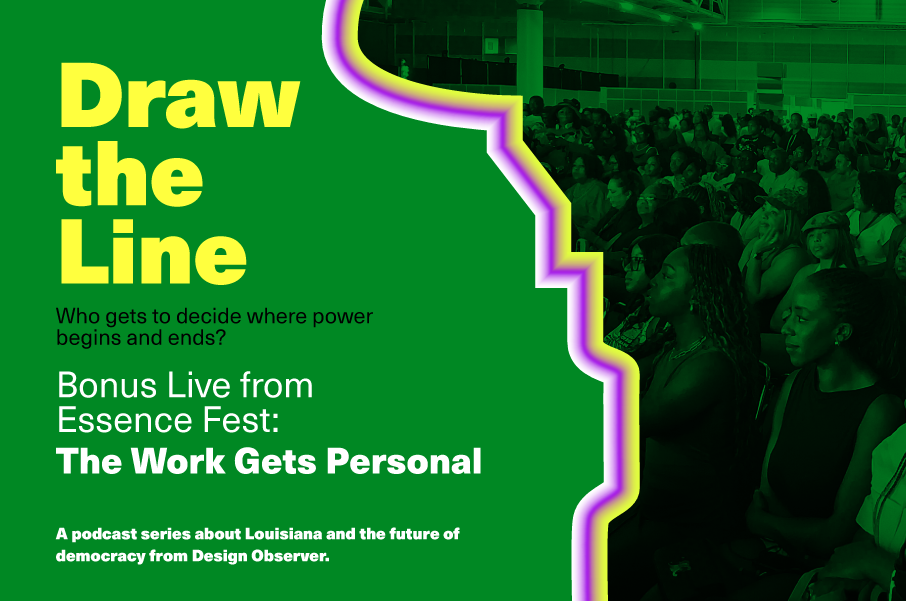
BONUS: Live from Essence Fest – The Work Gets Personal
If you spend enough time on voting rights work, you become more fluent than you ever thought you’d be in legal history, court cases, maps, and the enormously creative, and pretty ugly, ways some people have used to keep others from casting their ballot.
In front of a live audience at Essence Fest 2026, Janai Nelson, President and Director- Counsel of the Legal Defense Fund — and the person who argued the Callais case — talks with Power Coalition CEO Ashley Shelton about how she prepared to face the Supreme Court and ultimately how together, they forged an alliance that joins a legacy that’s always unfolding.
Stay tuned to the end for a special message on what to do if you have any questions about voting.
In this episode:
Power Coalition for Equity and Justice
Lawyer’s Committee on Civil Rights
LDF: Protecting the Right to Vote. Voter toolkits, election monitoring reports and ways to report problems at the polls.
Get help voting: Election Protection, 866-OUR-VOTE. The free, nonpartisan hotline led by the Lawyers’ Committee for Civil Rights Under Law; call 866-687-8683.
TRANSCRIPT AND RESOURCE LINKS
This series was made possible in part by the Power Coalition for Equity and Justice, which builds civic power in communities across Louisiana. You’ll hear from many of their staff and coalition members in this series, but all editorial decisions are Design Observer’s own. Head to their website for more.LDF: Protecting the Right to Vote. Voter toolkits, election monitoring reports and ways to report problems at the polls.
ELLEN McGIRT [Speaker 2] 00:33 That was seventy-six-year-old Jackie Germany of Baton Rouge, Louisiana. We’re back for part two of our spilling the tea reporter’s notebook episode recorded on location in New Orleans as part of this year’s Essence Festival. And this episode, like this fight, is all about the we.
[MUSIC] [Speaker 4] 00:50 So let’s show you body. So let’s show you.
ELLEN McGIRT 01:01 I’m Ellen McGirt, and this is Draw the Line, a 10-part podcast series about how the fight over a line on a map ended up invalidating one of the most consequential laws in American history, and the people fighting day in and day out for a fair democracy. If you spend enough time around voting rights work, you become more fluent than you ever thought you would in legal history, court cases, maps, and the enormously creative and pretty ugly ways some people have used to keep others from casting their ballot. In episodes two and three, we walk through the history that led to Callais and the current efforts for fair maps and representation in Louisiana. Nothing that’s happening now or next makes sense without that foundation. But this special episode reminds us that history is personal. If you do coalition work long enough, you write yourself into the history books. In front of a live audience, Janai Nelson, president and director-counsel of the Legal Defense Fund, and the person who argued the Callais case talks with Power Coalition CEO Ashley Shelton about how she prepared to face the Supreme Court and ultimately how together they forged an alliance that joins a legacy that’s always unfolding. Oh, and if you have voting issues anywhere in the U.S., you’ve got friends you may not know about. So stay tuned for an important phone number at the end.
ASHLEY SHELTON [Speaker 1] 02:34 Well, thank you guys for staying with us throughout the day. I’m so grateful to have the opportunity to have a one-on-one with my dear friend Janai Nelson, who runs the Legal Defense NAACP Legal Defense Fund. And so I I was there at the Supreme Court when you defended, you defended Louisiana when our attorney general decided that she would not defend Louisiana. And basically you were left to defend all to all of the plaintiffs in Robinson on our behalf, because we didn’t actually have the Louisiana legislature nor the plaintiffs actually have any representation from Louisiana, which is crazy. But you did it so beautifully. And I think that we forget that these moments are so much bigger than us. They’re not even, it’s not like you know, that it was like you were going to work on a regular Monday, and no.
JANAI NELSON [Speaker 5] 03:26 Not my regular Monday, no.
ASHLEY SHELTON 03:27 Yeah, exactly. Like you were not just clocking in, right? Like this was this was something that took a lot of preparation and a lot was on, a lot is, was, and continues to be on the line. And so you can you talk about that?
JANAI NELSON 03:38 Absolutely, but I I have to just start by saying good afternoon and hello and how good it feels to be back here in New Orleans. This is my first time back to Louisiana since the decision came out, and it feels really, really powerful and and and I feel so connected to this place and this state and these people, especially people like you, Ashley, and all of Power Coalition, who we have fought with for so long. And we’re not coming back here in defeat, we’re coming back here in full determination to make this happen. Right. We have not given up the fight. I will say that I felt so, so well supported in taking on this challenge of arguing before the Supreme Court in a case that I will be honest, we were quite certain we were likely to lose. And I say that not because of the merits of the case at all, but because of the fact that we had already won a case called Allen versus Milligan. That was out of the state of Alabama. And we have one of our amazing plaintiffs here today, Shalela Dowdy, who is in the Milligan case, an incredible young woman who’s one of many plaintiffs who helped us win a colossal, colossal victory in the state of Alabama just a few years ago. And so there’s no reason that Louisiana, which was based on nearly identical facts, would not have just been a rubber stamp. So the fact that they were even arguing this, that they had granted cert initially and were taking this up, all of it told us that there was trouble. Right. Right? Because this should have been this should have been an easy one to win. And so then my colleague, Stuart Naifeh, argued the case in March and did a superb job. We waited, just like we are right now, to the end of the term in June, and no decision came out. And instead they said they wanted us to reargue it. That was when we really knew that things were problematic. Because he had done everything you needed to do to win that case. Absolutely. We had precedent on our side. So the fact that they wanted to have us reargue it and answer a question about whether the remedy we got, whether that second Black district somehow violated the constitution, told us that we were going into the lion’s den, that this was an uphill battle. And not many people want to sign up for cases that they are really likely to lose. And very publicly, right? Like it’s not like this was gonna happen, you know, under Iraq . This was, you know, on full display. And I think it was because of all the incredible support that I was able to stand up there knowing that regardless of the outcome, this was a fight worth fighting. This was a fight that LDF wanted to put every possible resource into, including my time. And it was an honor. It was an honor and a privilege to come out of a decade of retirement. Because I had not argued a case in a public forum. I did some little things over COVID, but in a public forum, certainly never before the Supreme Court. And it was it was absolutely worth it because we made the record we needed to make. And I think about places like United Faith Ministries [confirm: United Christian Faith Ministries], where we were in Baton Rouge just earlier this year, and the covering that they provided, even after the argument, but while we were waiting for the decision, and places like Trinity Church and Chicago and Dr. Barbara Skinner, who like people who were just calling me up, coming up to you know me and saying, you know, we are praying for you and we have you covered. And that meant the world to me. And I know that that covering is what we are going to continue to rely on to ultimately get the victory that we so, so powerfully deserve.
ASHLEY SHELTON 07:42 Absolutely. I love that. Because I think too, I mean, one of the things that it is not lost on me is that, you know, you’re as an African-American woman running a national organization, it it gets lonely, right? I mean, at the end of the day, it’s it’s hard being a a woman and a woman and a leader, and then you add being African American to that and and fighting in these spaces for your space, right? For your voice, for the people. And so can you talk a little bit about just, you know, as you prepare for this case, like there was a lot of pressure, there was a lot on the line. I mean, you had to hold the whole Voting Rights Act, and you had to defend it again, knowing what we knew, right? About, you know, and and not only did they ask if it was in violation of the Constitution, they asked specifically if it was in violation of the Reconstruction Amendments, which I found particularly offensive and cruel. And so can you just talk about the preparation, the pressure, the um the reality too, that only a handful of Black women have ever even presented before the United States Supreme Court. And so there was a lot of pressure. And so can you talk and share a little bit of that with us?
JANAI NELSON 08:50 Yeah, there was a tremendous amount of pressure, but also, you know, Demetria McCain, who you just heard from, who’s LDF’s director of policy, anchored us in reminding us about the work of our ancestors. And so this was not new work. When I think about what was produced initially when the 14th and 15th Amendments were full of promise, right? When I think back to Reconstruction and places like Louisiana had 135,000 Black people registered to vote, that was then reduced to 1,000 when they added a grandfather clause to the state constitution, right? When I think about the power that we had and how quickly it was snatched away, and how this has been an ongoing fight. When I think about the lawyers at LDF who worked on Major versus Treen back in the 1980s, 883 , I think, was the case date that we won. This has been an ongoing fight, and everyone has had to fight their battle against odds with a lot of public pressure, with a lot of weight on their shoulders. And so I didn’t feel that I was entitled to any extra privilege, right? Because this was my leg of the race to fight to and to run. But it was a lot of pressure. It was a lot of pressure because of all this that was at stake and because of what we now see has happened afterwards. I mean, within hours of the decision, people were fighting to halt elections that were already in progress and undoing decades of Black political power like it was nothing, like it had no value. But we know that they were doing it because it has so much power and value. So it was um, it was it was a it was a lot of pressure, but you know, we were we were built for this type of moment. We were built for these fights. And I like to believe that I was built for this too. And everyone who signs up to do this work is built for this. Because like like Senator Duplessis has said, you could be doing anything. You could you could be working anywhere, and and we need to be everywhere. So this is not a knock on people who are doing their work from another perch. But for those of us who decide to be in the belly of the beast, we we we know what we’ve signed up for, and and we do it with great pride.
ASHLEY SHELTON 11:11 Absolutely, absolutely. Now, I I you know I talk, I tell the story about sitting in the Supreme Court and listening to Janai defend, defend me, literally as a plaintiff and an intervener. And so many of the elders that were plaintiffs in this case, Press Robinson, Dr. Nairne, all yeah, amazing. Yes, you know, and and how, you know, like and just also too, like how I had my own kind of heaviness around like how I felt about all of this, but then Press Robinson saying, Sweetie, I’ve been fighting for 70 years. What are you talking about? It’s like, sweetie, get in line. It was just like, and you got a long way to go. You know, but when I was in the in the Supreme Court, um, and I was I was teasing, I was telling Janai yesterday, I was like, I just I call Ketanji Ketanji because you know, in my mind, she’s my friend. And um, and that she’s thinking of me whenever she’s in court defending Black people. And so, but I felt like when you were arguing that every time you were speaking, she would she would always give context to your your responses. She would also chastise her colleagues on the court to say, like, why are we even talking about this? This isn’t even what we’re in here arguing about. She said, These are not the facts of this case. And so if you’ve not had a chance to listen to the Supreme Court argument, you should absolutely, because Janai and Ketanji were the stars of the show. It was it was like every every look every dream, like every dream that you have as as a as a as a Black person and somebody being able to defend you, somebody being able to hold something that is so near and dear to you, which is your right to exist, your right to have representation, your right to be Black and proud and loud, like your right to have the ability to elect a candidate of choice. I deserve to have representation. And I remind folks too that the key to citizenship is representation. You can’t talk to me about citizenship if I can’t then elect anybody that’s gonna bring our values and the things that we care about and my experiences as a Black woman into the political policy space. And so, but as I was in the courtroom, like there, there was like it was like watching a tennis game, you know, like you’re watching folks get, you know, get the points across, and and in particular watching you get the point across, and just they couldn’t even respond with anything thoughtful. I mean, every response literally felt one-dimensional and literally because we can and because we’re racist, right? Like that felt like the response to every you know argument that you brought. And they couldn’t even, they never ever could stand with you. And so, can you just talk about that a little bit? Because to me, it was, I was, I don’t know, like the little kid in me was just like, get them, get them, you know, like you better tell them. And so I just want you to share that with them because I think it was so powerful and so um satisfying, right? To just watch Black women do what Black women do, you know.
JANAI NELSON 14:06 Yes, well, it was a pretty special time. I will call her Justice Brown Jackson because we we’ve got lots of cases that will continue to go before the Supreme Court, but I absolutely feel what you’re saying. You know, she she is phenomenal, and we need to take a moment and send some energy, some love, some protection to that woman. She is an intellectual phenomena she really is, she’s she’s outstanding, and I can’t even imagine what it would be like to be in this moment on that court, absolutely, facing these battles as a really a lone soldier. She’s got some allies and colleagues, but she sees things in a supremely unique way. And she brings the Black voice and history and context and analytical prowess to her mostly dissent that is truly unmatched, in my view.
Learn more:
Get help voting: Election Protection, 866-OUR-VOTE. The free, nonpartisan hotline Damon Hewitt describes; call 866-687-8683.
- Janai Nelson and the Legal Defense Fund: naacpldf.org. The civil rights law organization founded in 1940, which Nelson leads.
- LDF’s voting resources: LDF: Protecting the Right to Vote. Voter toolkits, election monitoring reports and ways to report problems at the polls.
- Ashley Shelton and the Power Coalition: powercoalition.org. Voter registration help, sample ballots and ways to get involved in Louisiana.
- The Callais case and the argument audio: SCOTUSblog: Louisiana v. Callais. Docket, the 2026 opinion and dissent, and links to both oral arguments that Shelton urges listeners to hear.
- The first argument, March 2025: Supreme Court transcript, March 24, 2025. Stuart Naifeh’s argument for the Robinson plaintiffs.
- Justice Jackson’s birthright citizenship concurrence: theGrio: Justice Jackson on birthright citizenship. The June 30, 2026 opinion Nelson recommends reading.
- The Louisiana Voting Rights Act: SB 365, Louisiana Legislature. The bill Nelson says will keep being reintroduced.
- The Louisiana Voting Rights Act campaign: The Advocate: LDF to push for a Louisiana Voting Rights Act. Nelson’s January 2026 announcement at United Christian Faith Ministries in Baton Rouge.
- A. P. Tureaud and LDF’s Louisiana roots: 64 Parishes: A. P. Tureaud. The New Orleans lawyer who worked with Thurgood Marshall on Louisiana’s civil rights cases.
Observed
View all
Observed
Share on Social


Related Posts
Draw the Line
Audio
BONUS: Live from Essence Fest – The Accounting

Business
Audio
S13 E8 DB|BD at Aspen: Eric Ries Would Like to Apologize

Business
Audio
S13 E7 DB|BD at Aspen: Proactivity is the Key to Survival With Edelman’s Dave Fleet AI
Business
Audio
S13E5 DB|BD at Aspen: Innovation Requires Collaboration with Professor Linda Hill
Subscribe to The Observatory
Related Posts
Draw the Line
Audio
BONUS: Live from Essence Fest – The Accounting
Business
Audio
S13 E8 DB|BD at Aspen: Eric Ries Would Like to Apologize
Business
Audio
S13 E7 DB|BD at Aspen: Proactivity is the Key to Survival With Edelman’s Dave Fleet AI
Business
Audio