


October 7, 2026
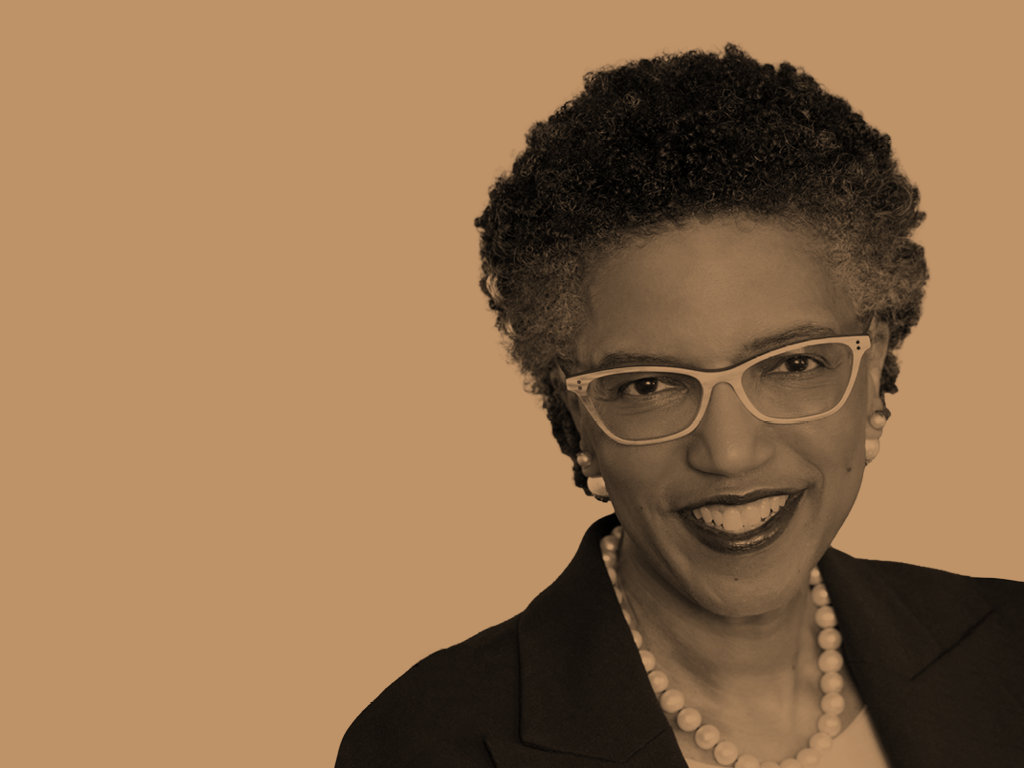
S13E5 DB|BD at Aspen: Innovation Requires Collaboration with Professor Linda Hill
The veteran ethnographer of the C-suite breaks innovation down into its ABCs
Linda Hill has been a professor at Harvard Business School for 40 years. Let me say that again… Linda Hill has been a professor at Harvard Business School for FOUR decades.
Her specific title is the Wallace Brett Donham Professor of Business Administration and Faculty Chair of the Leadership Initiative. Oh, and she’s also founded two companies.
After nearly half a century teaching Business at one of the best universities in the world…no one has better insight on what it takes to lead across space and time than Linda.
In fact, she has co-authored three books about it. The latest is called Genius at Scale. It’s a guide for leaders on mastering the practice… that’s right the practice… of innovation in a tumultuous time of change.
Over the years, Linda has studied and worked with leaders of innovative companies like Pixar and Pfizer. And while these companies do very different things… one is animating Toy Story and other is making vaccines… she says that they actually have a few things in common.
For one they subscribe to something called their DQ… no, they are not slurping down Blizzards from Dairy Queen. I’m talking about their Decency Quotient. Quite simply, it is the desire that everyone in the company treats everyone else with decency and respect.
Ground breaking, right?
And these innovative companies know how to kill their darlings. If an idea isn’t working, it’s gotta go- especially if it’s your own.
And most importantly to us, innovative companies value COLLABORATION above all else.
So I’ll leave it to Linda to share more about her experience writing Genius at Scale. She also shares her own experience as an entrepreneur and explains why one of the biggest problems with AI is that we are wayfinding and pathfinding at the same time… enjoy.
On this season of DB|BD, we are thinking about radical collaboration. Host Ellen McGirt sat down with visionary designers, leaders and thinkers at the 2026 Aspen Business & Society Summit to ask them about the radical act of collaborating with others in a time when it often feels impossible to find common ground.
TRANSCRIPT
Ellen McGirt: First of all, just to check in. How are you?
Linda Hill: I’m good. A little tired. I’ve been on a book tour all around the world, but I’m very good in the sense that this was a project that we worked on for almost 10 years, so to see it come to fruition and then to be able to share it is a special… It’s a privilege.
Ellen McGirt: It’s so joyful. And how has the book been received so far?
Linda Hill: It’s been well-received, and that certainly makes me happy. I must say I’m not someone who looks on Amazon or looks places to find out how the sales are really going, but I really pay more attention to who’s writing me and what they’re asking me, because that helps me decide what I still need to study as well or what else I need to do.
Ellen McGirt: So just for time-space continuum, tell us your current role at Harvard, please.
Linda Hill: I’m a professor of Business Administration at Harvard Business School and the faculty chair of the Leadership Initiative.
Ellen McGirt: And how long have you been there?
Linda Hill: I’ve been there for 40 years.
Ellen McGirt: Moment of silence for that kind of longevity. Most people aren’t places for 40 years anymore. The most basic, crazy question, answer any way that you would like: how has the role of leadership changed in the years that you’ve been at the helm?
Linda Hill: I don’t really think of myself as being at the helm, but in my years at Harvard Business School, the notion of leadership has shifted.
When I first came to Harvard Business School, I think leadership was mostly about setting strategy, and if you took a course on leadership, it was about what is the strategy of the company, and that’s what you’d work on. And then I think it’s shifted to being more about you as an individual and how you use yourself as an instrument to get things done.
We spent a great deal of time, thanks to people like John Kotter, talking about leadership as leading change, and the importance of being able to come up with a vision, communicate that vision, and inspire people to fulfill that vision. And I actually think that model of leadership, in some ways, is the one that most people still hold, because that was about leading change, and there’s lots of change to help people work through.
I would say my own work has been a little different because I ended up looking at leading innovation, and that turns out to be different than leading change. That surprised me. I think that we still have to deal with change. We now have a lot more innovation to deal with, so I think both of those models are still quite relevant.
Ellen McGirt: So let’s just dig right into that, because I think that’s the thing that you first brought to my attention, and I think a lot about it: we’re not quite sure that we understand what innovation is, are we?
Linda Hill: No. So innovation, it really surprised me. What happened was that the dean at the time, Dean Kim Clark, said to me, “I’m hearing from all of these CEOs and all of these senior executives that they don’t know how to lead innovation, and they don’t have leaders who know how to lead innovation.”
And at first, I was rather surprised by that, because I thought leading innovation was a type of change. And he said, “Well, they’re telling me this, so can you go find out and figure out what’s going on, and are we preparing people for that or not?” And when I did go out to look, I discovered that leading change and leading innovation were different and, as I said, that surprised me.
And what I did initially was go look at, I guess we’d call them digital-first companies now. They were the new internet companies. I oversampled on those companies. I’m an ethnographer, so that means that I have now spent hundreds of hours observing these leaders and their colleagues as they do their work.
And what I found, for instance, when I was studying Pixar and Ed Catmull, who was one of the co-founders of Pixar and very much a visionary, Ed explained to me that what he really was trying to do when he was leading was create an environment in which people who had diverse talents would come together, be able to collaborate, experiment, and learn together to do the kind of innovation necessary to create the kinds of movies that Pixar wanted to create.
And in particular, he was trying to make sure they could collaborate across art, technology, and business, so that they could build a sustainable business over time. And again, those are different areas of expertise. And what I learned as I did that work is that you rarely get innovation from working with people who have the same point of view as you have.
Instead, usually innovation comes from a collection of people who are able to collaborate, who have diversity of thought, and it’s being able to embrace that diversity of thought, because often we can’t, and use it to then experiment and learn our way to the future. So leading innovation is not about followership, which is what visionary leadership makes us think of: how do we get people to follow us because we’ve inspired them with this vision of the future?
Instead, leading innovation is about creating this environment in which people are gonna be willing and able to co-create the future with you. So co-creation is a different mindset than followership. Having said that, some of the skills necessary are the same, but it is a different mindset. And one of the leaders who I studied at the time, who built out the infrastructure for Google, the storage and that sort of thing, said to me, “If I told people who worked for me to [follow] me anywhere, they’d quit. They’re not followers. They’re people who want to work on creating that future with me, so I need to have a way of approaching them and a mindset about what I’m doing: they’re not following, they’re actually co-creating with me.” And that is different. I mean, empowerment is about sharing with people the potential to have influence, which frankly, if you’re a good visionary leader, you do that too.
But this was more about understanding that you needed to take into account very much their point of view, and use that diversity of thought to move you forward. And what we know is that, first off, many people still hold the myth that some individual genius is gonna have an aha moment, and that is the way you’re gonna do it. And the other piece of it, though, is that when you have more diversity, you often hear, “Oh, you’re gonna get more innovative problem-solving.” Actually, a lot of the time, I wouldn’t say most of the time, but a lot of the time you don’t get that at all. Because when you add diversity, you have conflict, and if you have a leader or a team that doesn’t know how to deal with conflict, and many don’t, you actually do worse than if you hadn’t had that diversity in the first place.
Ellen McGirt: So what did you learn about setting up the conditions where people could be more successful?
Linda Hill: So when we did Collective Genius, we did begin to define what were those conditions that were necessary. When we moved to Genius at Scale… and I’m gonna just move us there. So Collective Genius was first just looking at the connection between leadership and innovation, and even though it may be surprising, there’d been very little work that looked at that connection.
And we did discover what the mindset was and how these leaders did it. We then identified what was the culture that you needed to have. But we really started with what are the capabilities. We talked about the muscles differently, but it was all about collaboration, experiment, and learning. The way we assess collaboration is whether you can embrace difference, since you need to have that diversity of thought. If you can’t embrace difference, you’re not really gonna be able to collaborate in the ways necessary for innovation.
Experimentation and learning, we call that capability creative agility, and that is the one that many organizations start with when they want to become more innovative. And they don’t do anything about their capacity to collaborate across difference. And consequently, they end up having trouble innovating.
The other piece of it that we found was about decision-making, because you gotta make all kinds of decisions across these differences and as you experiment and learn, and many organizations have difficulty making decisions in an effective or a very efficient way. And so you wanna build those three muscles or capacities.
We call it creative abrasion, creative agility, and creative resolution. Jargon. Collaborate, experiment, learn, and make all the decisions you need to. We saw those as the capabilities. The culture you need to create really is a foundation, and it’s a little bit of a chicken-and-egg: which one you need to start with.
But if we don’t have a sense of shared purpose, then it’s really hard for us to wanna work together, because innovation is hard work. It’s emotionally and intellectually difficult work, and unless I feel like the purpose matters to me and what we’re all trying to do together, I don’t really wanna take these risks with you.
We then identified what were the four values you had to have in place that relate to being able to do those muscles, and then we identified what we called the rules of engagement about how we’re gonna interact and think together. And the one I’d like to just focus on here a little bit is how we’re gonna think together, how we’re gonna problem solve together.
Because innovation is fundamentally about how we solve problems, and it turns out that AI has a lot to do potentially with how we solve problems. So the three rules of engagement we saw in organizations that innovate time and again: one, you always had to share your evidence.
So you could never just state your point of view and say, “This is what I believe,” which is what often experts or bosses will do. “I believe this.” Everybody goes, “Okay.” You actually have to say, “I believe this because of these reasons.” The reasons might be data that you have to inform the decision. The reasons might be your gut.
As we know, there’s lots of research on gut that tells us gut is really our experience, and experience can be valuable. But the second rule of engagement was you can question anything. So if the expert says to you or the boss says, “I believe we should do this because my experience tells me we should do this,” then you have the right to say, “Well, is your experience really relevant to what we’re doing now?”
Or, “Okay, you say these are the data that show us that this is what this means, but how did you come up with this algorithm? What’s going on here? Do we really wanna trust this?” So you can question anything. And then the third one is you really need to think holistically. So we might come up with a solution as we problem solve together that, you know, I agree with the logic and the evidence, but it’s just not gonna work in my country if we do it that way.
So that’s thinking holistically. So you can say to the group, “Either we need to go back and do some more problem-solving, or we can say that my country’s gonna be treated differently. I’m gonna be the exception to what we’re doing.” So all of these organizations we saw had these rules about how they did problem-solving.
They also had rules about how you interact with people. And the one company that I love to talk about with regard to that is Mastercard. When Ajay Banga was there, he put in DQ, which to many Americans means ice cream, you know, Dairy Queen. It was meant to be provocative, but it really stands for decency quotient.
Right? And he’s like, “We’re just gonna treat everybody decently. Now, who’s gonna tell their CEO, ‘I don’t wanna be decent?'”
Ellen McGirt: Right.
Linda Hill: So then he began to talk about, well, what’s decent behavior? Well, if someone sends you an email, bothered to write it to you, it’s decent for you to respond back to it.
And when people weren’t responding, before he did big structural changes to break down silos, he said, “If someone doesn’t respond, then guess what? If you give them a week, if they don’t, just assume they said yes to whatever you requested.” So imagine the communication that began to happen across the organization.
So these very simple micro-behaviors that they put in place about decency was where they started to think about, you know, how are we gonna get people to behave in ways that are gonna be supportive of the kind of collaboration we need? That may seem silly on some level, but when you step back and think, “Well, what is decent behavior to people who work with you or another part of the organization? And am I being decent?” Well, maybe not. And he would encourage you. The other thing that was a part of that culture, ’cause we’re talking about innovation, and it’s a big, big problem in most organizations, is people would not kill ideas. So even though we’re supposed to be experimenting and learning, we’re supposed to experiment, and if it doesn’t work… So at Procter & Gamble, or at Pfizer, they found that people would not kill something they started because it reflected on their reputation, or whatever. So again, at Mastercard, Ajay said, “If you kill your own idea, I will personally give you a bonus.”
Ellen McGirt: That is such an interesting incentive.
Linda Hill: Yes, very. To kill your own idea so that those resources can be put to do the next experiment and work on the next thing.
Ellen McGirt: Can you have a team within an organization that operates this way, that adopts these rules, that is not wary of each other as human beings, and is killing their ideas correctly, and DQ’ing, and is respectful, if you don’t have a CEO who’s willing to value the experimental work?
Linda Hill: I think you can. I don’t know that I wanna call them out exactly here, because I don’t always know if the CEO didn’t evaluate. But we looked at a number of middle managers, and we also looked at individual contributors who did breakthrough innovations, and I would say that many of them were in what you might describe as rather hostile environments.
So, you know, I’m a middle manager in a regulated business in a company that’s 120 years old. And this didn’t come down from on high that I should do this, but I feel in my own group we need to do work differently and we need to be more innovative. So I wouldn’t say that the CEO was against what this person was doing, but this person didn’t wait to be a part of this effort to make us all more innovative. Just got to work and started doing it.
Ellen McGirt: Delivering their core function correctly.
Linda Hill: Always. You have to do that. And that person actually, it was just an absolute privilege to be able to tell this story.
So we try to follow leaders, not all of them, but we try to follow them for at least five years, and sometimes we follow them longer, because if you’re transforming the culture of an organization, it takes time. You can’t do it in less time, usually. But this leader actually is one who made a difference to the world. He was the person who headed the global clinical supply group for Pfizer, and he was hired to come in and do a digital transformation of that group, and that’s the group that runs clinical trials. And if you ever got a COVID vaccine from Pfizer, or used the antiviral they came up with if you did get the disease, then Michael’s team was the team that actually ran those trials in 266 days.
Now, he didn’t do that without the CEO, because the CEO said, “Get it done,” right? That was an instance in which they really made all the commitments to get it done. But it was because Michael started actually six years before COVID happened. He ended up saying to his group of people, which included people who did packaging, he was in supply chain, he said, “We need to be as innovative as the scientists.”
Well, all of the people were very confused by that, because it’s like, “No, the scientists are the innovators. We’re the executors.” And he said, “No, but if they come up with new medicines, the sooner we can get them to the patient, the sooner the patient will have hope and get better. So we need to look at our processes. We need to be as fast as we can possibly be about this, in this very, very safe way, believe me, rigorous in the way you need to be. But we have to change how we’re doing our work so that we can bring hope to patients.”
It took him two years of traveling around the world, because they had a global footprint, to talk to people about what does bringing hope to patients mean to you? ‘Cause he wanted that purpose, that base, so everybody felt committed to getting this done, because he knew that digital transformation was gonna be hard on them, and AI and all of that. They have all the worries. So he worked on that, and he had no idea, of course, in 2019, that this was all gonna matter, because they had to get to it, right? And they all look back and say, “If we hadn’t worked on our culture, if we hadn’t learned how to collaborate across difference,” because they were quite siloed before that, “if we hadn’t learned how to do experiments and learn very quickly together, and didn’t have those digital tools, we couldn’t have possibly run those trials in 266 days,” and as The Economist said, literally save millions of lives.
So what I love about that story is an individual, a middle manager, made a difference that impacted millions of lives because he chose to lead.
Ellen McGirt: I wanna talk about the ABCs, these interrelated leadership roles, because it makes the science and the observation behind innovation so accessible for individuals. There’s the architect, there’s the bridger, and there’s the catalyst. Can you walk us through those definitions, and how does one become one, or both, or many?
Linda Hill: So the ABCs of innovation, it was so fascinating to us, ’cause we began to call them that, and then one of my co-authors said, “Those are ABCs.”
Ellen McGirt: I love that.
Linda Hill: We’re like, “Easy,” right? As opposed to our paradoxes and everything else we did. So the architect really is what I’ve been describing just before. How do you build a team or an organization that can collaborate, experiment, and learn within the boundaries of a team or an organization? And how do you architect the muscles, if you will, and the culture? And we call that building a sense of community that knows how to innovate. And so that’s the architect role.
The bridger role has really come up a lot in the last number of years, partly because, I think, of the amount of change in technology and the pace at which businesses are trying to get work done. So because of that, many companies have discovered they’re never gonna have all of the talent and capabilities inside the boundaries of the organization that they’re gonna need to get done what they need to get done.
So even if we go back to the Pfizer example, Pfizer did not have the vaccine. The IP was owned by a biotech company in Germany. So not only did Michael have to figure out how to co-create with his own team and his colleagues at Pfizer, they also had to figure out how to co-create with this biotech company in Germany.
So he needed bridgers, people who could work across the boundary to get that done. Or think about Microsoft choosing to first partner with OpenAI to build Copilot. And that was probably, I assume, because of a desire for speed, to get into that space as quickly as possible.
And what you see so often is that we spend time coming up with the governance structure for that, you know, who’s gonna own the IP, all of that that you have to think about legally, if you will. But often we see that companies don’t think enough about who’s actually gonna co-create across the boundary all throughout to make sure that the AI product actually gets embedded in an innovative way inside the Microsoft products. Those are bridgers. The dean that we have now was telling me recently, he was describing this. I said, “Oh, you mean they don’t have enough bridgers?” So bridgers are the people who can work across those [boundaries].
Or when Delta wanted to rethink the experience we have at the airport, Nicole, who was the head of their innovation lab, had to work with CLEAR and then with the IT department in Delta to figure out how can we create a biometric, you know, facial recognition kind of way of letting people get through the airport more quickly?
So she was the bridger. And that’s the B. And we hear from so many companies, particularly AI companies, the big ones that are trying to do all of this, they don’t have enough bridgers. They don’t have people who can bridge across tech and business.
Ellen McGirt: They don’t seem to want them.
Linda Hill: They actually need them. I find myself being asked to speak a lot about this and help with this.
So I think that there’s a recognition, because what they’re seeing is, and I’m gonna say this the way one company put it, the tech people are creating shiny objects that don’t necessarily meet customer needs, because they don’t know the business. The business people don’t know the tech well enough to make sure that they’re taking advantage of opportunities or building in what needs to be built in to protect against risks.
So they actually need people who can translate across. And Nicole, who was at Delta, was a computer science major and also had been very involved in customer service and a whole range of different functions at Delta and other companies. And so she actually was the perfect person to be the bridger, because she knew both sides.
So no, they are looking for them, and they recognize it’s a gap. So the A is, can you architect your own team to co-create? B is, can you actually be a bridger and pick partners, curate, translate, integrate, figure out how to work with others who are outside the boundary of your organization? And C, the catalysts are the people who know how to build out whole ecosystems, what we call movements across an ecosystem that often are across industry, across sector, across a region, or even across the globe. And so the catalysts are really the people who understand how do we build multi-party coalitions of key stakeholders to create the kind of environment that’ll allow us to do our work.
And this is very important to sustainability efforts. So one of the people we looked at, who’s not in the book, was the CEO at the time of Renault. He wrote a letter to the citizens of the EU. He said, “You know what? If we wanna have a successful auto industry in the EU, we have to build out an ecosystem that can support electric vehicles. Otherwise, we are going to lose to either the US or China. And EU citizens, you need to insist that in fact corporations work with government to figure out how we’re gonna upskill people or reskill them so that they know how to build these vehicles, to make sure we have enough charging stations… Because no matter how wonderful and affordable the electric vehicle I build at Renault, unless the environment is one where consumers are gonna think, ‘I’m gonna be able to charge my car when I go around,’ or I’m gonna have the workforce to do this…”
And he went through a whole lot of other aspects of the ecosystem of Europe that had to change. Also, it turns out when I was doing work at the prime minister’s office in Dubai, what they discovered when they were trying to get people to adopt electric vehicles is that insurance companies had no idea how to price insurance for electric vehicles. And because they weren’t providing enough insurance, banks weren’t willing to provide car loans. So then you discover if you really wanna get something done, like get electric vehicles adopted, then you need to do private-private, private-public kinds of partnerships, and often civil society as well, to get all of those parties engaged to bring about your ambition to have X number of electric cars by whatever time it is.
So we’re seeing more and more of these catalysts, as we call them, who know how to activate whole ecosystems. And a lot of what I’ve been hearing at the event here this weekend is about how do we catalyze these cross-sector engagements so that we actually build the space for us to be able to solve the challenges we see, whether it’s climate or sustainability challenges that we wanna deliver. No company alone can do that.
Ellen McGirt: No, they sure can’t. And the question seems to be taking on even more urgency now as governments, particularly the large governments that we know, seem to be taking a step back from a collaborative stance, feeling a lot more authoritarian. In your observation, how are people responding to losing what feels like a key stakeholder?
Linda Hill: So I’m not a specialist on energy and climate, and I’ve been going to a lot of those sessions, and there’s a lot of jargon I don’t understand. But what I’ve been hearing is there’s a lot happening in the geopolitical environment that in fact are shocks that are making it harder to move towards some of these sustainable goals.
On the other hand, there are some, like, take the war in Iran, oil is going to be quite expensive. So the cost structure, as I’m hearing here, for sustainable renewable energy versus oil and gas is actually shifting very dramatically. So I’m not moving away from your question, but as I’ve listened to people talk, they’ve talked about what are the shocks that are really making it difficult and what are the ones that frankly are making it a little easier to sell why you might wanna do this.
Now, having said that, what I actually see in most companies is that most companies have already kind of made a decision to pursue some of these kinds of goals. I am doing a fair amount of work in entrepreneurial ventures, but most of the organizations I deal with are multinationals, and they need to be able to respond to what’s happening across the globe.
And as you know, in the global east, the global south, and Europe, there are still quite serious commitments to sustainable goals of various sorts. So I don’t actually see that much changing about what they’re actually doing in the multinationals. I really don’t. That said, do they talk about it in the same way, et cetera? Not necessarily. But I don’t see that they’re necessarily moving back. Having said that, I did hear about some regulatory shifts that have happened in the US that have taken away some of the subsidies and some of the incentives that might have been in place.
And so I have heard people here talk about what is our response going to be to losing those funds. I read an article, I don’t know where, that on the one hand, the purchase of EVs is going down in the US because some of the breaks that you had if you bought one seem to be going away. On the other hand, I read articles about how used EVs are very desirable to people, right? So I actually am not an economist. I don’t know how this is, quote, balancing out or working, but it feels like a different kind of environment to me in the way that you ask the question. But I do see companies kind of moving along.
Ellen McGirt: That’s good to hear.
I did not realize until I was prepping for our conversation that you co-founded an AI company, Innovation Force. While you’re studying AI adoption, while you’re observing CEOs for long periods of time and all the things that you do, what has building taught you that was different than the observation and studying that you usually do?
Linda Hill: Oh. Well, we did study many entrepreneurial ventures as well, but I have to tell you, I don’t like raising money. That’s what it’s taught me. And I have to say, going to meet VCs, and it’s not begging for money, making your pitch and all of that, it’s not something I enjoy. And I don’t know that I’m particularly good at it either.
I have all the respect in the world. I always respected entrepreneurs in the first place, but I have tons of respect ’cause there’s payroll to meet and all of that. So all the pressures. You know, it’s funny, years ago, and I don’t hear people say this quite as much, people would say, “I’m gonna become an entrepreneur so I have more flexibility.”
Ellen McGirt: You don’t actually.
Linda Hill: You don’t actually. Quite the opposite, right? I don’t know why anybody goes down this path. So I have a day job, I must say, so I feel safe. But my founder for that company, this is what she’s doing, and boy, you know, the credit card, all of the things you do to make sure you can pay people and move on. Even more respect at this point for that.
But I’ve also learned a lot about, you know, being in it. I’ve learned a lot more about what AI can do, how you begin to think about pitching, why this kind of business, what you’re gonna do, what you’re not gonna do. So a lot of the questions that I do a lot of research on, which I’ve published a couple of articles on.
For the last five years I’ve been doing quantitative studies of AI. And we have surveyed almost ten thousand executives around the world about what they find most challenging, opportunities, and how they’re responding to that. I’m also starting a new project on how artists and creatives are using AI.
I don’t know exactly what I hope we will learn from this, but I wanna understand people who care very deeply, not that everybody doesn’t, but people who care very deeply about their work because they’re artists and creatives. How are they using AI to amplify their creativity and their passions?
Because I’m hoping with some understanding of that, perhaps we can figure out what we should be doing with AI or what we could be doing with AI, and how we use it to augment, as people put it, our talents and our passions, our slices of genius. As opposed to thinking about it simply as a substitute, or automation to just cut costs. Not just cut costs, ’cause it’s important to cut costs to make things affordable. So I don’t know. But I’m working with some artists and creatives who are helping me design this study in both Los Angeles and Singapore, two different settings-
Ellen McGirt: Oh, wow.
Linda Hill: looking at this. So I have no idea what’s going to come out of it, but that’s-
Ellen McGirt: Innovation for you. You just don’t know.
Linda Hill: That’s innovation for you. You just don’t know. But starting the business helped me appreciate even more why I became a professor. A tenured professor at that. So I have job security in a different way. But there are so many courageous people and so many passionate people who are determined to build their businesses, and I just have more respect for them than I even had before.
Ellen McGirt: That’s wonderful. That is wonderful to hear. I do wanna ask you about AI before I let you go back to the conference.
We spent quite a bit of time, both on this podcast today and on Just In Session, talking about where AI adoption was actually happening. Chris Hyams and other people too were talking about the disruption to the labor market, in particular whether AI adoption was a cover for layoffs and cuts that you were gonna make anyway.
Is it really meaningful? What does it really look like? What do the next five years look like for people? What is your research showing you about what’s actually happening with executives in AI, and where do you think the labor market’s going?
Linda Hill: So two answers. One is, in this book, in Genius at Scale, a lot of what we looked at was the use of new technologies to innovate. One of the things about AI that everyone I’ve spoken to about it has agreed with, and these are very senior people, CEOs, et cetera: we make a distinction between wayfinding and pathfinding. Pathfinding, I’ll start with, is when you know the destination and you need to figure out how to get there.
And much of leadership, even going back to visionary leadership, is about pathfinding. I know the destination, I just need to figure out how to get there and how I’m gonna get other people to wanna go there too with me. Wayfinding is when you actually don’t know the destination nor how you’re gonna get there.
And fundamentally, with AI, no one knows what the destination is, and no one knows how we’re gonna get there. I was just talking to a CEO of a major pharmaceutical company, and I talked about this distinction. He said, “Yep, this is the problem. We are wayfinding and acting like we’re pathfinding.”
So I really think that we don’t actually know the destination, never mind how we’re gonna get there. So this is truly an innovation journey. And not trying to be fluffy about it, but in some ways he needs to think more like an explorer thinks. When you left Europe and went looking, you didn’t know what you were gonna find in the new world. Fundamentally, we don’t know. So that really makes leaders extremely nervous. Understandably, it makes them extremely nervous. And part of the challenge that we’re finding, and leaders will admit, is they don’t know what their roles are gonna look like when they get there either.
Ellen McGirt: Right.
Linda Hill: Or how to get there. So there’s a tremendous amount of anxiety. So for you to act like you know is untrue. And I’ve spoken to people who are leading these major AI companies. They don’t know what that destination’s going to be either. So I would say that what we need to understand is that we’re all very anxious and fearful.
There are real opportunities with this technology that are unbelievable, that I’ve actually seen examples of, or that people are working on. And the technology’s evolving very quickly. So frankly, how do you get people to actually take that journey when in fact many of them may lose their jobs and/or have them redefined in major ways, to include CEOs and senior leadership? And their hearts are beating fast about it, and they will admit it when you talk to them privately, at least.
And some of them are really admitting it to the companies, and many of them are trying to be honest. When we collected data, I think it was two years ago, we asked in our survey, “Will AI be a substitute or an augmentation?” I’m gonna have the numbers wrong, but I’d say fifty-some percent, maybe even sixty, said it’s gonna be more augmentation than substitution. But when we asked last year, that had flipped. So many had said, “Yes, it’s gonna be a lot of automation of roles.”
And one CEO said to me, though, “But how are we gonna develop the judgment? They keep telling me there are gonna be no entry-level positions.” Well, there are gonna be entry-level positions. It’s a question of where people enter. But going back to these bridgers, how are we actually going to develop people who know both sides? So I don’t think we know the answer to that, but I do think that there will be more automation.
And I think in those roles that can be automated, a lot of them will be. But a lot of companies are also discovering right now, maybe because the technology’s not there yet, that they have to rehire people that they let go, because in fact the technology isn’t there.
Are they gonna automate when they can? The answer, I would guess, is probably yes. So we do need to be planning for these major labor shifts. So going back to the CEO of Renault, one of the things he did write to the citizens of the EU was, you know what? First off, if we don’t have a competitive auto industry, it’s a major problem.
For any country, the auto industry is a key one because of the supply chains and all of that. But if we don’t, people are gonna lose their jobs. So we also want NGOs to come in. As we see this unfold and understand who’s going to be negatively impacted, we have to, as proactively as we can, be thinking about what are we gonna do for the people who are gonna lose their work? That needs to start now, citizens. So ask your politicians to start thinking about it now, right? Even though I can’t tell you what it’s gonna be.
Ellen McGirt: Yes. Well, as you were talking, it occurred to me that one of the things that leaders have always said is that their job was to create the conditions for people to do their best work, to execute on the task that they were given. But really, what you are saying, and what I’m hearing, is that leadership is about creating conditions for others to be wayfinders together. Which is a whole new way of thinking about things.
Linda Hill: Yes. And it’s a very unsettling place to be.
And particularly when you don’t have bridgers who know how to speak across. I won’t say which company, but we went to one company that’s developing a lot of these solutions to interview them in more depth, and they started laughing, and not in a mean way. They said, “You know, Linda, a lot of that is hype. You see all that? That’s not real. The technology can’t do this yet.” And we keep trying to tell companies, “You need to learn now, to practice, to prepare, because it will be able to do those [things].”
You need to think now about the governance, what are the choices you wanna make? So we now have courses, like I’m sure all the schools do, where you build your own agents.
One of the things that I do see happening, though, that worries me a bit, and it’s understandable in some ways, is that many companies, when they’re helping people develop AI literacy, are doing it so each individual is developing literacy. But what really needs to happen is the re-imagination of how we’re all gonna work together.
And me becoming better at dealing with my email is not gonna be the kind of transformation that really makes a difference. It’s gonna be how we transform the way our work flows and how we work across the organization. Everyone says it’s gonna be the horizontal work that is really gonna be critical here.
And we’re getting people to think about their own individual productivity as opposed to thinking about the productivity of the enterprise and how we can reimagine what we’re gonna do. How can we take advantage of opportunities that would not have existed if we didn’t have this technology, to make sure that we actually get the growth opportunities here and not just the cost-cutting opportunities that the technology can bring to us? But I have no doubt that people will be displaced. And the question is, who’s thinking about that now, and who’s helping prepare for a society in which that happens? Because I think it’s pretty clear that when you have major differences in equality and opportunity in a country, that’s not good for the country.
Ellen McGirt: No, not good for the country. Last question, then I’ll let you go, and I hate to bring it back down to the individual, but individuals are worried about how to prepare. Not everyone can be a bridger, not everyone can be a catalyst, not everyone can be an architect. But most people can be better participants in an innovative scenario if it presents itself or if they create it for themselves. What can the average person with average ambition, who also wants to be part of something meaningful, do to prepare to be a better collaborator if the opportunity arises?
Linda Hill: I think one of the things that we have found is that curiosity really matters. You need to be curious about people in different situations, and you need to be exposed to them. I must say, I have been very privileged. I was privileged because I’m an army brat, so even though my family did not come from means per se, I got to live in different countries, ’cause my father got moved to different countries as a member of the military.
So I ended up going to high school in Bangkok, and I lived in Germany, and I lived all over the US, et cetera. And I went to India and I went to all these places, even though we were extremely middle-class, if you will. And most people don’t get that. But one of the things that I’ve worked on very much as a parent is making sure that my child is curious about everybody, and doesn’t say, you know, “I don’t care about…” Because that’s what my parents taught me. But that curiosity, you can be curious even though you’re frightened. I guess what we’ve been trying to move towards is telling everybody, “Be cautious but curious.” Which means you actually have to engage others and get some diversity of experience so you can learn, develop those empathic skills, and understand how people are different and not be frightened by that.
In terms of the technology, I must confess, I don’t mind technology or whatever, but I’m not a tech geek by any means. But I always work and write my books with people who are in their 20s. My co-author here started with me when she was 22. And she is totally into, you know, whatever the technology is, and she’s like, “Okay, now we’re gonna vibe code.”
So I’m like, “I would not be vibe coding. I would not be doing all these things.” But, “Linda, you know, let’s try this. I want you to learn to use prompts. Don’t just prompt, you know, ChatGPT. Do Claude, do Perplexity. See what happens.” And so we’re writing an article right now about leveraging digital natives, the ones who are already using these technologies in their lives, to help you be better at this. So they’re forcing me, and I would say… Actually, it’s not so much forcing. Just make the time; it is really worth it.
So I’d say for the average individual, all of these different tools have free versions. Play with them, and they all give you different answers, so you know good and well there’s nothing precious about this, and some of them are gonna give you wrong answers.
But I think you can’t avoid it. Try to engage it in whatever way you can and learn about it. And I think mostly if you find young people, and I’m gonna say you can also find older people who are into tech, but find someone who’s gonna just show you that they’re using it in their daily lives in different ways.
And we literally are finding in our studies that those leaders who actually embrace the young people and the junior people in their organization who are using these tools are learning more about them themselves. A number of them are saying, “We need to be the bridge between that young person who’s excited about the technology and,” this is what they said, “the older person who’s frankly, you know, ‘I can’t learn this new thing.'” Having said that, the other thing about the younger people is that a lot of them have a much more realistic notion of AI. Not simply that they might lose their jobs or never get a job, if you will.
I’m mostly interviewing people who are in companies, so they have jobs, and they’re worried about losing their jobs because theirs can be automated, but they’re also very worried about the impact on sustainability, on electricity, et cetera. So they also raise concerns, and actually one of the CEOs put together what they called an ethics committee. It was very broadly conceived as an ethics committee, and they had some young people on that committee who wanted them to include, when you’re evaluating the use of AI, how much does it really cost to use that?
Because how much electricity, how much whatever is going into it, are we using this much? So that committee has begun to think differently about the metrics that should be collected as they actually deploy AI. And they’re coming up with a different set of metrics than they would have if they hadn’t had some of those younger people, who it turns out were also more junior, on the committee to help them work through what we should pay attention to as we deploy this.
So I think we need those different perspectives again, and I’m gonna guess that those companies are gonna come up with solutions that make a difference. And the other piece of Genius at Scale, I just wanna say, and I should have said this earlier, part of the reason why we wrote this book was that what we heard is it’s not just about coming up with innovative solutions, it’s about whether you can actually implement them.
Ellen McGirt: Right.
Linda Hill: And so the ABCs, I probably should have said this earlier, partly is that you need to build out these relationships to actually make sure that that idea you have, that solution you have, actually gets deployed and has the kind of impact you want it to have. And that’s why we see that you often also have to have these bridgers and these catalysts, just like I said about the CEO of Renault, who said, “It’s not gonna be us alone.” We need a consortium, cross-sector collaboration, for us to create the ecosystem necessary to support the auto industry as it’s evolving.
Ellen McGirt: Relationships, the way you describe it, are really implementation infrastructure, but they also make the hard work more meaningful.
Linda Hill: Yes. And a lot of the work… We had a session today. A lot of the work is not necessarily recognized. It’s behind the scenes.
Ellen McGirt: That’s the part that you talk about a lot. You remember the last time we talked, you said that you asked CEOs, “Would you ever wanna be a chief innovation officer?” Everyone was like, “No. I don’t wanna do that at all.”
Linda Hill: Yeah, it’s too risky, and it doesn’t often work, and then you have to change culture, and people are…
Ellen McGirt: And wayfinding is scary.
Linda Hill: It’s very scary. But we are in a wayfinding moment, and if anyone tells you, “No, we’re not,” they’re not being honest with you or themselves. And it’s a very uncomfortable place to be. Not many of us would take off and go hunt for the new world. But some of us do, thank goodness, and they know how to bring the rest of us along.
Ellen McGirt: I love that. That’s a good place to end. Have a great rest of the conference, and I’ll see you the same time next year.
Linda Hill: Oh, I hope so.
Ellen McGirt: I hope so. Thank you.
Linda Hill: Thank you for having me. I appreciate it.
Observed
View all
Observed
Share on Social


Related Posts
Draw the Line
Audio
BONUS: Live from Essence Fest – The Work Gets Personal
Draw the Line
Audio
BONUS: Live from Essence Fest – The Accounting

Business
Audio
S13 E8 DB|BD at Aspen: Eric Ries Would Like to Apologize

Business
Audio
S13 E7 DB|BD at Aspen: Proactivity is the Key to Survival With Edelman’s Dave Fleet AI
Subscribe to The Observatory
Related Posts
Draw the Line
Audio
BONUS: Live from Essence Fest – The Work Gets Personal
Draw the Line
Audio
BONUS: Live from Essence Fest – The Accounting
Business
Audio
S13 E8 DB|BD at Aspen: Eric Ries Would Like to Apologize
Business
Audio