


An Aposiopesis of Black Honey: or Variations on Dürer’s Melancholia I
Editor’s note: I’m very pleased to be able to republish Jess’s An Aposiopesis of Black Honey: or Variations on Dürer’s Melancholia I, from 1960. As the title says, it’s an aposiopesis, a breaking-off in speech, the sort of break from high seriousness you’d expect from work clearly meant to disrupt your expectations. But how far is its clutter, its digressions, its obsessiveness from the original Melancolia I? How far is it from any melancholy? For both of these reasons — psychological acuity and formal unity between classical and contemporary — the Aposiopesis is an apotheosis of collage. —Adam Plunkett
Published in Jess: O! Tricky Cad & Other Jessoterica, edited by Michael Duncan, Siglio, 2012
Copyright/all rights reserved and reproduced with permission from the Jess Collins Trust.
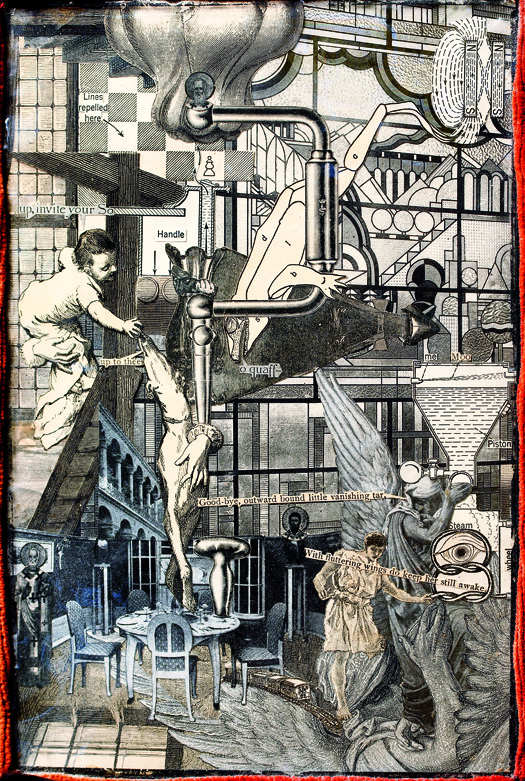

(click the image to zoom in)

Below: Melencolia I, Albrecht Dürer, 1514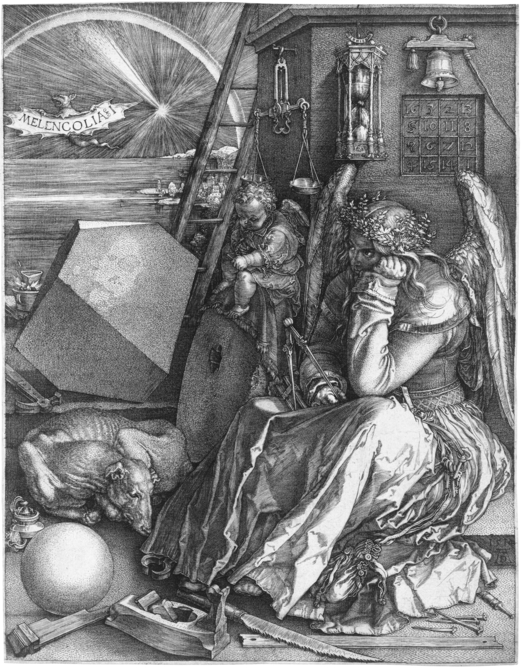
Observed
View all
Observed
Share on Social


By Jess
 Jess was a visual artist active for much of the twentieth century, widely influential for his paintings and collages. His longtime partner, the poet Robert Duncan, called Jess’s works “visible poems.” Details from “An Aposiopesis of Black Honey: or Variations on Dürer’s Melancholia I,” 1960. Artwork by Jess. Collection of Jim Newman & Jane Ivory.


Subscribe to The Observatory