


Ellen McGirt|2023 The Redesigners
October 10, 2023
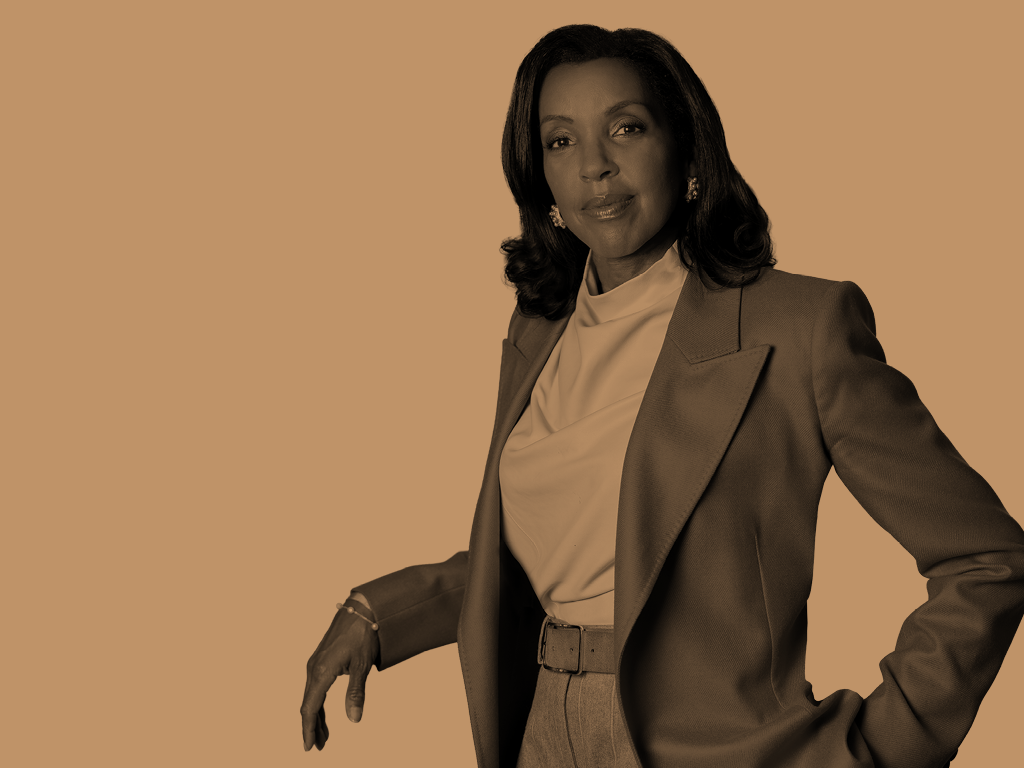
Judy Samuelson
Bringing together diverse players in business, science, government, design, and the arts to tackle the most urgent problems facing the planet.
The Design Observer Twenty | Sponsored by IDEO
The Design Observer Twenty is our curated selection of twenty remarkable people, projects, and big ideas solving an urgent social need.
Judy Samuelson is a vice president at the Aspen Institute, the global nonprofit with a storied history of leadership summits, and the founder and executive director of the Aspen Institute Business and Society Program (BSP) — and she knows how all that sounds. “It sounds like a mouthful, my job, I get it,” she says, conjuring a life spent convening over corporate snacks on tentpole issues that rarely change. But she’s here for the revolution, she insists.
Regulation, activism, and leadership science — all of it matters, Samuelson says. But if you want to change the world, you need to get business truly on board. And that means finding and activating the true believers. “If you don’t have change agents inside business, you’re not going to make any progress on any issues,” she explains. “And that’s the business I’m in.”
For 25 years, Samuelson has been co-leading the charge for change — equitable work, sustainable practices, poverty alleviation, and healthy communities — from within the ranks of corporate life where people have long been cogs and natural resources, rounding errors. Her work began when she and colleague Nancy McGaw, now a senior adviser of the BSP, launched an internal group called “the design team” whose mission was to invent the kinds of meetings that drove connection, insight, and collaboration between diverse business players from the Fortune 500 and beyond.
They developed a methodology that keeps people coming back.

“We are big believers in appreciative inquiry, open questions, and positive questions,” Samuelson says, “and we focus on what is possible.” But they’re not there to parse terms. “We’re not a debating society, we’re very deliberate about who is at the table,” she says. And they get into all the weeds. “We campaigned for transparency after Enron, we’ve done deep work on [excessive] executive pay,” she says. “We believe that short-term thinking is bad for business and bad for everyone.”
And they’ve asked probing questions about the purpose of a corporation long before the current conversation about environmental, social, and governance investing frameworks — or ESG — began making conservative legislatures cry foul in the public square. Samuelson’s book The Six New Rules of Business chronicles, among other things, is her 10-year campaign to retire the economist Milton Friedman’s notion that a corporation exists primarily to serve shareholders and take a more expansive approach. “We spent 10 years convening scholars, leaders, business journalists, and people across business to influence the Business Roundtable (an association of some of the top-company CEOs in the world) to redefine the purpose of a corporation to move away from shareholder primacy,” she says. When they finally did, in a groundbreaking announcement in 2019, it was the long-game come to pass.
Samuelson says their secret weapon is the First Movers Fellowship Program, a 15-year-old global network of executives who have expressed an interest in creating products, services, and systems that will both benefit their firms and have broader impact in the world. Fellows each pursue an innovation project; over the course of a year, they meet regularly — including three times in person — to build it out. Some 250 graduates have brought their impact work back to companies as diverse as BlackRock, Chevron, PepsiCo, and LinkedIn.
The Fellowship produces redesigners, she says.
“Part of what we’ve always done is identify systemic failures in society and business and try to bring some leadership on how you could operate differently,” she says. “The people who have done this work, this is who you want operating from the inside out.”
Essay by Ellen McGirt.
Observed
View all
Observed
Share on Social


By Ellen McGirt
 Ellen McGirt is an author, podcaster, speaker, community builder, and award-winning business journalist. She is the editor-in-chief of Design Observer, a media company that has maintained the same clear vision for more than two decades: to expand the definition of design in service of a better world. Ellen established the inclusive leadership beat at Fortune in 2016 with raceAhead, an award-winning newsletter on race, culture, and business. The Fortune, Time, Money, and Fast Company alumna has published over twenty magazine cover stories throughout her twenty-year career, exploring the people and ideas changing business for good. Ask her about fly fishing if you get the chance.
Related Posts

Business
Audio
S13 E8 DB|BD at Aspen: Eric Ries Would Like to Apologize

Business
Audio
S13 E7 DB|BD at Aspen: Proactivity is the Key to Survival With Edelman’s Dave Fleet AI

Business
Audio
S13E5 DB|BD at Aspen: Innovation Requires Collaboration with Professor Linda Hill
Business
Audio
S13 E4 DB|BD at Aspen: Dean Erika James Says a Prepared Leader is a Disciplined One
Recent Posts
S13 E8 DB|BD at Aspen: Eric Ries Would Like to Apologize S13 E7 DB|BD at Aspen: Proactivity is the Key to Survival With Edelman’s Dave Fleet AI S13E5 DB|BD at Aspen: Innovation Requires Collaboration with Professor Linda Hill S13 E4 DB|BD at Aspen: Dean Erika James Says a Prepared Leader is a Disciplined OneRelated Posts
Business
Audio
S13 E8 DB|BD at Aspen: Eric Ries Would Like to Apologize
Business
Audio
S13 E7 DB|BD at Aspen: Proactivity is the Key to Survival With Edelman’s Dave Fleet AI
Business
Audio
S13E5 DB|BD at Aspen: Innovation Requires Collaboration with Professor Linda Hill
Business
Audio