



March 10, 2026
If you have good taste and excellent discernment, this is your time to shine.
"Taste is a new core skill"
Just ask, well, everyone.
Last month OpenAI president Greg Brockman wrote on X that “Taste is a new core skill.” Sam Altman, posting before both OpenAI’s latest $110 billion funding round and controversial Pentagon contract, agreed. “We believe the best research teams are built through context, taste, and a real feel for where the field is headed next.”
Y Combinator founder Paul Graham, a longtime champion of taste, is still weighing in. “In the AI age, taste will become even more important. When anyone can make anything, the big differentiator is what you choose to make,” he said in a post on X.
“Discernment is a valuable gift—not confusing motion with progress,” writes Paul L. Gunn, Jr in Inc, speaking directly to leaders and boards. “With AI lowering the barrier to action, decisions that once took weeks now take moments. Having the wisdom to know when to pause, pressure test, and when to say no despite momentum is an important skill.”
While the declaration that good taste will save your career (and the world) may feel ubiquitous, it’s worth recalling that this is hardly a new conversation.
Buried in the history of design are the seeds that have now grown into thorny vines threatening to strangle the conversation about how to survive the age of AI.
Taste has always been a key economic skill and differentiator — ever since the Industrial Age launched the commodification of modern life and lowered the costs of materials, production, and labor. It was industrial arts, as newly defined by Bauhaus functionalism, that helped save the U.S. during the Great Depression by raising the quality of American manufacturing and creating a generation of consumers who expected beautiful things. “If products could look more graceful, more efficient, and more dependable, people would desire them more,” declared the Atlantic Monthly in 1939.
Design has always been the marriage of art and industry, and at its core, a deep commitment to both function and aesthetics. And design has always been called to comment on capitalism and civic life; it has long depended on both to showcase its greatest strengths and ambitions. And, it has made some serious missteps. (For more fodder, I strongly recommend The Invention of Design: A Twentieth Century History, by Maggie Gram, and the Big Think, below.)
While we’ve always needed humans with good judgment to decide which problems to solve and which solutions are most promising, we’ve never really needed overcapitalized, ego-driven, isolated public figures to explain how the world works.
So why let them frame yet another debate now?
I’m going to assume that the design community will exhibit the collective discernment to ignore calls for good taste exhorted by people with questionable judgment. So, let’s corner the market on taste, shall we? How are you sharpening your own discernment skills? Whom do you trust? What are you reading and who should we listen to? Let us know what you’re seeing and what’s working for you, and as always, what you need from us.
Ellen McGirt
Editor-in-Chief
LinkedIn
Instagram
Threads
Ellen@designobserver.com
P.S. Did someone who loves you send you this newsletter? Welcome! Subscribe here.
This edition of The Observatory was edited by Rachel Paese.
This is the web version of The Observatory, our (now weekly) dispatch from the editors and contributors at Design Observer. Want it in your inbox? Sign up here. While you’re at it, come say hi on YouTube, Reddit, or Bluesky — and don’t miss the latest gigs on our Job Board.
The big think
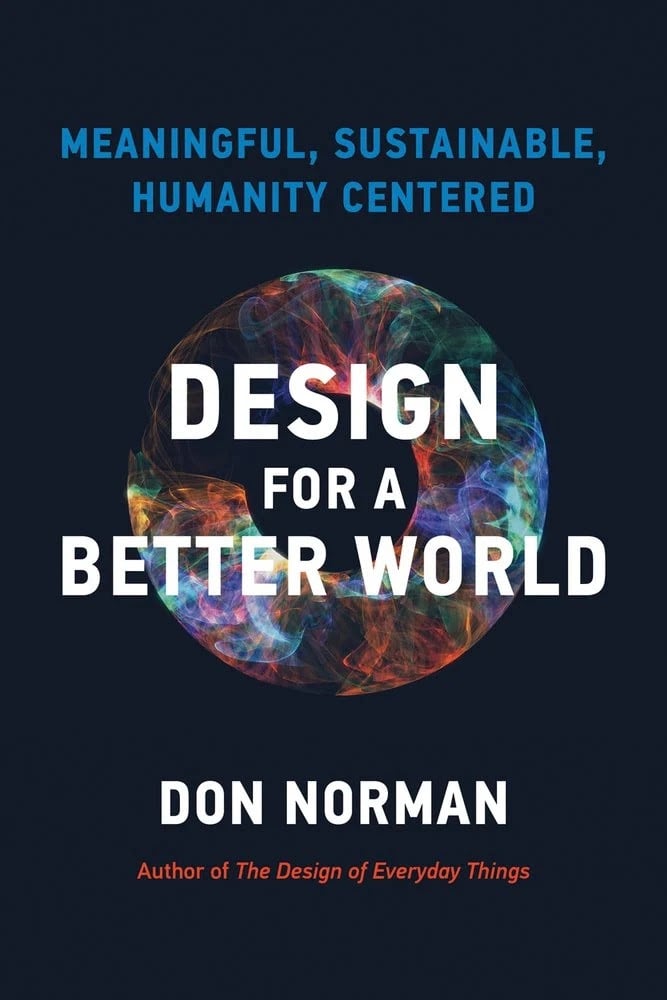
In 2009, design luminary Don Norman published Design for a Better World: Meaningful, Sustainable, Humanity Centered. “The world is a mess,” he told Design Observer. “And the key to change is human behavior.”
“Today’s world is dominated by the remaining traces of modernism, where technology, science, and economics rule. The result is an unwise emphasis on measuring everything, even things that cannot be measured, which turns almost all aspects of life into abstract, meaningless numbers. The result is that decisions and actions are made through abstractions, calculations, algorithms, and other mechanisms that are devoid of meaning and unintelligible to nonexperts. Worse, phenomena are studied in artificial situations, in the cold, isolated world of the laboratory, where the conditions can be completely controlled, or, in the case of economics, either through abstract ‘logical’ thinking devoid of observation of the real phenomena or by analyzing the abstract numerical statistics that economists are so enamored of. As a result, when the findings of these analyses are applied to the real world of multiple, uncontrollable, messy variables, they fail.”
Many of the most important aspects of life cannot be readily measured, but this does not minimize their importance. The whole point of humanity-centered design is to focus on humanity’s needs: if these needs cannot be measured by traditional metrics, we must develop nontraditional measures.”
Observed
What are you observing? Tell us.
Calling design, UX, and user research professionals: Students at the Design Leadership seminar course at the WashU Sam Fox School are conducting a semester-long research project to map the career journeys of the current generation of design leaders. They’re seeking to identify patterns, themes, and emerging signals that suggest how the designer’s role as a leader will evolve in the years ahead—and to explore how these patterns crystallize into recognizable archetypes. Part of this project is a brief survey for global Design, UX, and User Research professionals with 8 or more years of industry experience—either in a management or IC role. (The seminar is taught by Doug Powell, a brilliant design leader and great friend of Design Observer.)
The New York Times is running a special section dedicated to design, featuring buildings, objects, and techniques that are “fighting to stay alive.” Each entry is its own delight; today, get to know the vibrant stylings of self-taught artist L.V. Hull.
A senior robotics design lead at OpenAI has quit, citing concerns about the company’s contract with the U.S. government. “I resigned from OpenAI. I care deeply about the Robotics team and the work we built together. This wasn’t an easy call,” Caitlin Kalinowski in a public post.
Earlier this year, Mexico announced its General Law on Circular Economy (“LGEC”) an amendment to previous legislation that now makes circular design a legal obligation, not a voluntary best practice. No longer just reserved for waste management, the new regulation now extends to design, production, and materials.
What is circular design? Learn more here, here, and here.
When Amsterdam-based creative agency Tosti Creative set out to address loneliness among an aging population, the older folks they interviewed had a better idea. “Can’t we just come and brainstorm with you? We want to participate. I may be old, but I’m not stupid.” An open call for creatives over 70 to join the agency yielded hundreds of applications and a new cohort of senior team members.
A new wrinkle in the battle for redistricting. Mapmakers typically draw voting districts based on the total population of a particular area. But now, Republicans want to narrow that number to “eligible” voters. What that means and why it’s a problem.
The quest for the 24-hour city. The demand for vibrant city life after sunset is growing worldwide — walkable, safe, culturally fulfilling — yet most cities remain designed for a 9-5 lifestyle. “The night is not a void to be managed, but a frontier to be designed for,” says nighttime designer Tim Hunt.
Job board
Hiring a designer? Post your role on the Design Observer Job Board to reach a highly engaged audience of designers, creative leaders, and studios across the Design Employment Network.
Lecturer, Senior Lecturer, or Associate Professor – Industrial Design at Victoria University of Wellington – Te Herenga Waka, Zhengzhou, China.
Graphic Designer at Margot Elena, Englewood, CO.
Creative Design Manager at VCNY Home, North Bergen, NJ.
End marks
Dave Snyder has evergreen guidance on good taste. And speaking of evergreens, it has to do with “planting trees.”

The compound interest of design: what not to build
Two and a half decades in, Dave Snyder argues that the smartest design move isn’t chasing trends, it’s planting the tree and letting time do the work.
This is the web version of The Observatory, our (now weekly) dispatch from the editors and contributors at Design Observer. Want it in your inbox? Sign up here. While you’re at it, come say hi on YouTube, Reddit, or Bluesky — and don’t miss the latest gigs on our Job Board.
Observed
View all
Observed
Share on Social


By Ellen McGirt
 Ellen McGirt is an author, podcaster, speaker, community builder, and award-winning business journalist. She is the editor-in-chief of Design Observer, a media company that has maintained the same clear vision for more than two decades: to expand the definition of design in service of a better world. Ellen established the inclusive leadership beat at Fortune in 2016 with raceAhead, an award-winning newsletter on race, culture, and business. The Fortune, Time, Money, and Fast Company alumna has published over twenty magazine cover stories throughout her twenty-year career, exploring the people and ideas changing business for good. Ask her about fly fishing if you get the chance.
Related Posts

Business
Audio
S13E3 DB|BD at Aspen: AI is the Greatest Civil Rights Issue of Our Time With Chris Hyams
Design Juice
Rachel Paese|Design Juice
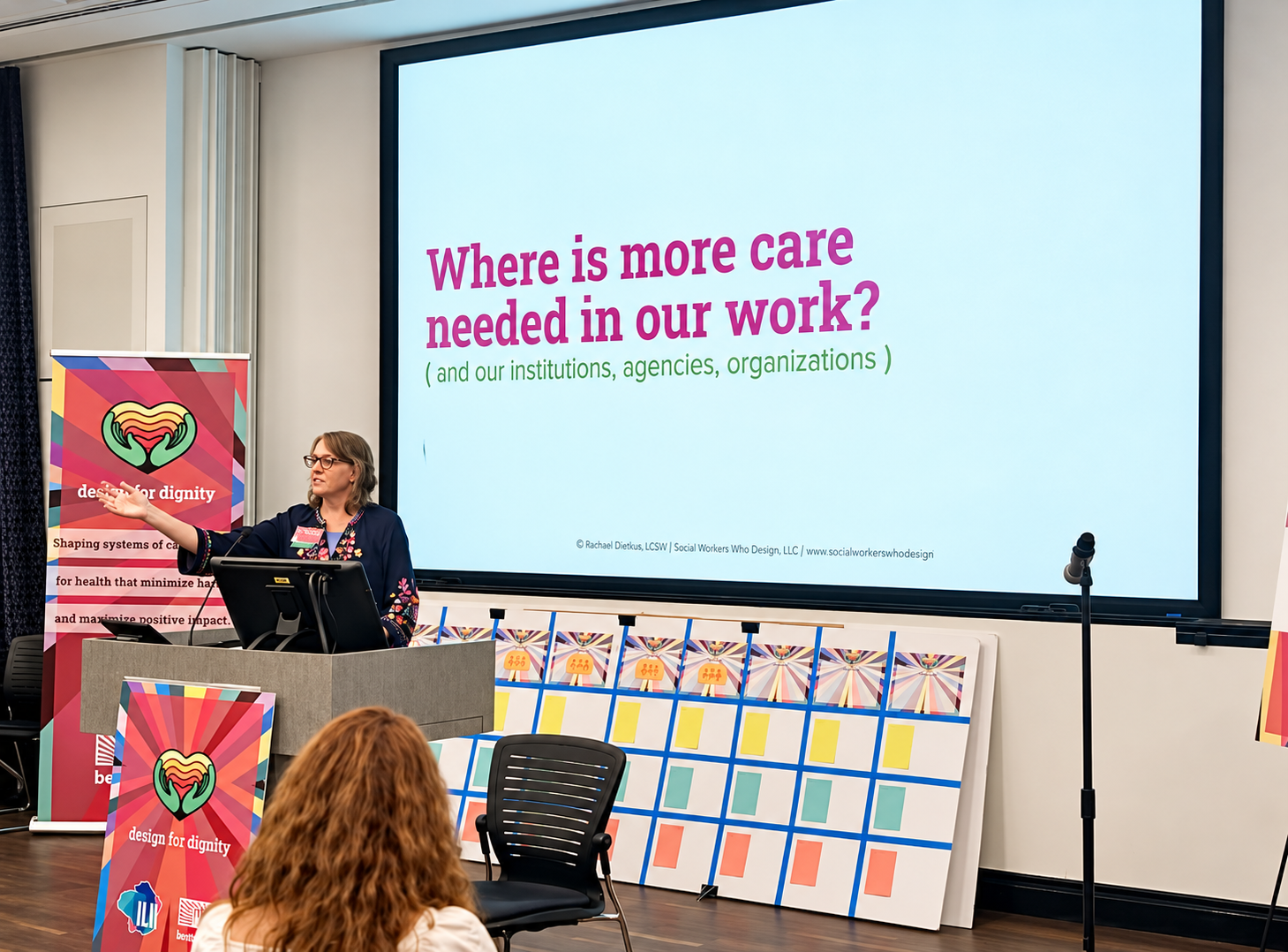
‘What if care were foundational to systems design?’ asks Rachael Dietkus
The Observatory Newsletter
Ellen McGirt
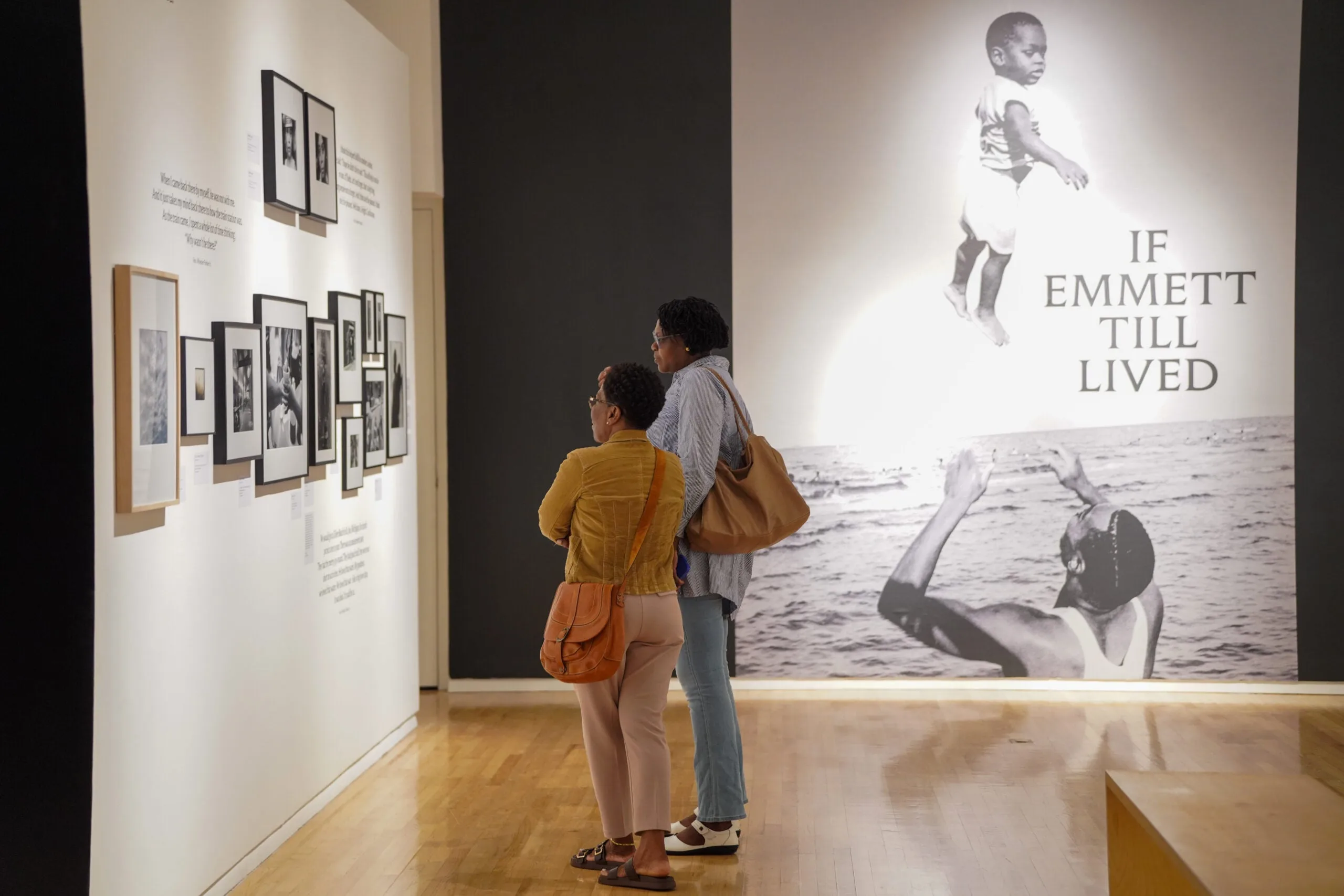
If Emmett Till Lived
Arts + Culture
Alexis Haut|Interviews
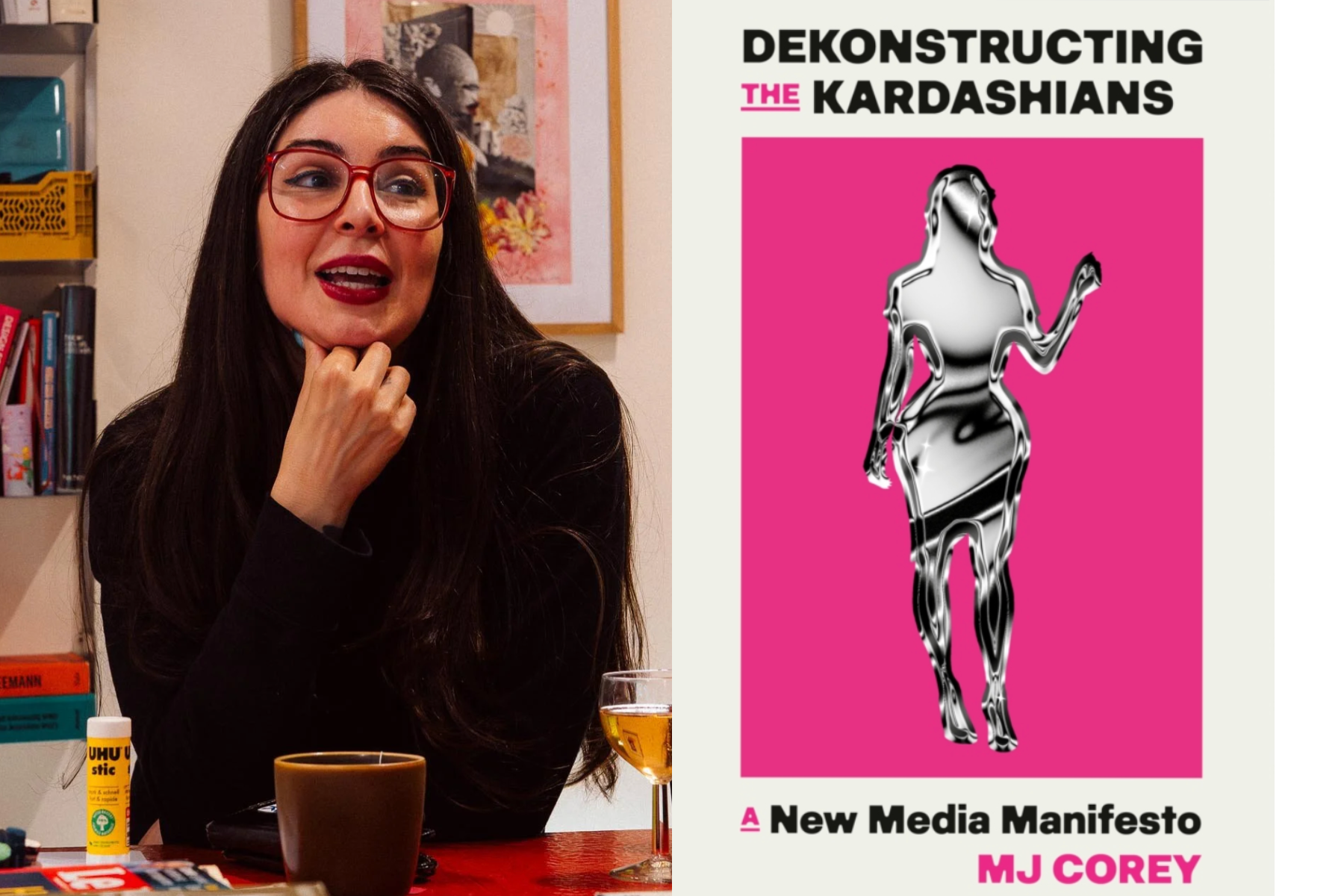
The Kardashians will make you cringe, but first they’ll sell you shapewear
Subscribe to The Observatory
Related Posts
Business
Audio
S13E3 DB|BD at Aspen: AI is the Greatest Civil Rights Issue of Our Time With Chris Hyams
Design Juice
Rachel Paese|Design Juice
‘What if care were foundational to systems design?’ asks Rachael Dietkus
The Observatory Newsletter
Ellen McGirt
If Emmett Till Lived
Arts + Culture
Alexis Haut|Interviews