


Steven Heller|Observer Quarterly
July 8, 2016
Tags: A Selection, I

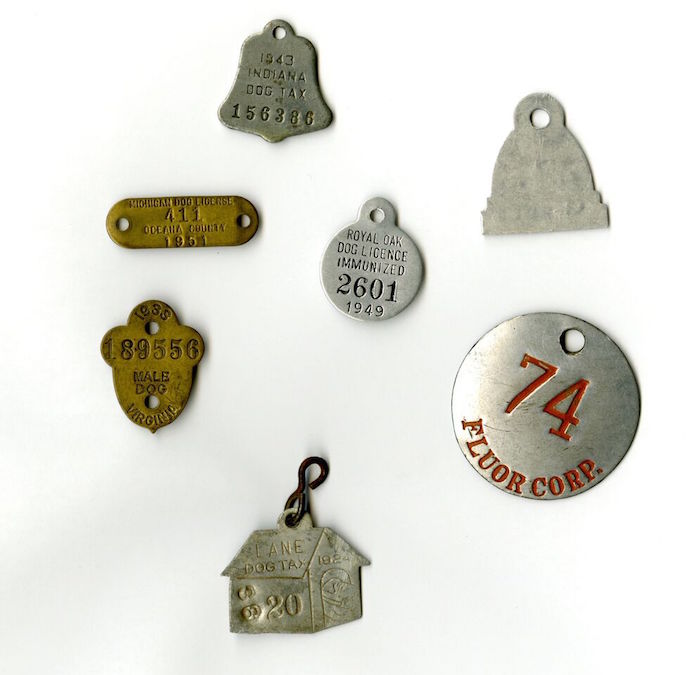
Rejection Tags
Inspection tags and stickers are supposed to be evidence that a human being with a particular expertise actually made a qualitative judgment about food, a piece of clothing, or an appliance. They are small yet reassuring. Presumably anything that has been bestowed with one has passed through some process—whether rigorous or not. But what about those things that don’t make the grade? The user will never see them, we hope, but rejection tags are an integral part of the process too. This one in red says STOP in no uncertain terms.
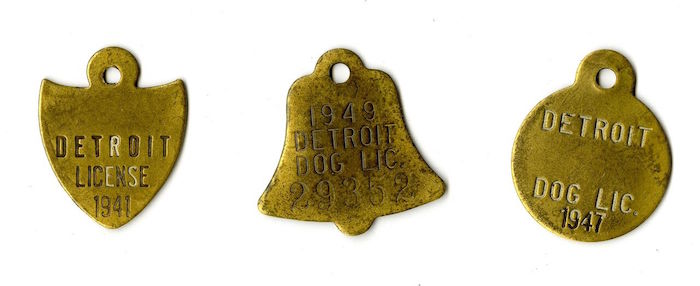
Dog Tags
Bodies are the currency of war. But if someone is going to give his life for a cause, the least that he is owed is a final resting place with a marker acknowledging his past life. During the Civil War, to avoid anonymity, soldiers required identification indicators. Without a uniform standard, soldiers used their own makeshift designs. It took fifty years for the government to make ID tags mandatory (during World War II the term “dog tag” described the curved and notched rectangular tag familiar to us today. The notch insured proper alignment on an Addressograph machine that inscribed the tags). A pair of tags was required until recently—one on a long neck chain and the other on a shorter chain. If a soldier fell in battle, the shorter chain placed on the toe of the deceased and a surviving comrade took the other.
To read the entire article, buy a copy of Observer Quarterly 2 at Blurb.
Observed
View all
Observed
Share on Social


By Steven Heller
 Steven Heller is the co-chair (with Lita Talarico) of the School of Visual Arts MFA Design / Designer as Author + Entrepreneur program and the SVA Masters Workshop in Rome. He writes the Visuals column for the New York Times Book Review, a weekly column for The Atlantic online and The Daily Heller.
Related Posts



Subscribe to The Observatory
Related Posts