


Rachel Paese|Design Juice, Interviews
September 14, 2026
Ira Blossom created a games-only, print-only newspaper — and it’s sold at a newsstand in New York City
Being a UX research manager at Google showed how much users are seeking balance between the digital and analog, and he's meeting the moment
Ira Blossom, a 35-year-old UX research expert, wants people to spend more time away from the digital worlds he studies and more time with themselves and each other.
You bring the pencil, he’ll supply the paper.
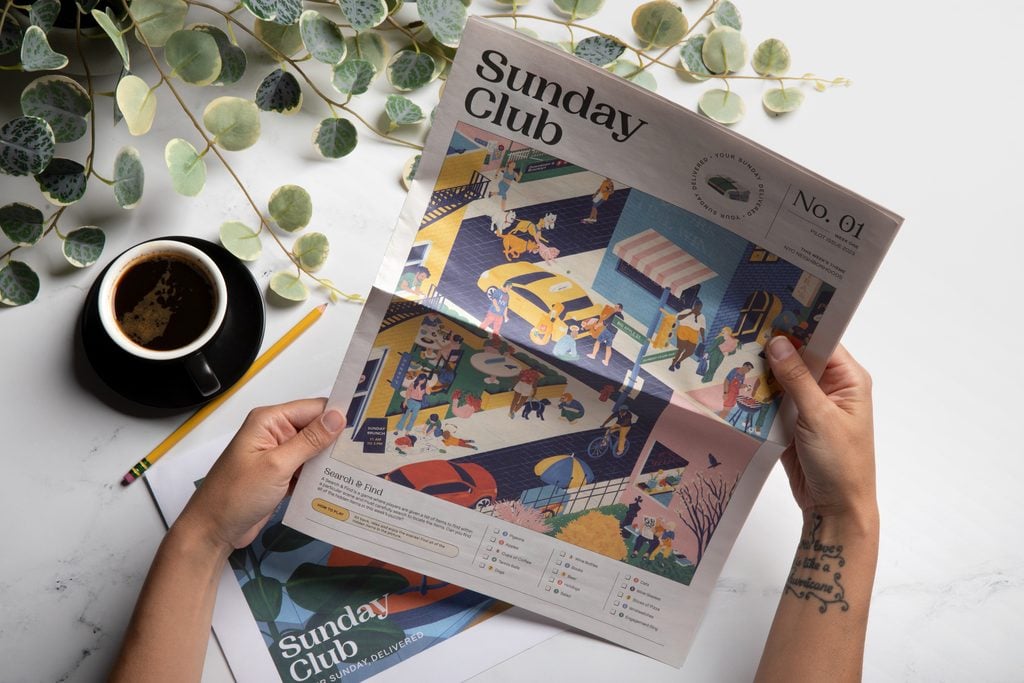
Ira Blossom is the founder and editor-in-chief of Sunday Club, a newspaper company committed to bringing community, relaxation, and small delights back to the weekend. To do it, he’s chosen a nostalgic, yet foundering, medium: the newspaper. Sunday Club’s motto: All games. No news.
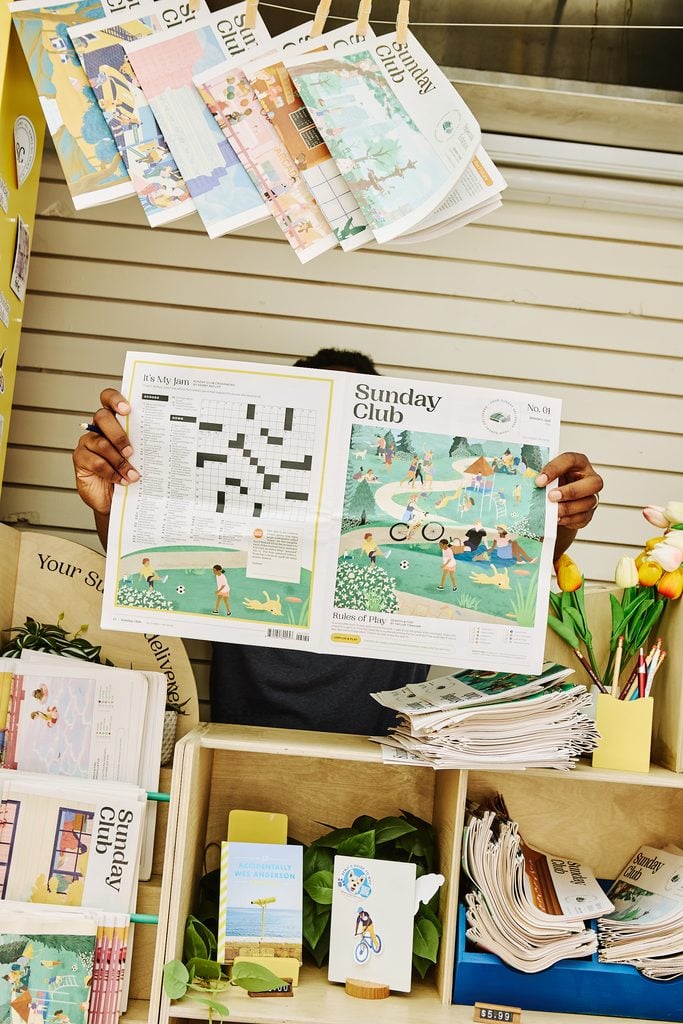
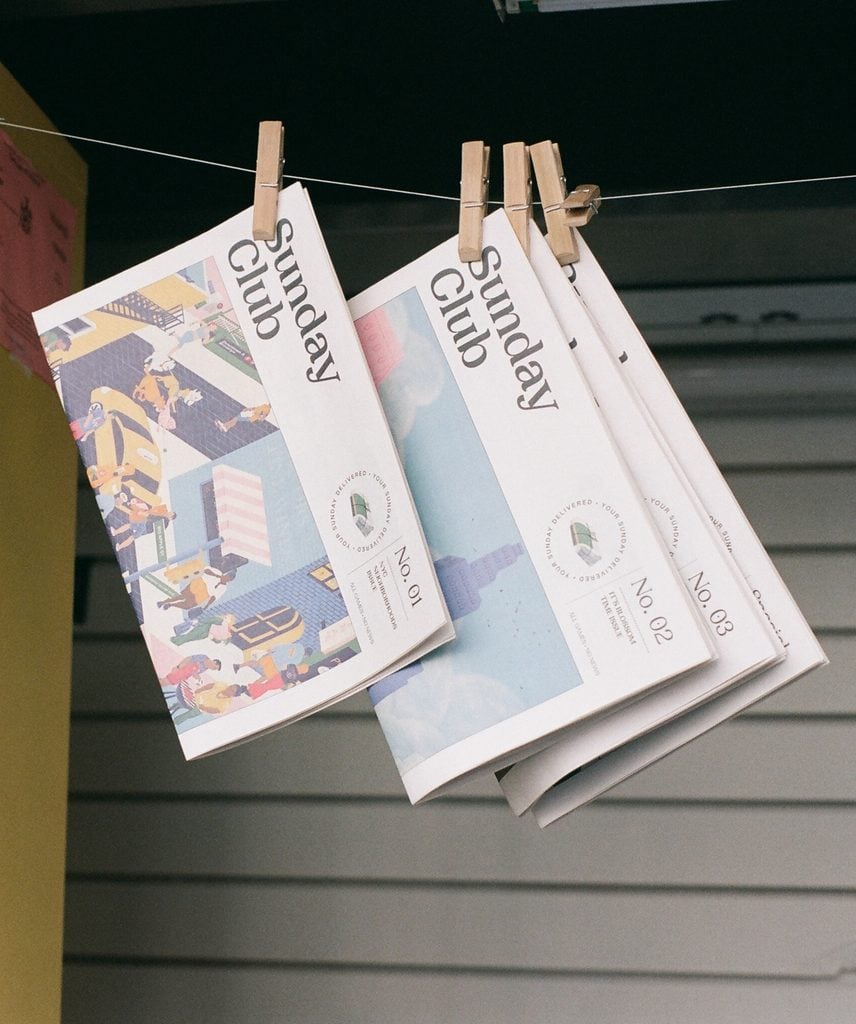
Sunday Club produces a monthly paper issue; each quarter features a different artist’s work, plus puzzles and games commissioned from human designers.
Blossom hatched the idea after he created a real-world family party game called “That’s Dope: The Party Game for Strong Opinions.” This also sparked his interest in creating experiences away from screens.
Sunday Club is Blossom’s side hustle. For his full-time job, he’s a senior UX research manager at Google, where he’s been for almost 12 years. There, he spends hours hearing people talk about their relationship with technology, and he’s noticed a few things happening at once. “A little bit of screen time fatigue, a lot of digital fatigue in general, a love for nostalgic media that I think is coming back.”
So, after his day job, he works on a non-digital, anti-fatigue solution. “It’s just about more balance,” he says.
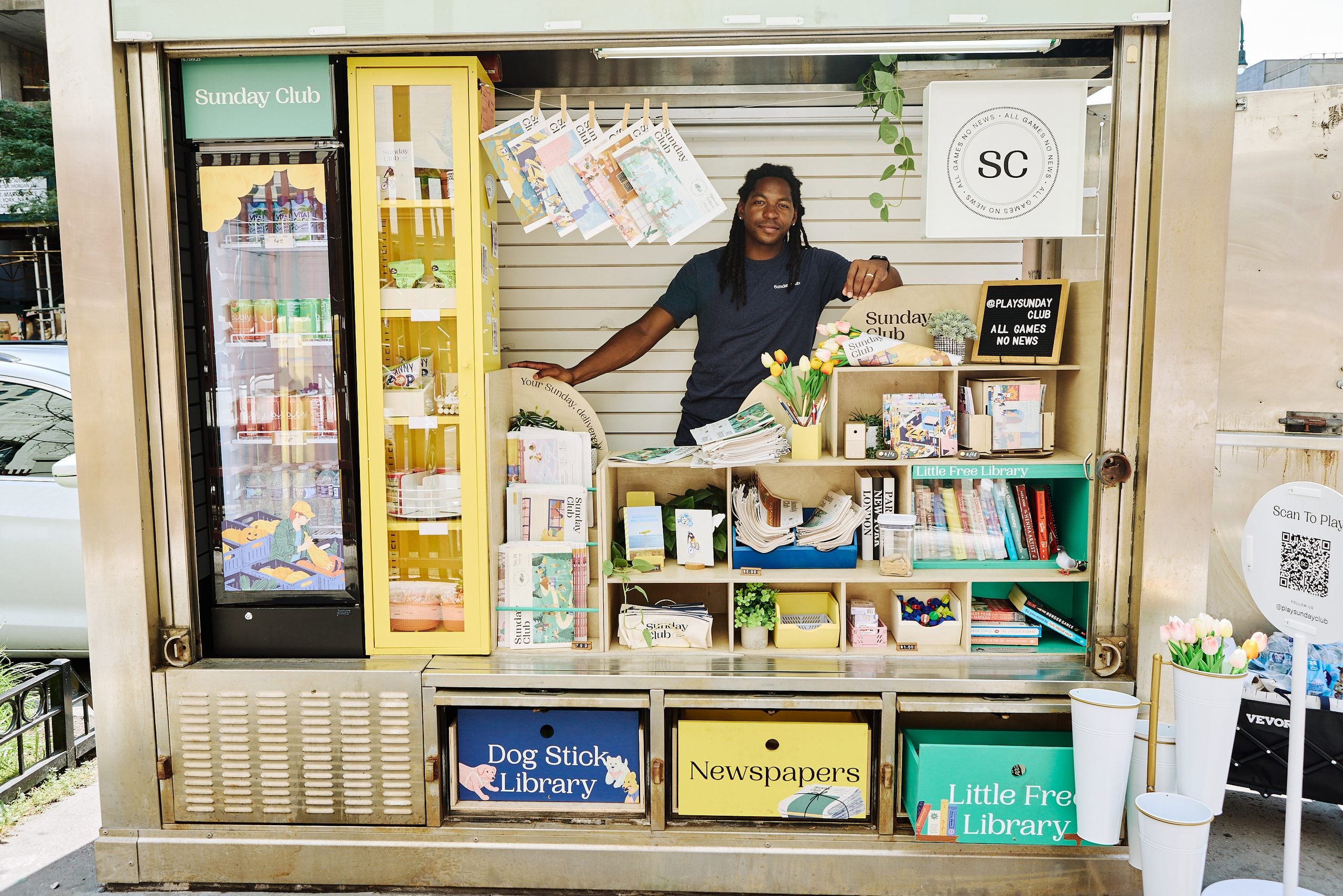
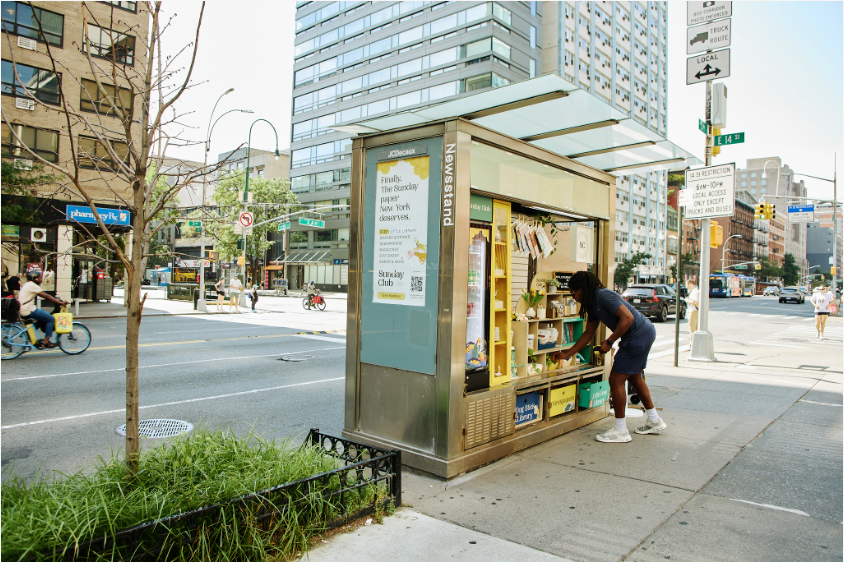
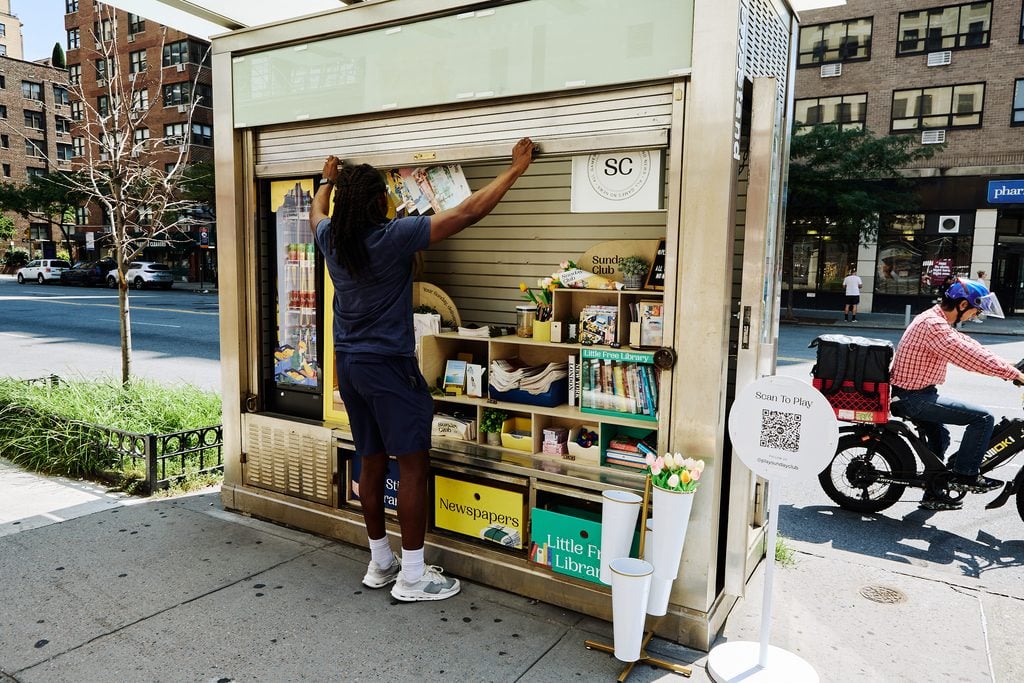
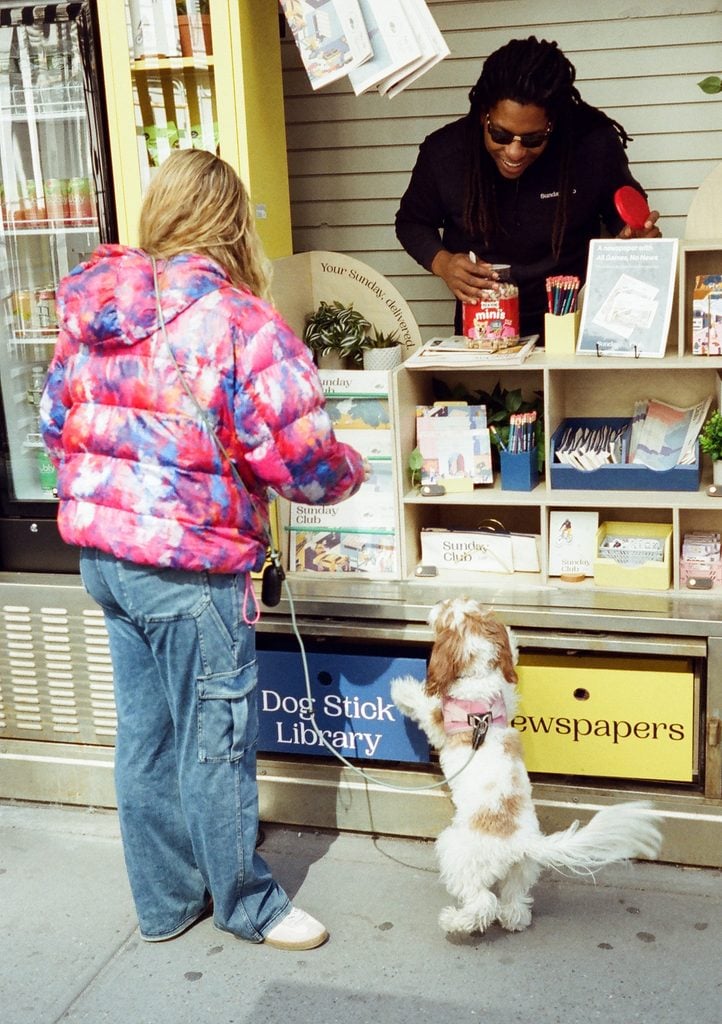
Sunday Club launched in 2025, and the orders were so overwhelming that even Blossom’s wife folded 50,000 copies from their kitchen. “It resonated,” he says. Issues arrive by mail, but if you’re in New York City on Sundays, you can go to the newsstand (which just opened in May of this year) to pick up a copy from Blossom himself — and maybe even meet some other newsstand entrepreneurs who are popping up nearby.
Blossom is finding ways to connect with the other newsstand owners to create new experiences for shared customers. “That’s a great example of meeting the moment to me — we saw each other, we connected.”
Besides real-world connection, Blossom believes being a keen observer has become a key differentiator for designers these days. “Always start with understanding the problem and the real underlying thing that people are trying to solve,” he says.
Design Observer sat down with Blossom to talk about Sunday Club, newsstands, UX research, AI, and how keeping the newspaper entirely human-made has been an important business decision.
The interview has been edited and condensed for length and clarity.
Why was it important to make Sunday Club exclusively available in print?
I work full time in tech, and so I’m aware of the tax of digital in general. Especially as someone who, for my entire career, has built digital experiences. Seeing that, it was very clear that there is this recurring cultural feeling, but also a very realistic one, of people looking for something else.
It’s just about more balance. I’m a digital person, I like technology, I couldn’t have built Sunday Club without technology. So it’s not to say we should do without — it’s just to say we need a little bit more optionality. That’s where the paper comes in.
How have you seen Sunday Club alleviate digital fatigue, or fatigue in general?
I think my favorite story from the newsstand was maybe a month ago. I had just opened the doors around 11 a.m. or so, and a guy comes over very frantically. This is in Union Square so it’s not unusual to see that, but he beelines straight for it and explains his story. He was telling me he had something super stressful happening in his life, something work-related. And he was like, “I already know Sunday Club, just give me this one. It’s kind of like a Tylenol.” I don’t know if he was going through a digital fatigue moment or just a real-life moment, but that’s kind of the direction: just relief. Sometimes from digital, sometimes from over-screen time, sometimes from other things as well.
One of the biggest use cases we have for Sunday Club is gifting. We allow people to write their own gift notes through our website, so we get a lens into how people are using it. A lot of times it’s “Get well soon,” or “You’re in the hospital, this is for you,” or “You just had a new baby” — special moments, a lot of healing moments. That’s something we’re going to lean into too.
Why was it so important to you to have the newsstand?
Sunday Club is, yes, a newspaper, but it’s broader than that to me. It is growing into more of a lifestyle brand, I guess, if I had to put a name on it. From the early days when I was just sketching the idea, I did have a vision of trying to have a physical Sunday Club.
One of the first things that put me in that direction was actually through our retailers. Coffee shops and hotels purchase Sunday Club for their customers. The coffee shop connection had always stood out to me, and I had always had it on my mind to try to make that work. It just happened that all of the stars aligned and I did the research at the right time.
Who designs the contents of the newspaper?
The way I’ve built the product experience, I think about it as a platform — the same as I think about some video game systems. It’s meant to feature others’ content. Every season of Sunday Club, which is every quarter of the year, features a new artist’s work. We very intentionally go and find new artists to bring them to life. That works well for us, and we love featuring them.
Same thing with our puzzles — it’s a contributor format where people can submit their puzzle content to us. If you’re a puzzle contributor, please reach out to us. And same thing with artists. We love to hear from them as well and try to find something that works.
Where did your interest in making Sunday Club analog begin?
For Sunday Club specifically, it was winter of 2022. My wife and I went on a group ski trip together. You can imagine: it’s snowing outside, fireplace going, big house, and every morning I was doing crosswords on my iPad. People started to gather around it, very much like with That’s Dope, the family party game I had just built. It wasn’t until that point that I had even made the connection that crosswords — I had always pictured that as a solo, kind of nerdy thing where you get in your corner and do your thing. Maybe you invite your significant other, but I had never thought of it as really facilitating a group activity the way that it could, like a party game. And with the background scenery and the fireplace and the people, I was like, the only thing that could make this better is if we weren’t just staring at the screen. That was the first connection — this needs to be an experience that’s offline.
Fast forward to 2025, I had been tinkering on it for the last couple of years at that point, just designing things, trying to get the branding right and doing research. In June 2025 I launched it to the public.
How did your role as a UX research manager at Google inform the development of Sunday Club?
At Google, we’re building things primarily for enterprises, for companies, for businesses. One thing that grounds me is that underneath everything, software aside, is just another person. And that person — as good as the technology is that we’re building — at the end of the day has an objective: probably to get home to their family and do their own personal things. So with that in mind, how do we build things with that context and not forget it?
The types of things that people will anecdotally mention as you get into these digital research spaces are: “Hey, I’m trying to accomplish this, and then I want to get offline.” If you spend hours and hours just hearing people talk about their relationship with technology, it’s changed over time for sure. And I think the AI wave we’re in right now is the next level of that we’re starting to do a lot of understanding of.
How are you thinking about the AI wave?
Sunday Club and the brand I’m building is focused on elevating human artwork. We’re trying to focus on the humans who contribute: the artists who contribute their artwork, the puzzle creators who are making their puzzle content. That’s what we want to do, and that’s what people want. If you’re doing a research study and you ask people what they want, from my anecdotal research, there is a want for more human content and less AI content. So that’s top of mind for me. That’ll be the guiding light for how Sunday Club operates.
My take on AI usage in general is that AI is a tool. We actually have clauses in our contracts: we do not allow our contributors to leverage AI for the final output of their work. I don’t love the idea of making it the center of everything — that’s where my line is personally. Humans should be at the center of things, and AI should be a supporting tool that we get to leverage.
How can designers meet the moment? What examples have you seen?
There is an artist who does pottery who actually opened a newsstand not too far from me, and I went to visit him a couple of weekends ago. There’s now actually a band of newsstands that have all recently opened in the last year or so. We’re banding together and offering a local newsstand passport book. That’s a great example of meeting the moment to me — we saw each other, we connected. We all recognize that there’s this nostalgic wave for the newsstand.
It’s about first spotting the wave. That’s where the research comes in — listening to the trends that are building over time is to me the most important thing. Spotting where people are going, what they’re asking for, what they’re complaining about, and the real underlying motivation behind that complaint — that’s what led me to this area. And then finding a creative way to design for that.
Do you have a piece of advice for an up-and-coming designer entering the industry?
I do a lot of interviewing, even for my full-time job. I think it’s really important to not be scared by AI — just try new things and build your portfolio. Your portfolio, to me, is still the number one thing you can do in your design career: having something that excites you and can show others how big you can go.
The landscape is changing so fast, that’s the hardest part. Every day there feels like there’s a new solution or a way of working or something you need to do. But just pick one. Try it and build something. As a builder myself, just getting something out there that people can try is the key. It’s okay if it doesn’t go exactly how you planned the first time, but just pick something.
How has observation been important in your design career?
As a researcher, that’s the number one thing I would say. Most of my professional job is running studies with people and writing papers on them. It’s all about what you’re observing — either from the human or the data. And to me, that’s the same for any design project.
For Sunday Club, it’s observing who’s in the space, observing the potential customer base and what makes them unique and what they’re looking for. Those are the two most important things before I get started on anything — starting with those observations. And then it’s not until I understand those things that I start tinkering with what a solution could be.
My number one thing is: don’t start solution forward. Always start with understanding the problem and the real underlying thing that people are trying to solve.
What inspired you as a young person? Did you always know you would be a designer?
I was always an inventor — always inventing and building and making something. If you asked 10-year-old me, I thought I’d probably be an architect or engineer. And then as I got introduced to computers, that took me toward computer science, which led me to human-computer interaction, which led me to user experience. But I would have been inventing and building something regardless.
What’s next for Sunday Club?
Some of the things we’ve been pushing — we will have a sub-brand called Sunday Club Kids launching soon. It’ll basically be a miniaturized version of Sunday Club dedicated to your 3-through-9 audience. I’m excited for that one. And we will be doing UK subscriptions — that’s been a big request of ours, and that’ll happen this year. And for the artist and contributor side: people generally reach out on our website, or shoot us a DM or email us with their portfolio. We do not do that internally — I make the creative direction, so I know what I want the issue to be, but people can always reach out with their portfolio.
Observed
View all
Observed
Share on Social


By Rachel Paese
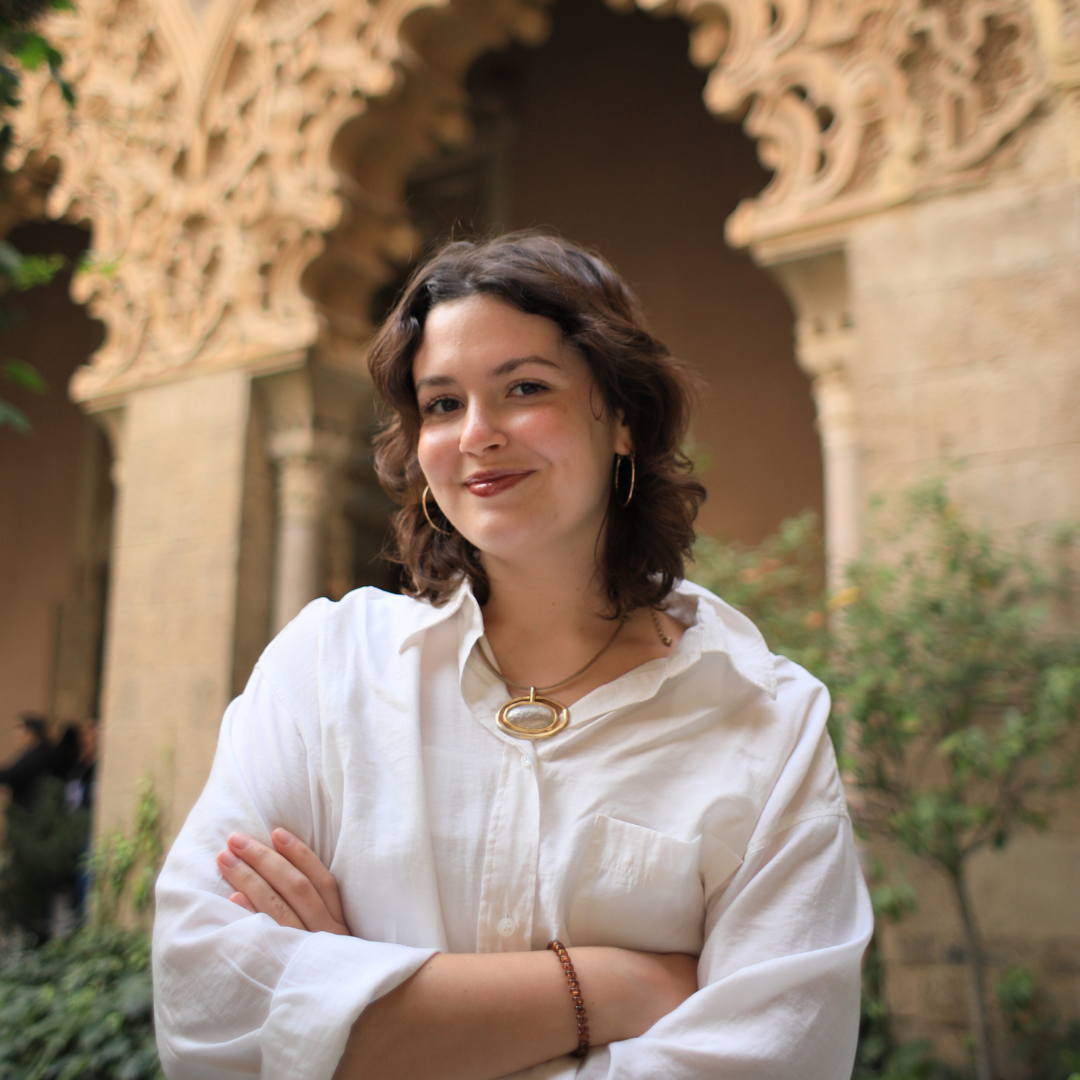 Rachel Paese is Design Observer’s Deputy Editor, and she loves giving curious people access to stories that change the way they see the world. It began with a major in English, and then evolved with a project that sharpened her editorial instincts the old-fashioned way: founding and leading her own multimedia magazine at the University of Kansas. After college, she carried that passion to education, helping students in Spain and Thailand think beyond their culture. Today, she brings that same spirit to Design Observer, working to connect readers with the people and ideas shaping a better future. Connect with her on LinkedIn, and ask her about her quest to sew her own wardrobe.
Related Posts
Design Juice
Rachel Paese|Design Juice
‘What if care were foundational to systems design?’ asks Rachael Dietkus
Arts + Culture
Alexis Haut|Interviews
The Kardashians will make you cringe, but first they’ll sell you shapewear
Design Juice
Rachel Paese|Design Juice
Sara Soskolne is a typeface designer who thinks of herself as a craftsperson
Design Juice
Rachel Paese|Design Juice
Katie Conry on building public programming for San Francisco’s most historically rich — and most misunderstood — communities
Subscribe to The Observatory
Related Posts
Design Juice
Rachel Paese|Design Juice
‘What if care were foundational to systems design?’ asks Rachael Dietkus
Arts + Culture
Alexis Haut|Interviews
The Kardashians will make you cringe, but first they’ll sell you shapewear
Design Juice
Rachel Paese|Design Juice
Sara Soskolne is a typeface designer who thinks of herself as a craftsperson
Design Juice
Rachel Paese|Design Juice