



September 17, 2026
S13E1 DB|BD at Aspen: Todd Breyfogle on the Aspen Institute’s Humanistic History
What the Institute’s radical roots can teach us about community, connection, and thriving in difficult times
In 1949, Walter and Elizabeth Paepkes invited 2,000 artists, thinkers and business leaders to the abandoned mining town of Aspen, Colorado, for the first iteration of an Aspen Institute gathering. Eight decades later, artists, thinkers and business leaders still convene in Aspen every summer to discuss the challenges and advances shaping our world.
And while their modes of transportation have changed (that first group mostly arrived via horseback), they share a key belief with their predecessors: that a deep investment in literature, philosophy and the arts is the key to nurturing our human spirits.
Today’s guest is a sort of guardian of that legacy. Todd Breyfogle is the Aspen Institute’s Senior Advisor for Humanistic Studies and Practices. He chronicles the story of Aspen’s dedication to the humanities. And keeps it alive. In this episode of DB|BD, Todd talks with host Ellen McGirt about why Aspen’s radical, artistic roots are a key that unlocks a better way of thinking about what they do now and how we can all do more meaningful work, together.
“You are never too young or never too ill-educated — I will simply say ill-credentialed by our standards — to think deeply about what it means to be human, about what just relations are among people, about the limitations of kindness and compassion and the demands of forgiveness…The quality of our dialogue reflects the quality of our civilization, which is a reflection of the quality of the things that we value.”
On this season of DB|BD, we are thinking about radical collaboration. Host Ellen McGirt sat down with visionary designers, leaders and thinkers at the 2026 Aspen Business & Society Summit to ask them about the radical act of collaborating with others in a time when it often feels impossible to find common ground.
TRANSCRIPT
Ellen McGirt: Todd, I, I loved meeting you at the opening, at the opening party of this, this fifth convening here at the Aspen Institute. But I did take the time to go through your extraordinary résumé, and it’s… I, I, I’m truly speechless and astonished at how much you have both accomplished and how focused you have been on the human side and the humanity side of leadership, which is what I think we need more than ever. But I will say that in 23, 4 years of being a business journalist, you’re the only person who has a mention of Queen Elizabeth in their bio. It’s incredible to me. Can you tell me a little bit about what you do right now? And maybe we can talk a, a bit about your journey to this, to this seat.
Todd Breyfogle: Well, thanks. I enjoyed meeting you the other night as well. Yeah. And thanks for the opportunity to be here. The through line for me really is this emphasis on humanistic learning and application. I think from a very early age, I was trying to make sense of the world like we all are. I… And I… There was a moment in particular where being a young person in rural Colorado who watched a lot of television, my grandmother, who was a first-generation, barely high school education, but wonderfully self-educated in the arts and literature, handed me a book and said, “Read this. We’ll talk about it.” And when Grandmother says that, you do. And it was a book of Chekhov short stories, and I think I was 11 years old, and it really opened my world, my imagination, to a whole range of human experiences which the humanities and literature and philosophy and theology in the arts are really embrace. And so from then on, I, I really was a voracious reader and a lover of learning. And so, coming here to the Aspen Institute, founded originally as the Aspen Institute for Humanistic Studies, was a, a very logical through line from my educational experience and also teaching at the university level.
Ellen McGirt: So you’re the senior advisor for humanistic studies and practices here?
Todd Breyfogle: Here? That’s correct. And it really is an emphasis at the institutional level to understand and expand upon the really pretty radical humanistic roots of the Aspen Institute. The founders of the Aspen Institute, who were Walter Paepcke and Elizabeth Paepcke, his wife, big players in Chicago, but friends of Robert Hutchins, who was the chancellor of the University of Chicago. And they both, both, all three of them had a really profound sense of a crisis in culture, and as a result, a crisis of education. And as they looked at two world wars and a Great Depression, they said, “We need an opportunity to step back and reflect upon,” as they put it, “the difficulty of the human spirit.” What was that difficulty? Not just two world wars and a Great Depression, but if— as they thought, our challenges were the human problems that we face, the human and social problems, no one professional sector, business, government, academia, the nonprofit sector, was adequate, adequate to address it, and no one mode of academic knowledge, a department in a university, was adequate. There needed to be a place where all of these voices could come together and radically collaborate. And it’s easy, I think, with the, the, the international reputation that the institute has now, it’s easy to underestimate just how radical this was in 1949. They brought 2,000 people to Aspen, which was an abandoned silver-mining town. It’s still hard to get to. It was really hard to get to. You would’ve come, in some cases, by ship and then train. If you were a local, you would’ve ridden in on horseback, literally. And they came here precisely to pursue that humanistic spirit that they thought had been lost in a modern technological age.
Ellen McGirt: That is such an interesting solution to what seemed to be a looming problem, and not unlike the problems that we have today, which, you know, always begs the question: Have we made progress?
Todd Breyfogle: We, we have and we haven’t, I think. And I think one of the… Part, part of the, the humanistic mindset, I think, is a recognition of the perennial problems of what it means to be human. And so for 17 years, I ran the seminars department here, which for the first really 40 years of the Aspen Institute anchored our programming in the exploration of big ideas. And one of the things that always happens when we’re around a seminar table, whether we’re reading Plato and Aristotle or Confucius or modern figures like Simone de Beauvoir and Martin Luther King, is people step back and say, “Wow,” “these problems have been around for at least 2,000 years.” And so really coming to terms with who are we, what are we as a human animal, both individually and society is something that never goes away. So are we making progress? It depends on what the measure of progress is. We’ve made great material progress in lots of things. But have we made the same kind of moral progress that allows us to use the material advantages that we have to better effect?
Ellen McGirt: So as you’re speaking, it’s such a poignant… Setting up such a poignant image, it occurs to me that the job of a leader, and certainly the job of a community member or a civically motivated person or someone who participates in society, is to take on as a practice—
Todd Breyfogle: As a practice the—
Ellen McGirt: Drawing yourself to the attention of the human condition over and over and over again, and each time you draw humanity to your own attention, you are both a different person, and humanity has moved on and to, and, and is facing some new, if, if albeit familiar, challenges. What do you think about that?
Todd Breyfogle: No, I think, I think that’s right, and I think from the very beginning, interestingly enough, the, the founders of the institute didn’t really think of themselves as, as, as a leadership organization, but rather as they named the, the institute in 1949 and as we were named until the late 1980s, the Aspen Institute for Humanistic Studies, which is to say they had an educational program that opened and broadened the horizon of people who were in various kinds of leadership positions. Let me say a little bit more about what what I think they understood. They understood that the conditions of modern freedom had radically changed the scope of activity for human beings. Mm. The traditional social and political hierarchies had broken down. We had unexpected and untold power, both economic and scientific. And there was also a sense that the material comforts that many people had come to enjoy by the end of the 1940s might distract us from the moral project of what it means to be human. And just parenthetically, this was an acute problem for both Walter Paepcke and Robert Hutchins. Paepcke was a first gener-generation German, the son of German immigrants, who understood the power of business and innovation in business, but also the contributions of business to culture. He also understood as a, as someone of German heritage what happens when an otherwise democratic country goes south. So he recognized that the moral challenges were the ones that were really important. Robert Hutchins, who had fought in World War I before becoming the chancellor of the University of Chicago at a very- Wow early age was also in his position as chancellor of the university, o-one who oversaw the Manhattan Project. And so he understood that scientific technology could have untold advances, but unless we bridged the gap between what we can do with our power and what we ought to do with our power, we risked destroying the planet. And so he felt very acutely that, that technological power was was an important problem to wrestle with. So how does this relate to leadership? Paepcke said very early on, he said that the purpose of the kinds of dialogues that we have at the Aspen Institute is to help leaders be dispossessed of the things that possess them.
Ellen McGirt: Them. That’s wonderful.
Todd Breyfogle: And to sort of peel back the, the idols, including the idols of ego that drive so much of human activity. But he went on, and he said, “The purpose of these dialogues is to be dispossessed of the things that possess us and to regain our humanity by becoming more self-aware, more self-correcting, and more self-fulfilling in the sense of putting our talents in service of something that’s greater than ourselves.” And so the fundamental premise is that we can’t lead others unless we know how to lead ourselves. Mm-hmm. And we’re pretty complicated animals.
Ellen McGirt: We are, and I’m really struck by the contrast between those observations and that effort and this investment and some of the other conversations that were happening among peer groups just at the time. I’m thinking about Henry Ford, who people have forgotten just what a—my words only—truly vile human being he was antisemitic and ego-driven and divisive and very chatty about… Like, bought a newspaper so he could continue to be chatty about his ideas. I’m thinking about the McCarthyism, which was right around the corner, and I’m thinking about the rise of the early stages of hate radio. Now that we’ve sort of set the stage here from a history-lesson point of view, h- who— what were the early cohorts like here? Were they diverse? Was it, were there like-minded people? Were there self-selecting humanists in, in training?
Todd Breyfogle: It’s a, it’s a great question. And I’m still going through a lot of the historical records. But you know, one of the early premises for the, the institute was that business really drives culture. It responds to culture, but it drives culture. Mm. Business has, they, as they saw it, an outsized institutional responsibility through creating jobs, through shaping, helping shape government regulation, to even thinking about the environmental impact of, of what it is that they do. So there was a very long time horizon as they were thinking about the kinds of people that they would invite. And I should say that early on, through the 1950s, the executive program was three weeks long. Wow. So you would bring your families, and you would spend the morning in seminar reading, you know, sort of classic and contemporary texts, and having lectures, and thinking about the big ideas, being in fellowship with one another. But then you’d have time to regain your humanity by not merely being a cog in the machine, but by experiencing the incredible nature that surrounds you. Go whitewater rafting or fishing. Again, families were invited. In the evening, the music festival would have music. There would be guest lectures and so forth. And so it was intentionally a mix- Not only of people from business, but people from government, from the academic sector, artists, musicians, and so forth. Again, with the sense that the intellectual and moral mosaic, including the mosaic of, of lived experience would enlarge our minds. And one of the things that’s really fascinating since you were talking about some of the upheavals of the ’30s, the, the labor and union wars in the ’30s during the Depression were incredibly violent. Yes. And so it seems a little, you know, trite now to say getting businesspeople and labor leaders to sit down in the early ’50s. That was actually pretty profound. And so it was a great example of how we’ve thought about, I would say, belonging or inclusion in the discussions that happen here, which is to say we’ve always… And sometimes we’ve been ahead of the curve, sometimes we’ve been behind the curve, but there’s always a sense that as the world around us changes, that we’re getting more and more diverse people, more and more diverse ideas. What does that mean? In the 1950s, we were reading Marx while the McCarthy trials were going on. Okay. In the 1960s, Thurgood Marshall was here, Ralph Ellison was here. There was a much greater appreciation and intentionality about including not just different business sectors and labor sectors, but you know, the whole of the civil rights movement. By the 1970s, women are much more involved partly because they have more seniority in companies. And so part of the radical experiment, and Paepcke did call this an ex-experiment of uncertain result, was always taking the, the temperature of the times and trying then to respond, because you can’t respond to every crisis all at once. And so there’s… I think at our best, we’ve been ahead of the curve on a lot of things. And like any hu-human institution, at our worst, maybe we’ve, you know, had some blind spots.
Ellen McGirt: So I’m thinking about, I’m looking through my notes here, I’m thinking about the seminar table as a form of technology, as a convening space, as a tool. It’s a 75-year-old designed experience. There’s, there’s a purpose, there’s a, there’s a designed purpose, a stated purpose, perhaps a table, a moderator, perhaps you’re outside, silence when needed. What are the load-bearing elements of the seminar experience? And w- if someone’s not lucky enough to be here or is looking to create a series of challenging but necessary cross-functional conversations in their own organization, how would you advise them?
Todd Breyfogle: Of the seminar experience? And if someone’s not lucky enough to be here or is looking to create a series of challenging but necessary cross-functional conversations in their own organization, how would you advise them? Let me say a couple of things. One, we’re in this amazing environment. Yes, we are. We’re in the Roaring Fork Valley. We’re surrounded by wilderness, and we’re also on a campus- Yeah … that was designed by Herbert Bayer, the Bauhaus artist and, and architect. And so let me reflect just a little bit on place because I think it’s important. Herbert Bayer was an early member of the Bauhaus. The Bauhaus was founded in Weimar, Germany, in 1918, and described itself as, quote, “The answer to the question: How do we make sure that the machine serves man and not man the machine?” Sorry for the outdated language, but that was more or less… And so first of all, it’s an answer to a question. Yes. But the question itself reflects an understanding that the transformation of the conditions of human freedom in the 19th century included dramatic industrialization,
Ellen McGirt: Mechanization,
Todd Breyfogle: And the movement of people from more traditional modes of living, from the country to the city. And I think it’s really easy for us now not to appreciate just what a decremental— tr— incredible transformation this was, what they described as the machine age. And I say that in part because we’re living in yet another iteration- Yeah … of a machine age. It’s a different kind of technology, perhaps, but the question remains: How do we remain human and make sure that the, the machines serve us and not the other way around? But to come back to Herbert Bayer, he designed the campus on Bauhaus principles of form and function, in which the built environment reflected the natural environment. So simply by being here, right, we find ourselves more in alignment with the natural world that’s around us. And so coming here to Aspen is a wonderful sort of full experience of unpacking oneself in the company of a, a built environment, but also a natural environment, which is unfamiliar to most of us in an urban setting. So actually, the, the place set apart- Yeah … is really important, and I’ll, I’ll come back to that in a second, because not everybody, in fact, very, very few people- Yes … get to come to a place that is this beautiful. But I will put a bookmark there in the design elements for this particular physical location. But what are the load-bearing elements? There are really three sort of fundamental building blocks. There are the people around the table, there are the things that we’re reading together, and there’s the facilitation of the conversation that happens. But even before then, we have to remember that as human beings, we’re always having a conversation with ourselves. How do we make sense of the conversation we have with ourselves? And this is irrespective of social and eco-economic origin. This is irrespective of the kind of academic credentials that one might have. This is simply a feature of being human. So how do we have good conversations with ourselves? How do we inhabit minds that are actually interesting to live in as we wrestle with all of these different questions? And so the presupposition is that we actually have better conversations with ourselves when we’re doing two things: one, reading—
Ellen McGirt: Mm-hmm.
Todd Breyfogle: And talking with other people. And it turns out that when we read and talk with other people, we get the happy juice. And, you know, we learn, and we’re in, in, in fellowship with one another. So we often say that we’re aiming for three conversations around the seminar table: a conversation with the ages, what have other people at other times and places thought about what it means to be human;
Ellen McGirt: Mm-hmm.
Todd Breyfogle: A conversation among peers, and so much of our education and training, quote-unquote, is unidirectional. We have so much to learn from one another, and we learn best from one another when we actually listen.
Ellen McGirt: We sure do.
Todd Breyfogle: And then the third element is the conversation that we had— have with ourselves. And so the design of the place, the design of the curriculum, the things that we’re reading, which could be written text, but they could also be walks in nature, experiences, music, visual arts, and so forth. That full-bodied experience is important because part of the mechanization of modern life is that we tend to emphasize the purely or even merely cognitive elements of living, rather than the full embodiment of being minds and hearts and, and souls, however you think about that. So by the time you get here, and you’ve unpacked a lot of these things, and you’ve developed a, a sense of presence to yourself and others, then you have a different kind of openness to the kind of conversation and to the kinds of learning. And in that sense, the outcomes are unpredictable, and they’re deliberately unpredictable. Mm-hmm. I don’t know, as a moderator, as a curriculum designer, what it is that you need to learn. Mm-hmm. In part because I don’t know what I need to learn either, and I’m a fellow traveler on this journey. And so we often encourage people to be open to the possibilities of wonder, to separate yourself from what makes us, most of all of us, successful, which is to say a relentless drive to go from point A to point B by the shortest possible route, and actually experience the, the wonder of creation of the, the people that we are and otherwise might not meet, and the better versions of ourselves that we might become.
Ellen McGirt: You absolutely stole my question. I was gonna ask you a question about leaving the possibility for awe, and I … To- just to underscore how special it is to be here, and I know that that’s unusual, I was driving to dinner with s- my husband and some friends, and we drove by a moose on campus. A fairly big moose, but still young enough to have his mother maybe around, so we were very mindful of that. But it was such an unexpected moment of, of awe and wonder, and it just … It did change the kinds of conversations I was having with people ’cause I was so excited to have seen it.
Todd Breyfogle: Can we, can we come back to that? Because I did bookmark, Yes … the fact that this is a very rare place. Yes. And I will say I’ve, I’ve r- conducted these kinds of dialogues all over the world, including on s-sidewalks, including with people literally who could not read at a charter school on the west side of Philadelphia. And I think there is a sense—and, and I think maybe we’ve traded too much on this—that only certain kinds of people with a certain kind of education can engage this kind of reflection. And I’m increasingly in my … as I get older- Yeah … not just frustrated but angry- Yeah … about this presupposition because you are never too young or never too ill-educated, I, I will simply say ill-credentialed by our standards—
Ellen McGirt: That. Thank you.
Todd Breyfogle: To think deeply about what it means to be human, about what just relations are among people, about the limitations of kindness and compassion and the demands of forgiveness. These are all human characteristics, and we were talking the other night. Yeah. Right? What, what, what we fundamentally encounter as human beings is the presence or the lack of presence of love. Yes. And our education, our professional training, the mechanization, and I think often dehumanization of our institutions of various kinds actually squeeze out what we understand as human beings to be most fundamental. And, and I, and I would extend that to place. You don’t need to be at a place like this to practice the habits of attention and receptivity that actually are conducive to genuine learning, to a sense of justice, and to a sense of transcendence. And so while we do this here, we also do it many, many other places. While we do it with people, whose names you would recognize a-again here, this is accessible to every human being. And I have stories that would make your hair stand on end about how that actually plays out.
Ellen McGirt: Do you wanna share any of those stories?
Todd Breyfogle: Of those now? I’ll share two. Sure. Thanks for asking. So—
Ellen McGirt: You set it up so beautifully.
Todd Breyfogle: Up so well. I did set it up, didn’t I? So again, and this is, this is part of the radical design that I think in retrospect that we don’t fully appreciate. The Aspen Institute grew out of the University of Chicago and Mortimer Adler’s custodianship of what became known as the Great Books Movement. And this, particularly in the cultural wars of the 1980s, got branded as a kind of elitism, but at its root it was exactly the opposite. So the 1950s saw an explosion of higher education in the United States, particularly because of the GI Bill. But even then, there were tons of people who were left out. So the idea was, could you package a curriculum- Mm-hmm … in, you know, however many volumes, and market it at a reasonable cost so that anybody could have, quote-unquote, “a Harvard or Chicago education,” even if you couldn’t afford to go? Mm-hmm. Which is to say there was an emphasis on, again, our own curiosity as individuals and our capacity to educate ourselves. So the story: My daughter was taking the Greyhound bus back from her undergraduate institution. Okay. And she sat next to… This was, you know, maybe 10 years ago. She sat next to a truck driver who had dropped his load and was reading his way through the Great Books.
Ellen McGirt: Oh, no.
Todd Breyfogle: Isn’t that extraordinary?
Ellen McGirt: And she knew what they were, and she knew where they came—
Todd Breyfogle: Yes. And she knew what they were, and she knew where they came from. Well, she— But, but, but, but he was involved in the endless- Yes … process of education and self-education, and I think part of the challenge and part of the reason that the Aspen Institute was founded as an institute for humanistic studies and not as a university was a recognition that education was not a credential that happened over four years in a particular place as if you were privileged. In fact, that was getting in the way of our ability to address the human challenges. So, second example, and I’ll, I’ll be really brief about it. We do these kinds of seminars and have for over 30 years for students here in the Roaring Fork Valley, middle school and high school students. Mm-hmm. And they read almost all the same things that the adults read, from Plato and Aristotle to Hobbes and Martin Luther King. So, about 10 years ago, again, Justice Kennedy, when he was still serving on the Supreme Court, rang up and said, you know, “I’m in town visiting my grand- grandchildren. I have a real passion for civic education. Do you think I could spend an afternoon with some middle school students?” Yeah. And I said— “Yeah, probably.”
Ellen McGirt: Wow.
Todd Breyfogle: So, and I should say that these middle school students are selected for their curiosity- Yeah … and not for their grades, and that the Roaring Fork Valley is actually incredibly diverse in ways that you would not expect- Yeah … for having middle school students around this table. And it was summer, so only, you know, a handful were here. So, you know, they showed up for a conversation with a Supreme Court justice.
Ellen McGirt: My goodness.
Todd Breyfogle: Oh, my goodness. And no time to prep, but we’re all in the, the same room, and Justice Kennedy starts in with the kind of law school questions.
Ellen McGirt: Bless his heart. And—
Todd Breyfogle: They say, “Well, that kind of reminds us of the distinction that Martin Luther King makes in the letter from Birmingham Jail between just and unjust laws.”
Ellen McGirt: Stop it.
Todd Breyfogle: And he sits back a little bit and he adjusts and he asks another kind of law school question. And they say, “Well, that’s really the conflict between Creon and Antigone in Sophocles’ play Antigone, isn’t it?” And he stops again—
Ellen McGirt: And—
Todd Breyfogle: Asks another question, and somebody makes a, a reference to Hobbes’ Leviathan about the, the need for authority in a world that might be solitary, poor, nasty, brutish, and short. And again, this is not… And to his credit, he totally changed and said, “Look-” He went- “… clearly we, we can have a con…” These, these are, these are 14-year-olds. Yeah. Right? Not A students from the Roaring Fork Valley in Colorado. And, and this is, this is a testament to the power of what happens when we think and have conversations with ourselves, when we talk with our peers, and when we read. Because when we read, we’re also having a conversation with the author. Mm. And when we do all of those things, we actually become more attentive to those around us, more attentive to ourselves, and more capable, I think, of receptivity and kindness towards others. Those are two long examples, but I think it really anchors the universality of this experience and the human experience.
Ellen McGirt: I was gonna ask you to offer a short reading list for our listeners to do just that, and then my follow-up question’s gonna be, do you engage in any other observation practices outside of reading that you found helpful? I stumbled onto one years ago that changed my life. But let’s start with the—
Todd Breyfogle: No, I’m dying to know what, what yours is. Okay. I think, you know, a book, book list, and we, you know, we could, we could talk endlessly about book lists and who’s on and who’s off, and I would—
Ellen McGirt: Say— I know.
Todd Breyfogle: I know … that Mortimer Adler had a, you know, a particularly, I think important and significant list of books. But one of the challenges with book lists, one of the, the, the, I think, misleading aspects of, of any even invocation of the Great Books misses a really fundamental point. Yeah. Which is to say, we’re not talking about cultural literacy- Right … by a certain standard. What we are talking about is what is it that as we read it, it reads us.
Ellen McGirt: Yes.
Todd Breyfogle: So the question is not who wrote it, or when it was written, or whether it was approved by someone for a particular syllabus. We have read side by side the poetry of T.S. Eliot and James Johnston, who slept on the streets of the Tenderloin in San Francisco and is a damn good poet, or was a damn good poet. I think he’s now dead. So the question is not just what we read, but how we read, and I think this is also, you know, a challenge as we think about our educational and, and technological environment because there are different modalities of reading. You can read for information and content. You can read for contemplation. You can read for pleasure. And so the modality of our reading depends upon our willingness to be receptive, to be spoken to. That said, I can tell you some of my favorites, which may or may not be included in seminars.
Ellen McGirt: A wonder- That… No, that’s a wonderful reframing and distinction, and you’ve certainly gotten me to rethink any, any of the things I thought that I knew or understood about the idea of a canon. So I’m very grateful for that reframing. So let’s just… Just give us a couple of favorites so that we can better know ourselves and maybe better get to know you, too.
Todd Breyfogle: Can I, can I say one more thing about the canon? Yes, please do … that, that, the- You’re—
Ellen McGirt: My mind right now, honestly. I knew you would, but… Our,
Todd Breyfogle: Our, our predecessors chose certain kinds of books, not for their answers, but for their questions. Yeah. Okay. Which is to say that when they settled on, for example, Plato or Aristotle or Confucius, or the Bhagavad Gita,
Ellen McGirt: Gita,
Todd Breyfogle: They weren’t looking for answers. They were wanting to be in conversation with people who were going to be asking questions thousands of years later that maybe we weren’t asking ourselves. Mm-hmm. And so some of my favorites, both for personal reading but then also as stimulations of, of dialogue, Plato and A- Aristotle, absolutely, for reasons that we can talk about. A lot of my theological training was in the, the, the Western Christian tradition largely, so Saint Augustine, Thomas Aquinas. I love Erasmus, the great hum- Renaissance humanist. But, but fundamentally, I read literature, and I try to go back and forth. I’m a slow reader, when I read for pleasure, or when I read for myself is a better way of putting it. And so it’s a mixture of, you know, some of the classics from Quixote onwards, to recent Booker Prize winners, and to things that I would never necessarily come across, because I’m following my nose. So, a lot of Native American literature I’ve been reading recently. A lot of African short stories, for example, from various countries in Africa. And, again, I’m looking to encounter another soul that somehow recorded themselves between the pages of a book.
Ellen McGirt: Mm. Yeah, I was… I was doing some reporting that I shared with you on voting rights in Louisiana, and I was touring a place called Cancer Alley.
Todd Breyfogle: Mm-hmm.
Ellen McGirt: And I inadvertently put on The Parable of the Sower while I was touring this extraordinarily abandoned and toxic place filled with people who were in unusual despair and had been sick for generations. And I remember thinking, “This was a mistake. This was a terrible mistake.” But in fact, it was … I had, I think, the closest to an experience that you and some of your seminarians might have had, listening to this beautifully rendered voice from across the ages that had predicted a s- a society that I was actually driving through, almost to the day, really. And what, what we could do, what we were doing to each other, and what the hopes and dreams were, and what the movements and the state violence and the rise of authoritarian. It was really an extraordinary experience, and I, as someone who has— has had to remind myself that I have a courageous attention span, and I can stop what I’m doing, and I can read a book, and I can talk to people about what I’m reading and experience something. It was a, it was a very surprising lesson in how powerful it can really be. Mm. That I felt very much in dialogue with that author and with the characters, and how even though it was a painful listen, I missed them when they were… When, when it was over. But real quick, and I’ll- then I’ll let you go. In ni- in 2021, I knew it was gonna be a terrible year. It, you know, we were post-COVID. My job was in turmoil. Everything was going wrong. I was entering a very specific and was going to be terrible period of elder caregiving with my mother and my stepfather and my much older sister, who was really a very sick and very challenging person. And I was in a Zoom room, a green room with Jessica Helfand, who’s my best friend, and also the founder of Design Observer, and she says a, sort of a throwaway line. She said, “You know, Ellen, you need all the things that you’re searching for and, you know, peace and justice and equity. You need an observation practice.” And then we, then we, then she did her presentation, and I did my moderation, and I went on. Turns out observation practice isn’t really a thing, but it kind of is a thing. And I did what I think you would appreciate, was I just let the world bring me some ideas. And back when Twitter was a kind, gent- somewhat kinder, gentler place, someone posted a how to draw a water drop cartoon in seven steps. I’ll share it with you. And I sort of looked at it, and it was a, a, a wonderful artist in his own right, said, “You can do it, and there’s this, this. It’s all about light and dark. And it’s, draw a circle, and then this, and then add the shading, and then add the light, and then at the end of it you’ll have this.” It’s like, I can do that. I can’t journal. I don’t want to meditate. I’m crunchy on the inside, but I can draw a water drop. So every day, starting January 1st, 2021, to the end of the year, I… I’m gonna start to cry. I drew a water drop. Sometimes they were beautiful, sometimes they were messy, sometimes it was a timed exercise, sometimes I used color, which I don’t usually do, and I posted it on Twitter. Said, “Good morning. I love you This is my wish for you for today. This is what I’m thinking about. Here’s what I was listening to. Here’s a musical interlude. I hope you know that I believe in you. And I post this picture of a water drop. And I did it every day. I’m not a person who can typically do things like that.
Todd Breyfogle: Really.
Ellen McGirt: It was an amazing… So I was about two weeks into this exercise and sticking with it. I did it first thing every morning. And then I found myself in the shower, and I looked around, it’s like, water drops are— they’re here. They’re real. They’re beautiful.
Todd Breyfogle: Beautiful.
Ellen McGirt: They’re, they’re perfect orbs of light and dark. And that, when I saw it, when I realized I never really was looking at the things around me, it changed my relationship to almost everything.
Todd Breyfogle: To almost everything. Mm. That is so beautiful, and I’m glad you shared. And I know we have to wrap up. Can I say a little bit more? Yeah. Which is to say— You have a voice … you called it an observation practice. But the Jewish philosopher Martin Buber, who actually spoke here in the early 1950s, famously makes a distinction between I-it relationships and I-thou relationships. The I-it relationship is when we are engaged with other people or other things as things. Mm. The I-thou relationship recognizes the fullness of the human personality before us, and arguably also the fullness of the personality of every living creature. The problem with the machine age, in whatever- Yeah … version we experience it, is that it treats people as things.
Ellen McGirt: Mm-hmm.
Todd Breyfogle: How do we move from an I-it relationship to an I-thou relationship? I think it is through these kinds of practices of attention. And the— I’ve been experimenting with watercolor, actually. I’m not very good.
Ellen McGirt: You don’t have to—
Todd Breyfogle: Are not? And that’s not the point. But that, as T.S. Eliot says, our, our modern experience is being distracted from distraction by distraction, and he wrote that in the 1930s.
Ellen McGirt: Yeah.
Todd Breyfogle: And if we are distracted from distraction by distraction, we cannot see each other for who we are, and we can’t see ourselves for who we are. Yeah. And so this practice of reading and talking together is a form of meditation- Mm-hmm … if you wanna put it that way. And Simone Weil, the, the French philosopher, says that prayer is the highest form of attention, which is to say there’s a kind of spectrum, however you think about your spiritual life- Mm-hmm between the practices of attention and our ability to encounter each other and the world as somehow reflected of the d- reflective of the divine light, and that is incredibly profound, it seems to me, and it’s a lifetime, a lifetime’s practice.
Ellen McGirt: I absolutely agree. I couldn’t agree more. As you know, I, I’m a self-avowed prelapsed Catholic. Relapsed. Which is for another podcast for another day. But I, I—
Todd Breyfogle: Will,
Ellen McGirt: I will say… that as you talked about
Todd Breyfogle: The proximity
Ellen McGirt: To humanity and the distractions, that you were also very much describing a fairly fundamental problem with the traditional structure of a corporation, which we talk a lot about here at Business & Society, and also capitalism itself, is that to be successful, it n-necessarily requires you not to care who or what you hurt, that people and the environment and communities are just numbers on a ledger that fall above or below a line. And the practice for, of, of- existing within humanity and thinking about the fundamen-fundamental nature of self and other, as you’ve talked about so eloquently here, would be such an interesting addition to the daily lives of most people who are in charge of something, any enterprise really. And I think it would also re- necessarily require that we ask different things of the very, very powerful and the people who have so much wealth that they are now largely unaccountable.
Todd Breyfogle: I think that’s right, and maybe time for another podcast. I think one of, one of the contemporary challenges is that institutions are by design impersonal, and they’re impersonal in part because we’re trying to construct environments in which people can’t exercise arbitrary power. So what is the balance between the fullness of the human personality and the relationships of love and care and kindness that we recognize in, quote-unquote, “our private lives” on the one hand, and the recognition that those arenas, families, communities, are also the locations often of profound degradation and injustice- Yeah on the one hand, and institutions, including but not limited to corporations. How do we get the best of the regulation, as it were, the, the, the rule of, of law and not arbitrary human force on the one hand, and still keep the kindness and compassion? And part of what we recog- recog- reckon with at the Aspen Institute and in seminars in particular, is how do we think about those trade-offs? But in order to understand the trade-offs, we have to understand the things themselves. Mm-hmm. And there’s so many different things that we value that are in tension with one another, but if we don’t take the time to pay attention to what it is that we value in the company of other people who might value other things or prioritize them differently, how are we going to align individual interests with the interest of the whole? And that is not only a lifetime’s conversation— It is … but it is a conversation that the species, I hope, will continue to have. And the, one of the founders, Walter— not Walter Paepcke, but Robert Maynard Hutchins, was very fond of talking about the civilization of the dialogue. Mm-hmm. And participating in, not only across time, but also across space, the kind of dialogue that makes us more human. And so I think going back to the question of whether we’re making progress, the quality of our dialogue reflects the quality of our civilization, which is a reflection of the quality of the things that we value. And the worst thing could happen would— the worst thing that could happen would be that the quality of our dialogue with each other, with the ages, with ourselves would become so diminished that we actually diminish ourselves as human beings.
Observed
View all
Observed
Share on Social


By Ellen McGirt
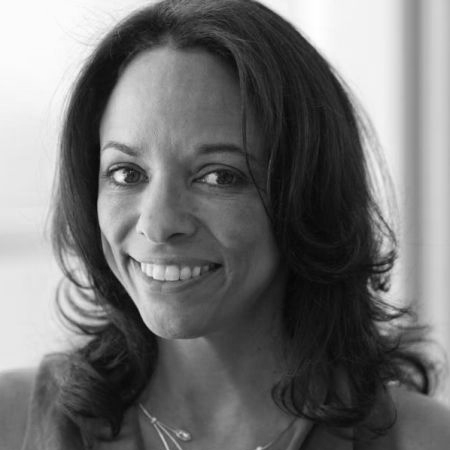 Ellen McGirt is an author, podcaster, speaker, community builder, and award-winning business journalist. She is the editor-in-chief of Design Observer, a media company that has maintained the same clear vision for more than two decades: to expand the definition of design in service of a better world. Ellen established the inclusive leadership beat at Fortune in 2016 with raceAhead, an award-winning newsletter on race, culture, and business. The Fortune, Time, Money, and Fast Company alumna has published over twenty magazine cover stories throughout her twenty-year career, exploring the people and ideas changing business for good. Ask her about fly fishing if you get the chance.
Related Posts

Business
Audio
S13E2 DB|BD at Aspen: Judy Samuelson is Still Thinking About the Purpose of a Corporation

Design of Business | Business of Design
Lee Moreau|Audio
The Past, Present and Future of Design with Lee Moreau, DB|BD Season 12 Finale

Design As
Lee Moreau|Audio
Patrick Whitney on Designing for What’s Next | Design As Season Finale

Design As
Lee Moreau|Audio
Design As Creation | Design As Consumption
Subscribe to The Observatory
Related Posts
Business
Audio
S13E2 DB|BD at Aspen: Judy Samuelson is Still Thinking About the Purpose of a Corporation
Design of Business | Business of Design
Lee Moreau|Audio
The Past, Present and Future of Design with Lee Moreau, DB|BD Season 12 Finale
Design As
Lee Moreau|Audio
Patrick Whitney on Designing for What’s Next | Design As Season Finale
Design As
Lee Moreau|Audio