


Madison Jamar|Analysis, Cinema, The Design of Horror | The Horror of Design
October 14, 2025
Dread for dinner: class anxiety is best served at the formal dining table
Even the strictest adherence to social norms can’t save the fractured families in ‘Hereditary,’ ‘The Invitation,’ and ‘Who’s Afraid of Virginia Woolf?’ from the perils that abound around the table.
When I was a child, my mother often mused about sending my older sister and me to finishing school, hoping to instill in us the etiquette of higher classes. We never ended up enrolling, but the notion that there were unfamiliar societal rules stuck with me, especially around mealtimes. My family usually ate in front of the TV because it was the best, and sometimes only, sitting place, so as a guest in friends’ homes, I encountered the dinner table with trepidation. I’d look nervously onward as my peers set it just so, and then dutifully briefed their parents about their days. I’d rarely contribute to the conversation for fear of committing an innominate faux pas.
Out of the mouths of babes, as they say: In A Date with Your Family, a 1950s instructional film on proper dining etiquette within the nuclear family unit, “mother and daughter switch into nice attire for the meal, because, the narrator tells us, ‘the women of this family seem to feel that they owe it to the men of the family to look relaxed, rested and attractive,’” NPR reports. “To avoid any distress, one must stick to his or her assigned role, which of course requires a lot of suppression. As the narrator states, ‘the table is no place for discontent.’”
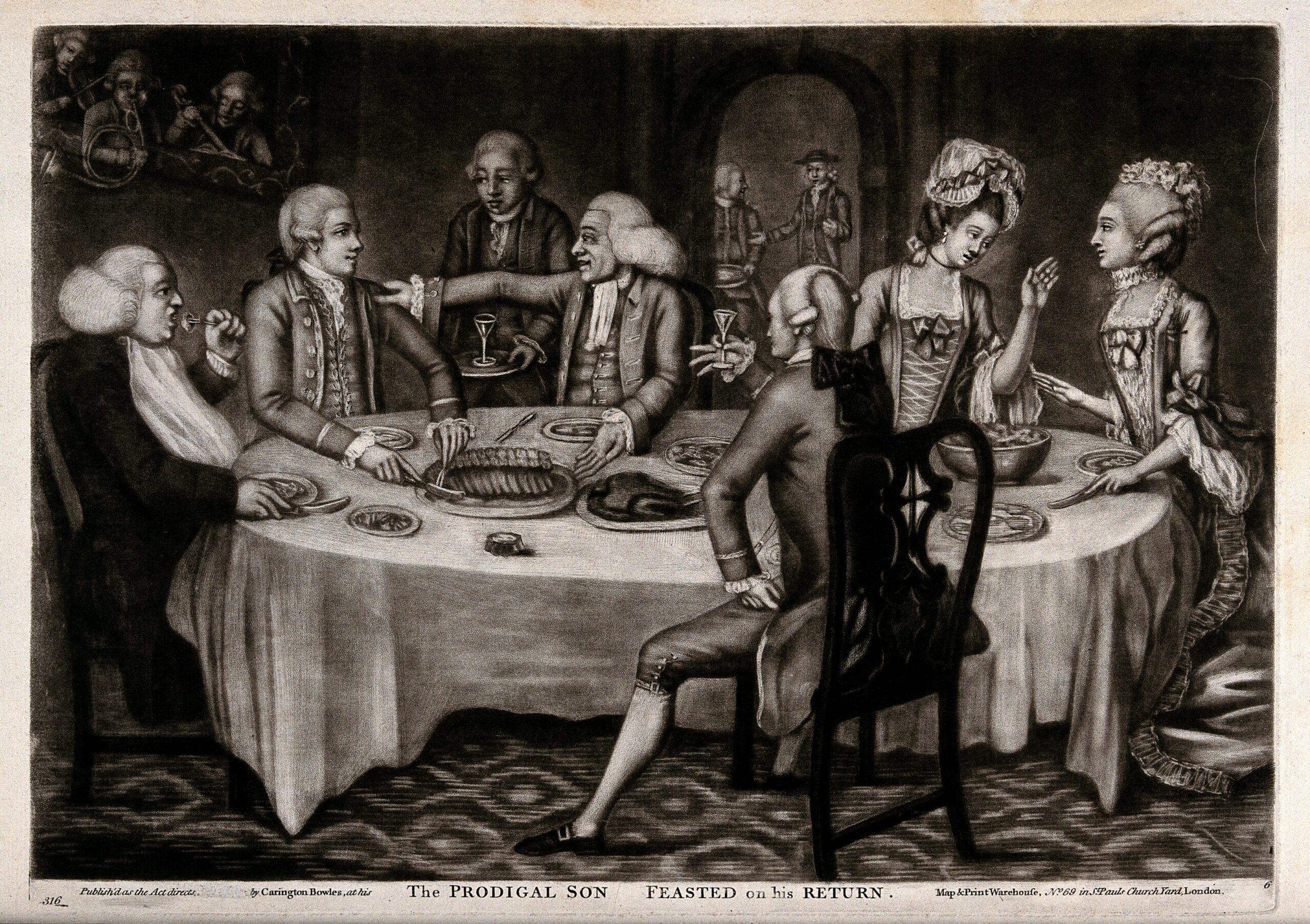
The development of the dinner table and its associated rites is a winding history of class and commerce. The dining room came into fashion in the US when Thomas Jefferson installed one in Monticello in 1772, and it remained a status symbol for the wealthy and upwardly mobile until the 1990s, when open floorplans became popular and shifted focus to the multi-purpose “great room.”
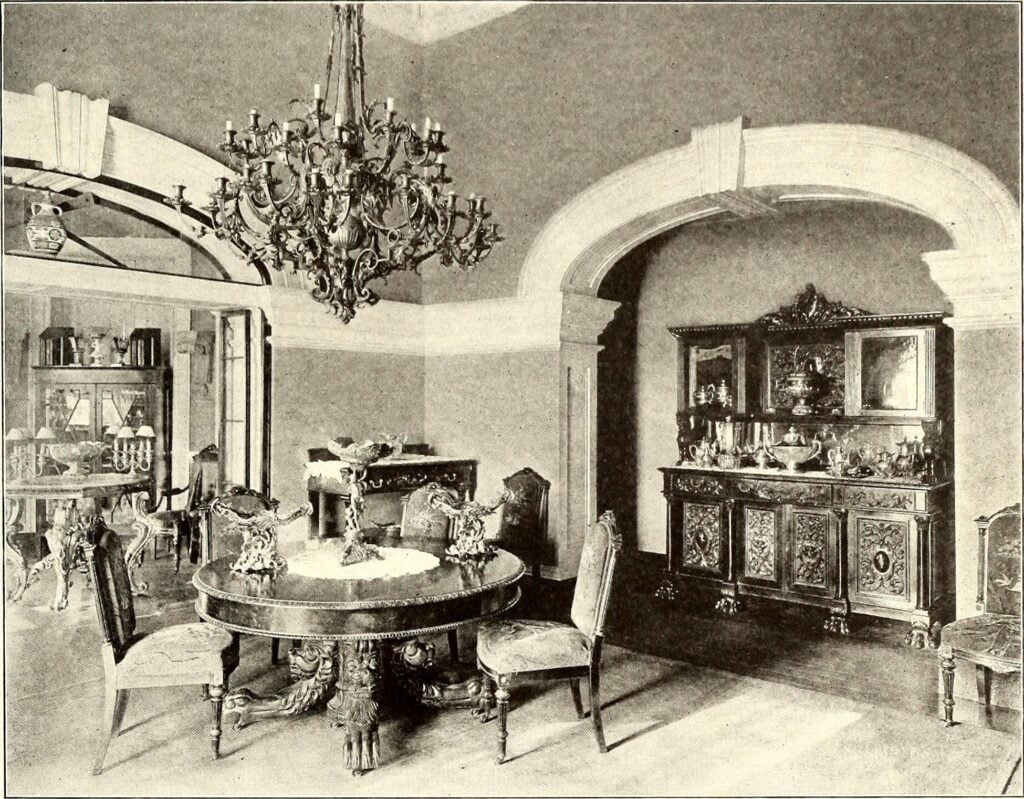
Today, we’ve mostly shorn the strictures of formal dining. According to a January YouGov survey, only 18% of Americans spend more than half an hour eating dinner, and most (63%) watch TV during the meal. Barely half even sit down at a table. At the same time, as loneliness levels rise, and younger generations respond with forays into dinner parties, designers have clocked a resurgent interest this year in dedicated dining rooms. But even these are a far cry from the rigid formats of yore, favoring flexibility and warmth where convention and ceremony once reigned.
Against this backdrop, the formal dinner table becomes an ideal site within horror for exploring the space between the image that a familial unit presents and its much more complicated underpinnings.
Ari Aster’s Hereditary, for example, is a family drama layered with the elements of a ghost story. We meet Annie (Toni Collette) on the day of her mother’s funeral. As she parses through her unsettling familial history — Annie had a troubled relationship with her mother — her grief is compounded by the shocking and tragic death of her youngest child, Charlie, whose body she discovers.
Annie, a successful artist who labors over models of her home and family but distances herself from the real-life inspiration, already seems to struggle with the pressures of domesticity and motherhood. Animosity between herself, her husband, Steve, and their son, Peter (who was tasked with watching his sister at the time of her death), are heightened as their collective loss estranges Annie further.
Attempting to maintain the household’s normalcy, Steve cooks a family meal. The three convene around the dinner table in a warm light that is offset by the darkness of the surrounding background and the stiffness of their interactions. Peter and Steve’s strained, polite exchanges are soon dwarfed by an outburst from Annie. Beset by grief, rage, and her motherly devotion to both her children, she towers over the table as she delivers the now famed speech, “I am your mother,” imbuing the words with the force of a traditional jumpscare.
“Nobody admits anything they’ve done,” Annie yells. No longer able to preserve the facade of routine, she thrusts off the last vestiges of the good wife and mother. Later, when Annie gathers her family around the table for a seance to bring Charlie back, it will seal their undoing.
That the conventional nuclear family could be shown in obscene negativity was a revelation in 1966. Adapted from the play of the same name, Who’s Afraid of Virginia Woolf? shocked audiences upon its release. Its trailer features a bloodcurdling scream from supporting actress Sandy Dennis, highlighting the horror-like aspects of the drama.
Nick (George Segal), a recently appointed young professor at an unnamed college, joins his wife, Honey (Dennis), for drinks at the home of the idyllic couple, Martha and George (Elizabeth Taylor and Richard Burton). But the young couple is wedged between the explosive Martha and George, who not only argue in front of their guests, but rope them into their dysfunction. Seeing marital misery openly exposed, even within a fictional couple, was disconcerting for many viewers in the 60s.
Captivity is a common feature in horror and excels in the dinner party from hell. One of the best feats of the subgenre is Karyn Kusama’s 2015 film, The Invitation. Like Hereditary, the movie is set in the aftermath of parental grief.
Accompanied by his girlfriend Kira, Will attends a dinner party hosted by his ex-wife Eden and her partner David. Will has not seen Eden in two years, since the death of their son, nor has any of their mutual friends.
Wearing eerily cheery dispositions, Eden and David are unnerving in their hospitality. As the hosts and their guests settle into the evening, questions begin to arise. Did Eden’s grief drive her into the arms of a cult? Are the doors locked due to concerns for safety, as David explains, or something more sinister, as Will suspects?
Will is consistently reprimanded for expressing his concerns, which are “freaking people out,” as one friend puts it. Perhaps his paranoia can be attributed to the difficulty of being in the home he once shared with Eden, raising a son who is no longer alive.
Eventually, it becomes clear that Eden and David are up to much more than merely communing with old friends, as Will has suspected. But even as their behavior becomes increasingly peculiar, and the specter of grief looms ever larger, it’s the group’s prioritization of social comfort and niceties — hallmarks of traditional dinner table etiquette — that makes room for more tragedy.
“Something dangerous is going on here and nobody is talking about it,” Will accuses the group in a flagrant rejection of the evening’s social contract moments before it’s revealed that Eden and David have poisoned everyone’s drinks. “We’re all just ignoring it because David brought out some good wine.”
Observed
View all
Observed
Share on Social


By Madison Jamar
 Madison Jamar is a New York-based culture writer. Her essays have appeared in Angel Food, Polyester, Black Lipstick, The Common, and more. You can find more of her work on her website, late2theparty.net.
Related Posts

AI Observer
Dave Snyder|Analysis
The identity industrialists
AI Observer
David Z. Morris|Analysis
“Suddenly everyone’s life got a lot more similar”: AI isn’t just imitating creativity, it’s homogenizing thinking

AI Observer
Stephen Mackintosh|Analysis
Synthetic ‘Vtubers’ rock Twitch: three gaming creators on what it means to livestream in the age of genAI

AI Observer
Raphael Tsavkko Garcia|Analysis
AI actress Tilly Norwood ignites Hollywood debate on automation vs. authenticity
Subscribe to The Observatory
Related Posts
AI Observer
Dave Snyder|Analysis
The identity industrialists
AI Observer
David Z. Morris|Analysis
“Suddenly everyone’s life got a lot more similar”: AI isn’t just imitating creativity, it’s homogenizing thinking
AI Observer
Stephen Mackintosh|Analysis
Synthetic ‘Vtubers’ rock Twitch: three gaming creators on what it means to livestream in the age of genAI
AI Observer
Raphael Tsavkko Garcia|Analysis