


June 22, 2026
“If anybody knew trans people, of course they’d love them”
Nine larger-than-life portraits for Pride Month and a reflection on LGBTQ+ history
I was barely nineteen years old when I got my first true glimpse of gay culture.
Telling no one, I had taken a train from college in Providence, RI, to NYC — of course, there was a boy to meet — and we found ourselves walking up and down Christopher Street looking for a gift for his Uncle Andrew. Christopher Street in the early 1980s was really an extraordinary experience, even for a newcomer to adult life. At the time, it reflected a growing civil rights movement (pre-LGBTQ+ acronym) and a full spectacle of still emerging pride. I didn’t understand then that this was the legacy of Stonewall in full flower.
And nobody knew that horror was on its way.
A new disease, first called GRID, or Gay-Related Immune Deficiency, was about to make the news; later, as AIDS, or Acquired Immune Deficiency Syndrome, it would quickly become an epidemic. At first, it was called the “gay plague;” that framing, and the disease that followed, were about to throw the community into an existential crisis.
But it was just another sunny day when we stumbled into The Erotic Baker, an adult-themed novelty bakery, looking for a birthday cake. Their signature items were cakes decorated as genitalia, resplendent in frosting and fondant. (E-mail me if you want to know what they were called.) The cakes were showstoppers, naturally, but it was the guys in the shop who really got my attention — after they stopped laughing at the look on my face. They were educated and wickedly funny, young and talented, with a sense of belonging in the world.
I returned to NYC two years later as a gallerist and exhibit designer. By then, AIDS had become a deadly troll, wandering the streets like an invisible Grim Reaper, randomly tapping the shoulder of some of the most creative and vibrant people in the arts.
I worried after those guys in the bakery. I hope they made it.
Worse than the virus, perhaps, was the cultural violence — political scapegoating, religious shunning, medical abandonment, and widespread harassment — that was unleashed on the LGBTQ+ community, gay men in particular. It remains a dark time in history.
Elements of that violence have returned in full force, this time focused in large part on transgender people, particularly youth. According to the ACLU, there are currently some 530 anti-LGBTQ+ bills working their way through legislatures across the country, looking to limit access to gender-affirming health care, regulate bathroom and locker room access, and ban name and pronoun autonomy.
The discourse in the public square is particularly ugly.
With all this in mind, artist Nina Katz created a series of paintings, first shown in early 2020, titled Larger Than Life: Portraits of Transgender People. Katz, whose trans daughter was then a teen, hoped the deeply observed portraits would help quell the dangerous anti-trans rhetoric that was just taking hold. “If anybody knew trans people, of course, they’d love them,” she tells Design Observer.
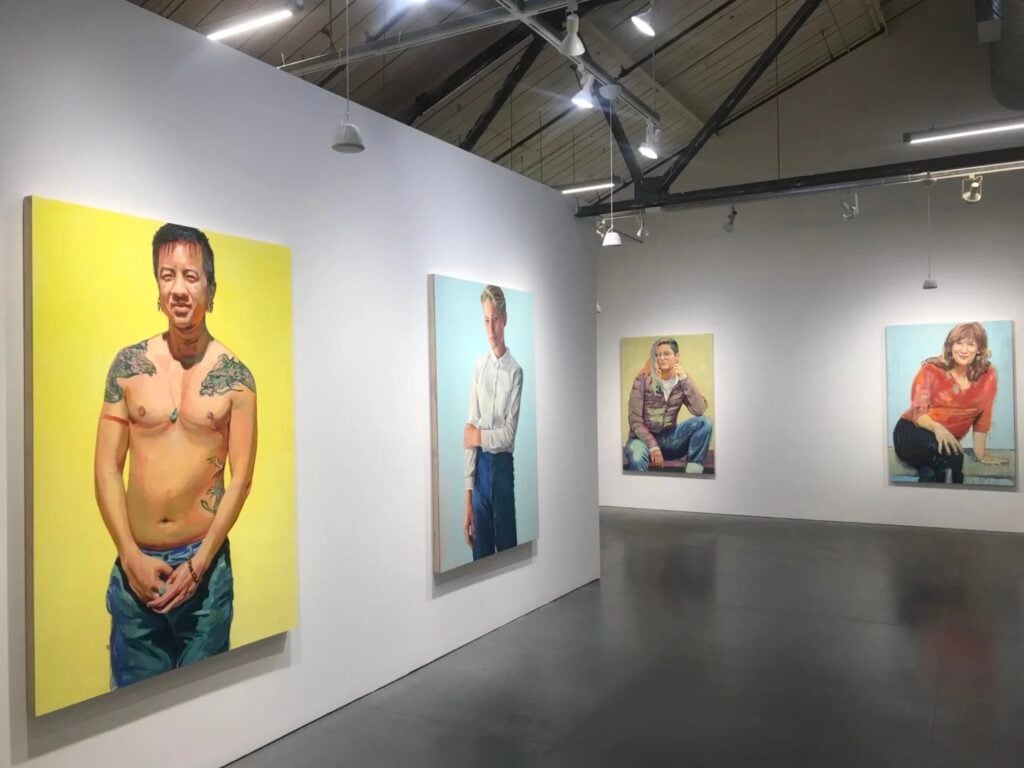
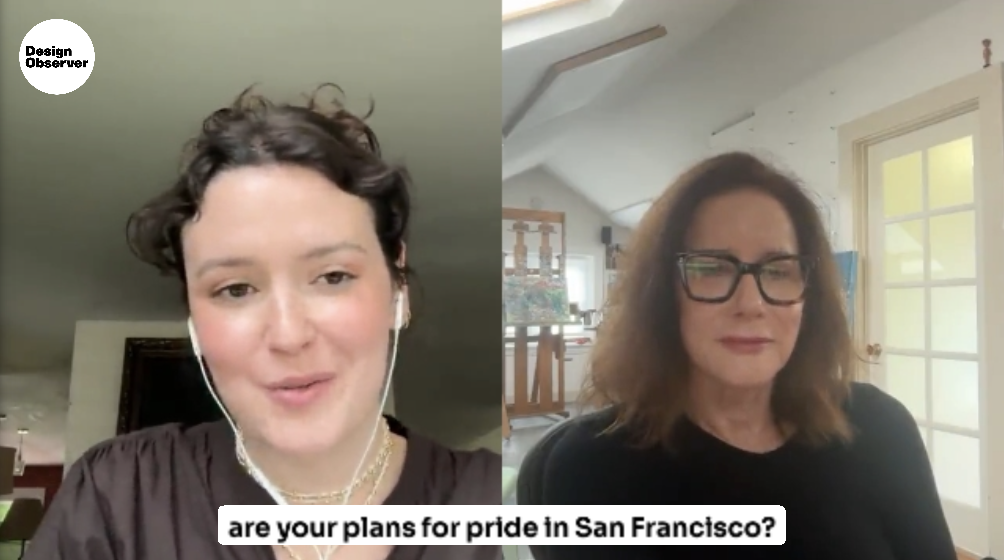
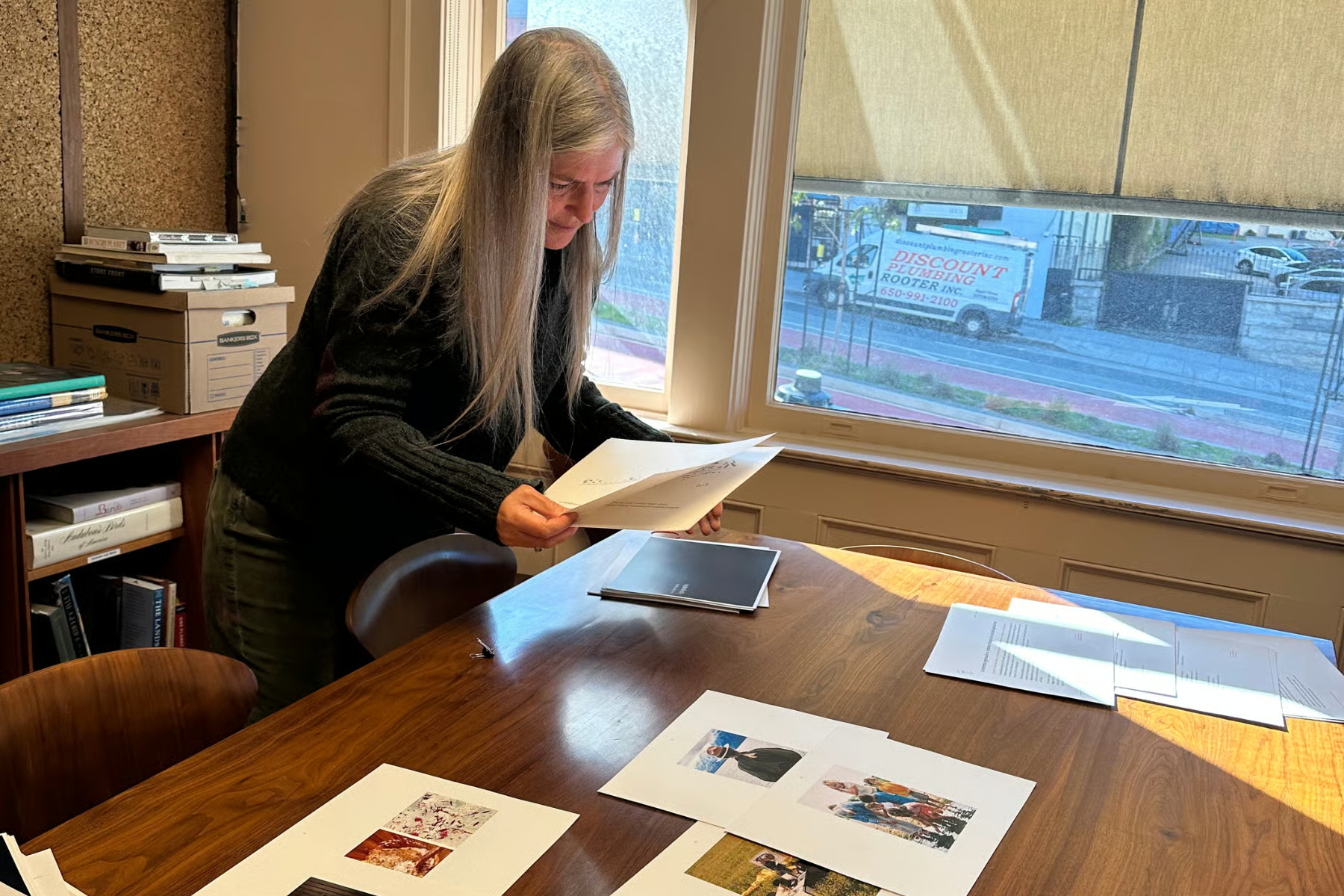
Deputy editor Rachel Paese visited Katz in her Berkeley studio to learn more about how she brings life to her portraits, and how, with the right presentation, she’s been successful in opening hearts. “I had no illusions that I was going to change people who were staunchly biased,” she says. “But when we had the opening, we also had a panel, and three of the people that I painted were there to answer questions.” That made a difference, she says. “If anything, what art does is raise questions for people to probe further.”
Uncle Andrew survived the AIDS epidemic, but many of his friends did not. Katz is worried about what’s still to come for trans people. “I want them to live their lives as they want to live it, and not in hiding, and not in fear, and not feeling as if there’s something wrong with them.”
If you’re in the area, you can see all nine portraits at the 2026 SF Pride Annual VIP Party, held at the Asian Art Museum in San Francisco on Sunday, June 28th.
Click here to see the portraits and learn why Katz believes that deep observation is the foundation of all good work. “There is that saying: pay attention to what you pay attention to,” she says. “Sometimes, if you stare at something long enough, you’ll find something there that interests you or raises some questions for you.”
Ellen McGirt
Editor-in-Chief
LinkedIn
Instagram
Threads
Ellen@designobserver.com
P.S. Did someone who loves you send you this newsletter? Welcome! Subscribe here.
This edition of The Observatory was edited by Rachel Paese.
This is the web version of The Observatory, our (now weekly) dispatch from the editors and contributors at Design Observer. Want it in your inbox? Sign up here. While you’re at it, come say hi on YouTube, Reddit, or Bluesky — and don’t miss the latest gigs on our Job Board.
Draw the Line
The Supreme Court case Louisiana v. Callais gutted the Voting Rights Act and rewrote the rules of American democracy. Draw the Line spends ten episodes telling the inside story of Louisiana’s fight over power, maps, and who gets left off them. As goes Louisiana, so goes the rest of the country. Who’s fighting for your vote?
Youtube
Find exclusive interview clips with Design Juice guests — including Nina Katz — on our Youtube channel.
Design Juice is an as-told-to conversation series series that captures how designers think, work, and envision the future. Design Observer is catching up with design practitioners from across disciplines and at any career stage who offer distinctive perspectives on their craft and its impact. Don’t miss the insights.
Observed
What are you observing? Tell us.
O! The glory of a world sporting event to which the entire world is actually invited. Let’s dance! Cabo Verde started on the plane. (Their first-ever World Cup.) Egypt has joined the joyful fray, via @okayafrica. Look! A dance off between Scottish and Haitian fans! Somebody won that match, but who cares? (Scotland.) Dubstep like nobody’s watching. This is really nice.
Dubstep explained, but without the fun, like a terms-of-service agreement.
When it comes to design in sport, the emphasis is typically on the kit, logo, protective gear, and the like. But luggage? But the DR Congo’s Les Léopards arrived in Houston for the 2026 FIFA Men’s World Cup in true sartorial style. It is the team’s first World Cup appearance in 52 years, reports @bellanaija. Click through and enjoy. (1/2)
Meet Franco-Congolese designer, Alvin Junior Mak (@alvin_jmak), founder and creative director of JMAKxPARIS. Mak, who was born in the DRC and raised in Paris, says in a wonderful explainer video that the pre-match look draws on La Sape, a vibrant Congolese fashion subculture related to dandyism, with early roots in colonial oppression, that evolved into a form of social resistance and cultural identity in the 1970s. “It shows that it’s possible to rise through ambition, even if you come from a poor, humble, or wealthy background.”
La Sape is an acronym for Société des Ambianceurs et des Personnes Élégantes (Society of Ambiance-Makers and Elegant People). We are going to need a moment to recover from this information. (Let Papa Wembe help.)
John M. Villa is an art historian working in fashion and tech, and his breathless fit checks on the stylings of World Cup players are well worth a follow. Picture he says, the Philadelphia Airport. “The Ivory Coast arrived for the Men’s World Cup in these exceptional outfits…imagine minding your own business and seeing this much swag!” Designed by Ibrahim Fernandez; come for the collarless jackets and tulip collar, but stay for the embellished elephants. Via @johnmvilla2
Stella Jean is also back with a line to celebrate Haiti’s return to the Men’s World Cup. Her collection, L’Haitiana, imagines sport through a high-fashion lens, featuring hand-stitched jerseys matched with Caribbean-themed fabrics. Our man @johnmvilla2cannot contain himself. “I love how she translates the nation’s culture into high fashion visual sportswear,” he says.“With L’Haitiana, football becomes more than a sport, it becomes a symbol of pride, visibility, and unapologetic expression,” says Mecca Pryor in Essence.
Job board
Hiring a designer? Post your role on the Design Observer Job Board to reach a highly engaged audience of designers, creative leaders, and studios across the Design Employment Network.
Senior Product Designer, Eyewear at Bonnie Clyde, Los Angeles, CA.
Industrial Design Director at Haworth Inc, Holland, MI.
Graphic Designer at Thuma, San Francisco, CA.
End marks
Esra’a Al Shafei is the creator of Ahwaa. “Launched in 2011, Ahwaa is a unique discussion platform serving the Arab LGBTQ community. It combines anonymity, gamification, and community-powered trust systems to create one of the safest online spaces in the region. Users join with a pseudonym and avatar, unlocking new features as their contributions are recognized as positive and supportive by peers. This model not only fosters meaningful connection but also shields the community from outside threats,” says Ahwaa’s website.
In 2011, Maria Popova interviewed Al Shafei for Design Observer, asking about privacy, community, LGBTQ+ rights, and more.
This is the web version of The Observatory, our (now weekly) dispatch from the editors and contributors at Design Observer. Want it in your inbox? Sign up here. While you’re at it, come say hi on YouTube, Reddit, or Bluesky — and don’t miss the latest gigs on our Job Board.
Observed
View all
Observed
Share on Social


By Ellen McGirt
 Ellen McGirt is an author, podcaster, speaker, community builder, and award-winning business journalist. She is the editor-in-chief of Design Observer, a media company that has maintained the same clear vision for more than two decades: to expand the definition of design in service of a better world. Ellen established the inclusive leadership beat at Fortune in 2016 with raceAhead, an award-winning newsletter on race, culture, and business. The Fortune, Time, Money, and Fast Company alumna has published over twenty magazine cover stories throughout her twenty-year career, exploring the people and ideas changing business for good. Ask her about fly fishing if you get the chance.
Related Posts
The Observatory Newsletter
Ellen McGirt
Who gets to decide where power begins and ends?
The Observatory Newsletter
Rachel Paese
You need an observation practice
Draw the Line
Audio
BONUS: Live from Essence Fest – The Work Gets Personal
Draw the Line
Audio
BONUS: Live from Essence Fest – The Accounting
Subscribe to The Observatory
Related Posts
The Observatory Newsletter
Ellen McGirt
Who gets to decide where power begins and ends?
The Observatory Newsletter
Rachel Paese
You need an observation practice
Draw the Line
Audio
BONUS: Live from Essence Fest – The Work Gets Personal
Draw the Line
Audio