


September 23, 2026
If Emmett Till Lived
A new exhibition at the Museum of Contemporary Photography in Chicago
The image is arresting: a small Black boy, tossed aloft by his father on a perfect Chicago summer beach day. The photo is black and white; the warmth of the other sun wraps them both. The boy is frozen in time, serenely suspended in midair, and the man’s strong hands wait to catch him.
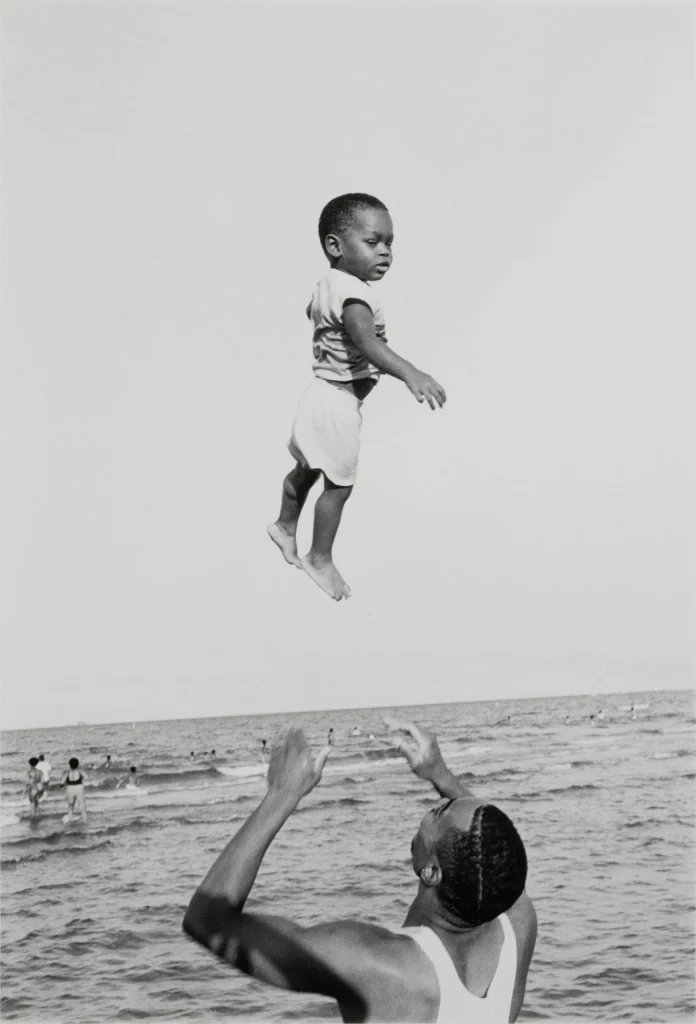
It’s not a picture of Emmett Till, but it could have been. If only he’d made it home.
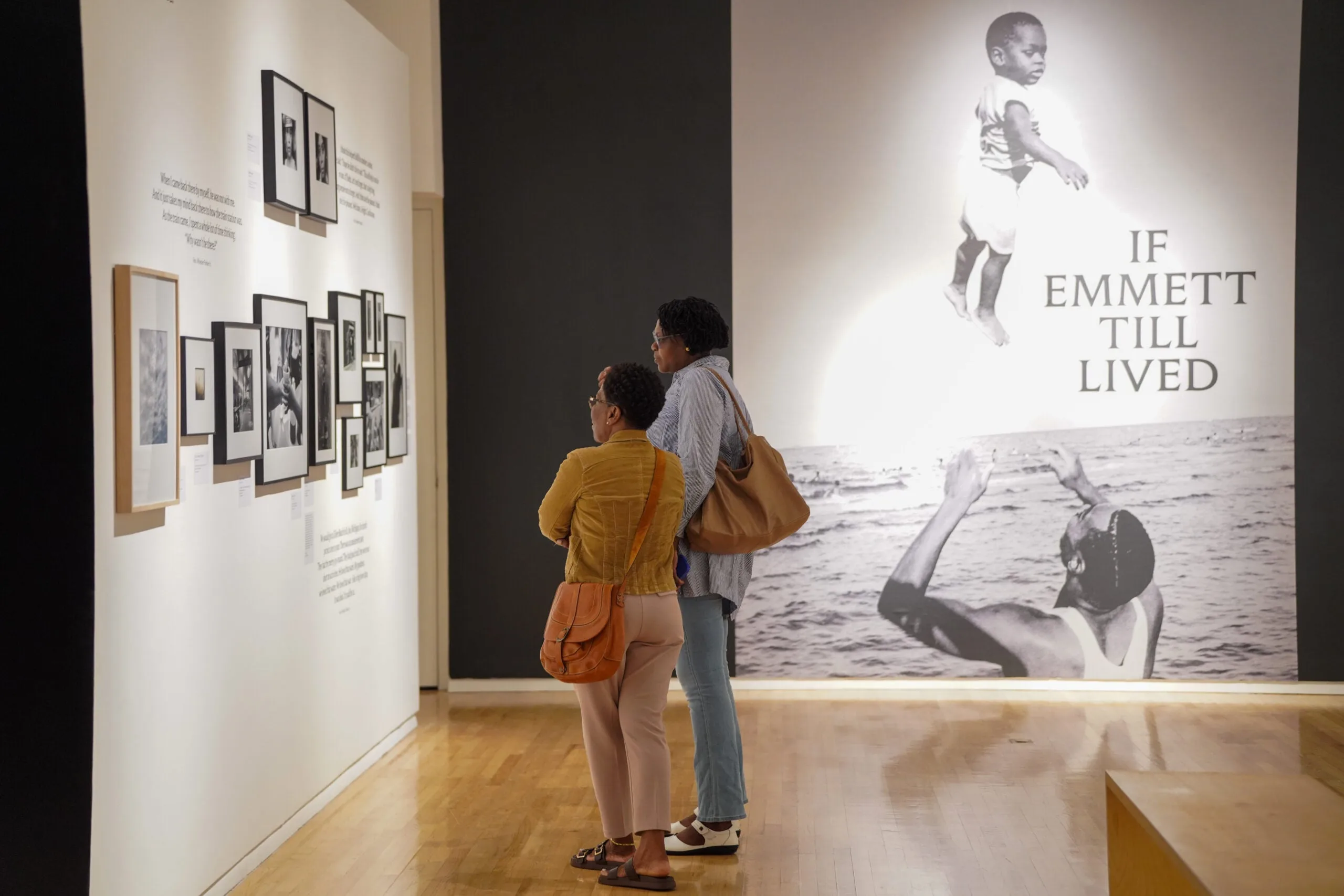
This is the opening image of If Emmett Till Lived: Freedom on American Ground, an exceptional new exhibit on display at the Museum of Contemporary Photography at Columbia College Chicago through December 19. (The image is by Stephen Marc, Untitled, from Changing Chicago, 1988. Gift of Jack A. Jaffe, Focus/Infinity Fund.) Drawing entirely from the museum’s own collection, the exhibit and its companion book explore the life denied to Till, the Black Chicago 14-year-old who was abducted, tortured, and lynched by white supremacists while visiting relatives in Mississippi in 1955.
What would he have loved? Would he have had children? How would he have made his way in the world?
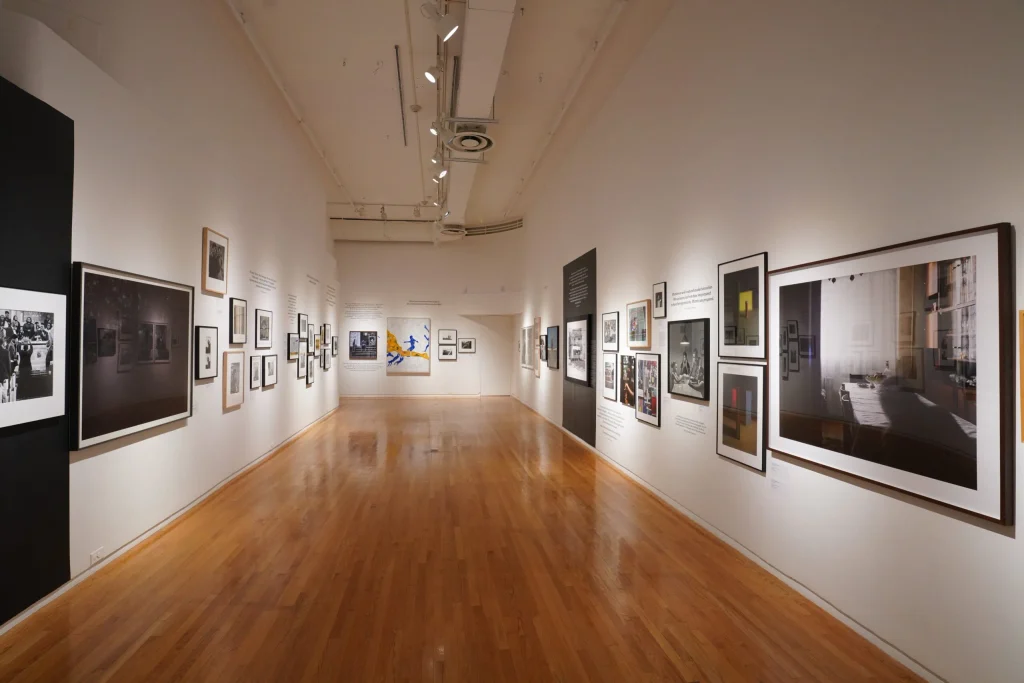
“There’s not one photograph of Emmett Till or Mamie Till-Mobley in the exhibition. There is not one image of the violence he endured or the people who caused it,” guest curator Sarah Elizabeth Lewis, a Harvard professor and award-winning author, told the audience at the public symposium introducing the exhibit. Instead, she said, there are images by more than 110 artists from the museum’s collection, “that evoke the experiences we hope he might have had.”
Lewis is the founder of Vision & Justice, an initiative focused on how visual culture shapes our understanding of race, citizenship, and American democracy. She co-curated the exhibit with Rev. Wheeler Parker Jr., Till’s cousin and the last living witness to his abduction. In a poignant conversation with Sherrilyn Ifill, the civil rights lawyer and former president of the NAACP Legal Defense Fund, who contributed an essay to the book, Parker described decades of numbness and survivor’s guilt. “I went to the funeral, I had no sorrow, no sadness. I said, that’s not him, I’ll see him again,” he said. He and Till’s mother, with whom he’d struggled to reconnect, he said, ultimately came to the same conclusion: “We can’t afford the luxury of hate.”
Ifill called the exhibit an “invitation to unsee”: to set aside the brutal image of Till’s body that she remembers from the Jet magazine in her childhood home, and to imagine his life instead.
The exhibit, which Lewis calls a “creative monument,” opens at a time when collective memory is under attack.
Following the 2025 executive order “Restoring Truth and Sanity to American History,” the Trump administration has been removing signs and exhibits at public parks, monuments, and museums on topics like African American history, chattel slavery, and climate change. “We are experiencing unprecedented impacts to historic preservation,” said Brent Leggs, president and CEO of the National Trust for Historic Preservation.
Lonnie Bunch, the Smithsonian’s secretary and the first African American to hold the role, had planned to speak at the convening. He canceled after announcing his retirement two days earlier; Lewis told the audience the news had sparked counterattacks that kept him in Washington.
And yet the day felt like a balm. The capacity crowd, and the willingness to have a difficult conversation about history and the future, seemed like a harbinger of a better democracy to come.
“Every American ought to be able to see themselves in the history that surrounds them,” Leggs said. The National Trust is part of a constellation of supporters helping to underwrite the restoration of Roberts Temple Church of God in Christ on Chicago’s South Side, where Till’s 1955 funeral was held. Dr. Marvel McCain-Parker, Reverend Parker’s wife, is directing the work on the ground.
The night before the exhibit opened, the church lit a replica of its historic neon sign for the first time. The Trust’s African American Cultural Heritage Action Fund launched in 2017 after Charlottesville, with Leggs as founding executive director. “The original idea was to raise $25 million,” Leggs said. “In the last nine years we have raised more than $200 million. Almost 500 preservation projects from Alaska to Puerto Rico.”
Mamie Till-Mobley turned her grief and horror into action when she insisted on an open casket and allowed photographs of her son’s mutilated face to be published. “Let the world see what they did to my boy,” she said.
Remembering is hard work, and democracy doesn’t work without it. Seventy-one years after she made the world look, this exhibit asks us to imagine what she was fighting for: a happy boy tossed safely aloft in the light, and strong hands waiting to catch him.
P.S. Did someone who loves you send you this newsletter? Welcome! Subscribe here.
This edition of The Observatory was edited by Rachel Paese.
This is the web version of The Observatory, our weekly dispatch from the editors and contributors at Design Observer. Want it in your inbox? Sign up here. While you’re at it, come say hi on YouTube, Instagram, LinkedIn, or TikTok — and don’t miss the latest gigs on our Job Board.
Podcasts
Design of Business | Business of Design
DB|BD is back!
This season we are thinking about radical collaboration. For the second year in a row, Design Observer is publishing some exclusive conversations from the Aspen Institute’s Business and Society Summit.
In July, DBBD host Ellen McGirt interviewed eight thoughtful, important, and provocative leaders who are thinking deeply about AI, sustainability, and the role of business in a chaotic world.
Episode one is out now! Catch a new episode every week.
Draw the Line
Episode one of Draw the Line out now.
The Supreme Court case Louisiana v. Callais gutted the Voting Rights Act and rewrote the rules of American democracy. Design Observer’s brand new audio documentary, Draw the Line, is telling the inside story of Louisiana’s fight over power, maps, and who gets left off them.
Every district line is a design decision — and every decision is about who gets power.

Observed
It’s UNGA week, and world leaders gathered at the UN in NYC are wholly preoccupied by the now towering human and financial costs of heat waves and climate change. “We’ve gone from seeing the fingerprints of climate change in individual events to seeing the handprint of climate change on the whole world,” said scientist Bill Hare, CEO of the organization Climate Analytics.
In a galaxy far, far away… the Lucas Museum of Narrative Art in Los Angeles opened with the most star-studded gala in the history of star-studded things. But the colossal new cultural landmark also needs defending, evidently, for its mix of “masterworks with pop culture ephemera.” Or, as WaPo puts it: Is it the end of the art museum as we know it? (No.)
Behold: the long-awaited graph sandwich. “The notion is so beautiful,” said Pu Gao, a mathematician at the University of Waterloo. “What attracts me most is actually the beauty of it.”
Aperture, the non-profit publisher dedicated to photography, has a spacious new home on NYC’s Upper West Side, with a street-facing bookstore, gallery, and meeting spaces. “It’s a really different relationship with our audience than before,” says executive director Sarah Meister.
Flock’s going down, y’all. Amid a customer and public backlash against license plate readers specifically and surveillance tech generally, Flock has hastily opened a voluntary employee separation program, offering a “generous” severance package to employees who want to leave. According to sources speaking to Wired, many of the 1,500 employees may leave the nest.
Designer Steve O Smith upended the traditional fashion show at London Design Week by delivering a lecture on his collection to editors and journalists gathered at the Royal Academy of Arts. His message: fashion is made by humans, and he named every seamstress and beading artist. “[E]ach look was carefully broken down not just in terms of narrative, but also granular technique,” reports Leah Dolan.
“The Charter of the New Urbanism treats disinvestment, placeless sprawl, separation by race and income, environmental deterioration, loss of agricultural lands and wilderness, and erosion of built heritage as one ‘interrelated community-building challenge.’” But how do you budget for the amenities that are critical infrastructure in disguise? asks Jarah V. Jacquay in the New Urbanism journal.
Read more at designobserver.com or in your Substack feed.
YouTube
Hear the voices and see the faces behind the latest and greatest on our site, including bonus content with Design Juice guests and behind-the-scenes conversations with the writers of our expert business commentary.
Job board
Hiring a designer? Post your role on the Design Observer Job Board to reach a highly engaged audience of designers, creative leaders, and studios across the Design Employment Network.
Sr. Industrial Designer at DIRTT Environmental Solutions, Calgary, AB.
Senior Level Exhibit Designer at Blair Inc, Springfield, VA.
Soft Goods / Wearables Designer – Patented Sleep Product (Cash + Future Equity) at Win The Sleep LLC, Cincinnati, OH.
End marks
Designing exhibitions that require audiences to lean into complex history is not an easy task. In July, when the Trump administration ordered “inaccurate information” signs to be placed outside of the Smithsonian museums, designer John Ball responded in an essay. He reflects on his experience designing an exhibition for the Smithsonian in 2012 about one of America’s most contentious subjects: immigration. What is a designer’s role in a polarizing time?
“When public debate becomes louder and more polarized, one of design’s most valuable roles is not to tell people what to think, but to give difficult material the space it needs and help people understand what they are looking at.”
This is the web version of The Observatory, our weekly dispatch from the editors and contributors at Design Observer. Want it in your inbox? Sign up here. While you’re at it, come say hi on YouTube, Instagram, LinkedIn, or TikTok — and don’t miss the latest gigs on our Job Board.
Observed
View all
Observed
Share on Social


By Ellen McGirt
 Ellen McGirt is an author, podcaster, speaker, community builder, and award-winning business journalist. She is the editor-in-chief of Design Observer, a media company that has maintained the same clear vision for more than two decades: to expand the definition of design in service of a better world. Ellen established the inclusive leadership beat at Fortune in 2016 with raceAhead, an award-winning newsletter on race, culture, and business. The Fortune, Time, Money, and Fast Company alumna has published over twenty magazine cover stories throughout her twenty-year career, exploring the people and ideas changing business for good. Ask her about fly fishing if you get the chance.
Related Posts
The Observatory Newsletter
Ellen McGirt
Who gets to decide where power begins and ends?
The Observatory Newsletter
Rachel Paese
You need an observation practice
Draw the Line
Audio
BONUS: Live from Essence Fest – The Work Gets Personal

Draw the Line
Audio
BONUS: Live from Essence Fest – The Accounting
Subscribe to The Observatory
Related Posts
The Observatory Newsletter
Ellen McGirt
Who gets to decide where power begins and ends?
The Observatory Newsletter
Rachel Paese
You need an observation practice
Draw the Line
Audio
BONUS: Live from Essence Fest – The Work Gets Personal
Draw the Line
Audio