


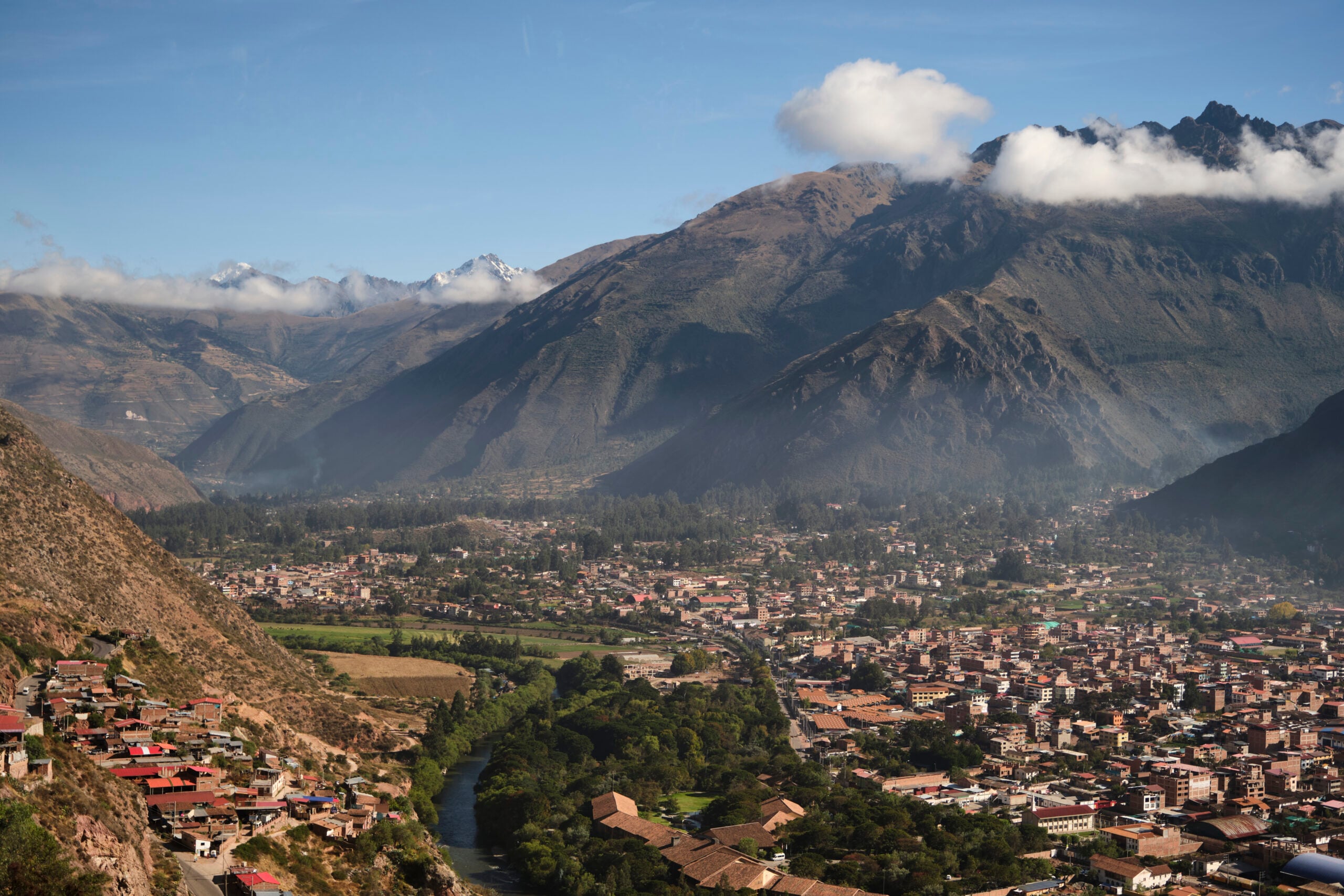
Wayne Suiter Matamoros|Peru's Sacred Valley
June 3, 2026
Looking to Latin America for the future of design innovation
What to learn from Latin American designers who are using reinterpreting the region’s past while shaping its present and future
Editor’s note:This is the third installment of a series on design lessons learned from Reclaiming Value, Murmur Ring’s four-day multi-disciplinary immersion in Peru’s Sacred Valley. Read more of the series here.
When Latin American design is discussed, it is often framed through references to traditional Indigenous art or to the architectural legacies of Barragán, Niemeyer, and Legorreta. While these references indeed reflect a strong track record of innovation and design, they freeze the region in the past and risk missing the innovations born in the region today.
As society faces increased complexity and disruption, it would be a missed opportunity not to look to Latin America for direction. The region’s culture of ingenuity has grown through a long history of colonization, political upheaval, and economic instability, producing adaptive and context-aware approaches to problem solving. The tendency to categorize or even romanticize the Global South as being behind the curve and simply imitating the North is a trope well past its expiration date. Simply spending a few days in almost any of the countries will quickly break the stereotype and access ideas that hold the potential to positively impact industries and communities across the globe.
Much of this innovation emerges from conditions of instability, often driven by external, colonial interests with little regard for local people or resources. In response, a deep ethic of resourcefulness has taken root, drawing from the past to meet present needs. Innovation in Latin America frequently seeks impact beyond financial growth alone. As one designer in Colombia explained, “When we design, we take into consideration the potential to grow a company, but in that growth is a generation of more opportunities for our communities.” This integrated view of progress helps position the region as a leader in shaping more resilient and equitable futures.
Innovations of the past, today
During the Reclaiming Value: Sacred Valley Design Immersion, I was struck by the Andean innovations we were experiencing from hundreds, if not thousands of years ago, in contemporary contexts.
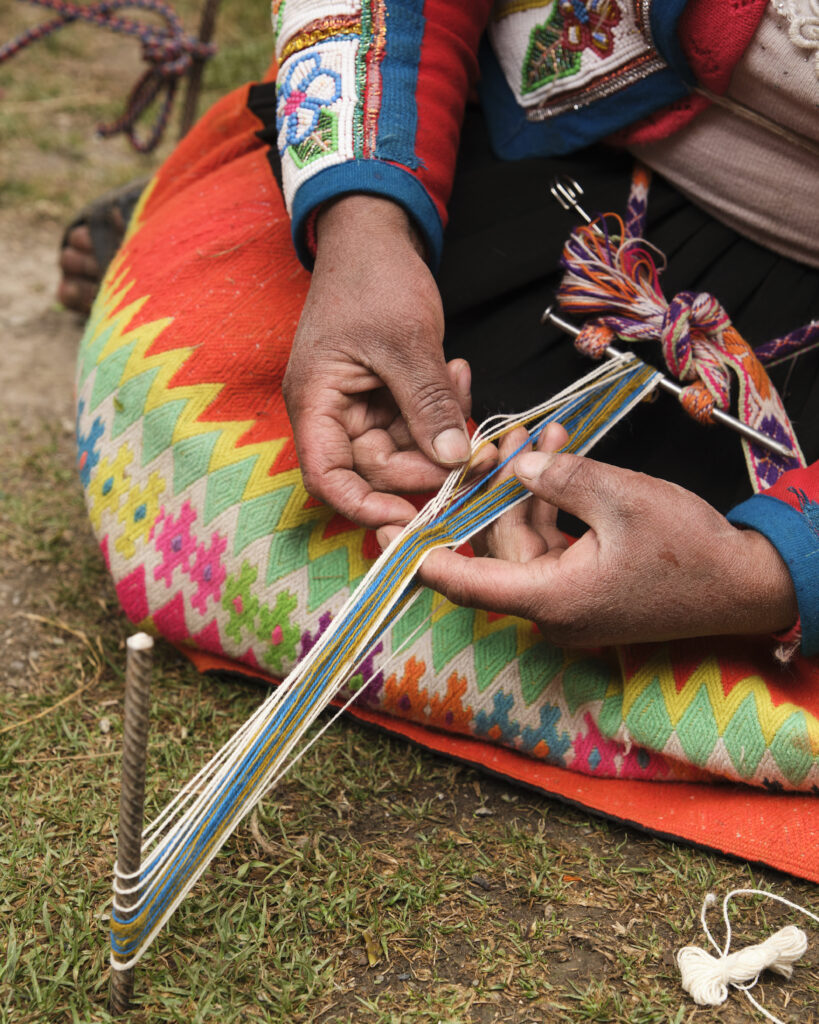
Our site partners at Awamaki have devised a circular model that connects cooperatives of Andean artisans to the digital marketplace, allowing them to simultaneously maintain ancient weaving traditions while accessing the global marketplace. These Andean artisans leverage digital connectivity from remote regions to manage their businesses in ways that even ten years ago would not have been possible.
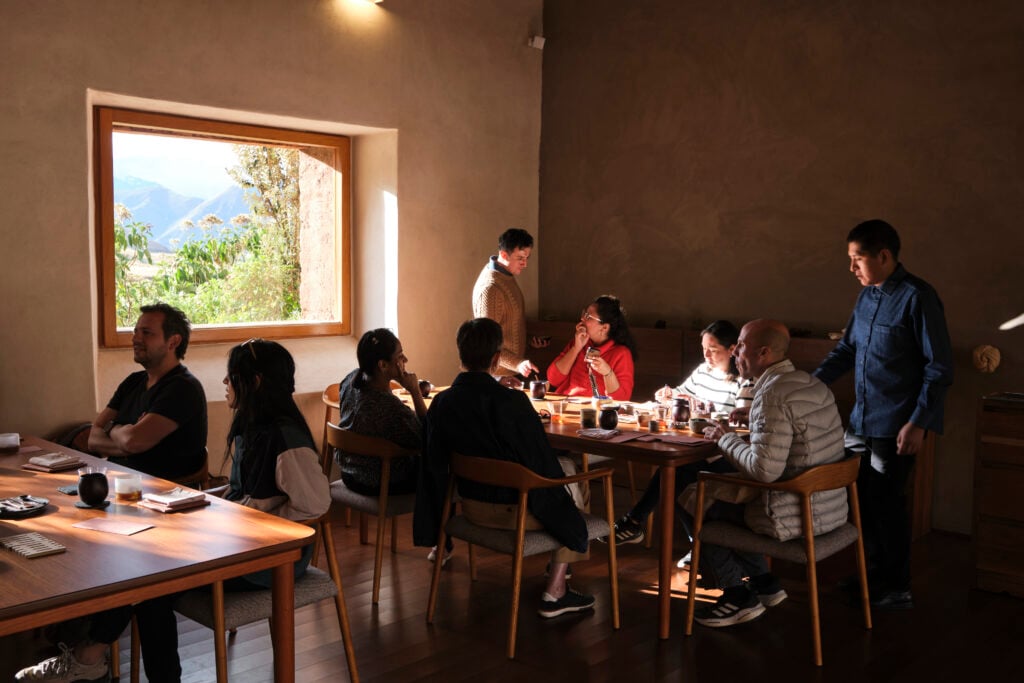
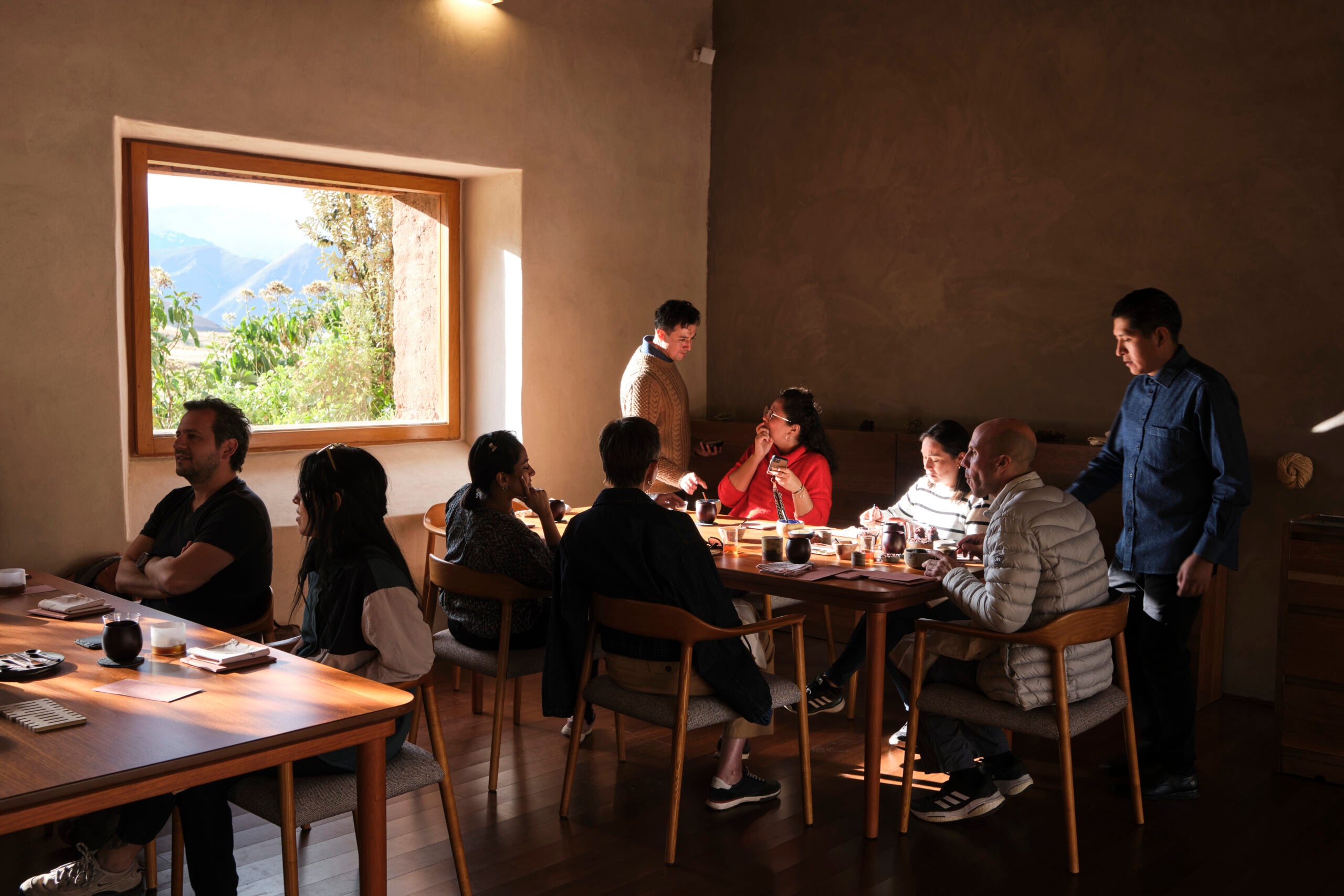
Award-winning restaurant MIL Centro has intentionally partnered with ecological researchers at Mater to incorporate ancient Inca food science into their cuisine, operations, and values. They exemplify that, instead of seeing the region as one anchored in the past, we should be looking to it to help us determine how we can innovate in more impactful ways to define a better future.
Both examples offer designers a key guiding principle when creating products, systems, and services: it is essential to involve local communities throughout the entire creative process. Furthermore, clear agreements regarding intellectual property must be established, ensuring that the economic benefits go to the original creators. This reciprocal approach to co-creation results in the best outcomes for all stakeholders: sustainable solutions and equitable economic outcomes.
Today’s innovations with potential for global impact
The innovations seen in Peru’s Sacred Valley during the immersion called to mind other leading innovations across LatAm.
1. Purpose-driven digitalization
In many parts of the Global North, digitalization’s primary purpose has been to maximize revenues or drive cost efficiencies. In contrast, Latin American design often utilizes digitalization as a tool to close access gaps in critical sectors such as banking, education, healthcare, and civic participation.
The region’s digitalization has not only enabled financial inclusion, but has also created accessible means of communication for diverse audiences. Initially a digital wallet from the Bancolombia Group, Nequi has evolved into a fully digital neobank, providing financial inclusion for Colombians who lack traditional banking services.
2. Diversifying digital accessibility
With over 550 million people from diverse backgrounds, Latin America is a global amalgamation of cultures, languages, music, and art. This diversity of lived experience, combined with gaps in education and connectivity, result in complex digital accessibility challenges. As a result, there is no one-size-fits-all approach to creating successful and impactful products and services.
In Brazil, Linklado made the first digital keyboard for Amazonian indigenous languages available, enabling and encouraging communication and transmission of knowledge in these languages. With the Indigenous population of Latin America consisting of approximately 50 million people, and belonging to 500 different ethnic groups, there is a critical need for such innovation across the entire region.
Increasing digital accessibility also requires creating solutions that work on devices with limited processing power, operate with limited mobile data, and are intuitive for first-time digital users. To meet this challenge, companies such as Bridgefy from Mexico have enabled mobile devices to communicate directly using Bluetooth and Wi-Fi without internet or cellular connection. While developed for regions with limited infrastructure, it is now being seen as a solution more broadly for emergency services in extreme situations.
3. Leveraging the past, looking to the future
Contemporary Latin American design seeks not only to preserve heritage but also to adapt and merge it with modern trends, creating products and experiences that resonate both locally and globally. Most importantly, designers are doing this in a way that doesn’t just celebrate the communities that create the work, but compensates them equitably. For example, Someone Somewhere out of Mexico works with 300+ artisans in 7 of Mexico’s most vulnerable states to apply traditional handcrafts on clothing and accessories to create quality, on-trend products, which are then distributed globally through partnerships with companies like Delta Airlines.
Latin America’s design voice
A new generation of Latin American designers, artists, and brands is reclaiming local identity, using design to reinterpret the region’s past while actively shaping its present and future.
Experiences like the Reclaiming Value: Sacred Valley Design Immersion show the value of coming together to reflect on the purpose of design. In diverse groups — especially those unfamiliar with Latin America’s distinctive perspective — these gatherings give this new generation a chance to assert the region’s relevance and broaden what success in design can mean.
Observed
View all
Observed
Share on Social


By Wayne Suiter Matamoros
Related Posts
Arts + Culture
Martín Zabaleta|Peru's Sacred Valley
Designing with the Andean principle of Ayni: “What will we choose to give back?”
Arts + Culture
Laura Sofia Cardozo|Peru's Sacred Valley
The value of multigenerational memory in design practice
Arts + Culture
Masha Safina|Peru's Sacred Valley
The layers of value creation
Arts + Culture
Ashley Lukasik|Peru's Sacred Valley
Foraging design futures in Peru
Recent Posts
S13 E8 DB|BD at Aspen: Eric Ries Would Like to Apologize S13 E7 DB|BD at Aspen: Proactivity is the Key to Survival With Edelman’s Dave Fleet AI, aspen business and society program, aspen institute, corporate culture, Delta, economic equity, government, harvard business school, hbs, innovation, leadership, Mastercard, Pfizer S13E5 DB|BD at Aspen: Innovation Requires Collaboration with Professor Linda Hill S13 E4 DB|BD at Aspen: Dean Erika James Says a Prepared Leader is a Disciplined OneSubscribe to The Observatory
Related Posts
Arts + Culture
Martín Zabaleta|Peru's Sacred Valley
Designing with the Andean principle of Ayni: “What will we choose to give back?”
Arts + Culture
Laura Sofia Cardozo|Peru's Sacred Valley
The value of multigenerational memory in design practice
Arts + Culture
Masha Safina|Peru's Sacred Valley
The layers of value creation
Arts + Culture
Ashley Lukasik|Peru's Sacred Valley