


Martín Zabaleta|Peru's Sacred Valley
May 13, 2026
Designing with the Andean principle of Ayni: “What will we choose to give back?”
How the Quechua word for reciprocity can guide a new design philosophy
Editor’s note: This is the fourth installment of an ongoing series on design lessons learned from Reclaiming Value, Murmur Ring’s four-day multi-disciplinary immersion in Peru’s Sacred Valley. Along with insights from individual participants, the series explores the question: what makes a meaningful convening? Read more here.
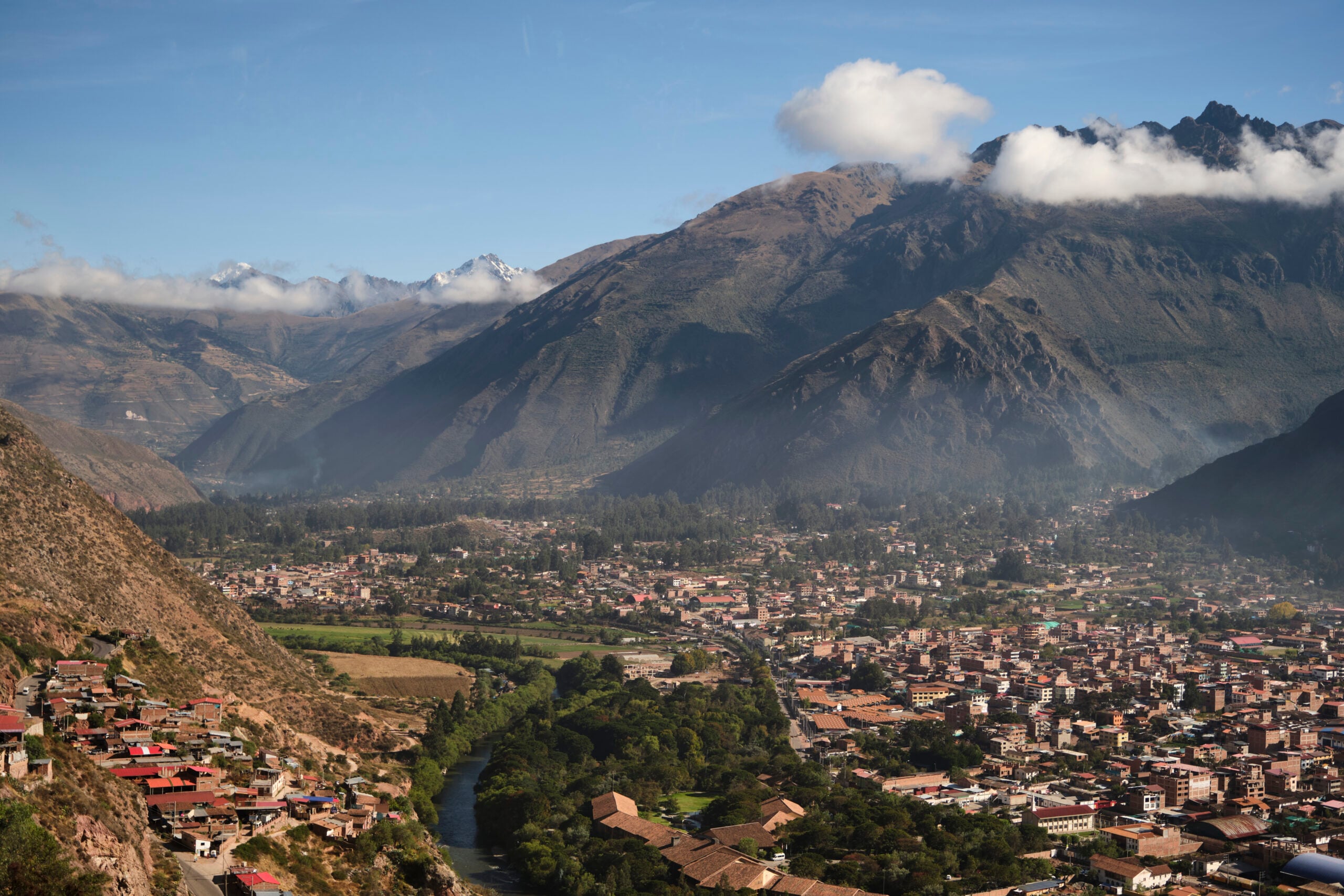
At 11,700 feet above sea level, surrounded by mountains and on the edge of an Inca ruin, I learned about an ancient Andean principle that prompted me to reflect on how designers can nurture relationships and systems to sustain what we create.
It was here, at MIL Centro alongside research initiative Mater during the Reclaiming Value: Sacred Valley Design Immersion, that I came to understand the meaning of Ayni.
What is Ayni?
Ayni is a Quechua word meaning “reciprocity”. This ancient principle of mutual care practiced by Indigenous Andean communities remains vital to contemporary social, economic, and spiritual life in the region.
Ayni involves giving and receiving in a balanced exchange that strengthens bonds and maintains harmony within community and with nature.
As one of Mater’s land stewards explained during our visit: “Hoy día por ti y mañana por mí,” or in English: “Today for you, tomorrow for me.” Reciprocity isn’t measured in money or contracts, but in cycles of support that sustain both people and land.
Observing Ayni in practice
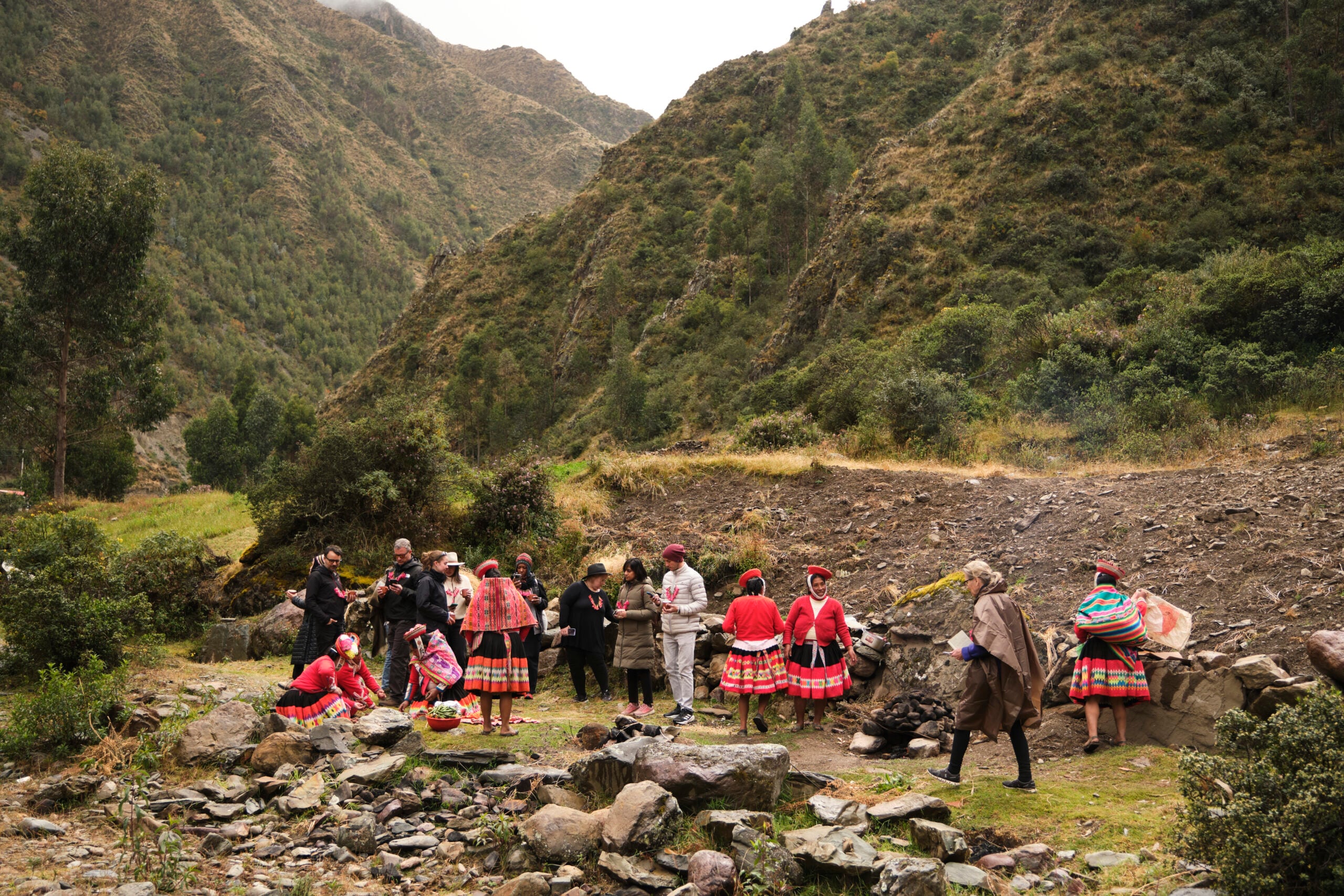
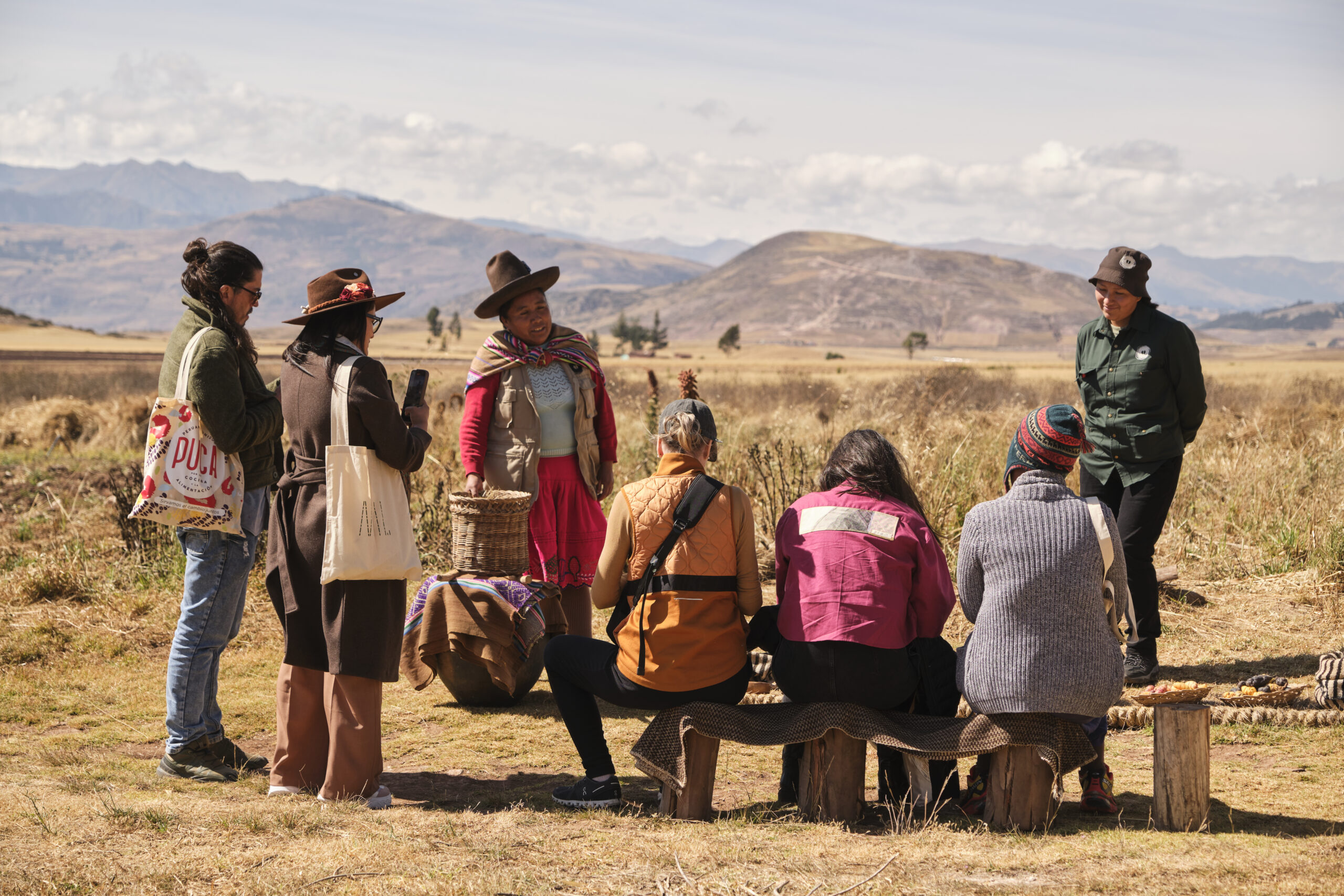
Guided by Tomasa of the Warmi collective from the nearby community of K’acllaraccay, we traversed the highlands learning how plants and flowers sustain life as food, medicine, and memory. There, we were invited to witness Ayni in practice. During harvest, Tomasa explained, shared labor is honored with chicha, a fermented corn drink. The chicha is offered first not to people, but to Pachamama (Mother Earth) and the Apus (mountain spirits) whose names are carried on the wind like those of family, in gratitude for all that is given.
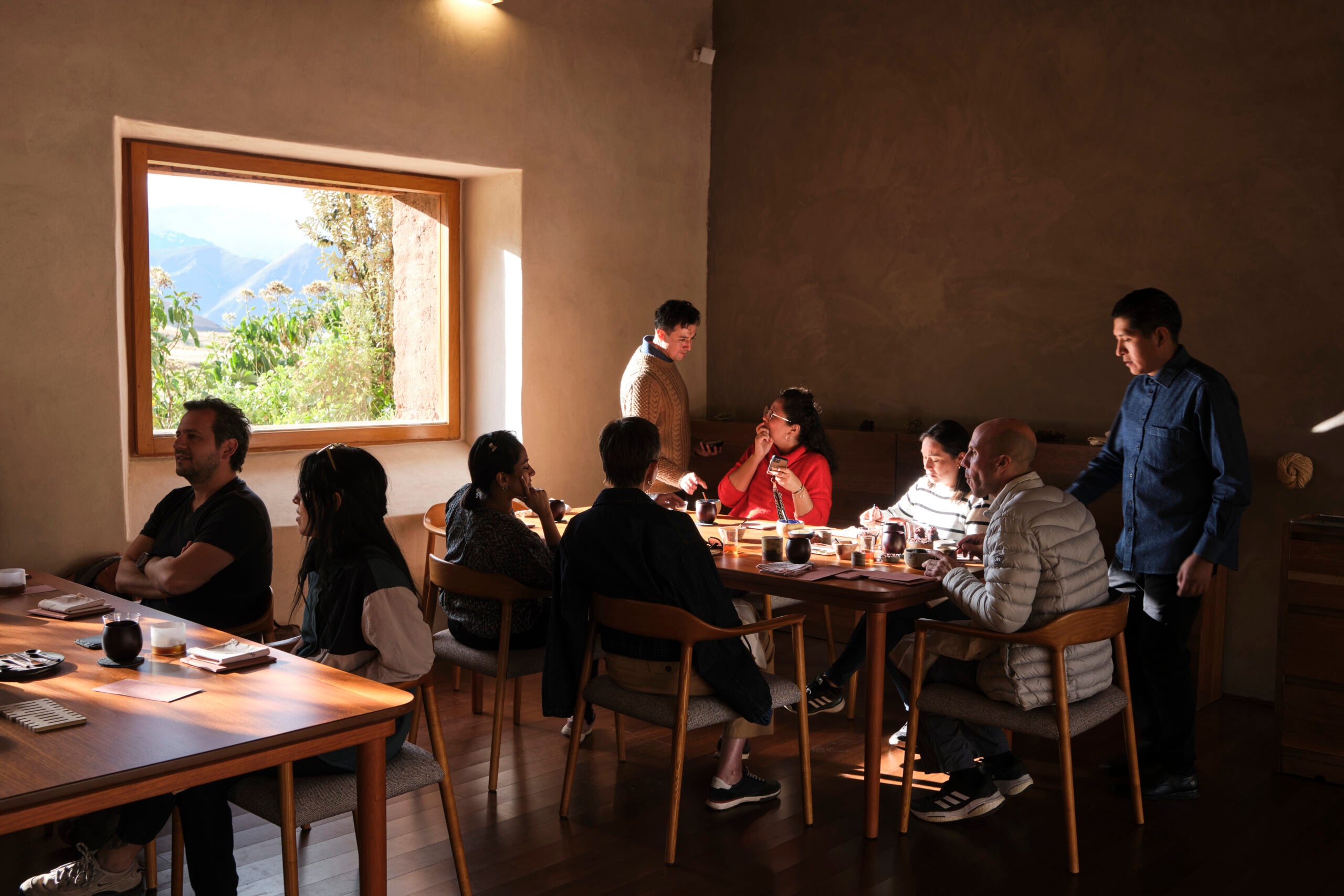
Our visit continued inside MIL Centro with an eight-course lunch tracing the eight ecosystems of the territory we had just walked. Ingredients harvested from the land were served on tableware crafted by local artisans.
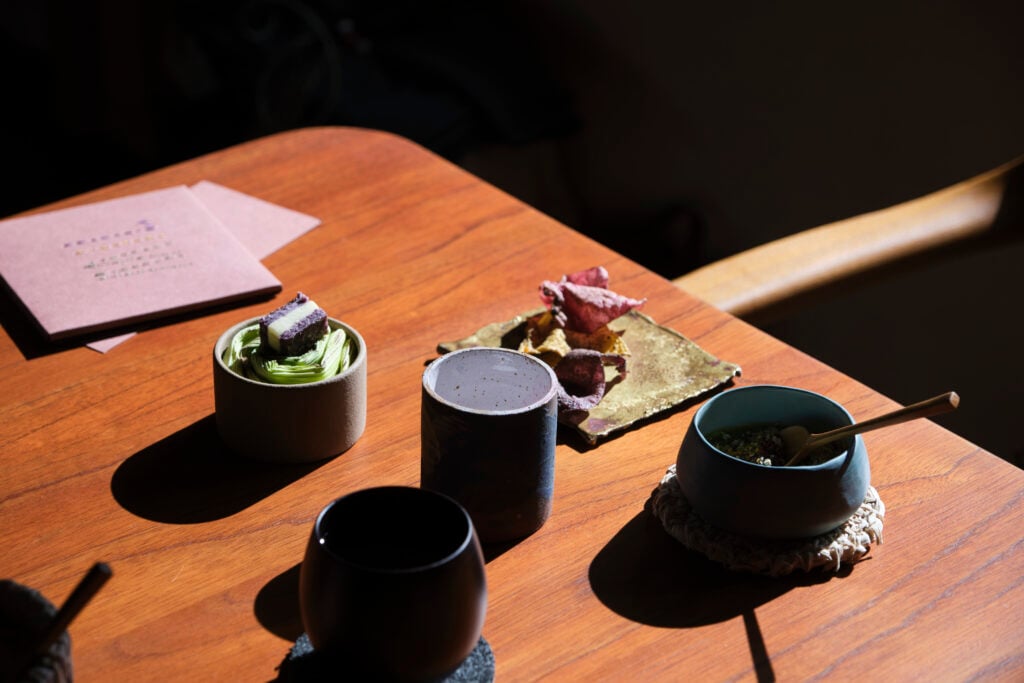
The meal reflected MIL Centro’s living model of Ayni: working with local communities to sustain livelihoods while honoring ancestral knowledge and ecosystems. You can see this dialogue with the land unfold in the video below.
Putting Ayni into action: begin within ourselves
Through observing Ayni in action, I realized reciprocity isn’t just a principle to apply externally — it begins within ourselves. To design with Ayni, designers must first embody it by practicing generosity, honoring land and ancestral knowledge, and considering impacts beyond our own lifetimes in our everyday lives and work. Designers should begin by asking ourselves:
- Are we sharing knowledge openly?
- Do we honor others’ expertise and lived experience?
- Do our intentions align with our behaviors?
This doesn’t suggest that addressing systemic challenges such as climate change, social inequity, and resource scarcity should be delayed. Rather, including this reflection in our practice can increase impact, cultivating the awareness and coherence necessary for designs that genuinely serve both people and ecosystems.
Applying Ayni to design: principles for practice
Current design systems often reward efficiency and accumulation, defining value through outputs, profit, or market share. Ayni offers a compelling alternative lens that emphasizes circulation, regeneration, and mutual flourishing.
Viewed this way, design is not simply a means of producing products or services, but a practice of shaping systems that circulate value and strengthen interdependence. Importantly, this approach also recognizes that humans aren’t separate from nature, but participants in a living web of relationships.
Designing with reciprocity therefore requires a redefinition of success and impact. Rather than extracting value, Ayni centers outcomes that regenerate and return value to both human communities and the broader ecological systems they are part of. From our reflections and observations, several principles emerge to guide design practice through Ayni‘s lens:
Circulate value, don’t extract it
Every intervention should return benefits to the communities, ecosystems, or knowledge networks that enable it. Just as MIL Centro sustains local farmers and artisans, design should seek mutual enrichment rather than unilateral gain.
Honor knowledge across generations
Solutions should respect wisdom embedded in culture, tradition, and local expertise—knowledge that has sustained life for centuries and can inform resilient design today.
Embed co-flourishing in outcomes
Evaluate designs not only for functionality or efficiency but for their capacity to strengthen social, ecological, and cultural networks. Reciprocity asks us to measure impact in terms of shared flourishing, not only deliverables.
Think in cycles, not lines
Adopt a systemic, circular mindset. Every action has repercussions; every solution should feed back into the system that sustains it, whether through environmental restoration, knowledge sharing, or long-term relationship building.
Start with self and circle outward
Personal practices matter. Cultivating generosity, respect, and responsibility in our own lives prepares us to extend these values to larger systems. Reciprocity begins with coherent, intentional action in our immediate sphere.
These principles aren’t a checklist to follow blindly but provocations for reflection and action. They invite designers to ask questions at every stage: Who benefits? Who is respected? What is sustained? What is returned?
In this way, Ayni becomes a compass for design that does not dictate methods but shapes the ethos of impact, the architecture of value, and the relationships that outcomes create.
As I stood in that highland landscape, honoring the Apus with chicha, I understood that every design decision is an offering to the communities we serve, the ecosystems we inhabit, and the future generations who will inherit what we create.
The question Ayni poses is simple but profound: What will we choose to give back?

Observed
View all
Observed
Share on Social


By Martín Zabaleta
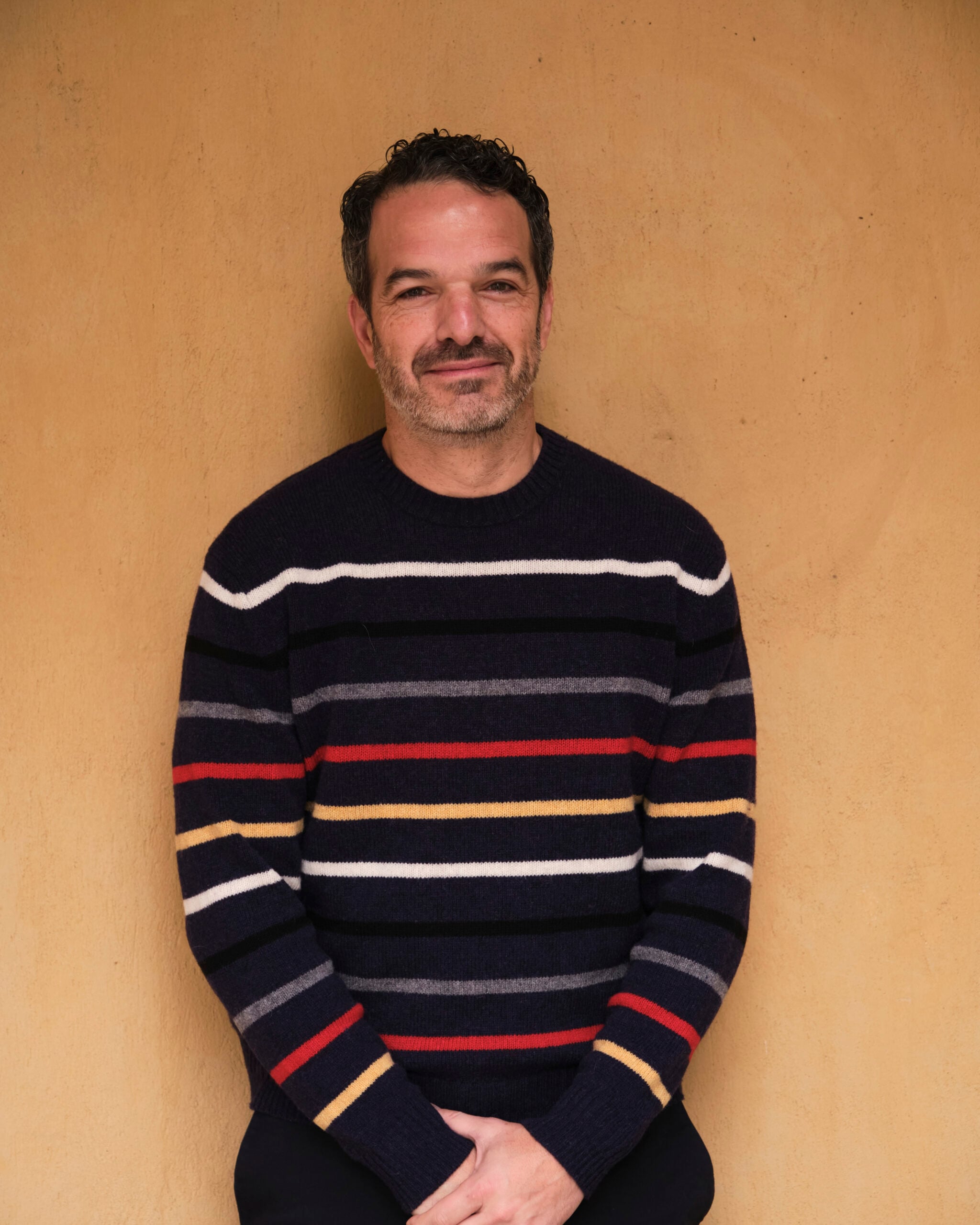 Martín Zabaleta is a leader specializing in design, innovation, and strategy with more than 20 years of experience supporting global brands, startups, and the public sector in strategic innovation projects using human-centered design methodologies. He has held leadership positions at IDEO, Fjord, and INSITUM, and he is currently Partner and Managing Director at Empathy. Martín holds a Master of Design (MDes) degree from the Institute of Design (IIT) in Chicago.
Related Posts
Arts + Culture
Wayne Suiter Matamoros|Peru's Sacred Valley
Looking to Latin America for the future of design innovation
Arts + Culture
Laura Sofia Cardozo|Peru's Sacred Valley
The value of multigenerational memory in design practice
Arts + Culture
Masha Safina|Peru's Sacred Valley
The layers of value creation
Arts + Culture
Ashley Lukasik|Peru's Sacred Valley
Foraging design futures in Peru
Subscribe to The Observatory
Related Posts
Arts + Culture
Wayne Suiter Matamoros|Peru's Sacred Valley
Looking to Latin America for the future of design innovation
Arts + Culture
Laura Sofia Cardozo|Peru's Sacred Valley
The value of multigenerational memory in design practice
Arts + Culture
Masha Safina|Peru's Sacred Valley
The layers of value creation
Arts + Culture
Ashley Lukasik|Peru's Sacred Valley