


November 26, 2015
Thanksgiving Day
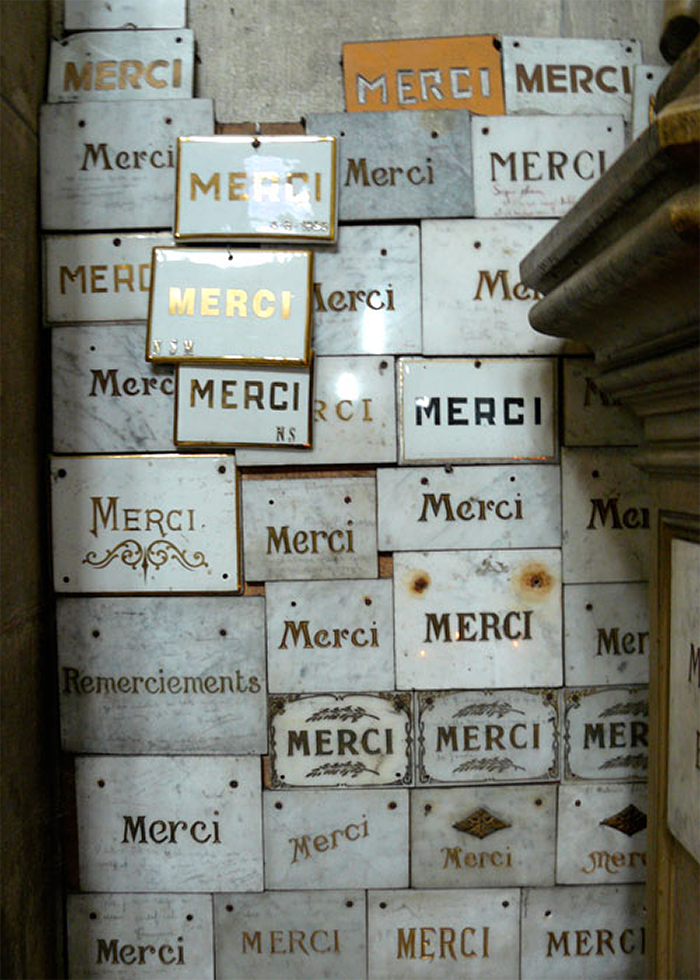
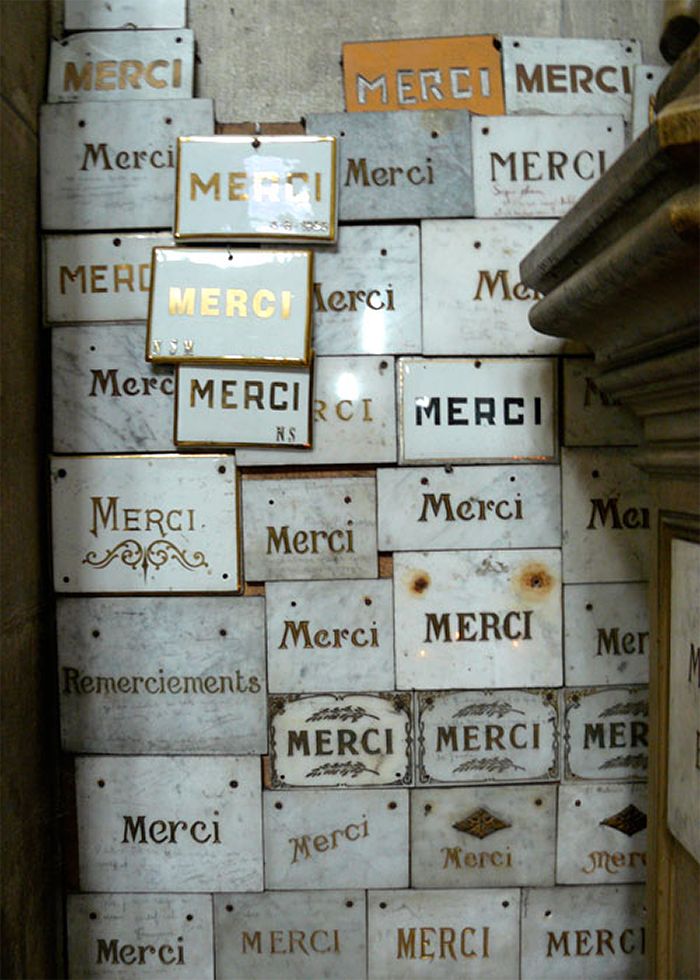
In a small church somewhere in the southern Pyrénées stands a wall covered in fragments of marble and ceramic tile. Declaring gratitude for any of a number of invisible reasons—personal, spiritual—the simple repetition of a single word forms a beguiling tapestry of human anonymity. Who were these people who chose to crystallize their appreciation this way, through words representing any number of thoughts and events and deeds now long gone? Here, merci becomes at once a gesture of appreciation and an architectural statement. The letterforms, some shiny and others starting to decompose, coalesce as a single form—a mesmerizing typographic benediction.
Here in America on this day of ritualized thanks, we are reminded that saying Thank You is a meaningful, yet all-too-often overlooked part of everyday life. And so we say merci to all our readers whose contributions we recognize with sincere gratitude. We are nothing without you.
We’ve gathered a few food and thankfulness related posts from our archive. Happy Reading!
It’s too late to start George Lois’ Thanksgiving stuffing recipe (it takes two days), but it’s a fine time to read the story of the recipe and how it saved his marriage.
An essay by Nicola Waldron, about the cycles of life and land.
Artist and farmer Matthew Moore describes his Digital Farm Collective, a multimedia project created to spur dialogue about the future of the family farm.
Way back in 2009 Alexandra Lange hosted her first Thanksgiving in her then newly finished home. While she hasn’t updated us, we assume it went well.
Timothy Beatley describes a new tradition in the planning department at the University of Virginia: the 100-Mile Thanksgiving, for which students prepare the annual feast, trying to use food produced within 100 miles of the Charlottesville campus.
Observed
View all
Observed
Share on Social


By Jessica Helfand
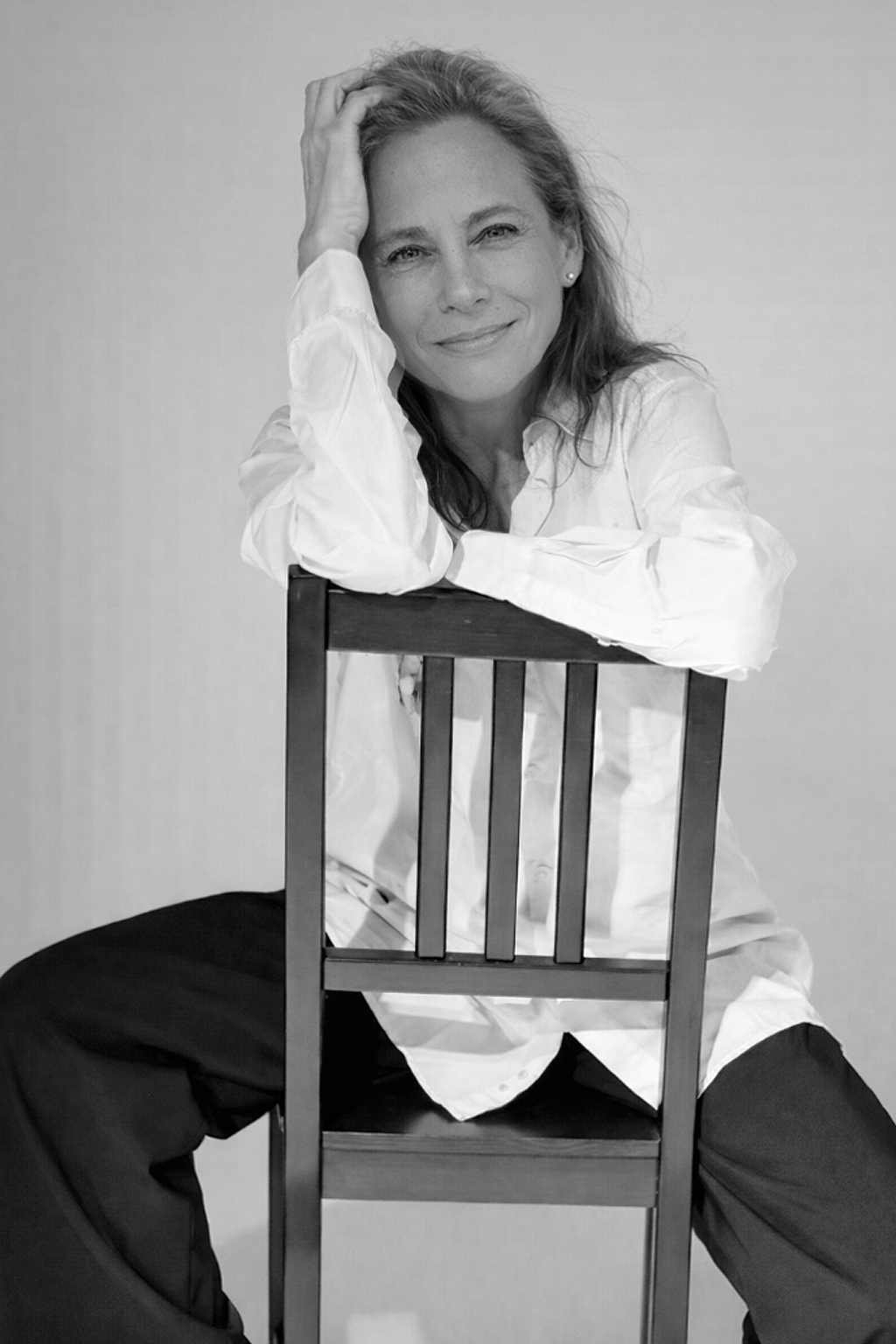 Jessica Helfand is an artist and writer based in New England. A former critic at Yale School of Art and one of the founding editors of Design Observer, she is the author of several books on visual culture including Self Reliance, Design: The Invention of Desire, and Face: A Visual Odyssey. jessicahelfand.com
Related Posts
Innovation
Ashleigh Axios|Essays
Innovation needs a darker imagination

Business
Kim Devall|Essays
The most disruptive thing a brand can do is be human
AI Observer
Lee Moreau|Critique
The Wizards of AI are sad and lonely men
Business
Louisa Eunice|Essays
The afterlife of souvenirs: what survives between culture and commerce?
Recent Posts
Wayne Suiter Matamoros|Peru's Sacred Valley
Looking to Latin America for the future design innovation Pope Leo XIV weighed in on the AI conversationJessica Helfand|The Icarus Diaries
20: Deus ex Machina Nina Katz’s answer to growing anti-trans rhetoric: nine larger-than-life portraits of the people she wants you to meetRelated Posts
Innovation
Ashleigh Axios|Essays
Innovation needs a darker imagination
Business
Kim Devall|Essays
The most disruptive thing a brand can do is be human
AI Observer
Lee Moreau|Critique
The Wizards of AI are sad and lonely men
Business
Louisa Eunice|Essays