


Ellen McGirt, Rachel Paese|Books
July 1, 2026
“What book made you a better designer?”
Your summer reading list
We reached out to the Design Observer community with a simple question: what book made you a better designer?
We use bookshop.org for our affiliate links; proceeds from book sales support local booksellers and our editorial programs.
Design as Art by Bruno Munari
It was Munari’s way of seeing — curious, playful, visionary, systematic, and human all at once — that shaped Giorgia Lupi more than any other book, she tells Design Observer. The information designer and Pentagram partner keeps returning to Bruno Munari’s Da cosa nasce cosa — published in English as Design as Art — because, as she puts it, “design is not only about solving problems, but about opening up new ways of seeing.”
The Tipping Point by Malcolm Gladwell
For Alix Pollack, Catalyst’s Head of Knowledge Transformation and Solution Development, the pick is less about tactics than orientation. Malcolm Gladwell’s The Tipping Point taught her not to underestimate the slow work of chipping away at progress. “Change happens slowly, and all at once,” she says, and the book reminds her that the long game is the work.
Lo–Tek. Design by Radical Indigenism by Julia Watson
Lo—TEK: Design by Radical Indigenism, Julia Watson’s survey of Indigenous design intelligence, opened Ari Melenciano to international, deeply imaginative ways of solving human problems. The artist, designer, and educator — founder of Afrotectopia and a professor at NYU’s Interactive Telecommunications Program — found in it solutions that are “incredibly eco-friendly and sustainable,” she says, “while always considering the health of the Earth.”
The Unknown Craftsman by Soetsu Yanagi
What makes something beautiful? It’s a quiet, internal question that keeps resounding for Jonsara Ruth, co-founder and design director of Parsons’ Healthy Materials Lab — and the one Soetsu Yanagi’s The Unknown Craftsman keeps answering from the perspective of craft, clay, and the human interaction with materials. “I feel filled when I read these insights,” she says of the book, a Japanese meditation on beauty she’s returned to across several decades.
The Real World of Technology by Ursula Franklin
The one book Ethan Marcotte wishes he’d read at the very beginning of his career is Ursula Franklin’s The Real World of Technology. The web designer who coined “responsive web design” credits Franklin with rewiring how he thinks about his practice — her argument that technology is a social force “capable of reshaping, and if we’re not careful, harming people’s lives,” he says. It’s a book he wishes every designer would read.
Children Solve Problems by Edward de Bono
Rachael Dietkus found her copy of Edward de Bono’s Children Solve Problems secondhand at a campus bookstore in the early 1990s, caught between studying design and switching to sociology — so “it resonated with me on many levels.” The social worker-designer and founder of Social Workers Who Design was intrigued by its short stories, illustrations, and de Bono’s analysis of how children addressed barriers; the 1972 book became her “unexpected introduction to public service design and systems thinking.”
“Why I Write” by Joan Didion
Jamer Hunt admits he’s going to cheat and name an essay rather than a book: Joan Didion’s “Why I Write.” For the writer and Program Director for University Curriculum at The New School — and founding director of Parsons’ Transdisciplinary Design program — it’s a dazzling reminder that creative making can precede seeing and understanding, and that, as he puts it, “attunement to the cat’s shimmer is all you need to start.”
The Artist’s Way by Julia Cameron
Without a doubt — and, she’d say, unsurprisingly — Dionna Dorsey names The Artist’s Way. The designer, creative director, and co-founder and CEO of The Creative Ladder has a standing instruction for any creative who hasn’t yet read Julia Cameron’s classic: “drop everything and read it now.”
Looking Closer by Michael Bierut
Dave Snyder offers a bit of a curveball. It was the ads in Thrasher and Transworld — skateboarding’s mid-90s typographic moment — that first piqued the Siberia partner and head of design’s interest in design, and in typography specifically. “And I liked it,” he says. But it was Michael Bierut’s Looking Closer series, which collected critical essays on design, that truly shifted his worldview about how we think, write, and explore the importance of the craft: design with the capital “D.”
Observed
View all
Observed
Share on Social


By Ellen McGirt & Rachel Paese
 Ellen McGirt is an author, podcaster, speaker, community builder, and award-winning business journalist. She is the editor-in-chief of Design Observer, a media company that has maintained the same clear vision for more than two decades: to expand the definition of design in service of a better world. Ellen established the inclusive leadership beat at Fortune in 2016 with raceAhead, an award-winning newsletter on race, culture, and business. The Fortune, Time, Money, and Fast Company alumna has published over twenty magazine cover stories throughout her twenty-year career, exploring the people and ideas changing business for good. Ask her about fly fishing if you get the chance.
 Rachel Paese is Design Observer’s Deputy Editor, and she loves giving curious people access to stories that change the way they see the world. It began with a major in English, and then evolved with a project that sharpened her editorial instincts the old-fashioned way: founding and leading her own multimedia magazine at the University of Kansas. After college, she carried that passion to education, helping students in Spain and Thailand think beyond their culture. Today, she brings that same spirit to Design Observer, working to connect readers with the people and ideas shaping a better future. Connect with her on LinkedIn, and ask her about her quest to sew her own wardrobe.
Related Posts
Design Impact
Ellen McGirt|Books
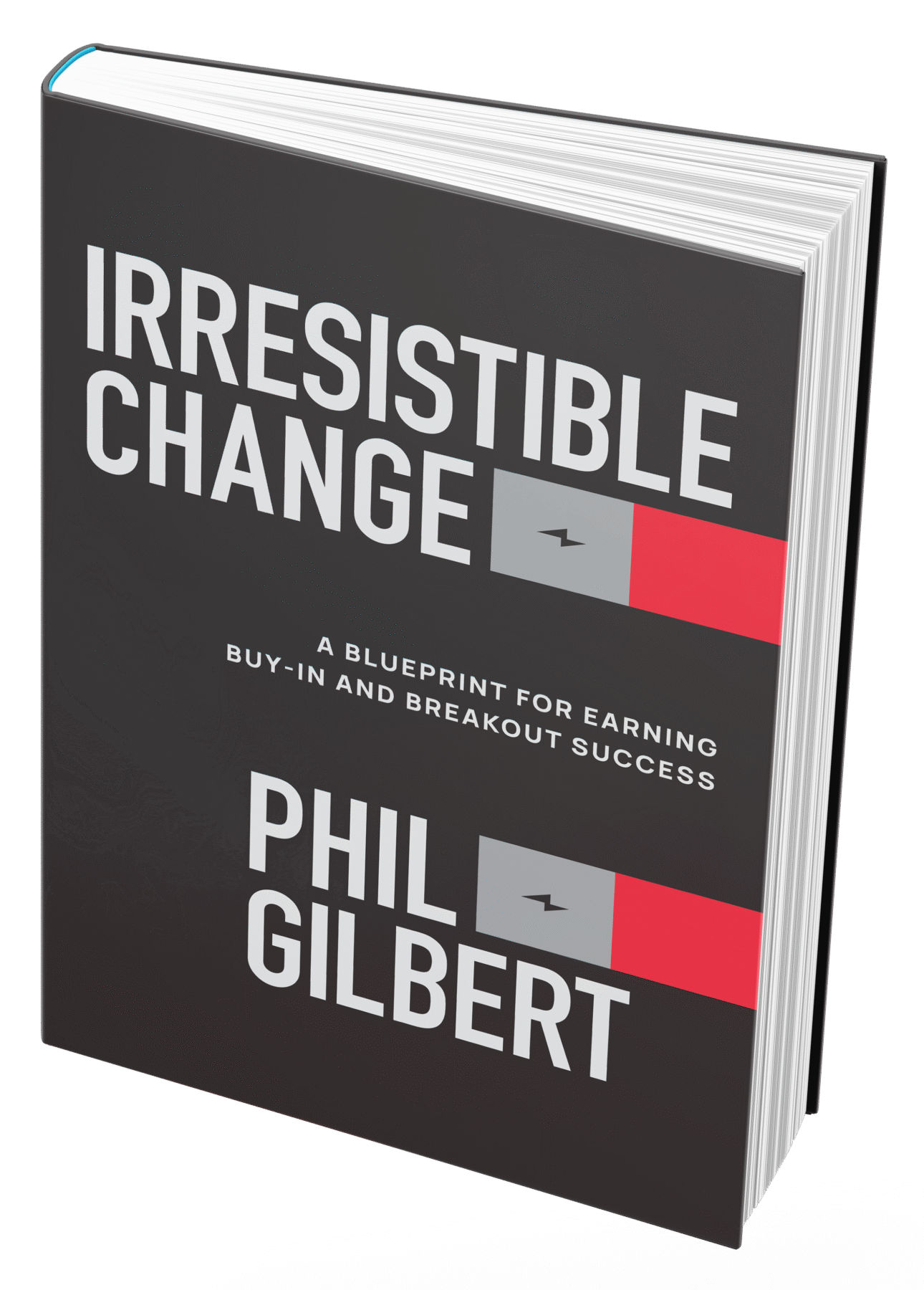
No mandates, only opportunities: IBM’s Phil Gilbert on rethinking change
Education
The Editors|Books
Your October reading list: The Design of Horror | The Horror of Design

Innovation
Vicki Tan|Books
How can I design at a time like this?

AI Observer
John Maeda|Books
Should we teach AI to reflect human values, emotions, and intentions?
Subscribe to The Observatory
Related Posts
Design Impact
Ellen McGirt|Books
No mandates, only opportunities: IBM’s Phil Gilbert on rethinking change
Education
The Editors|Books
Your October reading list: The Design of Horror | The Horror of Design
Innovation
Vicki Tan|Books
How can I design at a time like this?
AI Observer
John Maeda|Books