


June 15, 2026
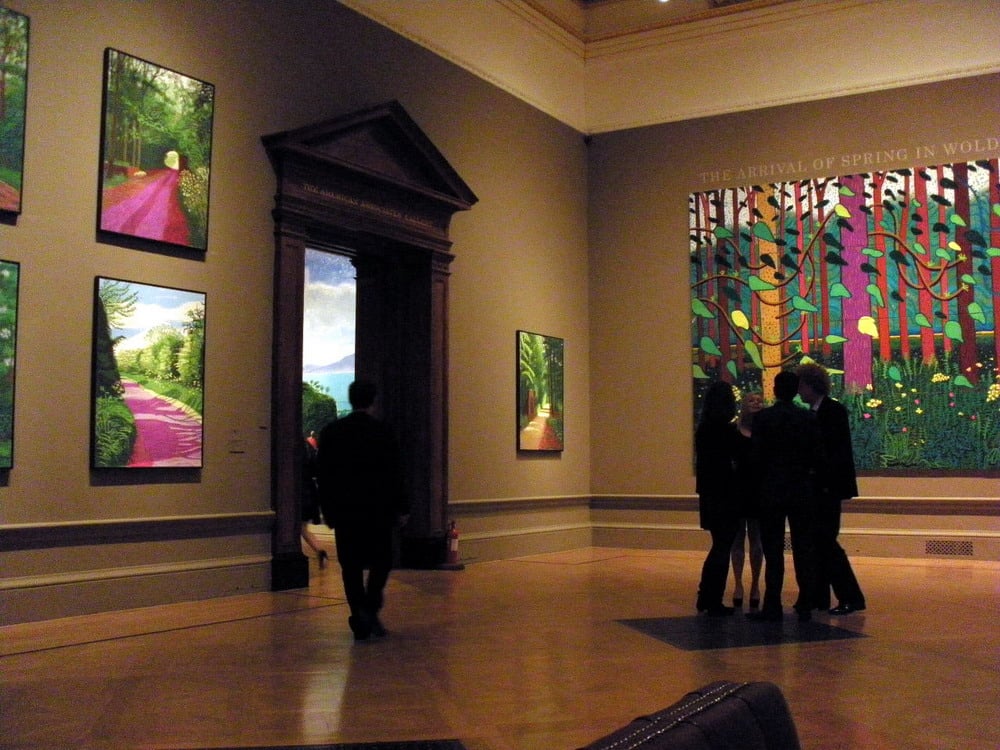
Observing David Hockney
“Everybody does look. It’s just a question of how hard.”
“I’m 82, I’m going to die. We die because we are born.”
It was April 2020 and British artist David Hockney was writing to his friend Ruth McKenzie. The emotional correspondence later appeared in his last book, Spring Cannot Be Cancelled, part of his attempt to capture the liminal space of the COVID-19 lockdown. “The only things that matter in life are food and love, in that order, and also our little dog Ruby. I truly believe this, and for me, the basis of art is love. I love life.”
David Hockney died on June 11 at his home in London, just a month short of his 89th birthday. He was a true art-world luminary, a profound observer, a dachshund parent, and a voice of his generation.
Hockney was a painter, printmaker, photographer, and draughtsman who also designed sets, magazine covers, and the lone stained-glass window. He was a breakout star from the jump — as a young gay man he folded seamlessly into the star-studded London pop art movement, and was determined to live out loud. “In the early 1960s, paintings like We Two Boys Together Clinging, painted at a time when homosexuality was a criminal offense, announced the arrival of a new generation of painters,” Nicholas Serota, Arts Council England chair, told The Guardian.
In 1964, Hockney moved to Southern California, looking to escape the dreariness of England to join what he came to believe was a vibrant American art scene. “I thought people who produced such work must live in colour, so I went in search of it,” he says in David Hockney, a biography by BBC journalist Peter Adam. “I had spent the first 20 years of my life in the gothic gloom of the North. Here I felt free.”
Freedom suited him. Living in Santa Monica, he produced a body of painted work that changed the way people saw Southern California: sunlight and pools, splashes and glances, and a dedicated tenderness to the human form (particularly gay and male) that was captured in color, light, and a deceptive simplicity.
It was radical inclusiveness at its tender, brightest best. “I’m interested in ways of looking,” he said in an early interview with PBS. “Everybody does look. It’s just a question of how hard.”
Hockney achieved enormous financial success.
His museum shows are reliable blockbusters; in 2018, his “Portrait of an Artist (Pool With Two Figures)” sold at Christie’s in Manhattan for $90.3 million, a world-record price for a living artist. It was that bankability that made his willingness to experiment in his practice even more remarkable: he made art with Polaroid cameras, fax machines, copiers, designed sets and immersions, and loved his iPad, on which he created a large body of drawings. He “always had this desire to reach people in new ways,” art producer and collaborator Mark Grimmer told the New York Times. “He would try anything.”
Love of life — and a killer sense of style — is a part of Hockney’s enduring legacy. But it is his lifelong commitment to observation, and the radical act of finding beauty in the banal, that gave his work its wide welcome.
If you’ve got time this week for one internet rabbit hole, spend it on remembrances of Hockney. The bespectacled peroxide-blonde worked tirelessly to make his work appear effortless, and despite his experimental nature, he claimed painting as his true love.
He was transfixed by the human face. “How can you see a person… how would I know if I’d got you really well?” he told PBS in 2018. “Painting can’t die because photography isn’t good enough. It’s just a snap. But why not look longer? Maybe you’ll see more.”
“People are dismissive of the word ‘pretty’. I like pretty, and I think most people do too,” he told Geordie Greig, his friend and chronicler for more than fifty years. Greig thinks it was Hockney’s great unlock. “[It] was a simple mantra that art should celebrate, but it hid a complex and deeply sophisticated profundity of an artist who was to progress over the next half century to become the world’s biggest art star since Picasso.”
Ellen McGirt
Editor-in-Chief
P.S. Did someone who loves you send you this newsletter? Welcome! Subscribe here.
This edition of The Observatory was edited by Rachel Paese.
This is the web version of The Observatory, our (now weekly) dispatch from the editors and contributors at Design Observer. Want it in your inbox? Sign up here. While you’re at it, come say hi on YouTube, Reddit, or Bluesky — and don’t miss the latest gigs on our Job Board.
Draw the Line
The Supreme Court has gutted the Voting Rights Act. Redistricting determines whose voice counts, whose neighborhood thrives, and whose representation vanishes. That is exactly the kind of design we exist to examine.
Podcast coming soon. In the meantime, find exclusive clips on our socials and follow along here in The Observatory Newsletter or on the website for updates.
Some fine print
Your boss made a prototype. Good. The process was never the point. By Dave Snyder.
What does AI understand about fine art? An experiment with ChatGPT reveals unsettling truths about how AI interprets artists from diverse backgrounds. By Xintian Tina Wang.
Your tailormade revenge dress? There’s an app for that. Making its runway debut at NYFW, Neuono promises perfectly fitted, custom garments from a selfie. As AI enters the atelier, questions loom large about labor and artistry. By Xintian Tina Wang.
Elixir Design founder Jennifer Jerde believes in the human touch. Brands still need real people to lead with observation and connection in their effort to tell the visual story, she says. By Rachel Paese.
Observed
What are you observing? Tell us.
When it comes to design in sport, the emphasis is typically on the kit, logo, protective gear, and the like. But luggage? The DR Congo’s Les Léopards arrived in Houston for the 2026 FIFA Men’s World Cup in true sartorial style. It is the team’s first World Cup appearance in 52 years, reports @bellanaija. Click through and enjoy.
Despite previous security concerns, Anthropic released Claude Fable 5 last week, a Mythos-class model now available to its enterprise customers and paid subscribers. “For us, it’s really around what we call ‘race to the top,’ being able to provide this technology in a valuable fashion, and at the same time providing the right safety guardrails so that it can do asymmetrically more benefits than harm asymmetrically,” Anthropic’s head of product management for research told CNBC. Breaking news: Fable has been deactivated citing <checks notes> unspecified national security concerns.
The biggest box-office flop in U.S. history happened in 2026 and didn’t make a sound. The “historical desert action epic” was helmed by a seasoned director, starred more than one bold-faced named actor, and still, you’ve likely never heard of it. So, what went wrong? Instead of marketing, a big chunk of the budget created “a filmmaking infrastructure for Saudi Arabia” that can “support filmmaking endeavors in the future,” says box office analyst Ryan Scott.
Think of the children. The Annie E. Casey Foundation has recently published its 2026 KIDS COUNT Data Book and updated its online KIDS COUNT data center, a wonderfully searchable tool with rich data measuring the well-being of kids and families, organized by topic and state. The analysis focuses on four domains: economic well-being, education, health, family, and community, and it seems like the kind of stuff that civic leaders might want to spend some time with. Here’s one nugget: from 2016 to 2020, nearly 26% more school-age children (3-17) in the United States were diagnosed with anxiety or depression. (1/2)
Then, design for the children. All three most deadly childhood illnesses in Sub-Saharan Africa — malaria, diarrhea, and acute respiratory infections (ARIs) — can be mitigated by deliberate design choices. It’s crunch time: the growing region will need to build aggressively to house an expected 1.1 billion new souls by 2050. Researchers hit upon a shareable model. “We designed a novel double-story house, called a Star Home, to provide an insect-proof, cleaner, cooler, and smoke-free environment, with a reliable supply of water and sanitation.” They’ve partnered with Ingvartsen Architects to build a network of homes in Mtwara, Tanzania, that also serves as a clinical health trial. Here’s the exhaustive research. (2/2)
Beloved grandparents at the kitchen table. Food offerings to a sun god. An open-air restaurant at a coal mine. The dusty path of a lonely shepherd. Ladies with chips. A selection of winning images from the 2026 World Food Photography Awards offers mouth-watering snapshots of humans, subsistence, and sustenance.
Job board
Hiring a designer? Post your role on the Design Observer Job Board to reach a highly engaged audience of designers, creative leaders, and studios across the Design Employment Network.
Sr. Experiential Graphic Designer at RSM Design, Los Angeles, CA.
Production Designer / Project Manager at KANE Footwear, Westport, CT.
Head of Design and Production: Gallery Scale Artworks at Leo Villareal Studio, Brooklyn, NY.
End marks
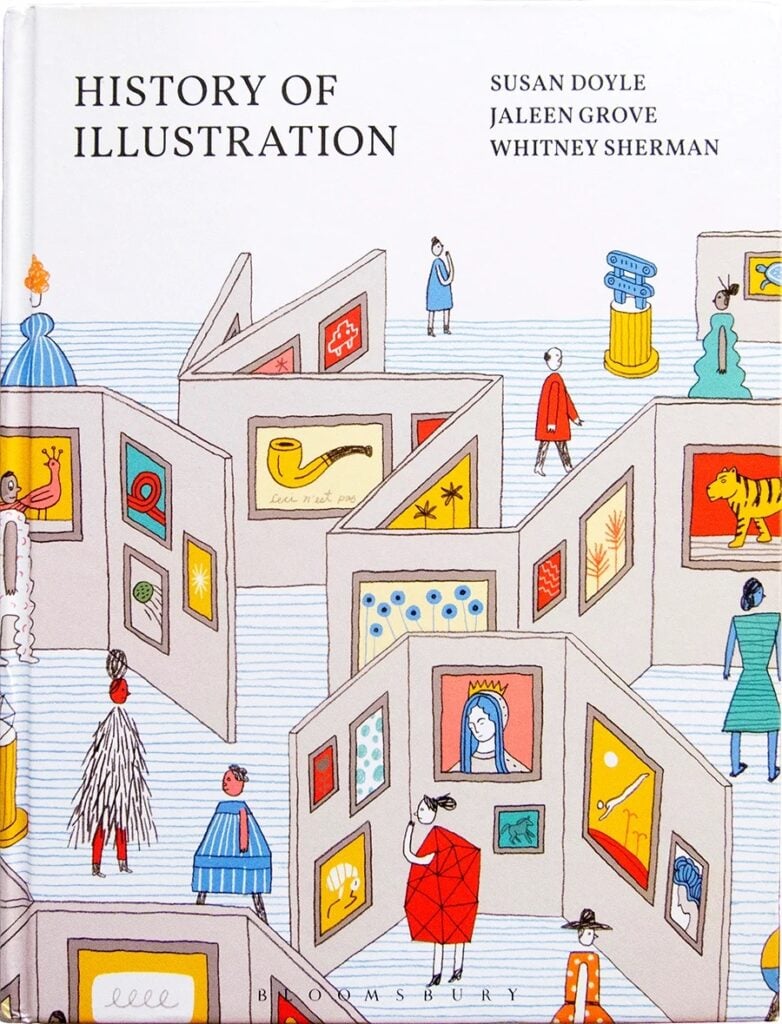
It took five years, 29 chapters, and a team of specialists to write the first comprehensive textbook on illustration history. In 2019, Steven Heller sat down with the book’s co-authors Susan Doyle, Jaleen Grove, and Whitney Sherman to talk canon, gender, racism, and why people love pictures.
“The term ‘illustration’ is notoriously slippery, and contingent on the culture and period producing it. We asked each chapter writer to define illustration according to their needs. As a result, a wide range of images and objects are admitted as ‘illustration’, which I think is really healthy. Illustration is not a thing, it’s a practice, an intent,” says co-author Jaleen Grove.
This is the web version of The Observatory, our (now weekly) dispatch from the editors and contributors at Design Observer. Want it in your inbox? Sign up here. While you’re at it, come say hi on YouTube, Reddit, or Bluesky — and don’t miss the latest gigs on our Job Board.
Observed
View all
Observed
Share on Social


By Ellen McGirt
 Ellen McGirt is an author, podcaster, speaker, community builder, and award-winning business journalist. She is the editor-in-chief of Design Observer, a media company that has maintained the same clear vision for more than two decades: to expand the definition of design in service of a better world. Ellen established the inclusive leadership beat at Fortune in 2016 with raceAhead, an award-winning newsletter on race, culture, and business. The Fortune, Time, Money, and Fast Company alumna has published over twenty magazine cover stories throughout her twenty-year career, exploring the people and ideas changing business for good. Ask her about fly fishing if you get the chance.
Related Posts
The Observatory Newsletter
Ellen McGirt
Who gets to decide where power begins and ends?
The Observatory Newsletter
Rachel Paese
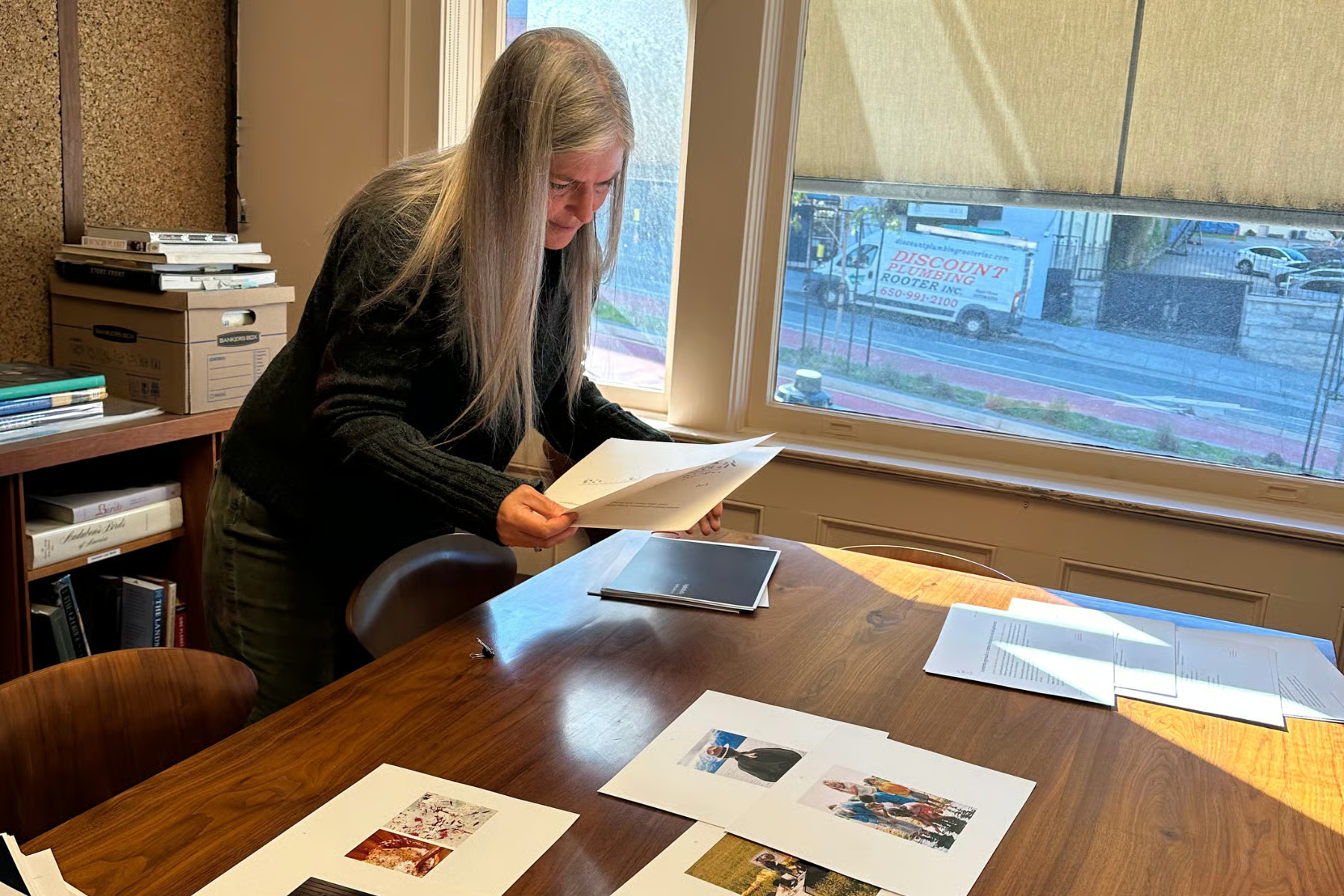
You need an observation practice
Draw the Line
Audio
BONUS: Live from Essence Fest – The Work Gets Personal
Draw the Line
Audio
BONUS: Live from Essence Fest – The Accounting
Subscribe to The Observatory
Related Posts
The Observatory Newsletter
Ellen McGirt
Who gets to decide where power begins and ends?
The Observatory Newsletter
Rachel Paese
You need an observation practice
Draw the Line
Audio
BONUS: Live from Essence Fest – The Work Gets Personal
Draw the Line
Audio