


October 7, 2026
S13 E4 DB|BD at Aspen: Dean Erika James Says a Prepared Leader is a Disciplined One
How to create a truly human workforce, and how the first AI ethics grad program was born
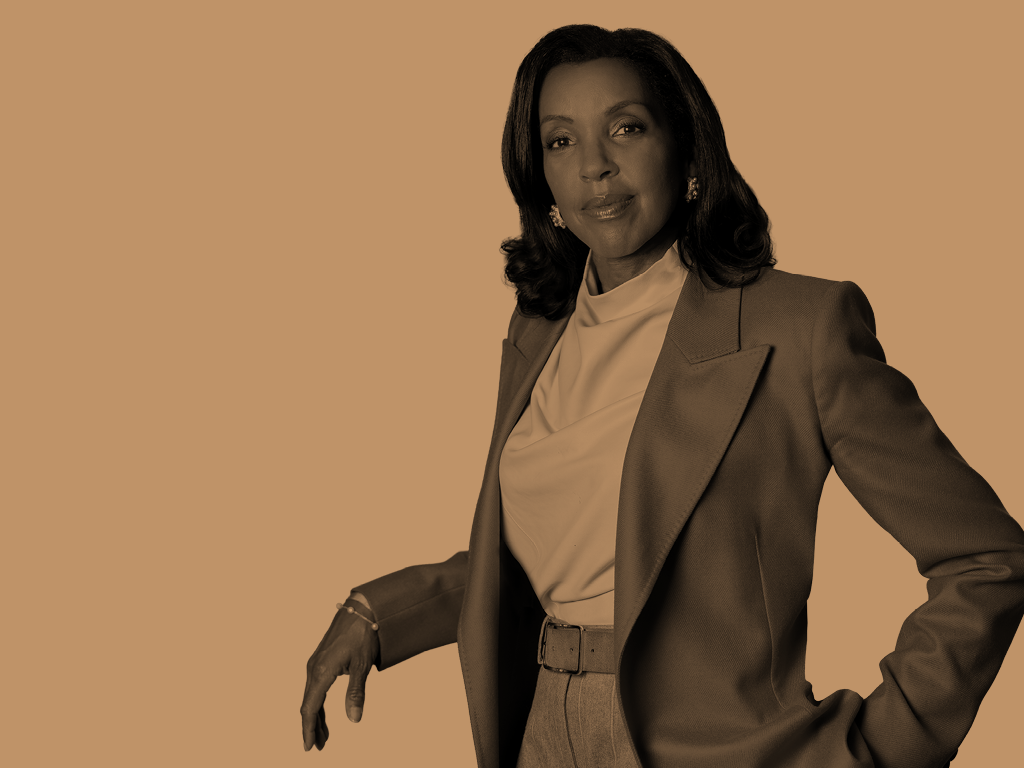
Erika James became the Dean of the Wharton School on July 1, 2020. You remember that summer… we were deep into the pandemic and amidst one of the largest social reckonings in American history.
So I guess you could say Dean James knows how to lead during a crisis. She even wrote a book about it. Erika and her co-author Lynn Perry Wooten published The Prepared Leader in the fall of 2022. The book breaks down the phases of crisis management and lends some advice on how to make big decisions under pressure.
But in the 4 years since The Prepared Leader was published, the nature of our world has changed once again….which means leading through a crisis is pretty much just a state of being for Dean James.
In the conversation you’re about to hear, Erika details the decisions she is making to prepare her students and her faculty to succeed in an unstable economy that is increasingly relying on AI.
For one thing, Wharton now has an AI major… which is probably hard for a lot of us to wrap our heads around. But, don’t worry, a Wharton education is still a very human one. To hear Dean James tell it, AI expertise is just the cherry on top of a sundae that includes critical thinking, relationship building and moving with integrity.
We also cover the state of DEI and Erika’s ambivalent thoughts on being the first Black person to serve as Wharton’s dean.
This is a conversation that I think will stress you out, leave you more prepared to lead and will ultimately leave you feeling hopeful about our future. Enjoy!
On this season of DB|BD, we are thinking about radical collaboration. Host Ellen McGirt sat down with visionary designers, leaders and thinkers at the 2026 Aspen Business & Society Summit to ask them about the radical act of collaborating with others in a time when it often feels impossible to find common ground.
TRANSCRIPT
Ellen McGirt: Erika, when we last talked for Fortune, you were a bright light at a very difficult time for our cohort of business leaders, but you had just stepped into the deanship in the middle of a pandemic. And, and then the, the, the book came along after that.
So I thought we could go back… Didn’t it?
Erika James: Yes. Yeah.
Ellen McGirt: I thought we could go back there on a little, just a little bit about what it was like when you arrived at Wharton, and what- What was it like for you, and how you were preparing to lead at such a difficult time?
Erika James: Yeah. Well, first of all, thanks. I’m delighted to be here. I’m gonna take you back even before the start date at Wharton because I accepted the role in February of 2020, which was before-
Ellen McGirt: You did. That’s right.
Erika James: …yes, so it was before the pandemic really became problematic here in the US. And I started in July, so from the moment I accepted to when I actually started, the world had been completely upended.
So the job that I thought I would be taking was a very different job by the time I actually started. And because I had been dean at another university previously, I was managing the very initial stages of that school’s shift into pandemic mode while also starting the transition into Wharton. So there was a period of, like, three months where I was actually doing two deanships simultaneously.
I relocated to Philadelphia in June of 2020, and started right in trying to meet people, learn the campus, understand the decisions that needed to be made, all while never being able to see anyone in person, being on the campus and not having any context. Because I was new to the school, I didn’t have any context for the decisions I was making.
And that was, I think, pretty… a challenging way to start, but you’re in it at that point, and you make the best of it. And you really focus on the modes of communication that you do have in order to establish relationships and gain credibility, get people to trust you. You’re trying to ascertain who you can trust, all the while making decisions about people and places that you have no prior perspective on.
So that was a pretty challenging time, but it was also a real opportunity because higher education at that moment, like the rest of the world, was being totally upended. It gave us a fresh start to think about what does education look like in the future, and I think that has been the defining aspect of my deanship since then.
Ellen McGirt: It certainly sounds like it. And if I am right, you were the first woman and the first person of color to hold the role- correct- as dean at Wharton? Yes. So that felt like a moment for all of us.
Erika James: It felt like a moment for me, too, not because I was paying attention to that, but because the rest of the world seemed to be.
Yeah. And I, I started my deanship on day one on Good Morning America. Like, who starts their job by going on national television? And so that was when I started to realize how significant this was to so many people, and that there were a lot of eyes on me and on the school, which I think added a level of pressure.
But I think I, I tried to think of it as a healthy pressure and a healthy tension to, while we have the attention of the world, let’s do something with it. Yeah. And that’s what I’ve been trying to do.
Ellen McGirt: Let’s dig into that in a minute, but I do wanna talk about your book, The Prepared Leader, which I still turn to from time to time, and I appreciate it very much.
You, you wrote it with your dear friend and fellow academic leader, Lynn Perry Wooten, and you both came and spoke to us at, at Fortune, which was really wonderful. Can you tell us why the book was necessary, and where did it come from within you?
Erika James: So Lynn and I had written a book probably 10 years prior to this publication, and we realized that times had changed, and we needed to evolve our content.
And so we were really just gonna do an updated version and provide new examples of crises that leaders were facing today. And as we were starting that process is when the pandemic hit, and it occurred to us, this is probably the one time in our lifetimes where everyone in the world was experiencing the same crisis.
And so we changed our initial premise of just adding some new examples to really making the pandemic the theme of the book, and what leadership looks like in a moment when the whole world is actually having to think differently about every aspect of, of their work. So that was what prompted this particular focus on The Prepared Leader.
And you asked what- What it meant for me personally to write this book. And I think because at that point in time, it was 2023 when it was published, so it was ’21 and ’22 when we were doing the bulk of the work, which were still heavy pandemic-
Ellen McGirt: Yeah.
Erika James: periods. And I found writing this book quite cathartic, meaning I’m living out exactly what I’m writing about, and it gave me a chance to put perspective and to reflect on the decisions that I was making and the impact and the changes that were happening.
And being able to… It was almost like journaling in some respect. Yeah. But journaling in the context of having an expertise in a particular domain, which is leadership, and in this case, crisis leadership.
Ellen McGirt: So you argue in the book that the best leaders treat crisis as a discipline, not an emergency to respond to, and also that anybody can prepare, anybody can become competent in what you need to do, in- need to be and think to treat it as such.
What does that actually look like in practice, and what did that look like for you?
Erika James: Yeah. So when we think of crises typically, we think of them as these episodic events that happen once in a blue moon, and if you’re lucky, it will never happen to you or your, your firm or organization. And when I began to think about the way in which the world is changing and the pace with which the world is changing and the frequency with which we’re seeing crises emerge, it made me realize that we can’t just be hopeful that it won’t happen or be wishful that we’ll get through the one crisis.
Crises are now happening fairly consistency, consistently. So when I talk about it being a discipline, it’s recognizing that there are actually things we should be able to anticipate. Yeah. And, and part of the work of a leader now is thinking about what am I seeing in the environment, the macro environment of my organization, of my industry, of my profession, and what kinds of signals are we seeing that should give us an indication that something may change pretty fundamentally.
And once you’ve identified a set of vulnerabilities or risks, then you can start to do something about planning or preparing for them, which might also include mitigating the damage should something actually manifest. And that upfront work is not something that leaders, I think, have ordinarily spent a lot of time on.
Yeah. Some people have gotten very good at reacting once something has happened- Yeah … and being responsive, but that is a necessary but insufficient part of what the leadership journey should be about. So there’s the upfront cost of anticipating the signals that might lead to risks. There’s preparing and planning for them.
There’s the responding and reacting once something happens. But then there’s the business recovery. Yeah. And just thinking about the pandemic for a minute, the one phrase I heard over and over was, “I can’t wait to get back to normal.”
Ellen McGirt: It’s not coming, is it? It…
Erika James: Normal will never be again. It’s not coming.
Ellen McGirt: Oh, Erika.
Erika James: And so leaders need to have that frame of mind that normal will never be again. And if that’s your goal, then you’re setting your organization up for failure- Yeah … quite frankly. So if we can think about how do we leverage this moment in time and, and think about how do we use the experience we’ve gone through with this crisis to reimagine what the future of the organization or the future of your business or industry might look like, then you’re thinking long term. You’re th- you’re starting to think strategically again, and you’re s- setting the organization up for much more success.
Ellen McGirt: I wanna talk about the impact that you have had on Wharton when it comes to education and students. But before we get into that, because it’s quite significant, and I’m very interested in the AI as major as, as AI major, which is, just sounds extraordinary. I was hoping to talk a little bit about the language that, of, of diversity and sustainability and ESG, and all of those words that matter to you, and concepts that matter to you, and have mattered to business for a very long time, at least historically in the modern era.
And now the vocabulary itself is contested. Are you of the mind that the work is continuing, but under a different name, one that’s a little bit less politically, makes people politically vulnerable? And what does that mean for s- for the students in an education? How are you preparing young business leaders to think about equity in the workplace and diversity and inclusion and belonging in the workplace, and ways of framing that as important to the business, even if it’s risky for them to, to speak or think that way?
Erika James: Yeah. So, matters of DEI have clearly been important to me as a woman in business, for which there are not many, as an African American who, you know, has experienced the sort of insidious stereotypes of intellectual ability and those kinds of things. So personally, I’ve lived a life where I’ve thought and tried to use my platform in whatever way that I had one, to, to advance the work of diversity and inclusion in the, in, in any setting.
Coming into the Wharton context, which I think also stereotypically had a reputation of not being very sensitive or open to those matters, the biggest surprise I had was that Wharton is very open and sensitive to matters of diversity and inclusion, to matters of ESG. We’re now referring to it as impact, talking about language changes, et cetera.
So all of those things have been a core part of the school, but they’ve never been emphasized in ways that would let anyone understand or recognize that that has been important to us. And I think in the corporate world, so outside of the Wharton context, in the corporate world, we have seen language change because the political environment is one where it doesn’t feel safe to talk about those things.
I think it has been weaponized. The language has been weaponized in a way that has made it very challenging. At the same time, there have been, in some cases, perhaps legitimate critiques of DEI. I don’t know that every organization put in the work- Yeah … but they used the nomenclature for- organizational gain or benefit in ways that did not really reflect actual changes in the organization.
Right. And so I think those firms, those entities who weren’t truly invested in the work are going to ultimately struggle because the world is diverse whether we like it or not. And I think that people, leaders who have been actually authentically invested will find ways to continue to do that work regardless of what language we put around it, because they recognize the true advantage of leveraging the skills and the experiences and the talents of everyone throughout their hiring pool and in, within their organizations.
Ellen McGirt: We spent a lot of time here already, I know the, the conference is only a, a couple of days old, but one of the things that keeps coming up are entry-level employees, younger employees, frontline first time leaders who seem, w- and, and a lot of the folks here feel that they seem under-prepared in some key areas.
Words like judgment and discernment keep coming up, and over-reliance on tech. One of the things that’s really beautiful about The Prepared Leader, which runs as a through line, is that it’s a human endeavor. You cannot do this alone. You have to be talking to people who have a different perspective than you.
You recommend that people have teams of people around them who can give them feedback and support, and you can be that for other people as well. It’s come up in every conversation we’ve had here so far. This is a human business, and the technology component of it is taking us away from what business needs to be.
How, through your work as an educator, but also as just a person who has a lot of influence with other leaders, are you reinforcing this human side of business with the students that you see at Wharton?
Erika James: It has… So the conversation is happening here, it’s also happening at Wharton and every other university and, and, and business school, because our conversations lead with the technology.
We’re always talking about how do we get students up to speed on AI? How do we make sure that they understand data science and machine learning? How do we create more computer scientists who understand the technology? And I think we need to start shifting the primacy of technology versus humanity, because pretty soon the technology will equalize or democratize or commoditize, quite frankly, the technical aspects of what once differentiated new workers into the workplace.
And now what’s going to differentiate those workers are the things that make them human: their ability to forge relationships, their ability to gain trust and credibility, their ability to think critically about decisions, their ability to know how to interpret and make sense of all of the data that’s coming into them, their ability to work with clients and customers, their ability to do all of these things that really rely on your human skills, communication, judgment, decision-making, discernment, storytelling and, and crafting a narrative.
All of those things are what will actually differentiate you, and those aren’t the things, at least yet, and hopefully not in our lifetime, that, that technology or AI will be able to lead on. So I think about this as how do we augment the human side and educate for the humanity and let the technology supplement that, as opposed to starting with the technology.
Ellen McGirt: So how do, how do we do that?
Erika James: So in a place like Wharton, for example, which has a long history of being known as a very empirically driven, quantitative- Right … analytical, technology-focused business school, it’s a, it’s a daunting challenge. And I think that unless we begin to normalize all of the other fields like management and communications and, and ethics, and we have a legal studies department, all of these other things, that has to start to gain as much traction and as much purpose as our finance and operations classes do.
So part of this is rebalancing the curriculum, and part of this is hiring and rewarding the faculty who are able to contribute on both the technological and quantitative side and the humanity side. And it’s gonna be a slow process to change institutional cultures in that regard. But the ones who recognize the need for that kind of change and start to modify their curricula accordingly and start to reward the faculty who are demonstrating the ability to see both sides, that’s when we’ll start to-
Ellen McGirt: I love that.
I love that. But I’ve been a reporter for a very– business reporter for a very long time, and I– as I entered the conversation around technology, we were exiting an era in the, the hardware builders in Silicon Valley. You could be a poet, you could be a cellist, and still be hired by Cisco back in the day, or Intel back in the day.
Do you ever anticipate a world like that, where those kinds of humanities-driven just e- even curiosities or expertise would be valued in the marketplace again?
Erika James: The interesting thing is they are, they’re valued in the marketplace because people recognize they need those kinds of skills- Yeah.
Yeah … but they are not valued financially yet. So people with those skills aren’t receiving the same kind of compensation, for example, as people with the more quantitative or technical skills. And until that shift chains- Yeah … changes, we probably won’t see the equilibrium, and that is, I think business can drive some of that change.
I think policy can drive some of that change, and I think it’s also gonna be a grassroots effort. One of the things that we’re seeing in business education is many more students choosing not to go into the traditional fields of consulting or banking, but to start their own-
Ellen McGirt: I like that.
Erika James: …startups.
Entrepreneurship is becoming increasingly interesting for them, and I think a large part of it is because they’re recognizing they can’t be who they are in the more standard bureaucratic firms and get rewarded accordingly. So I think they’re going out and starting their own thing, which I think we’re gonna see more of.
Ellen McGirt: You know, what I particularly like about that, having interviewed plenty of startup founders back in the day, is that they’re going to discover more quickly than they would if they were in a larger organization how powerful the human part- Yes … of leadership is. Absolutely. They’re gonna, they’re gonna get past that one first product, and suddenly they’re gonna be adrift.
Right. And they’re gonna need to talk to other people. Exactly. You talk a lot about the, you know, from a design point of view, designing the, the understanding of how you see systems unfolding around you, how you see the people around you. And I’m curious how you would advise, whether they’re a startup or not, or just someone who is young in the workforce, how to bring a design lens to progress on their own projects and in their own work.
Erika James: Yeah. So, you know, interestingly, I believe that from birth people are starting to design. I think it is, until they know better, they’re left to their own devices to figure out how things work and how to manipulate the environment around them. And you see that in toddlers, and you see it in high school kids, and you see it in graduate students.
So- I think as people mature and as they get more and more exposure to systems like a work system, that natural proclivity for design starts to become diminished. And I think what we need to do is remind people and give people more and more opportunities to demonstrate their own natural design skills, their own natural curiosity, their own question and inquiry-focused approaches to understanding how to learn and how to have impact.
So I think it actually happens naturally, and m- what we need to do is actually get out of the way as opposed to- Okay … putting more structure in place around it.
Ellen McGirt: I do wanna ask about the AI major, that I’m really intrigued by that. How did you come up with that idea? What was the genesis, and how is it going?
You’re a year into this?
Erika James: A little more than a year. Probably two years by now, actually. So I… November 2023, I was at a restaurant with some friends, and someone asked me if I had used ChatGPT, and I said, “What is ChatGPT?” Okay. And he said, “Oh, if you give it… if you, if you ask it a question, it can write a poem.”
And I was like, “Okay.” Yeah. “I guess we need that.” But then, like within quick succession over about a six-week period, it’s all anyone was talking about was ChatGPT, and the fluidity with which it was advancing and what it could do was becoming more and more pronounced. And then in the academic environment, everyone said, “Oh, students are gonna use this to cheat on their applications for, for college, on their exams, et cetera.”
And I fundamentally thought of that might happen, but the reality is this thing is moving fast, and if we don’t learn how to prepare ourselves and prepare the students that are in our charge for how to use the technology and how to use it responsibly, it’s gonna take over us as opposed to us mastering it.
And so we brought a group of faculty together who were already doing research and teaching in this area, and we said, “We probably need to make this a more pronounced part of the curriculum,” and asked them to come up with what that would look like. And so it was very a faculty-driven process to design the curriculum, which is quite broad in the academic areas of focus.
So we have AI, an ethics-based course. We have machine learning and data science. We have neuroscience with respect to understanding artificial intelligence. We have artificial intelligence within the marketing area. So it’s a very broad, academically diverse major. And at this point, no student at Wharton will graduate without having had significant exposure, whether they choose the major or not, to the application of AI in business.
Ellen McGirt: So that is fascinating. It sounds like you followed your own playbook to put together this curriculum. Like, that’s literally, you just described a, a chapter from The Prepared Leader.
Erika James: It… Well, yeah, and I think it goes back to this natural proclivity that people have for design. Yeah. And if you give them the space to th- recognize the environment around them and see what the vulnerabilities are, the signal detection.
How do you prepare and plan for that eventuality, and then put something in place to address it?
Ellen McGirt: So for the rest of us, you, you know, had a wonderful conversation with Reid Hoffman, who’s a, a fascinating leader, and you sorted… Together you sorted people into doomers, gloomers, zoomers, and bloomers about the technology.
I’m curious how that sorting can help us find where we all are in it, and then navigate to a place that might be more productive for us. Yeah.
Erika James: So for the record, Reid wrote a book, and he first used that technology. But we were talking about it in- Yes … in our interview together. Okay. And I, I was fascinated by that distinction, because I could identify several people that I know who would identify themselves as a gloomer or a doomer or a boomer or a zoomer.
And, you know, as the language would suggest, there are people who see the world is going to end because artificial intelligence is gonna take over. Yeah. Those would be the doomers and the gloomers. You have people who see that this is gonna fundamentally change the world, and so let’s go all in on AI.
And then you have people who recognize that there’s real potential for good to advance society- that AI can advance society for good if we use it responsibly. And I think there’s a natural sorting, and I think part of that natural sorting is generational-based. What I see oftentimes are people who are, let’s say, 50s, 60s plus, are either a bit more skeptical or a bit more fearful about AI, so that they might be in the doomers or the gloomers category.
But young people in high school who are now AI natives to some extent, it’s all they will have ever known, and so they see the opportunity and the, and the possibility and also I think some of the challenges. So given that in any standard workforce you’re gonna have multi-generations, the responsibility of the leader now is to understand how to sort through and leverage what does this older generation bring and how they can help the younger generation understand how to embed new technology, and how does the younger generation help make the older folks in the organization much more at ease with the fact that things are changing and here’s an opportunity for new products, for new innovation, et cetera.
Ellen McGirt: That is so fascinating. So, we’ve talked about this a lot on this podcast and also here at Aspen. On the most basic level, people who are very different from each other in skills, perspective, expertise, orientation, needs, and concerns, have to get into a room together, l- literally or figuratively, and solve a problem or f- or move for- move an, an opportunity forward.
Yes. That is the basic job of business, and the leader, as the leader is emerging, is the person who sets the stage in that room, helps the, put, br- puts out the snacks, and makes the conversation happen even when people get very, very uncomfortable.
Erika James: Might I also just add- Yes … that that is the fundamental definition of diversity? Yes.
Right?
Ellen McGirt: It is.
Erika James: We’ve talked about diversity almost exclusively in this country based on identifiable characteristics like race and gender. Yes. And yet, in its truest form, it is bringing people together who have all of those kinds of differences- yeah… in a room together to solve a problem. Yeah. And when we focus on that aspect- Yeah … and that responsibility for advancing society, then you can’t help but see how necessary and intentional we should be around diversity.
Ellen McGirt: I agree. I agree, and given how fraught it, it has become, even the word, are we in danger of losing any momentum for the willingness to be uncomfortable in a room with people who are different from each other?
Erika James: Th- all I can say is I hope not. The, the bright spot that I see, and fortunately I spend my day around people from the ages of say 18 to, to 30, and they’re a different lot. They have grown up in a different environment. They have grown up surrounded by people largely who have been different from them.
Mm. And so I think their willingness to not only be open to this, but the expectation that they have that this is how the world should operate, is the one thing that I hold my hat on when I think about the future with respect to diversity and inclusion. I think it’s this younger generation that’s gonna move the ball forward because it is exactly how they have lived.
Ellen McGirt: They’ve also the generation that has been surveilled their entire life. Yes. Do you see any impact of that or response to that experience as they begin to build companies and projects and initiatives going forward?
Erika James: Great question, but not one that I’ve spent much time thinking about. I, so yes, there has to be.
There has to be some impact or some consequence of that constant surveillance and that constant a- focus or, or attention to some form of media. And rightly or wrongly, the way in which what is portrayed, whether it’s accurate or not, that influences what people know and what people, the assumptions that they make in the world.
So yeah, it’s absolutely gonna influence them, but I don’t know for better or, or worse yet.
Ellen McGirt: Right. Right. I’m hoping there’s gonna be an empathetic sense of the experience of other people. Right. I think that would be really nice. In a recent reflection, you tied Wharton’s founding to a willingness to break convention, which I thought was really wonderful, especially since they surprised you when you got there.
Maybe we could talk a little bit about that. But my main question is what convention in business education is most overdue to be broken?
Erika James: I either want my faculty to be listening to this or I don’t. But I, I actually think the, the convention that needs to be overhauled is grading.
Ellen McGirt: Nice.
Erika James: I don’t know that we know how to accurately assess performance anymore. And if you think about the context for which we are operating and the context for which we’re trying to prepare a generation of young people, it’s so dramatically different from the context that was in place when we designed the current grading system that we have.
And I don’t know that we’re doing anyone any favors by evaluating performance against criteria that may no longer be relevant anymore. So I think that is a convention that is probably due for reconsideration.
Ellen McGirt: So what does this mean for leaders in the workforce and their development and assessment requirements?
Erika James: Same thing. Mm-hmm. The exact, the exact same issue I think applies there because you’re evaluating performance, you’re determining who should get what opportunities and, and who shouldn’t and, and unless we understand what the skills are that are necessary and how do we help develop those skills… Your education doesn’t end when you graduate.
Mm-hmm. You’re going into a work environment and you’re gonna continue to learn. And the more exposure, the more apprenticeship-like learning, so this is going back to sort of the country’s founding, which is based on an apprenticeship m- model in some respects. I think those kinds of experiential aspects weigh far more than can you respond to a multiple-choice set of questions.
Right.
Ellen McGirt: Right, right, right. So one of the things that we spent a lot of time talking about here and here in Aspen, and she said waving her arms around, is business as a, as a force for good, business has real obligation and opportunity within the broader context of society. Do you still believe, now that we’ve heard your thoughts on, on, we don’t- on grading and we’re not sure where we know what’s, what’s progress anymore, and what does that actually re- require of leaders today?
Erika James: Do I still believe that business is a force for good? Yes. And,
Ellen McGirt: And how is that changing? Maybe that’s a better way of saying it. What are the new opportunities?
Erika James: I [think] about this in the context of trust, and if you look at where trust is eroding in this country, the trust in media has eroded. The trust in our politicians and policymaking has eroded.
Our trust in the education system, and Lord knows I’ve lived through this in the last couple of years, has eroded. There was a time when we talked about business and business leaders as being, you know, untrustworthy. But I think there’s a moment right now because so much of the advancement in this country and around the world is coming through technology and through the commercialization of technology, and therefore through business and engineering.
I think there’s an opportunity for those industries to really rebuild and, and change the narrative around trust. So yes, business is a force for good, it will always be a force for good. It is what allows people to advance and, and contribute to society in ways that are constructive and productive.
And I think we have a moment now for business leaders and for the work that comes out of business to combine and align with other industries like healthcare, other industries like engineering, other industries, th- like, like policymakers. If we can bring those collaborative forces together, that’s when I think we’ll see a rebirth of building the foundation that has made this country and so many others great.
Ellen McGirt: So it sounds like to me you’re saying that what’s required of this generation and the next generation of business leaders is a willingness to look over the wall at how other industries and societies and communities are functioning or not, and extending a hand.
Erika James: Yes. Absolutely.
Ellen McGirt: I love that. Everyone should listen to the dean on this.
All right, you have a great conference, Erika. Thank you so much. Thank you.
Observed
View all
Observed
Share on Social


Related Posts
Draw the Line
Audio
BONUS: Live from Essence Fest – The Work Gets Personal

Draw the Line
Audio
BONUS: Live from Essence Fest – The Accounting

Business
Audio
S13 E8 DB|BD at Aspen: Eric Ries Would Like to Apologize

Business
Audio
S13 E7 DB|BD at Aspen: Proactivity is the Key to Survival With Edelman’s Dave Fleet AI
Subscribe to The Observatory
Related Posts
Draw the Line
Audio
BONUS: Live from Essence Fest – The Work Gets Personal
Draw the Line
Audio
BONUS: Live from Essence Fest – The Accounting
Business
Audio
S13 E8 DB|BD at Aspen: Eric Ries Would Like to Apologize
Business
Audio