


Rachel Paese|Design Juice, Interviews
September 9, 2026
Katie Conry on building public programming for San Francisco’s most historically rich — and most misunderstood — communities
From a resident-led LGBTIA+ history walking tour to an immersive play about the first known act of queer resistance in the U.S., the Tenderloin Museum tells the neighborhood's story with its community members
“History Isn’t Just Remembered. It’s Experienced,” reads a pop-up on the Tenderloin Museum’s website.
Over the last 11 years, the Tenderloin Museum, located in San Francisco’s Tenderloin neighborhood, has become known for its unique, community-centered public programming and history-themed arts programs.
The Tenderloin has a rich and often misunderstood story: it was home to the first sex workers’ rights protest in the country, the first gay neighborhood in San Francisco, and the start of the modern queer civil rights movement. The Compton’s Cafeteria Riot, which occurred in the Tenderloin in August of 1966, is a powerful early instance of militant resistance by the queer community to police harassment in U.S. history.
After the 1906 earthquake and fire nearly destroyed the neighborhood, it was subsequently rebuilt with single-room occupancy housing — an essential option for a diverse and vulnerable community: immigrants, unmarried working women in the early 20th century, queer folks, sex workers, civil rights leaders, and more.
Today, social-service organizations in the Tenderloin translate for 20 to 30 languages.
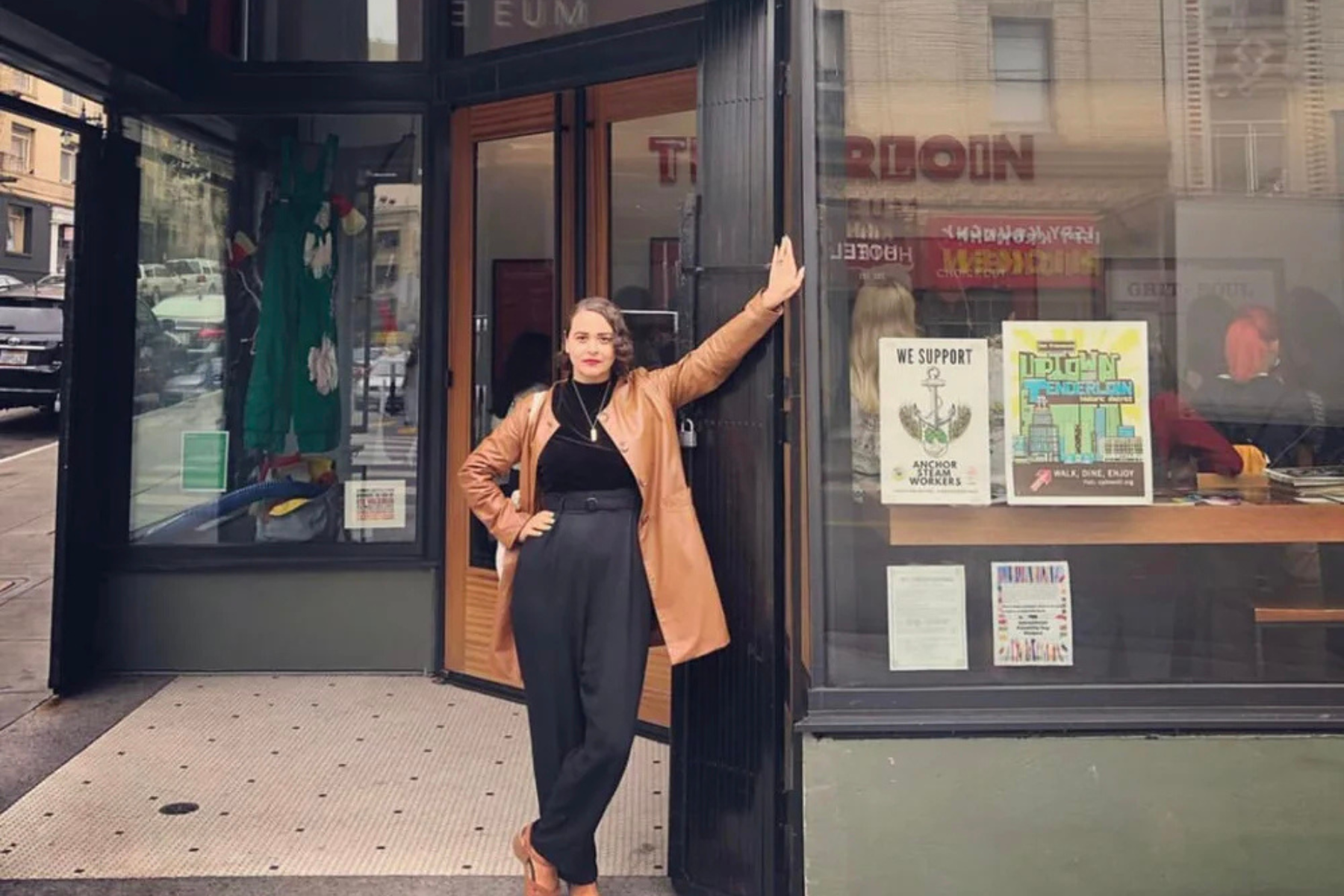
Katie Conry, executive director of the Tenderloin Museum, has been on staff for 11 years, first joining as head of public programs before its opening in 2015. Before that, she held jobs at other museums in San Francisco, and honed her public programming chops playing a key role garnering the public support to help Adobe Books, a beloved San Francisco bookstore and art gallery, transition to a nonprofit.
To Conry, designing successful public programming entails creating experiences where the community, with all its diverse identities and experiences, can tell their unfiltered stories. The same slogan from the sex workers’ rights movement guides her work at the Tenderloin Museum: “nothing for us without us.” In the process, empathy can pave the way for better understanding. “Representation matters. History matters,” she says. More on that below.
Part of the mission is to combat the stereotypes that have continually plagued the Tenderloin district — under constant scrutiny for what Conry says is a persistent misconception about its residents and history.
The neighborhood is home to the services that provide assistance to the people caught in the fallout of rapidly increasing economic inequality — San Francisco’s biggest challenge since the most recent Silicon Valley boom. As Conry puts it, “The Tenderloin didn’t somehow create this horrible economic inequality — it’s where people come to get help to alleviate the worst parts of it.”
Design Observer caught up with Conry to discuss what it looks like to design meaningful public programming in a unique, cornerstone community like the Tenderloin.
The interview has been edited and condensed for length and clarity.
Can you tell me a little more about the public programming happening at the Tenderloin Museum, and how that’s changed over time?
I think our public programming was always the thing that was really successful about the museum. After we first opened, we didn’t have many daytime visitors, but public programs were packed.
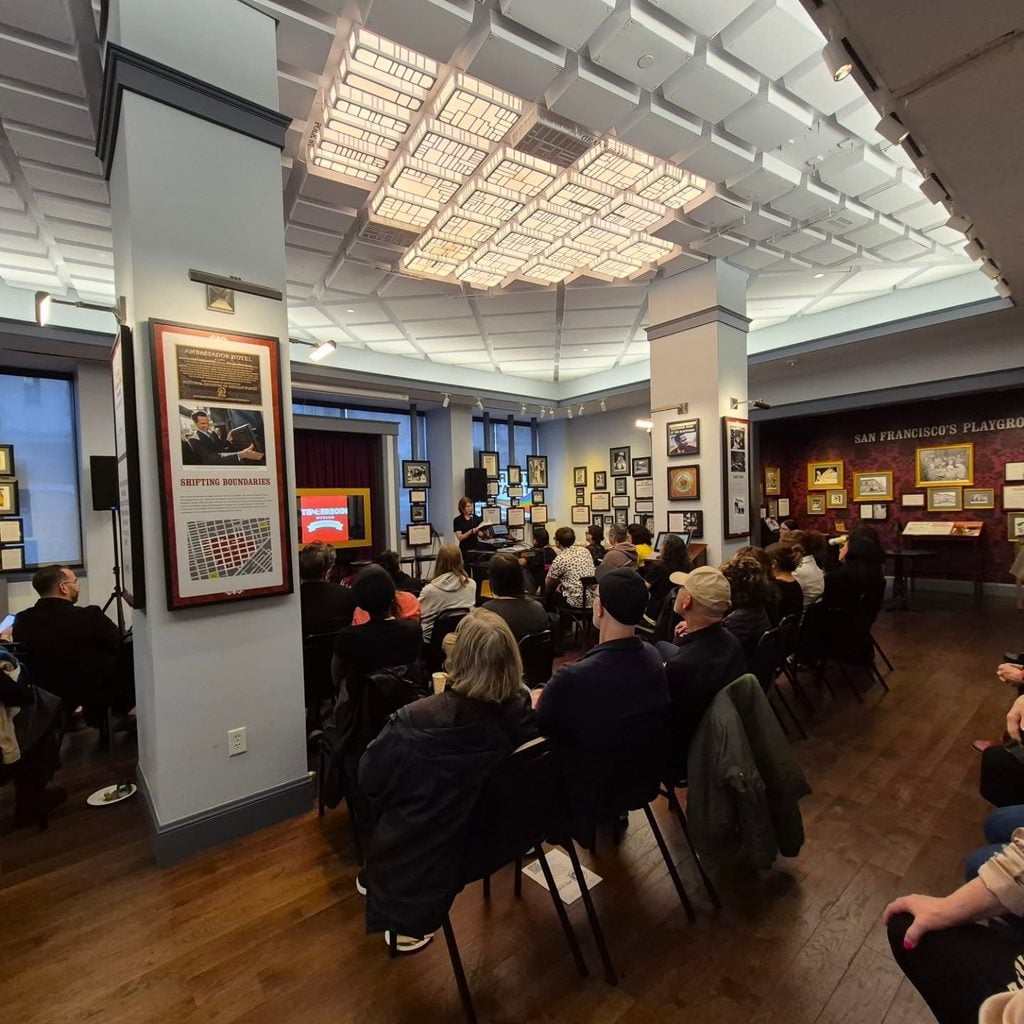
It’s really the heart of what we do. It’s how we’re able to invite the community into our space, build community, and work with all the different people and different identities in the neighborhood. We’re really lucky that the neighborhood is so diverse and there’s such a rich history here. The public programs are how we support and celebrate people in the neighborhood today, and involve residents in telling their own story, as opposed to just a static exhibition on the walls.
We’ve had a lot of success with that from the beginning, because we listened to what people wanted, and because we were able to partner with so many groups doing amazing things in the neighborhood. That’s how we were able to invite the neighborhood into this space to create programming by and for the neighborhood.
How do you define your primary audience to yourself and your team?
First and foremost, our audience is the Tenderloin community in a very real way. That’s mostly who comes — people who live and work in the neighborhood. But pretty much every event or program, there’s someone who’s there for the first time. They might be attracted specifically to a documentary or narrative film that was shot in the neighborhood in the ’90s that we’re screening, or they’re friends with the artists we’re showing, or they really love dance, or music. So there’s always a theme that brings in specific people, and then we have a broader audience as well.
Do you have an example of an event that, to you, felt really successful? What made it feel successful?
I could give two examples — one from a lot longer ago, and one more recent.
One of my favorite events we’ve ever done was commemorating the 100-year anniversary of the first sex workers’ rights protest in the country, which happened in the Tenderloin in 1917. Devon Angus and Ivy Anderson read from their book, Alice: Memoirs of a Barbary Coast Prostitute. Then St. James Infirmary — a health and social-service support institution for sex workers in the Tenderloin — talked about the work they were doing, and modern-day sex workers talked about their experiences. Then we recreated the march, and Ivy Anderson read the original speech at the location where it happened.
They taught me a phrase: “nothing for us without us.” It speaks to how important it is to include people in telling their own story, which kind of became the mission of our institution.
Most recently, we did an amazing art show with a local artist named Lord Frederick, who’s become a friend of the museum. He’s blind and calls himself “the Black, gay, blind, sexy artist of San Francisco.” Our staff was really involved in producing that show — walking him from his SRO to the museum, helping with his work while he was here, providing studio space, and presenting a beautiful art show.
That’s a good example of our evolving relationship with our neighbors, and how we’ve centered arts programming — something I created after I started working here.
Can you tell me more about the walking tours that the Tenderloin Museum offers?
We have walking tours most Saturdays, typically resident-led, about the history of the neighborhood and the residents’ own experiences. Those are primarily people from outside the neighborhood learning more about it.
We also have themed tours. Unspeakable Vice is the main one we run most consistently, a queer history walking tour. That has more of a mix of locals and visitors. We’ve done all sorts of other tours: a mural tour of the neighborhood, an architecture history walking tour, a trans-specific history walking tour, and a walking tour about immigrant history.
Walking tours are really beloved. It’s a good way to support our resident tour guides and connect residents and visitors so they can hear each other’s stories.
What makes a walking tour really successful?
We used to do a nighttime tour that also went to some local bars. That was a really nice one, because there was a real sense of community, people getting to know each other and learning history through socializing.
I wasn’t on that particular tour, but one of our tour guides, Pam, told us they ended at Aunt Charlie’s — , the last queer bar in the neighborhood.
The group was hanging out together, and one of the tour attendees came out as trans to her family. She had taken them on the tour so they could learn more about it. Everyone was crying. It was really emotional, and positive.
Can you tell me about the play, Compton’s Cafeteria Riot, produced by the Tenderloin Museum?
The Compton’s Cafeteria Riot is the first known instance of militant resistance by the queer community to police harassment in U.S. history, three years before the more famous Stonewall riot — a trans-led riot that happened in the Tenderloin. It was one major flashpoint in a whole history of organizing.
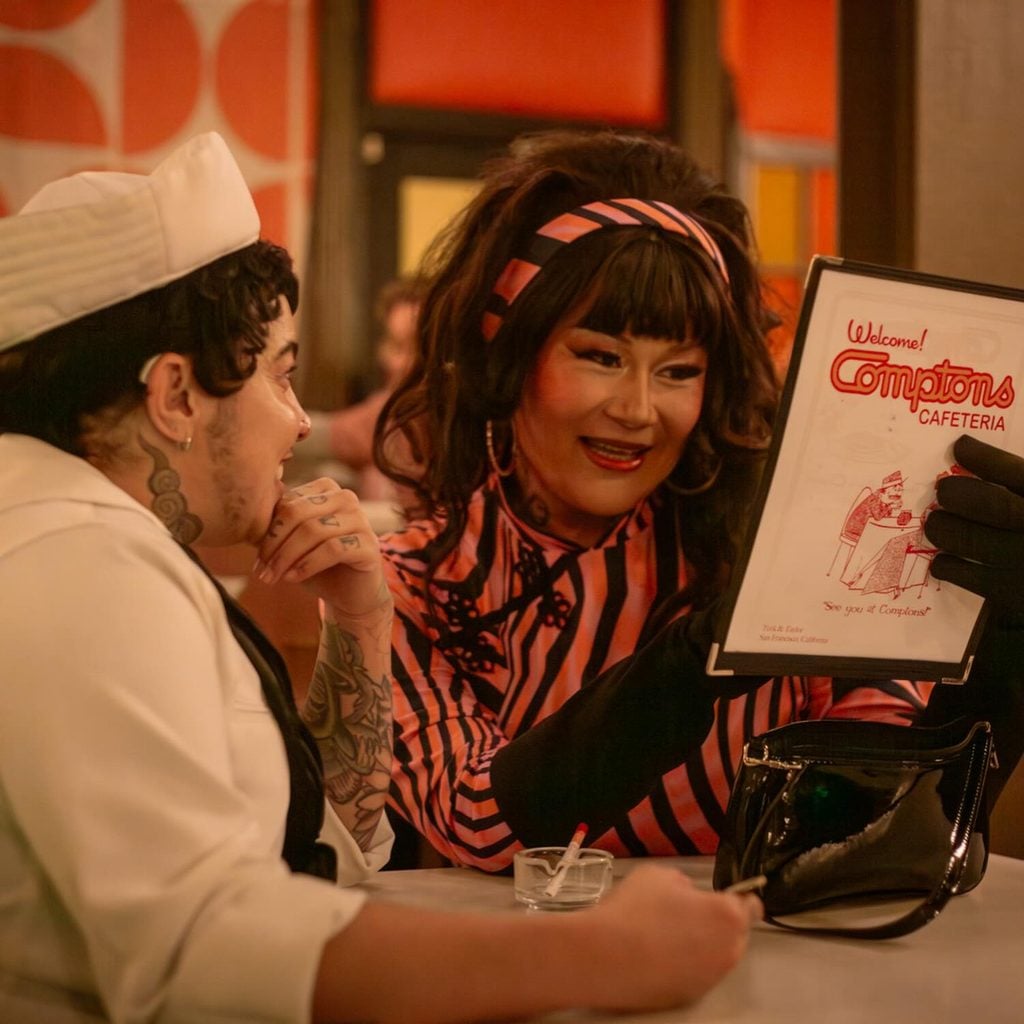
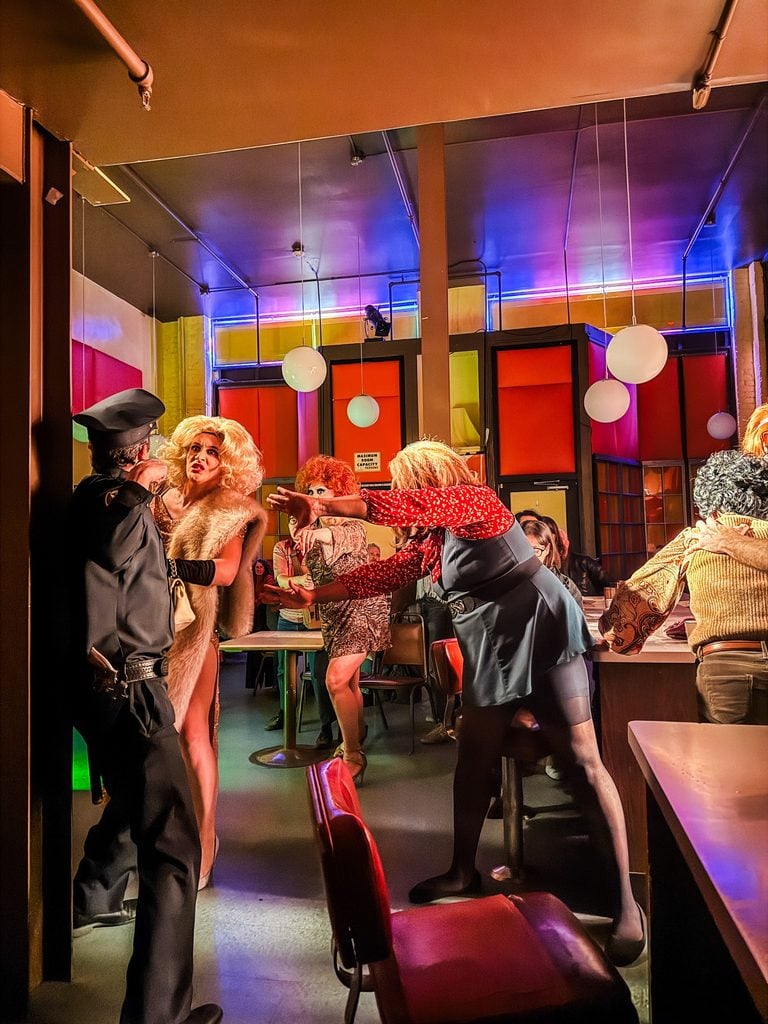
The play has been running every Friday and Saturday night for over a year, in our own dedicated venue on Larkin Street. It’s an immersive play written by two trans women who were part of the scene: Colette LeGrande and Donna Personna. We created a diner set with our partners. You go in, you’re served food, and then the actors come in and the play unfolds around you. We’ve had nearly a year in that space, and the show is still going. It’s a good example of how we’ve evolved and become known for historically-inspired arts programs.
We weren’t discouraged by the fact that this isn’t typically something a museum does — it was the right project for our community.
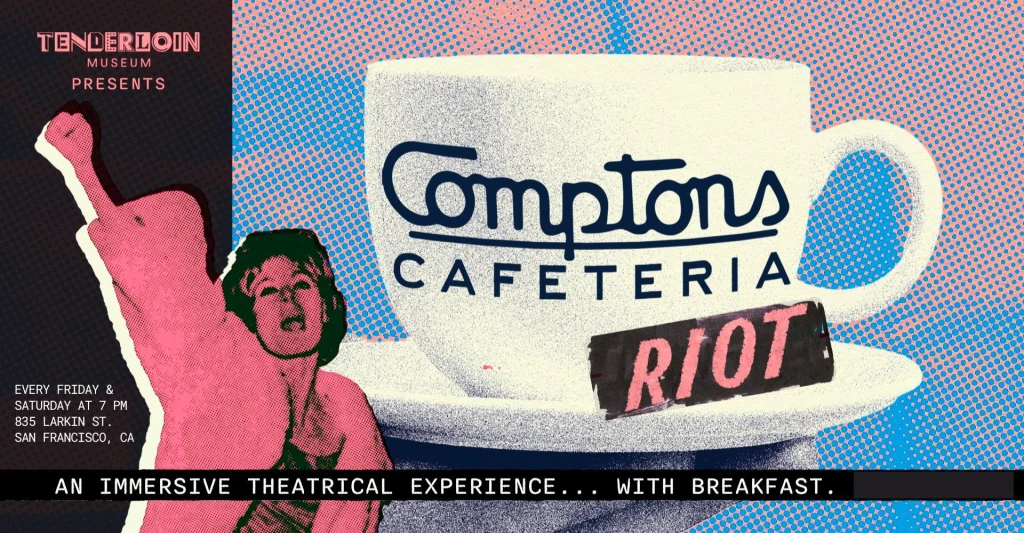
The cast is almost entirely trans and LGBTQ. We’ve provided over $250,000 in stipends over the past year, so it’s definitely supporting people in the community and the neighborhood today. It’s providing a lot of economic activation for Larkin Street, also known as Little Saigon, which was hit hard economically by the pandemic. It brings hundreds of people to Larkin Street to patronize other businesses every week. It’s a really exciting, unique thing we do.
The arts are empathy-driven. It helps you understand history in a more emotional way. At the play, you’re there with the queens — they’re more real people to you than just reading about it. Representation matters. History matters. That person was basically saying, we’ve always been here, this isn’t a new thing.
What do you feel is most often misunderstood about the Tenderloin neighborhood?
That it’s this vile, corrupting place that ruins people and is a blight on the city. That attitude erases so much of the history and community here. All the services in the city are in the Tenderloin, so people come here to get help, and there are amazing organizations helping them. I think that part gets missed a lot. The Tenderloin didn’t somehow create this horrible economic inequality — it’s where people come to get help to alleviate the worst parts of it.
What changes people’s perspective?
Pretty much just one quick conversation, or one quick visit to the museum, completely changes people’s perspectives pretty quickly. I’ve seen that countless times — both outsiders and people who live here who are learning more and are excited to learn more. That’s meaningful for them.
Do you have an experience during your time working at the Tenderloin Museum that really changed your perspective?
I remember going to an event at GLIDE. Cecil Williams, the co-founder, is a huge part of the history and present day of this neighborhood, and was actually a huge figure in the early LGBTQ civil rights movement too. Other ideas that started here before they became more mainstream: harm reduction, housing-first, social justice ideas.
There was a moment — I wish I could remember the quote exactly — about why GLIDE includes everyone, why it’s about radical inclusion, why they help everyone: because people are no different than us. That was a really moving moment for me, where everything kind of tied together.
It connected so many dots, really succinctly, of things I maybe already felt or already saw — why we help each other, and how that can seem like a radical idea even though it shouldn’t be.
What’s next for the Tenderloin Museum?
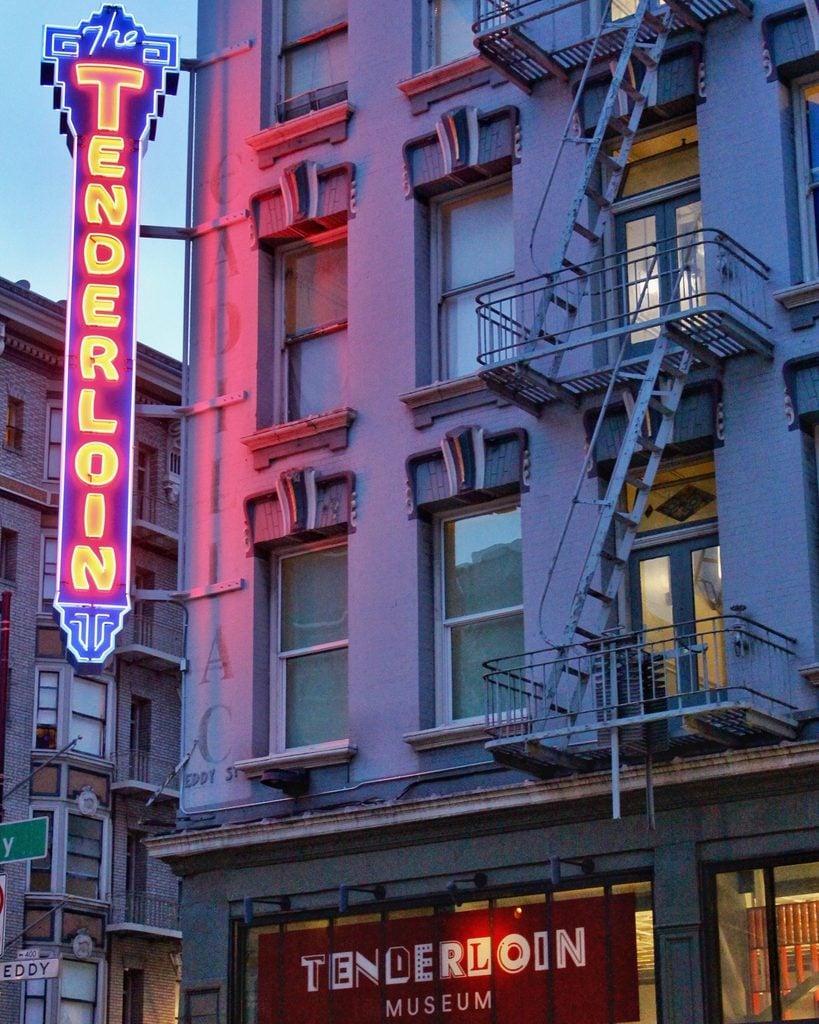
For 11 years, the Tenderloin Museum has celebrated and preserved the history of one of San Francisco’s most vibrant and misunderstood neighborhoods. Now, we’re embarking on our most ambitious project yet: expanding into a new 6,850-square-foot historic space next door to our current location at 398 Eddy Street. This expansion will triple our size and allow us to bring more of the Tenderloin community’s stories, voices, and creativity to life.
It will include an expanded permanent exhibition on the history of the Tenderloin, San Francisco’s First Neon Sign Gallery, Indo-American Hotelier History Exhibit, a much larger art gallery, and a youth-focused exhibition
It’s an opportunity to take everything we’ve been talking about — involving the community, telling their own story in our programming — and bring it into the exhibition itself. It’ll have a lot more oral histories, more personal stories, building on almost 11 years of community feedback.
Shop the Tenderloin Museum’s book recommendations in our bookshop.org store. Proceeds from book sales support local booksellers and our editorial programs.
And three more recommendations that are not sold on bookshop.org:
Observed
View all
Observed
Share on Social


By Rachel Paese
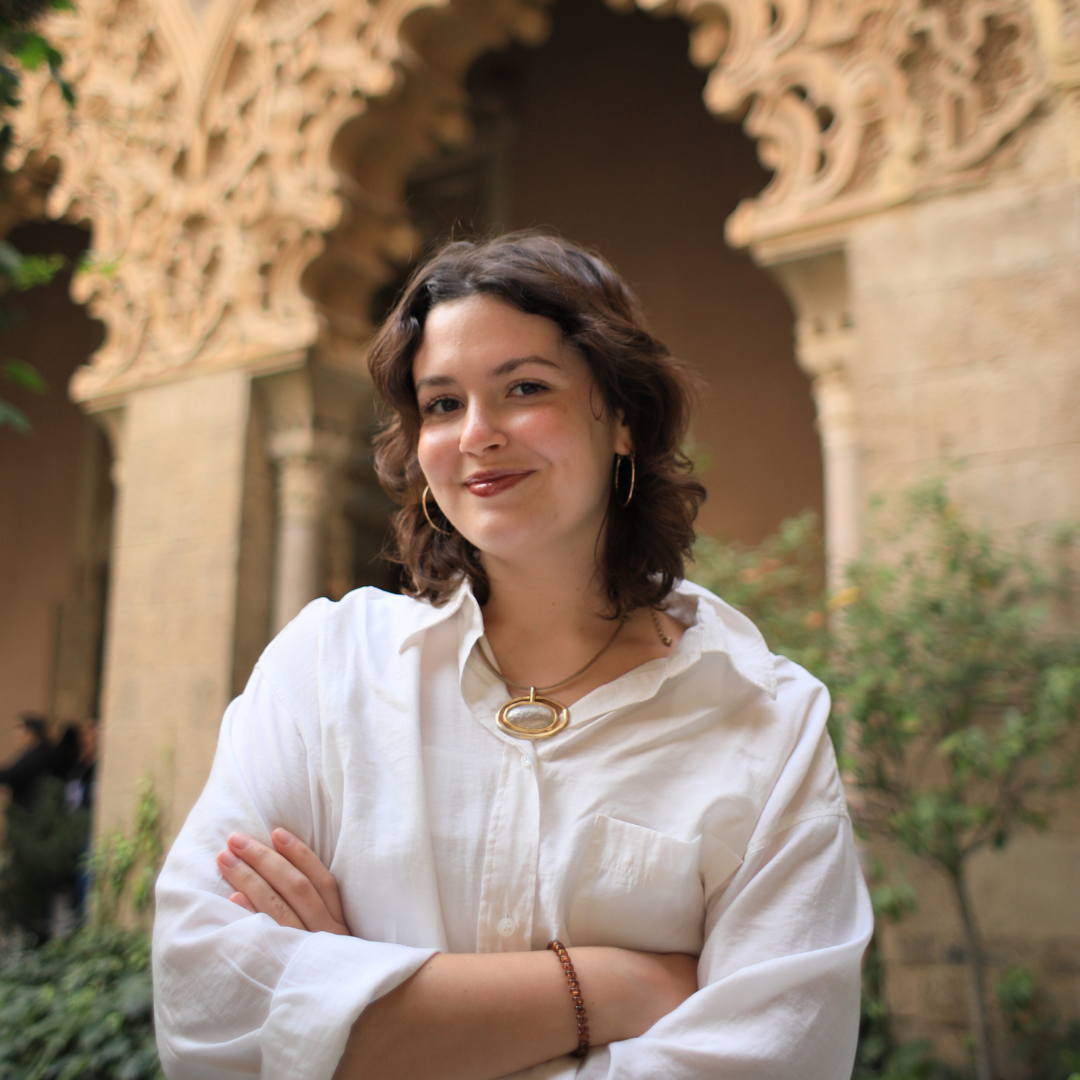 Rachel Paese is Design Observer’s Deputy Editor, and she loves giving curious people access to stories that change the way they see the world. It began with a major in English, and then evolved with a project that sharpened her editorial instincts the old-fashioned way: founding and leading her own multimedia magazine at the University of Kansas. After college, she carried that passion to education, helping students in Spain and Thailand think beyond their culture. Today, she brings that same spirit to Design Observer, working to connect readers with the people and ideas shaping a better future. Connect with her on LinkedIn, and ask her about her quest to sew her own wardrobe.
Related Posts
Design Juice
Rachel Paese|Design Juice
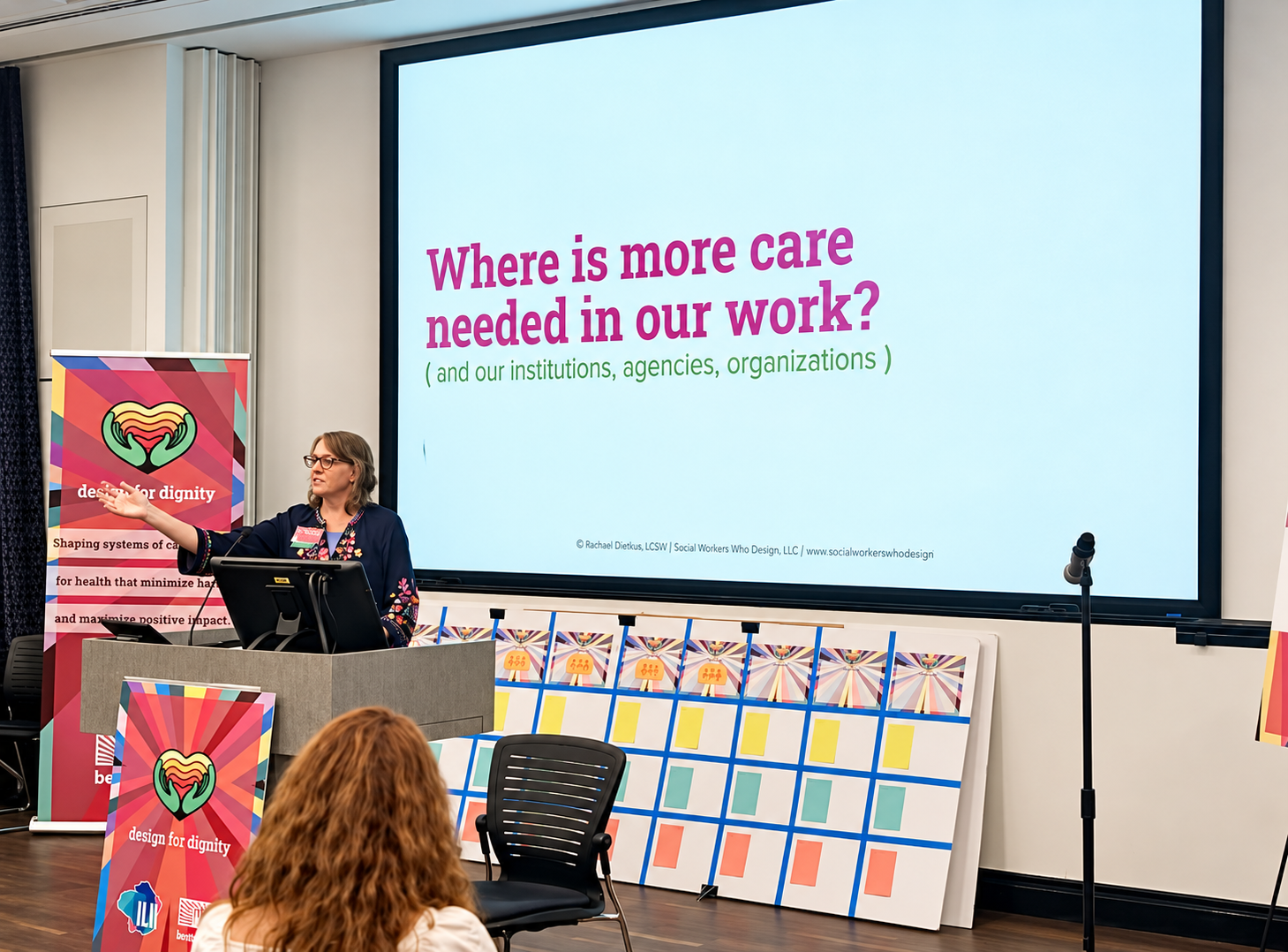
‘What if care were foundational to systems design?’ asks Rachael Dietkus
Arts + Culture
Alexis Haut|Interviews
The Kardashians will make you cringe, but first they’ll sell you shapewear
Design Juice
Rachel Paese|Design Juice
Sara Soskolne is a typeface designer who thinks of herself as a craftsperson
Design Juice
Rachel Paese|Design Juice
Ira Blossom created a games-only, print-only newspaper — and it’s sold at a newsstand in New York City
Subscribe to The Observatory
Related Posts
Design Juice
Rachel Paese|Design Juice
‘What if care were foundational to systems design?’ asks Rachael Dietkus
Arts + Culture
Alexis Haut|Interviews
The Kardashians will make you cringe, but first they’ll sell you shapewear
Design Juice
Rachel Paese|Design Juice
Sara Soskolne is a typeface designer who thinks of herself as a craftsperson
Design Juice
Rachel Paese|Design Juice