


Rachel Paese|Design Juice, Interviews
August 31, 2026
Becoming a better observer has defined John Ball’s 40-year design career
It's made him better at helping people understand things, which is how he believes designers must meet the moment
Last week, John Ball wrote for Design Observer about his experience designing a poster series for the Smithsonian about one of America’s most contested subjects: immigration. Although the project was in 2012, the Trump administration ordering “inaccurate information” signs outside of the Smithsonian museums brought up old memories and new reflections.
Encouraging visitors to sit with complexity was important then, and it’s even more important now, he concludes. “When public debate becomes louder and more polarized, one of design’s most valuable roles is not to tell people what to think, but to give difficult material the space it needs and help people understand what they are looking at,” he writes.
When Design Observer caught up with him to learn more about his career, he reiterated, “As designers, that’s what we do: we help people understand things.”
Ball has had almost 40 years of practice at the same firm, MiresBall, working with a wide variety of clients, from commercial to arts and culture. Working with Lux Art Institute, a museum in his home city of San Diego, is where he found a love for designing for museums, and where he served as a founding board member. He feels uniquely lucky that his design career has offered him “opportunities to jump into these different worlds and learn about things.”
This curiosity, he says, comes naturally to designers. It’s one of the superpowers that designers can “lean into in pursuit of truth, whether for ourselves, our clients, or our society.”
Although it’s a natural inclination, it must also be sharpened, according to Ball, who learned this the hard way: if you want to pursue truth and meet your client’s moment (whether it’s political, economic, cultural, or something else), curiosity and observation must become an intentional practice.
Early on in his career, Ball found himself in rooms, talking to clients about “big things.” “I had no idea how to be in that conversation,” he recounted. “I quickly realized, do I need to read the Wall Street Journal? Do I need to embrace what’s happening in the client’s world a little bit more, and step out of the design bubble?”
After 40 years, he’s meeting the age of AI with the steadfast opinion that “clients still need the thinking.”
But in order to deliver, the same thing has always been true: being a good observer has to come first.
Below are more stories from his career, what he’s currently working on, and how designers (both established and up-and-coming) can meet the moment.
This interview has been edited and condensed for length and clarity.
Your commentary was in response to the Trump administration ordering “inaccurate information” signs to be placed outside of Smithsonian museums. Can you tell me a little more about your reaction to that and why it reminded you of your project with the Smithsonian?
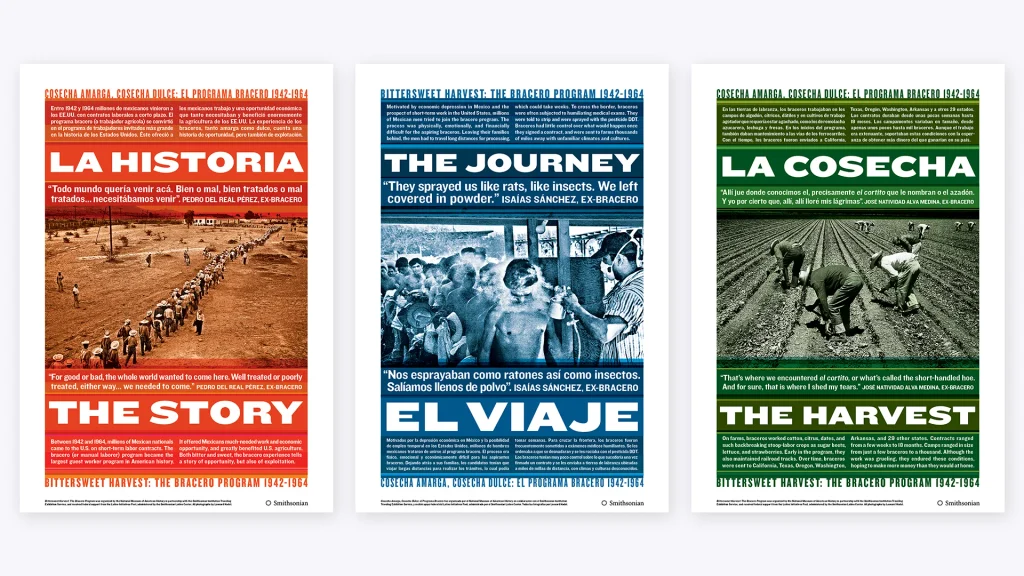
I had always looked at the Smithsonian as this kind of guiding light, a paragon of truth and trust, I think more than anything. That name just evokes so much trust, and that’s a lot of why we were excited to work with them. When I saw that, on one level it wasn’t surprising, given where things are today, but it was just disappointing to see them being questioned like that. My experience working with them on Bittersweet Harvest was very much about trying to find the truth of it, the middle ground — not swinging too far in either direction, but just trying to find the balance of the story.
If this project came across your desk today, you would approach it differently?
That’s a great question. I don’t know that we would necessarily approach it differently. I think we somewhat need to tune out a lot of things to focus on what the brief is. I would imagine the folks at the Smithsonian would have maybe some different sensitivities, or different ideas about it today than they would have back then. But I think we as designers build up that muscle to focus on the brief, with almost a tunnel vision, and tune out the distractions. I’d like to think that we would just do that.
Why is it so important for designers to create exhibitions that encourage visitors to engage with complexity — especially now?
As designers, that’s what we do: we help people understand things. So I think that’s always been the case. Certainly now, maybe what we’re facing is more entrenched views than there have been over the years, so there are some headwinds there.
I think you can’t sugarcoat it. Complexity is there, different viewpoints are there, different ways to interpret the same thing are all there, and we can’t really change that. Our job is to serve the content. So the question is: how do we get people to engage in that content? They’ll make up their own minds, they’ll decide what they think. We can’t tell them what to think, really, but we can help them understand the content, comprehend it, and draw them into it.
In our commercial work, yes, we’re trying to convince you of something and sell you a product. In more of the cultural work, we’re not really trying to convince you of anything. We’re trying to help you see something, understand it, and form your own conclusion. So I do draw a line there between work where we are trying to deliver a message and a point of view, and work in the cultural space.
What are you working on now at MiresBall?
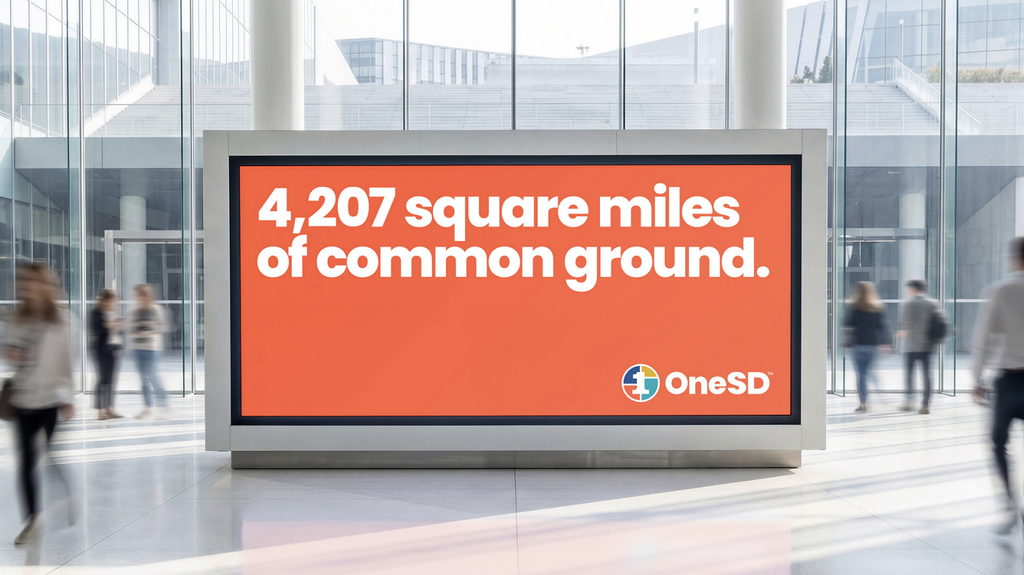
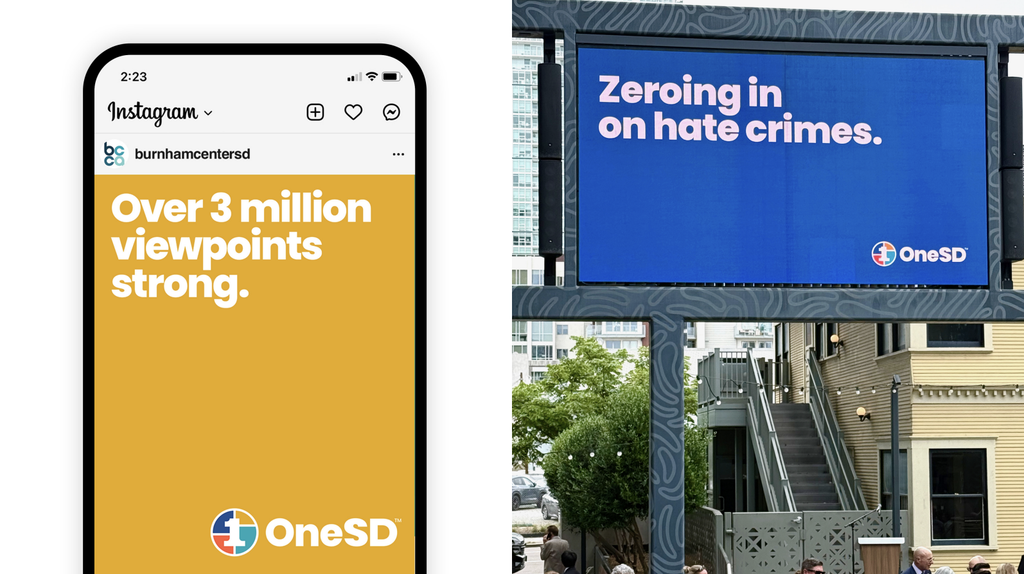
We’re currently working on a project here in San Diego called OneSD, which is this idea to really try to heal the divides and the polarization. OneSD is really designed to bring people together to find common ground, push out the extremes of views, and find again the things that unite us and bring us together. That’s been a really great thing to be involved in during these times.
Given the times we’re in, it’s not so much how we approach design, but maybe the kinds of things we want to take on — things that are going to make things better or help on some of these issues. We’ve really embraced that project. It’s localized in San Diego, but it hopes to become a model for other cities — to bring lots of folks together from government, business, and philanthropy, and really try to find that common ground.
Would you say you’ve seen the design industry change a lot in the 40 years of your career?
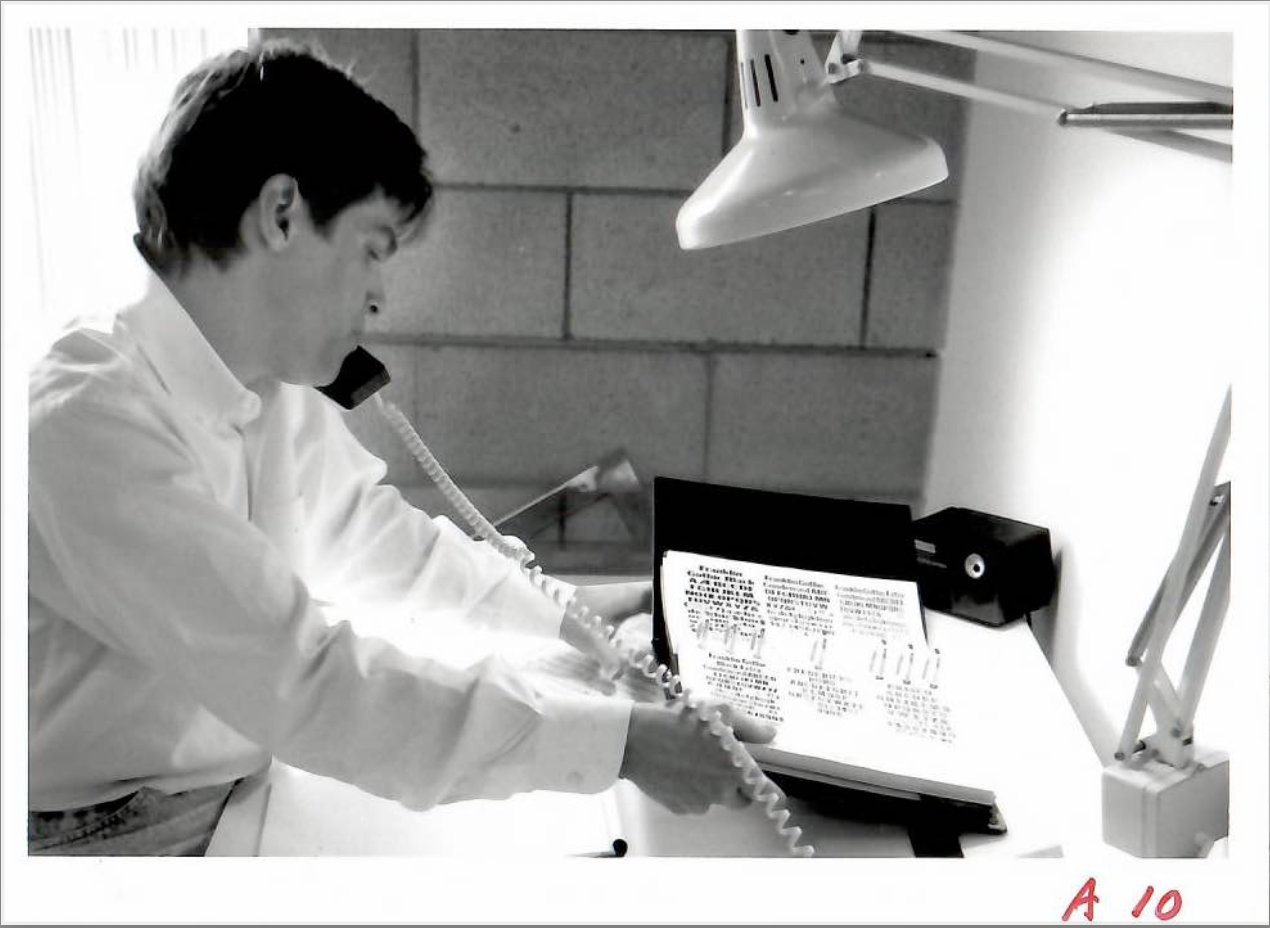
Absolutely. I think there are probably a few still around, but less and less every day — practicing designers like myself who came up in the analog world, where we did things by hand: cutting and pasting and gluing and all that. That gave you this very tactile process, putting things on a big piece of cardboard. If you look back at that process now, it just seems so archaic — no wonder things took so long to do. And then on top of that, communication certainly evolved from clients locally who would come in and we’d meet them face to face, to at some point FedEx, where you could work with somebody a little further away, send things to them, and get on the phone.
The tools, the communication — really everything about it, how we take in things as designers, how we find our inspiration — all of that has changed so much. Generally for the better, I think. Progress is good, and we can do things faster, better, and explore more. But you look back and go, there was amazing work being done back then, and way before that, just in a different way. People always find a way to do good things with whatever they have.
How are you thinking about the age of AI and what it’s changing for designers? Are you worried? Hopeful?
I think we’ve probably gone through all of those phases at different points. I remember the first time another designer showed me a logo done in AI. It feels a little bit right now like people are just settling down with it, sitting with it, and finding their own way through it.
But I think clients still need thinking. They still need that core stuff that we do — how we’re going to tell the story, how we’re going to bring people in. AI can’t really do that. You have to know what to ask it for. People who can master that and master the prompts can produce some interesting things. But more so it’s just another tool we’re using — for research, checking stuff, things like that. It just adds to the toolkit.
I’m sure it’ll keep changing from here — maybe a whole different conversation in a year or even six months.
Design Observer contributors have commented on the emerging reality that clients can now produce their own prototypes. It seems like the way clients communicate is quickly changing. Have you seen this too?
I can look back through my lens on what’s changed over 40 years, and I think we probably had the same concern in the early ’90s, late ’80s, when the computer first became a tool for us. With desktop publishing, a lot of talk at that point was: now anybody can do this because they have the tool, they can make something on the computer. But that didn’t really change. We went on to flourish and do even better after that. We got those tools, and we could do much more with them than somebody who wasn’t a trained designer. I think you’ll probably see the same thing happening now — yes, you can make something, you can do something, but is it the right thing? Has it been thought through?
All of the things that we as designers build up — these muscles, these skill sets that we sometimes don’t embrace that we have — like empathy, respect for the reader, hierarchy, knowing how people engage with things, all of these things. When we create something, it’s going to benefit from that. When somebody who maybe isn’t a trained designer makes something, will it employ all of those things? Do they have all those muscles to shape what they’re doing?
Recently, I was presenting an identity project to a room full of people, and we weren’t getting the most positive response, and somebody in the back actually whipped up something on AI right in the meeting.
But it was fine — it was just sort of part of the process. It wasn’t going to derail what we were doing. It just said, okay, we need to go back and keep working on this. That was just that person’s way of contributing to the conversation. I think it probably felt worse at the time than it really was — it was just like, how are we communicating what’s not right or what’s missing? I think you want to take it as somebody trying to be helpful.
In a different day and age, somebody would have sketched it on a napkin. Is it really that different?
If you were starting out as a designer today, what do you think would be different?
I do a lot of portfolio reviews for some of the local schools here in town, so I talk to a lot of young designers who are just getting started, and I really admire their courage. To want to pursue this, in spite of all of the noise and the chatter around it and the uncertainty — and they still want to do this. You have to just love that energy and the courage. I think there are definitely some headwinds now.
What I see with a lot of young designers, though, is that what has changed with social media and culture is they’re just going to do their own thing — start a clothing line, find more entrepreneurial ways to be a designer. The model of going to work for an agency with a lot of experienced folks and being a junior in that agency — maybe that’s less the only path now. There are other paths, and your learning may be slower or different than if you took the traditional path and started as a junior and worked your way through. But everyone is just trying to find their path in design, and for most of us you just kind of feel it inside and you just have to do it. They’ll find it.
A lot of them are actually very optimistic. They’re just jumping in and embracing the chaos.
For an up-and-coming designer, how can they be instrumental in the field?
Just keep taking in information, looking at things, observing, learning, questioning what you’re doing. I think many designers have another gift, for better or for worse — we can question what we’re doing, and I think that ultimately makes you better. If you go back and look at what you’re doing and question it, you usually get to a better place.
Do you have an observation practice? What keeps you curious?
I think that’s the thing as a designer — you’re like a visual vacuum cleaner. You’re just sucking it all in. I was up in Seattle over the weekend, just walking around looking at signs and things.
But I think there’s also the other side of that, which is taking in information about the world. What I realized early on in my career was that you start out very much immersed in the design world — looking at all the design press, the award books at the time.
When I worked for a couple of years in New York, all of a sudden I was in conference rooms with the principals of the firm, talking with clients about these big things, and I had no idea how to be in that conversation. I quickly realized, do I need to read the Wall Street Journal? Do I need to embrace what’s happening in the client’s world a little bit more, and step out of the design bubble? And so I really embraced that too.
You want a wide-angle view of things — what are your clients reading, what’s their world like. There was probably even a time when I went too far into that, and I now try to get back to still visiting that design bubble, which I still love. Being able to toggle back and forth has been really helpful.
Observed
View all
Observed
Share on Social


By Rachel Paese
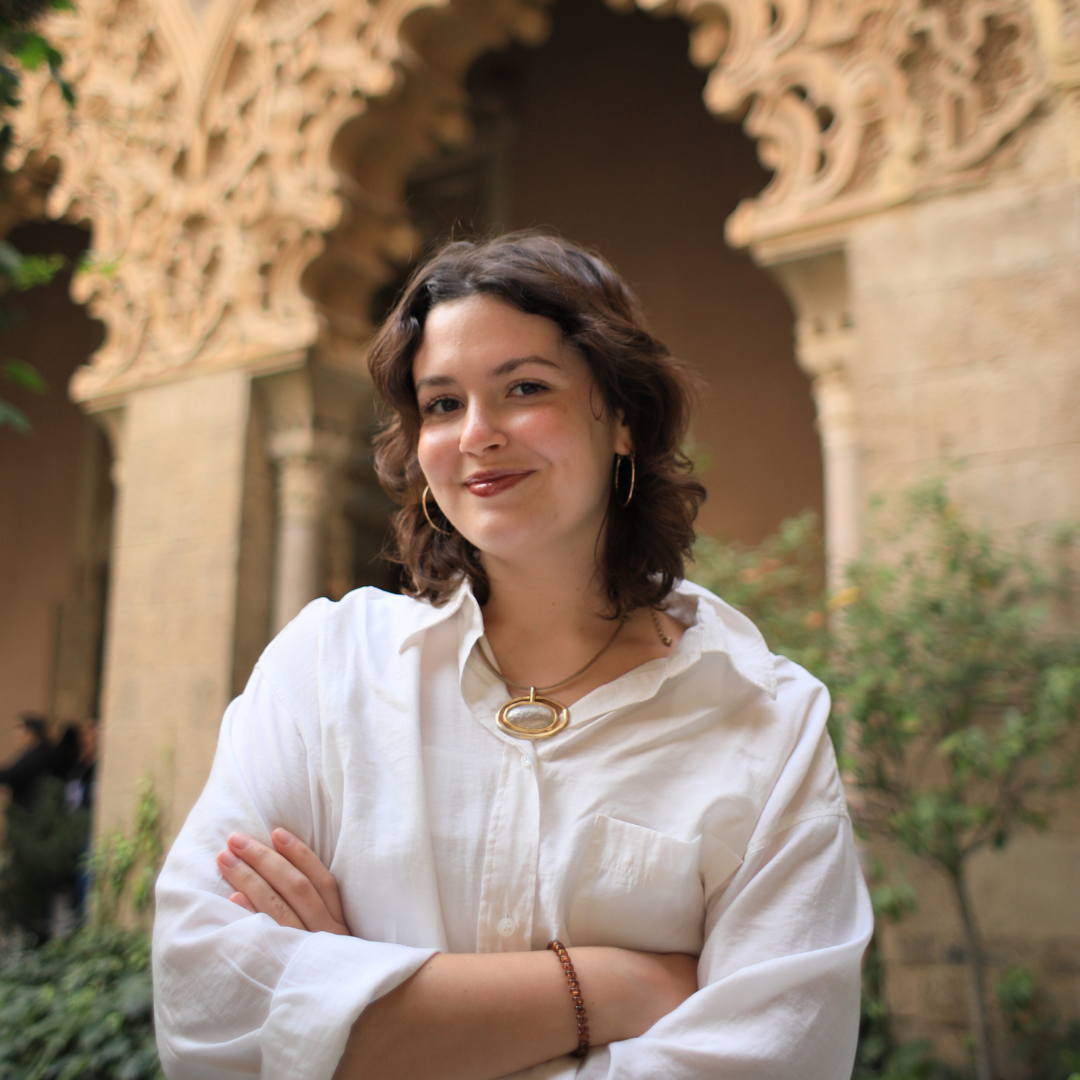 Rachel Paese is Design Observer’s Deputy Editor, and she loves giving curious people access to stories that change the way they see the world. It began with a major in English, and then evolved with a project that sharpened her editorial instincts the old-fashioned way: founding and leading her own multimedia magazine at the University of Kansas. After college, she carried that passion to education, helping students in Spain and Thailand think beyond their culture. Today, she brings that same spirit to Design Observer, working to connect readers with the people and ideas shaping a better future. Connect with her on LinkedIn, and ask her about her quest to sew her own wardrobe.
Related Posts
Design Juice
Rachel Paese|Design Juice
‘What if care were foundational to systems design?’ asks Rachael Dietkus
Arts + Culture
Alexis Haut|Interviews
The Kardashians will make you cringe, but first they’ll sell you shapewear
Design Juice
Rachel Paese|Design Juice
Sara Soskolne is a typeface designer who thinks of herself as a craftsperson
Design Juice
Rachel Paese|Design Juice
Ira Blossom created a games-only, print-only newspaper — and it’s sold at a newsstand in New York City
Subscribe to The Observatory
Related Posts
Design Juice
Rachel Paese|Design Juice
‘What if care were foundational to systems design?’ asks Rachael Dietkus
Arts + Culture
Alexis Haut|Interviews
The Kardashians will make you cringe, but first they’ll sell you shapewear
Design Juice
Rachel Paese|Design Juice
Sara Soskolne is a typeface designer who thinks of herself as a craftsperson
Design Juice
Rachel Paese|Design Juice