


May 18, 2026
The line, now drawn
I spent last week watching redistricting in action
In his recent oral arguments, Chief Justice John Roberts described Louisiana’s newly defunct 6th Congressional District as a snake, a caustic nod to the way it wound across the state, spanning some 200 miles connecting parts of Baton Rouge, Shreveport, Alexandria, and Lafayette.
(We’ve been describing it as a sash, but why quibble?)
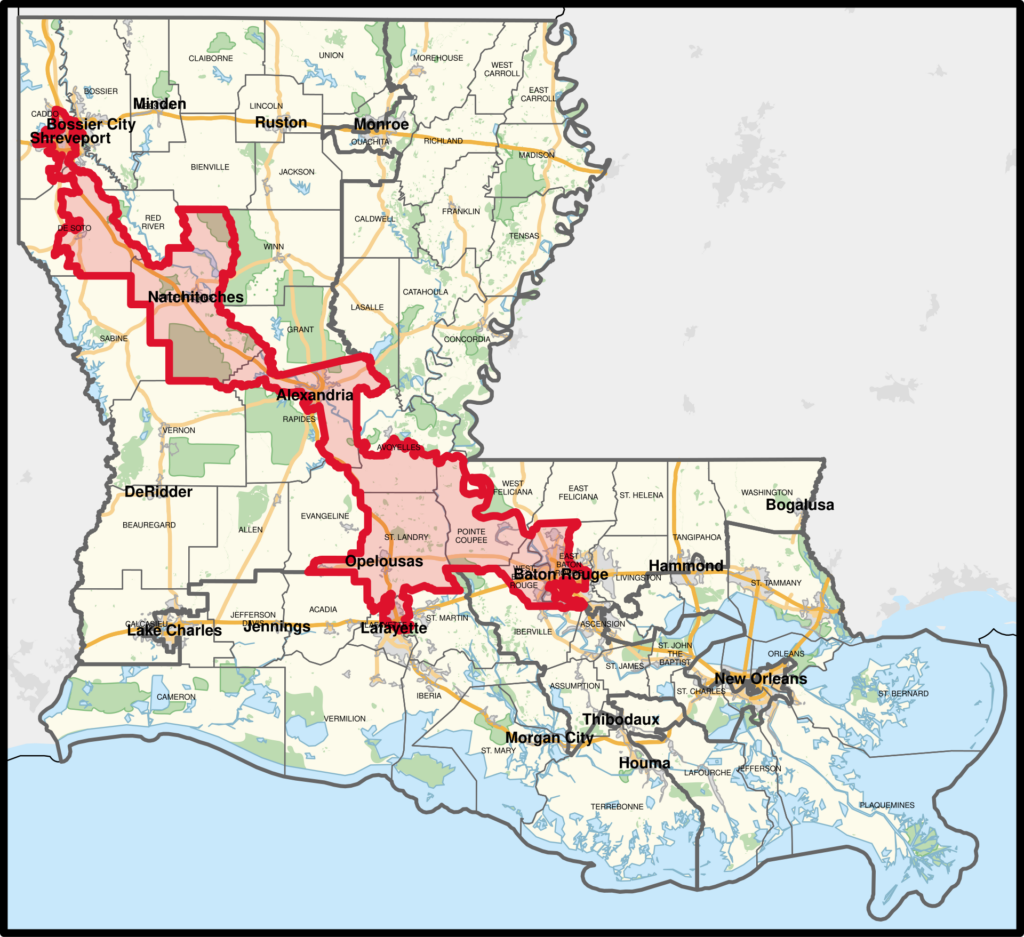
District 6 is now gone, erased by new lines drawn by a familiar hand, a voting map created after a marathon legislative session last week at the Louisiana State Capitol. The Roberts Court ruled that the district, one of Louisiana’s two majority Black districts, was an unconstitutional racial gerrymander and sent it back to the state to address. Address it they did. The subsequent hearing and public testimony were rescheduled, cynically, many concluded, from Wednesday morning at 9 a.m. to 7 p.m. the night before, preventing hundreds of voters from attending on previously arranged buses.
And yet, hundreds did get there in time, lively and prepared, and lined up to speak until nearly 5 a.m. Spending hours listening to them from an overflow room was a poignant experience, like watching a play unfold in multiple acts, even if in their minds, the tragedy was foretold.
Just two days later, the State Senate affirmed the new map in a party-line vote in a somber, performative hearing that felt like watching a funeral.
I spent the better part of last week in Louisiana, where I have been traveling regularly since March. At this point, I’ve been to the Capitol often enough that some legislators, advocates, and even security have started to recognize me by face or name. It’s a rich and rewarding way to be a reporter, despite the fraught circumstances. When we launched the Draw the Line podcast project to focus on Louisiana, Callais, and the unique design problem that is democracy in the U.S., I was worried it would be an uphill battle to win the public’s attention.
Now, with an unprecedented mobilization of voting rights activists in play around the country, I’m also worried about other things.
I spent two days driving across what was once District 6. It contains a bit of everything that is beautiful, historic, and strange about Louisiana and its Red River. For one, it was the launch pad for so much joyful noise: gospel, early rockabilly, with Cajun and Zydeco versions of the Delta blues thrown in for good measure.
But much of it is also home to Louisiana’s Cancer Alley, an 85-mile stretch of land with some 200 petrochemical and fossil-fuel production plants. The area produces about 25% of the U.S.’s petrochemical products; it also experiences pollution that causes respiratory illnesses, maternal and newborn health issues, and related cancers that are more than seven times the national average.
A lack of representation hits different when you see it up close.
Since I returned, there has been another march on Selma and widespread calls for “a new playbook” on civil rights in the U.S. What once felt like an exercise in understanding democracy as it is now has become a chance to document the rise of something new, in somewhat real time.
The podcast is coming soon. I’m particularly grateful to the many players on the ground who have opened their hearts and minds to help me understand what’s at stake and how the messy business of coalition-building with your neighbors.
W.E.B. Du Bois liked to say, “as the South goes, so goes the nation,” a slogan that is currently making the rounds on many signs in many meetings in Louisiana. But he also wrote in his 1953 book Black Reconstruction in America, “War and especially civil strife leave terrible wounds. It is the duty of humanity to heal them.”
Ellen McGirt
Editor-in-Chief
LinkedIn
Instagram
Threads
Ellen@designobserver.com
P.S. Did someone who loves you send you this newsletter? Welcome! Subscribe here.
This edition of The Observatory was edited by Rachel Paese.
This is the web version of The Observatory, our (now weekly) dispatch from the editors and contributors at Design Observer. Want it in your inbox? Sign up here. While you’re at it, come say hi on YouTube, Reddit, or Bluesky — and don’t miss the latest gigs on our Job Board.
Draw the Line
The Supreme Court has gutted the Voting Rights Act. Redistricting determines whose voice counts, whose neighborhood thrives, and whose representation vanishes. That is exactly the kind of design we exist to examine.
Follow along in The Observatory Newsletter, on our socials, or on the website for updates.
Some fine print
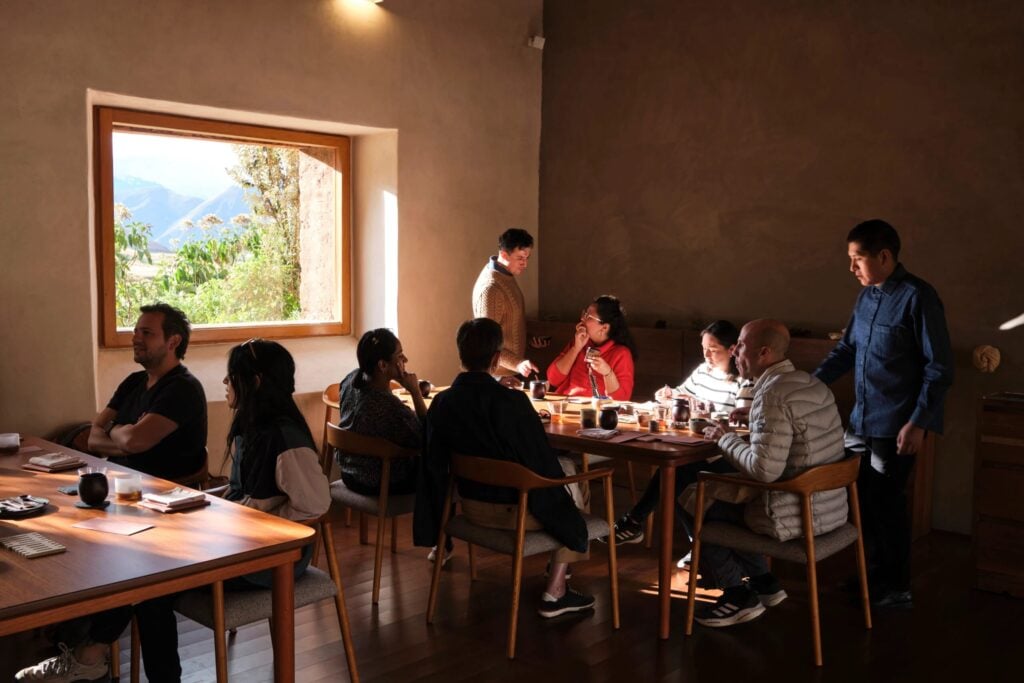
Designing with the Andean principle of Ayni: “What will we choose to give back?”How the Quechua word for reciprocity can guide a new design philosophy. By Martín Zabaleta.
Elixir Design founder Jennifer Jerde believes in the human touch. Brands still need real people to lead with observation and connection in their effort to tell the visual story, she says. By Rachel Paese.
Corporate crisis is design’s opportunity. After years of prioritizing efficiency, businesses need the visionaries they’ve been undervaluing. By Stephen Fritz.
Sam Furness got serious about investing in his curiosity. Now, he’s helping others do the same. He’s partnering with Tina Roth Eisenberg at CreativeMornings and Adobe on Release Day, a collective deadline to help creatives get their projects into the world. By Rachel Paese.
Art Basel Hong Kong featured an AI and digital art exhibit. The artists and their work tell a story about the ways technology is changing — or not changing — how art is made and sold. By Kajsa Kedefors.
Observed
What are you observing? Tell us.
Musk loses his case against OpenAI. Time was not on his side, evidently. Musk sued the company he helped cofound and fund to the tune of $38 million, alleging that their shift from non-profit to for-profit status was tantamount to theft. “I was a fool…I gave them free funding to create a startup,” he told the court. The jury found that the case was barred by the statute of limitations, and Judge Yvonne Gonzalez Rogers agreed. “I think that there’s a substantial amount of evidence to support the jury’s finding, which is why I was prepared to dismiss on the spot,” she said.
Everlane has reportedly been bought by Shein. Everlane’s claim to fame was as a direct-to-consumer fashion brand born of sustainability and radical transparency. In a surprising move, the cash-strapped company is being acquired by Shein, China’s notorious fast fashion empire. The valuation is reportedly $100 million. Puck broke the story.
A new study finds that young gamers have accepted the manipulative and deceptive practices that encourage gambling and overspending in digital games as a normal part of gameplay. “These are not isolated tricks,” explains one of the researchers, “but features built into the architecture of the game, designed to prolong playing time and stimulate spending.”
“The richest man in the world spent this week tweeting about a Black woman’s face.” Independent journalist Terry Moran on Elon Musk’s slow-rolling tirade about the casting of Lupita Nyong’o as Helen of Troy in Christopher Nolan’s forthcoming film of The Odyssey. “He accused Nolan—one of the greatest and most honored directors of our time… of desecrating Homer simply to make himself eligible for an Academy Award,” he writes on Substack. The multiple vile posts have ignited a global mob. “He chose to direct a horde of racists at one woman, day after day, with the ease and blithe recklessness of someone for whom there will be no consequences.”
Job board
Hiring a designer? Post your role on the Design Observer Job Board to reach a highly engaged audience of designers, creative leaders, and studios across the Design Employment Network.
Senior Interior Architect Proficient in Beaux Arts Style at Kati Curtis Design, New York, NY.
Senior Project Architect at I-5 Design Build, Inc., Lacey, WA.
Freelance Industrial Designer at BrightSpring, Los Angeles, CA.
End marks
Design Observer has a long track record of examining the relationship between design and governance — and the ways designers influence change.
Design As asks a diverse array of design practitioners to imagine a better world together. In the “Design As Governance” episode, Chelsea Mauldin, the director of the Public Policy Lab, says this:
“When we think about design and governance, we’re not actually thinking about the creation of governmental structures or policies, although sometimes we’re in fact designing those things. But quite often we’re talking about the series of conversations that design can influence in our effort to change the world around us.”
This is the web version of The Observatory, our (now weekly) dispatch from the editors and contributors at Design Observer. Want it in your inbox? Sign up here. While you’re at it, come say hi on YouTube, Reddit, or Bluesky — and don’t miss the latest gigs on our Job Board.
Observed
View all
Observed
Share on Social


By Ellen McGirt
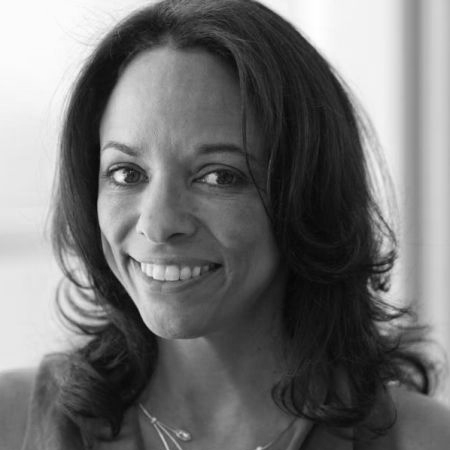 Ellen McGirt is an author, podcaster, speaker, community builder, and award-winning business journalist. She is the editor-in-chief of Design Observer, a media company that has maintained the same clear vision for more than two decades: to expand the definition of design in service of a better world. Ellen established the inclusive leadership beat at Fortune in 2016 with raceAhead, an award-winning newsletter on race, culture, and business. The Fortune, Time, Money, and Fast Company alumna has published over twenty magazine cover stories throughout her twenty-year career, exploring the people and ideas changing business for good. Ask her about fly fishing if you get the chance.
Related Posts
The Observatory Newsletter
Ellen McGirt
Who gets to decide where power begins and ends?
The Observatory Newsletter
Rachel Paese
You need an observation practice
Draw the Line
Audio
BONUS: Live from Essence Fest – The Work Gets Personal
Draw the Line
Audio
BONUS: Live from Essence Fest – The Accounting
Subscribe to The Observatory
Related Posts
The Observatory Newsletter
Ellen McGirt
Who gets to decide where power begins and ends?
The Observatory Newsletter
Rachel Paese
You need an observation practice
Draw the Line
Audio
BONUS: Live from Essence Fest – The Work Gets Personal
Draw the Line
Audio